
Discover the essential skin cancer trends in 2026. Learn about rising diagnoses, survival rates, and how to protect yourself and your loved ones.

Skin cancer in 2026 is defined by a striking paradox: more diagnoses than ever before, yet steadily declining mortality rates. The American Academy of Dermatology projects 234,680 new melanoma cases in the U.S. this year alone, including 112,000 invasive cases and an estimated 8,510 deaths. Beyond melanoma, roughly 6.1 million adults are treated annually for basal cell carcinoma (BCC) and squamous cell carcinoma (SCC), costing the healthcare system approximately $8.9 billion. Understanding these skin cancer trends in 2026 is the first step toward protecting yourself, your family, and your community.
What are the latest skin cancer statistics in 2026?
Melanoma is the most dangerous and most closely tracked form of skin cancer, and the 2026 numbers tell a nuanced story. The American Academy of Dermatology estimates 122,680 noninvasive (in situ) melanoma cases alongside 112,000 invasive cases this year. That invasive figure carries the most clinical weight because it reflects tumors that have grown beyond the skin’s surface layer and carry real mortality risk.
The projected 8,510 melanoma deaths in 2026 represent a meaningful decline from peak rates seen in earlier decades. Improved detection and treatment have contributed directly to this drop, even as the total number of diagnoses continues to climb. More diagnoses alongside fewer deaths is not a contradiction. It reflects better screening catching cancers earlier, when they are most treatable.
Nonmelanoma skin cancers, primarily BCC and SCC, present a different tracking challenge. Cancer registries historically undercount these cases because they are so common and rarely fatal. The CDC uses treatment volume and cost as the primary metrics instead. At $8.9 billion in annual treatment costs, the economic burden of keratinocyte cancers alone rivals many other major disease categories.
| Metric | 2026 Data |
|---|---|
| Total new melanoma cases (U.S.) | 234,680 (invasive + noninvasive) |
| Invasive melanoma cases | 112,000 |
| Estimated melanoma deaths | 8,510 |
| Adults treated for BCC/SCC annually | 6.1 million |
| Annual BCC/SCC treatment cost | $8.9 billion |
Key patterns worth noting from the current data:
- Melanoma incidence rose sharply from 2001 to 2016, then stabilized between 2016 and 2019, a notable inflection point suggesting prevention efforts are having some effect.
- Men carry roughly twice the melanoma mortality rate of women, a disparity that has persisted for decades.
- Overall U.S. skin cancer mortality decreased from 1999 to 2020, with recent stabilization rather than continued decline.
- Global nonmelanoma skin cancer incidence has risen significantly since 1990, with higher mortality concentrated in lower socioeconomic regions.
How do skin cancer rates vary by geography, age, and demographics?
Skin cancer does not affect all Americans equally, and the 2026 data makes those gaps impossible to ignore. State-level analysis shows widening geographic incidence disparities even as mortality gaps have narrowed. States with higher UV exposure, older populations, and lower screening rates consistently show elevated melanoma incidence and death rates.
Age is the single strongest demographic predictor of melanoma risk. Adults over 50 account for the majority of invasive melanoma diagnoses, and the risk accelerates sharply after age 65. Younger adults have seen some stabilization in incidence rates, which researchers attribute partly to increased sunscreen use and reduced tanning bed popularity among millennials and Gen Z. That stabilization is encouraging, but it does not mean younger people are immune.
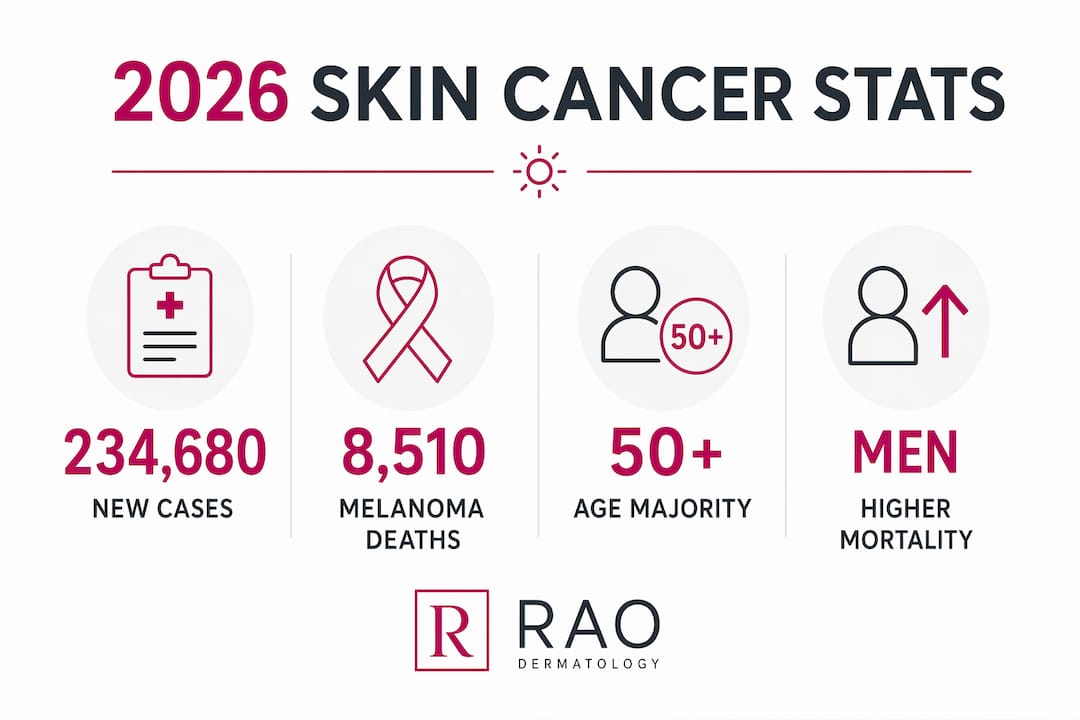
Sex differences are pronounced and clinically significant. Men over 50 face substantially higher melanoma mortality than women of the same age. This gap is driven by a combination of factors: men are less likely to perform self-examinations, less likely to seek dermatology care proactively, and more likely to have tumors diagnosed at later stages. Caregivers of older men should treat this as a specific, addressable risk factor.
Racial and ethnic disparities add another layer of complexity. White Americans have the highest melanoma incidence rates by a wide margin. However, Black and Hispanic patients are diagnosed at later stages on average, which directly worsens outcomes. This pattern reflects both access barriers and a widespread misconception that people with darker skin tones do not need to worry about skin cancer. They do. Understanding your personal skin cancer risk factors is critical regardless of your background.
Pro Tip: If you live in a high-UV state like Arizona, Florida, or California, ask your dermatologist about annual full-body skin exams starting at age 40, or earlier if you have a family history of melanoma.
What are the best prevention and early detection practices for 2026?
Prevention remains the most cost-effective strategy in skin cancer management, and the 2026 guidelines from the American Academy of Family Physicians (AAFP) are more specific than ever. The core recommendations have not changed dramatically, but the evidence base supporting them is stronger.
- Avoid peak UV hours. UV radiation is most intense between 10 a.m. and 4 p.m. Scheduling outdoor activities outside that window reduces cumulative UV exposure meaningfully over a lifetime.
- Use broad-spectrum SPF 30+ sunscreen. The 2026 AAFP evidence summary specifies broad-spectrum protection against both UVA and UVB rays, applied generously and reapplied every two hours during outdoor exposure.
- Wear protective clothing. Tightly woven fabrics, wide-brimmed hats, and UV-blocking sunglasses provide physical barriers that sunscreen alone cannot replicate.
- Consider chemoprevention if you are high-risk. Oral nicotinamide (a form of vitamin B3) has shown promise in reducing new BCC and SCC lesions in patients with a history of these cancers. This is not a general-population recommendation, but it is a real option worth discussing with your dermatologist.
- Schedule annual skin checks. Early detection through screening is the single most reliable way to catch melanoma at a stage when it is curable. Five-year survival rates for localized melanoma exceed 98%. For distant-stage melanoma, that figure drops sharply.
Indoor tanning policy is also shifting in 2026. England’s government has proposed strengthened sunbed regulations including mandatory age verification, supervision requirements, and compulsory health risk disclosures. While U.S. federal policy has not moved as aggressively, several states have already banned tanning bed use for minors. The direction of travel is clear: indoor UV exposure is a preventable risk factor, and regulators are treating it as such.
Pro Tip: When learning how to detect skin cancer early, use the ABCDE rule: Asymmetry, Border irregularity, Color variation, Diameter over 6mm, and Evolution over time. Any mole that changes in any of these ways warrants a same-week dermatology appointment.
What emerging treatments are shaping the future of skin cancer care?
The future of skin cancer treatment is being written right now, and the progress is substantial. Melanoma, once considered one of the most treatment-resistant cancers, has seen survival rates improve dramatically over the past decade. Immune checkpoint inhibitors like pembrolizumab (Keytruda) and nivolumab (Opdivo) have transformed advanced melanoma from a near-uniformly fatal diagnosis into a manageable condition for many patients. Targeted therapies using BRAF and MEK inhibitors have added another layer of options for patients with specific genetic mutations.
For BCC and SCC, the treatment picture is also evolving. Mohs micrographic surgery remains the gold standard for high-risk facial and acral tumors, offering the highest cure rates with the smallest tissue sacrifice. Hedgehog pathway inhibitors like vismodegib (Erivedge) provide a systemic option for advanced BCC cases that are not surgical candidates. Research into melanocortin pathways is opening new avenues for understanding pigmentation biology and melanoma detection at the molecular level.
Dermatopathology, the diagnostic discipline that examines skin tissue under a microscope, is becoming more precise through AI-assisted image analysis. Several academic centers are piloting machine learning tools that flag ambiguous lesions for specialist review, reducing the time between biopsy and diagnosis. Faster, more accurate diagnosis translates directly into better outcomes.
The demographic disparities discussed earlier are also shaping treatment strategy. Oncologists and dermatologists are increasingly tailoring screening frequency and treatment intensity based on age, sex, and geographic risk profiles rather than applying one-size-fits-all protocols. Personalized risk assessment is not a future concept. It is standard practice at leading dermatology centers in 2026.
Key takeaways
Skin cancer in 2026 is rising in incidence but falling in mortality, and the gap between those two trends is explained entirely by advances in early detection, prevention, and treatment.
| Point | Details |
|---|---|
| Rising incidence, falling mortality | 234,680 new melanoma cases projected, but deaths declining due to better screening and therapies. |
| Nonmelanoma burden is massive | 6.1 million Americans treated for BCC/SCC annually at a cost of $8.9 billion. |
| Demographics define risk | Men over 50 and patients diagnosed at late stages face the worst outcomes; early action matters most. |
| Prevention guidelines are specific | SPF 30+ sunscreen, peak UV avoidance, and annual skin checks are evidence-backed for 2026. |
| Treatment is advancing fast | Immunotherapy, targeted therapy, and AI-assisted diagnostics are improving survival for advanced cases. |
Why early detection still outperforms every other intervention
The data on emerging treatments is genuinely exciting, and I do not want to minimize it. But after reviewing the 2026 statistics carefully, one conclusion stands out above everything else: the single biggest driver of survival is how early a cancer is caught. Immunotherapy works better on smaller tumor burdens. Surgery is less disfiguring on early-stage lesions. The five-year survival gap between localized and distant-stage melanoma is not a small statistical footnote. It is the difference between a routine outpatient procedure and a years-long treatment battle.
What concerns me about the current moment is that public awareness campaigns tend to focus on sunscreen and UV protection, which are genuinely important, but they underemphasize the annual skin exam. Many people do not know that a dermatologist can identify a suspicious lesion years before it becomes dangerous. That window of opportunity is the most valuable thing in skin cancer medicine right now, and too many patients are not using it.
The demographic disparities are also underappreciated by the general public. If you are a caregiver for an older man, or if you are a man over 50 yourself, the data says you are in a higher-risk group that is also less likely to seek care. That combination is preventable. Understanding the types of skin cancer and what to watch for takes less than ten minutes. Acting on that knowledge could change everything.
— Krunal
How Raodermatology can help you stay ahead of skin cancer

Raodermatology, founded by Dr. Babar K. Rao with over 25 years of dermatology experience, offers specialized skin cancer prevention and treatment across California, New Jersey, and New York. The practice provides full-body skin cancer screenings, biopsy and pathology services, Mohs surgery referrals, and personalized prevention plans based on your individual risk profile. Whether you are managing a prior diagnosis, monitoring a suspicious lesion, or simply overdue for a professional skin check, Raodermatology’s medical dermatology team brings the clinical depth to catch what you cannot see yourself. Schedule a consultation at any of the practice’s multi-location dermatology services to get a clear picture of your skin health in 2026.
FAQ
How many new melanoma cases are expected in the U.S. in 2026?
The American Academy of Dermatology projects approximately 234,680 new melanoma cases in 2026, including 112,000 invasive cases and an estimated 8,510 deaths.
What is the most effective way to detect skin cancer early?
Annual full-body skin exams performed by a board-certified dermatologist remain the most reliable early detection method, combined with monthly self-checks using the ABCDE rule for mole changes.
Who is at highest risk for melanoma in 2026?
Adults over 50, particularly men, face the highest melanoma mortality risk. White Americans have the highest incidence rates, while Black and Hispanic patients are more likely to be diagnosed at advanced stages.
Does sunscreen actually prevent skin cancer?
Broad-spectrum SPF 30+ sunscreen, applied correctly and reapplied every two hours, is an evidence-backed prevention tool confirmed in the 2026 AAFP guidelines. It reduces UV-induced DNA damage that drives BCC, SCC, and melanoma development.
Are tanning beds still a significant skin cancer risk in 2026?
Yes. Indoor tanning remains a documented risk factor for melanoma and keratinocyte cancers. England’s 2026 proposed sunbed regulations reflect growing regulatory consensus that UV tanning devices require stricter controls to reduce population-level cancer risk.
Recommended
- Skin Cancer Awareness Month: 5 Expert Tips to Protect Your Skin in 2024 | Rao Dermatology
- Skin cancer screening: early detection and prevention | Rao Dermatology
- Annual Skin Cancer Screening: Why You Need One Every Year | Rao Dermatology
- Know your skin cancer risk factors and stay protected | Rao Dermatology
Filed under: