
Practical clinical guide to sebaceous hyperplasia treatment. Learn how lesion count, depth, and skin type shape results, scarring risk, and safety.
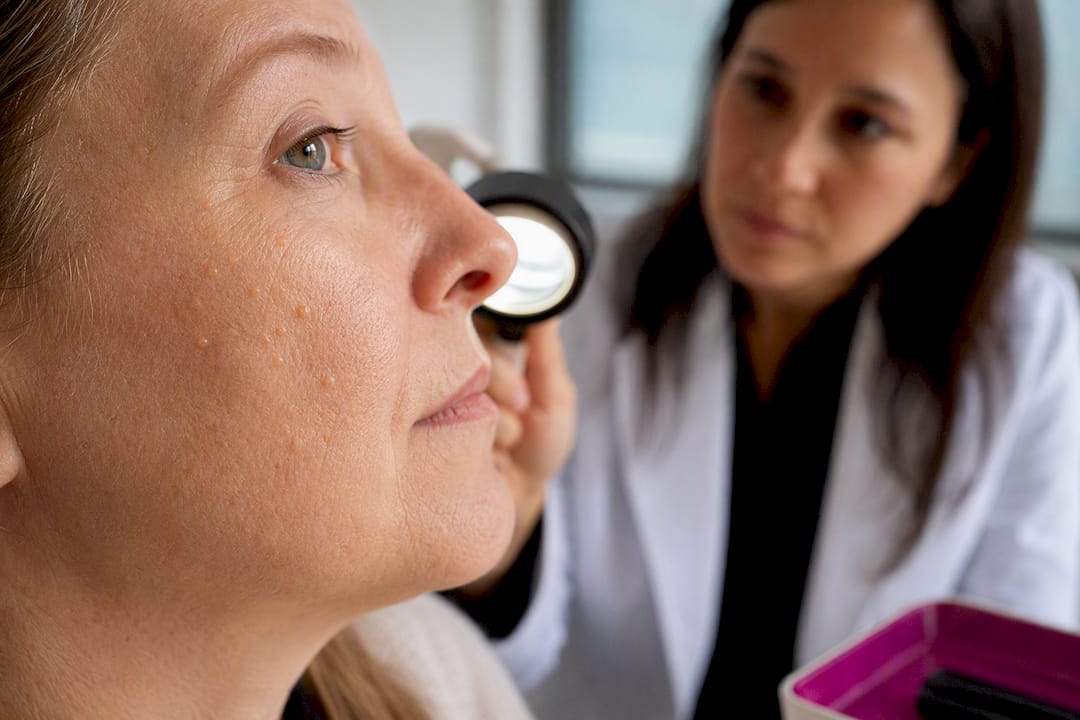
Sebaceous hyperplasia rarely needs treatment at all, since the bumps are benign and stable over time. When patients want them gone for cosmetic reasons, dermatologists choose between office procedures like electrodessication, laser, or cryotherapy, and systemic therapy with oral isotretinoin for widespread cases. Each path trades some combination of scarring risk, recurrence, or side effects for cosmetic improvement, so home removal is never the answer.
TL;DR:
- Procedure choice depends on lesion size, depth, and patient skin type, with risks including scarring, color changes, and recurrence.
- Oral isotretinoin offers systemic treatment for extensive or disfiguring cases but often results in lesion return after stopping the medication.
- Accurate diagnosis by a dermatologist through dermatoscopy or biopsy is essential before considering any treatment plan.
- Home removal is risky and discouraged, as it can cause infection, scarring, and misdiagnosis of non-sebaceous lesions.
- Treatment outcomes vary based on individual factors, with no single method guaranteeing full clearance or absence of side effects.
Table of Contents
- How Is Sebaceous Hyperplasia Diagnosed, and When Do You Need a Dermatologist?
- What In-Office Procedures Treat Sebaceous Hyperplasia?
- Does Oral Isotretinoin Work for Sebaceous Hyperplasia?
- How Do You Choose the Right Treatment and What Can You Expect?
- How Does Rao Dermatology Approach Sebaceous Hyperplasia Cases?
- Our Take: Stop Chasing a “Best” Treatment That Doesn’t Exist
- Ready to Have Your Lesions Evaluated?
- Sources
- FAQ
How Is Sebaceous Hyperplasia Diagnosed, and When Do You Need a Dermatologist?
These lesions show up as small, yellowish or skin-colored bumps, usually with a slightly indented center, most often clustered on the forehead, nose, cheeks, and sometimes the chest or genital area. Most patients notice several appear together, often after age 40, and they tend to stay put for years without growing dramatically.
The diagnostic challenge is that sebaceous hyperplasia can closely resemble basal cell carcinoma, particularly the nodular variety, which is also small, pearly, and prone to appearing on sun-exposed facial skin. Dermatologists usually distinguish the two through dermatoscopy, looking for the characteristic crown-like vessel pattern and central pore openings typical of sebaceous hyperplasia rather than the arborizing vessels seen in skin cancer. Dermatoscopy can reliably tell many benign sebaceous lesions from basal cell carcinoma on sight, but when a lesion looks atypical, a biopsy settles the question.
Certain signs should send you to a dermatologist without delay:
- A lesion that has grown noticeably or changed shape in recent weeks
- Bleeding, crusting, or ulceration at the surface
- Pain or tenderness in a bump that was previously painless
- Any spot you genuinely cannot distinguish from a mole or suspicious growth
Do not pick at these lesions, squeeze them, or attempt any form of home cautery. A dermatologist’s evaluation is the only reliable way to rule out something more serious before you decide whether treatment is even worth pursuing.
What In-Office Procedures Treat Sebaceous Hyperplasia?
Procedural treatment for sebaceous hyperplasia works by physically destroying or removing the overgrown gland tissue, and the main techniques include electrodessication, cryotherapy, laser therapy, shave excision, curettage, and photodynamic therapy. Which one fits best depends heavily on how many lesions you have and how deep they sit.
Electrodessication and cautery use a fine electric current to dry out and char the lesion, usually under local anesthesia, and work well for isolated or scattered bumps. Cryotherapy freezes the tissue with liquid nitrogen. It is fast and needs no numbing, though it carries a meaningfully higher risk of leaving a lighter patch of skin behind, especially in darker skin tones. Shave excision and curettage physically scrape or shave off the lesion, letting the wound heal by intention, and tend to give better clearance on larger or deeper lesions than surface-level cautery.
Laser treatment covers a range of approaches. CO2 and erbium lasers vaporize tissue with precision and are common choices for facial lesions where control matters. Pulsed-dye lasers target blood vessels feeding the growth. More recent work on the 1,720-nm laser and photodynamic therapy suggests these gland-specific wavelengths may cause less collateral damage than older destructive methods, though they typically require multiple sessions and access to specialized equipment most general practices do not stock.
Healing usually takes one to two weeks for smaller destructive procedures, longer for excision. Aftercare centers on gentle wound care and strict sun protection, since inflamed or healing skin is prone to post-inflammatory pigment changes.
Pro Tip: Ask your dermatologist how deep they plan to treat before the procedure starts. Removing the full gland cuts your recurrence risk but raises the odds of a small indentation scar. This is the actual tradeoff to discuss, not just “will it come back.”
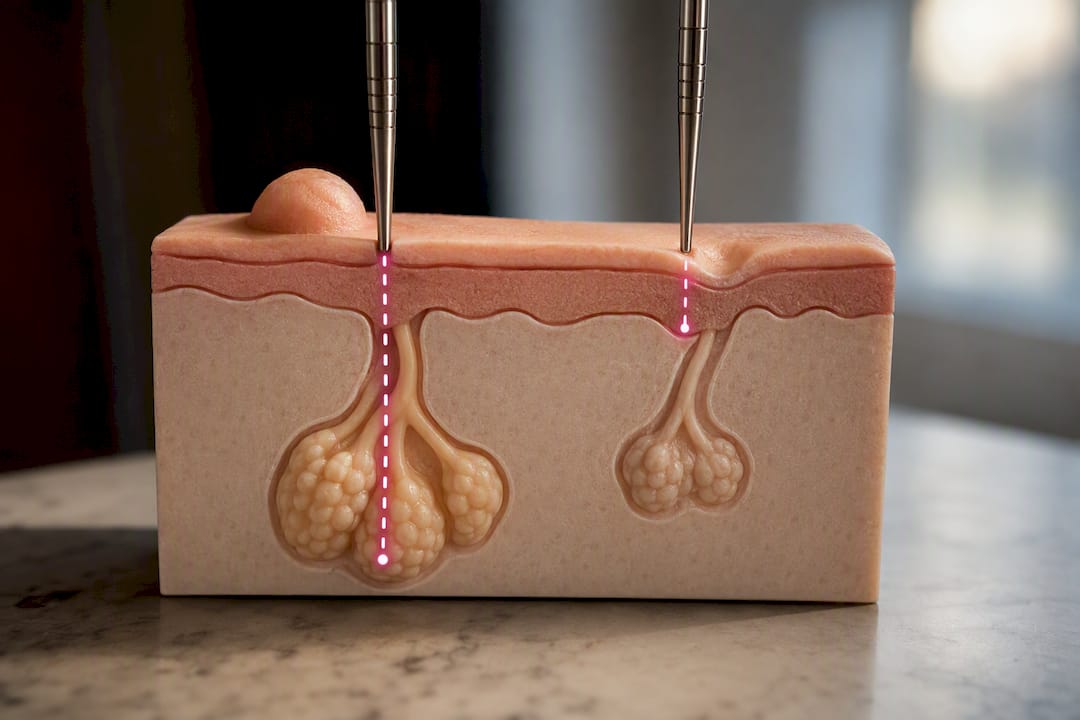
The main risks across all these methods are atrophic scarring, hypopigmentation or hyperpigmentation, infection, and recurrence if the gland is not fully destroyed or removed. None of these techniques offer a guarantee against a new bump forming nearby later.
Does Oral Isotretinoin Work for Sebaceous Hyperplasia?
Oral isotretinoin is the pharmacologic option dermatologists reach for when lesions are numerous, widespread, or disfiguring enough that treating each one individually with a laser or cautery device isn’t practical. It works by shrinking sebaceous glands throughout the skin rather than destroying one lesion at a time.
Reported doses typically range over a moderate amount daily, with improvement often noticeable within several weeks (https://emedicine.medscape.com/article/1059368-treatment) of starting treatment. That is faster than many patients expect from a systemic medication. The catch is durability: lesions frequently return once the drug is stopped, meaning isotretinoin functions more as a control strategy than a permanent fix for most patients.
Because isotretinoin carries a well-documented side-effect profile and a serious pregnancy risk, prescribing and monitoring must stay within specialist care under programs like iPLEDGE in the United States. Regular lab work, pregnancy testing where applicable, and monitoring for mood changes, dry skin, and elevated lipids are standard parts of the protocol, not optional add-ons. Common issues patients report include:
- Significant dryness of the lips, skin, and eyes
- Muscle aches and mild fatigue
- Temporary changes in triglyceride or liver enzyme levels
- Sun sensitivity requiring diligent sunscreen use
Some clinicians also apply topical trichloroacetic acid (TCA) as a chemical cautery for individual lesions, though its results are inconsistent from patient to patient and it carries its own scarring risk when applied too aggressively. Topical retinoids are sometimes tried, but they generally underperform compared to procedural or systemic options because they act on the skin surface rather than the gland itself. If you’re weighing isotretinoin, it helps to read up on the full side-effect and safety picture before your consultation so you walk in with the right questions.
How Do You Choose the Right Treatment and What Can You Expect?
There is no single best technique for sebaceous hyperplasia. Outcomes depend on lesion count, skin phototype, and how deep the lesion sits, plus how much scarring or downtime you’re willing to accept for the sake of clearance.
Walk into your consultation with these questions ready:
- How many sessions will this specific lesion likely need to clear?
- What is the realistic chance of scarring or pigment change given my skin type?
- What does recurrence look like, and how soon might it happen?
- Are there alternatives if this approach doesn’t suit my skin or budget?
- What does follow-up care involve, and how will you check for complications?
Outcomes generally fall into three buckets. An optimal result means the lesion clears with minimal or no visible scar, common with shallow lesions treated conservatively. A moderate result clears the bump but leaves a small mark, mild pigment shift, or a faint indentation, which happens often enough that patients should expect it as a real possibility rather than a rare exception. A poor result involves visible scarring, notable pigment change, or early recurrence, more likely when deeper glands are aggressively treated or when technique and aftercare aren’t well matched to the patient’s skin.
Pro Tip: If cosmetic downtime worries you more than perfect clearance, say so upfront. Dermatologists can dial treatment intensity down to protect appearance during healing, accepting a slightly higher chance you’ll need a touch-up later.
Home removal skips every one of these safeguards. Without a professional exam first, you risk treating a growth that isn’t actually sebaceous hyperplasia at all, on top of the infection and scarring risk that comes with unsterile tools and no anesthesia.
How Does Rao Dermatology Approach Sebaceous Hyperplasia Cases?
A comprehensive approach starts with a clinical exam and dermatoscopy, moving to biopsy whenever a lesion’s appearance doesn’t clearly fit the benign pattern. Some dermatology practices operate across multiple states with both laser technology and medical therapy options available under one roof.
Individualized planning matters more than picking a single “best” device. A patient with three isolated lesions on the cheek and a patient with dozens across the forehead are not the same case, and treating them identically usually disappoints one of them.
That workflow, exam, imaging, biopsy when indicated, then a tailored procedural or pharmacologic plan, reflects how multi-location dermatology practices typically structure care for cosmetic lesion concerns that also carry a diagnostic question mark.
Our Take: Stop Chasing a “Best” Treatment That Doesn’t Exist
The biggest misconception about sebaceous hyperplasia treatment is that one method is objectively superior to the rest. It isn’t. The clinical literature is consistent on this point: outcomes track patient-specific factors, lesion depth, skin phototype, how many bumps you have, far more than they track which device or drug got used.
Where conventional advice falls short is in downplaying the scarring-versus-clearance tradeoff. Plenty of information online treats laser and cautery as low-risk cosmetic fixes, glossing over the real chance of a pigment change or small indentation. Patients deserve that tradeoff spelled out before they consent, not discovered afterward in the mirror.
What should you prioritize first? Diagnosis, not treatment. A benign-looking bump that turns out to need biopsy changes everything about the conversation that follows. Get the exam before you start shopping for a procedure. Everything downstream, isotretinoin, laser, cryotherapy, only makes sense once you know for certain what you’re actually treating.
— Rao Dermatology
Ready to Have Your Lesions Evaluated?
If you’ve got bumps you suspect are sebaceous hyperplasia but you’ve never had them formally checked, that uncertainty is exactly the gap Rao Dermatology’s clinical evaluation closes, with dermatoscopy and biopsy available on-site rather than a referral chain.
Rao Dermatology’s medical dermatology services cover the full diagnostic path, exam, biopsy when a lesion looks uncertain, and a treatment plan matched to your specific lesions, whether that means an in-office procedure or medically supervised isotretinoin. For those leaning toward a procedural approach, the practice’s laser treatment options include the gland-targeting technologies discussed above, chosen based on your skin type and lesion depth rather than a one-size-fits-all protocol. Schedule a consultation at a dermatology practice location to get your lesions properly identified before deciding on treatment.
Sources
NCBI Bookshelf on sebaceous hyperplasia, Medscape treatment guidance, and the PubMed review on individualized treatment informed this article’s clinical claims.
This article is general information, not a substitute for advice from a qualified doctor. Consult a qualified healthcare professional about your own circumstances before acting on anything here.
FAQ
Does Sebaceous Hyperplasia Go Away on Its Own?
No, sebaceous hyperplasia is a permanent, benign change in the gland and does not resolve without treatment. Bumps typically persist indefinitely once formed, though they don’t pose a health risk if left alone.
Can You Remove Sebaceous Hyperplasia at Home?
No, home removal is strongly discouraged because it risks infection, permanent scarring, and misdiagnosing a lesion that might not actually be sebaceous hyperplasia. Reports of mechanical techniques like the pin-hole method exist in clinical literature, but these were performed under professional supervision, not as DIY procedures.
What Is the Best Moisturizer for Sebaceous Hyperplasia?
No moisturizer treats or shrinks sebaceous hyperplasia lesions, since the condition involves gland overgrowth beneath the skin’s surface rather than dryness. A gentle, non-comedogenic moisturizer supports skin healing after a procedure, but it will not clear existing bumps on its own.
Can Salicylic Acid Treat Sebaceous Hyperplasia?
Salicylic acid has no established role in clearing sebaceous hyperplasia lesions, since it works on surface buildup rather than the gland tissue driving the bump. Topical retinoids show similarly limited results compared to procedural options like laser or electrodessication, or systemic therapy with oral isotretinoin for widespread cases.
Recommended
Filed under: