
Rao Dermatology breaks down the three chemical peel depths, which suit each Fitzpatrick skin type, and key risks, downtime, and aftercare.
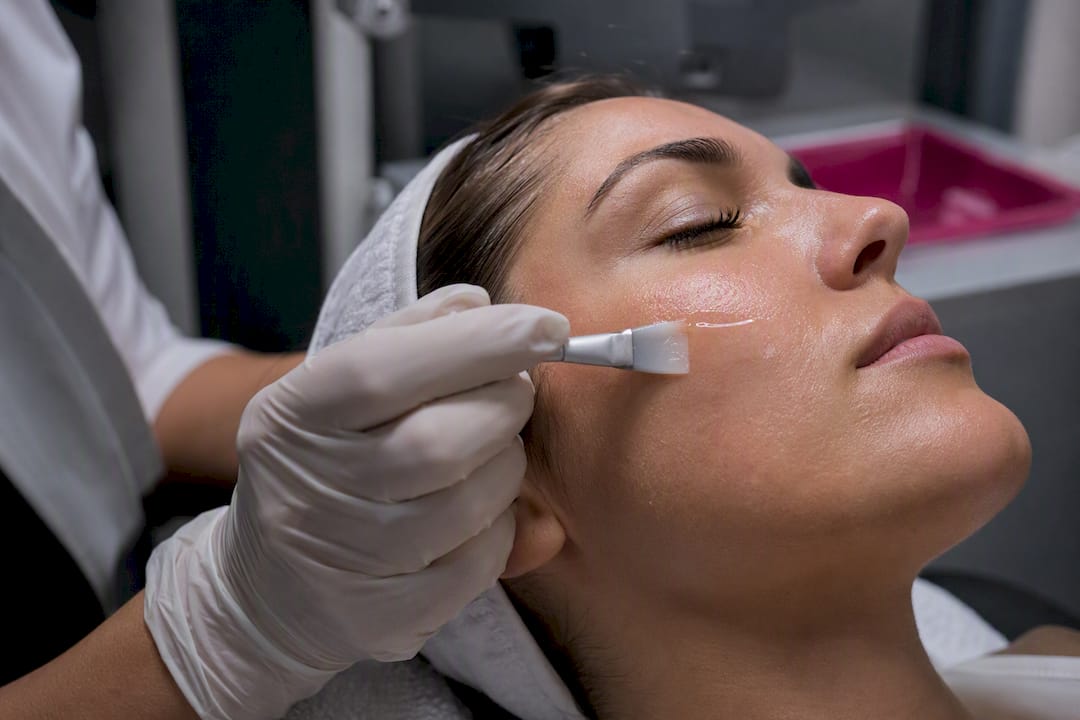
Chemical peels fall into three clinical depths, superficial, medium, and deep, and each trades greater clinical effect for more downtime and risk. Superficial peels smooth texture and calm acne with almost no recovery. Medium peels handle sun damage and fine lines over a week or two off. Deep peels reset severely aged skin in a single surgical-level session. Clinicians match the peel depth to your skin type and goals during a consult, rather than picking one because it is trending.
TL;DR:
- Superficial peels target only the skin’s outer layer and require multiple sessions for cumulative results, with minimal recovery time.
- Medium peels reach the upper dermis and typically involve about one to two weeks of healing, often needing occasional repeat treatments.
- Deep peels penetrate into the lower dermis, offering long-lasting remodeling but requiring weeks of recovery and a surgical environment.
- The choice of peel depth depends on specific skin concerns such as acne, pigmentation, or wrinkles, and must consider skin type and medical history to minimize risks.
- Proper pre- and post-treatment skin care, including priming and sunscreen use, plays a vital role in achieving optimal results and avoiding complications.
Table of Contents
- What Do “Superficial,” “Medium,” and “Deep” Actually Mean?
- Glycolic vs TCA Peel and Other Common Peeling Agents
- Which Skin Concerns Match Which Peel Depth?
- What to Expect: Procedure and Recovery Timelines
- Risks, Contraindications, and Skin-Type Considerations
- Preparing for a Peel and Caring for Your Skin After
- How Clinicians Decide Which Peel Is Right for You
- Rao Dermatology’s Take on Choosing the Right Peel
- Ready to Talk to a Dermatologist About Your Peel Options?
- Sources
- FAQ
What Do “Superficial,” “Medium,” and “Deep” Actually Mean?
Depth is not a marketing term. It refers to exactly how far a peeling agent injures the skin, and that injury is what triggers the rebuilding process that produces results.
A superficial peel wounds only the epidermis, the thin outer layer you shed naturally every few weeks anyway. A medium peel reaches the papillary dermis, the upper layer of the true skin where collagen fibers live. A deep peel penetrates into the reticular dermis, the thick lower layer responsible for skin’s structural support. The StatPearls overview of chemical peels classifies peels this way precisely because depth predicts both the clinical payoff and the recovery burden.
What decides which layer gets reached isn’t just the chemical itself. Concentration, pH, and how long the solution sits on the skin all shift a single agent from a light refresh into a much deeper treatment. Glycolic acid at 30% for two minutes behaves nothing like the same acid at 70% left on for ten. Technique matters just as much: the same agent applied by different clinicians at the same concentration can still produce different depths, depending on the number of coats and how evenly the solution is worked into the skin.
Here’s the trade-off in short form:
- Superficial peels: minimal results per session, virtually no downtime, need to be repeated.
- Medium peels: noticeable improvement in texture and pigment, roughly a week of visible healing.
- Deep peels: dramatic, often permanent remodeling, but weeks of recovery and a much higher complication ceiling.
Glycolic vs TCA Peel and Other Common Peeling Agents
Every peel depth has its own toolkit of acids, and recognizing them helps you understand what your clinician is actually recommending.
Superficial-depth agents work on or just under the surface:
- Glycolic acid (AHA): typically 20 to 70%, brightens dull skin and softens fine lines.
- Lactic acid (AHA): gentler than glycolic, often chosen for sensitive or drier skin.
- Salicylic acid (BHA): usually 10 to 30%, oil-soluble and favored for acne-prone skin because it penetrates pores.
- Lipohydroxy acid (LHA): a slower-acting salicylic derivative with less irritation.
- Low-strength TCA (10 to 20%) or retinoic acid: light exfoliation with a slightly stronger effect than AHAs alone.
Medium-depth agents step up the intensity:
- TCA at 35%: the classic medium peel, often combined with another agent to control penetration.
- Jessner’s solution plus TCA: Jessner’s (a blend of salicylic acid, lactic acid, and resorcinol) primes the skin so a lower TCA concentration reaches medium depth more evenly, which lowers the scarring risk that pure high-strength TCA alone can carry.
Deep-depth agents are reserved for surgical settings:
- Phenol, often in the Baker-Gordon formula with croton oil: the most aggressive option available, producing dramatic remodeling but carrying systemic absorption risks that require cardiac monitoring.
- TCA above 50%: occasionally used for deep resurfacing but with a narrower safety margin than phenol-croton formulas.
The StatPearls review on chemical peels notes that combination approaches like Jessner-TCA exist specifically to increase effect while keeping the complication rate more predictable, which is often the smarter move than jumping straight to a high-strength single agent.
Which Skin Concerns Match Which Peel Depth?
The depth you need depends entirely on what you’re trying to fix, not on how dramatic a result sounds.
Superficial peels are the workhorse for active acne, mild post-acne marks, dullness, and uneven texture. Because the injury is shallow, they’re typically done in a series of 3 to 5 sessions spaced every 2 to 5 weeks rather than as a one-time fix.
Medium peels target problems that live deeper: moderate sun damage, actinic keratoses (precancerous rough patches), noticeable fine lines, and shallow acne scarring. A single medium peel produces visible change, though many patients repeat one every 6 to 12 months to maintain results, according to the same review of current peel practice.
Deep peels are reserved for severe photoaging, deep static wrinkles around the mouth and eyes, and certain premalignant lesions that need aggressive resurfacing. These cases align with indications tracked in current clinical literature and are almost always handled in a surgical or specialist setting.
Peels are also frequently staged alongside other treatments. Laser resurfacing can refine texture after a medium peel heals, and dermal fillers often address volume loss that a peel, which only resurfaces the surface, cannot touch.
What to Expect: Procedure and Recovery Timelines
Walking into a peel appointment without knowing the actual timeline is how people end up canceling weekend plans they didn’t realize they’d need to cancel.
- Cleansing and degreasing: the skin is prepped to allow even penetration, especially important for medium and deep peels.
- Application: the agent is applied in controlled layers; TCA peels are self-neutralizing, while glycolic and salicylic peels are timed and then rinsed or neutralized.
- Pain management: superficial peels need little more than a fan and cool air. Medium peels often use a cooling device or oral sedation. Deep phenol peels require regional or general anesthesia given the intensity of the injury.
- Immediate reaction: expect frosting (a whitish appearance) on medium and deep peels, a normal sign the agent reached its target depth.
- Healing window: superficial peels flake for a few hours to a few days. Medium peels take about 1 to 2 weeks to shed and re-pinken. Deep peels need 2 to 3 weeks or more, with redness that can linger for months.
- Follow-up: medium and deep peels typically get a check-in within the first week to monitor healing before the next milestone.
Risks, Contraindications, and Skin-Type Considerations
Deeper isn’t automatically better, and the risk side of the equation is where that becomes obvious fast.
Possible complications include prolonged redness, infection, scarring, and pigment changes in either direction, meaning skin can end up lighter or darker than it started. Post-inflammatory hyperpigmentation (PIH) is the complication clinicians worry about most, and it does not distribute risk evenly across skin types.
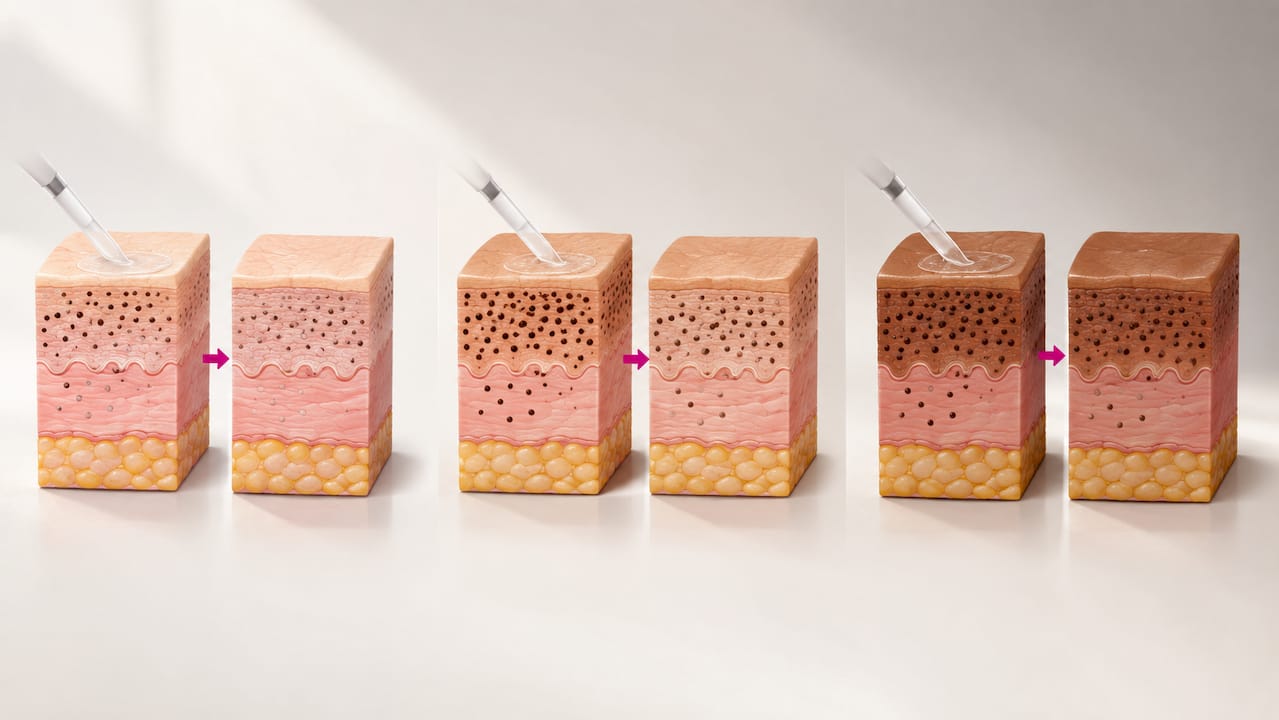
Fitzpatrick skin types IV through VI carry a meaningfully higher risk of permanent pigment change with medium and deep peels, according to a review of current peel practice. That doesn’t rule these patients out of peels. It means the approach usually shifts toward superficial or staged medium treatments, longer priming periods, and closer monitoring rather than a single aggressive session.
Certain conditions take a peel off the table entirely, or at least require a serious conversation first:
- Active isotretinoin use or recent completion (within roughly 6 months).
- Recent facial radiation therapy.
- A personal history of poor wound healing or keloid scarring.
- Pregnancy, particularly for anything beyond superficial-strength agents.
- Active infection or cold sore outbreak at the treatment site.
Deeper peels also carry more complication risk overall, which is exactly why clinical guidance on peel procedures stresses proper patient selection and, for deep peels, a surgical setting rather than a spa chair. A test spot behind the ear or along the jawline is standard practice before committing a whole face to an unfamiliar combination.
Preparing for a Peel and Caring for Your Skin After
What you do in the weeks before and after a peel often matters more than which acid gets used.
Before your peel:
- Clinicians commonly prescribe a topical retinoid or a lightening agent for several weeks beforehand to even out penetration and lower complication risk, particularly for medium and deep peels.
- Stop retinoids a few days before the actual appointment, as directed by your provider.
- Avoid waxing, tanning, or other exfoliating treatments in the immediate run-up.
After your peel:
- Follow the specific cleansing and ointment or soak routine your provider gives you. Deep peels involve occlusive dressings and a defined soaking schedule; superficial peels may need nothing more than a gentle cleanser.
- Hold off on makeup until your provider clears you, usually once active flaking or crusting resolves.
- Daily broad-spectrum sunscreen isn’t optional. Freshly resurfaced skin burns and pigments easily, and this single habit protects the results you just paid for.
Pro Tip: Keep a printed copy of your aftercare instructions on the bathroom counter. When skin is peeling and your face feels tight, you will not want to hunt through your inbox for the clinic’s email.
Call your clinician promptly for spreading redness, pus, fever, or pain that worsens instead of easing after day two or three.
How Clinicians Decide Which Peel Is Right for You
A good consult isn’t a menu. It’s closer to a diagnostic checklist that rules options in or out before anyone touches a bottle of acid.
- Fitzpatrick skin type sets the outer boundary of what’s safe without extensive priming.
- Target concern (acne, pigment, wrinkles, scarring) narrows the depth category.
- Scar or lesion depth, when relevant, determines whether a peel alone will reach far enough.
- Medical history and current medications, especially isotretinoin use or a healing disorder, can rule out certain depths entirely.
- Downtime tolerance weighs clinical ambition against your actual schedule.
- Prior treatment response flags whether previous peels under or overtreated the skin.
For darker skin types or uncertain cases, a staged approach, starting conservative and building up over sessions, is often safer than one aggressive treatment. Sometimes the honest answer is that a peel isn’t the best tool at all, and a comparison between peels and other resurfacing methods like microneedling or laser resurfacing is worth having before committing.
Rao Dermatology’s Take on Choosing the Right Peel
The biggest mistake we see isn’t picking the wrong acid. It’s picking a depth based on what a treatment promises rather than what a patient’s skin, history, and schedule can actually support. A phenol peel might remodel deep wrinkles beautifully, but it is the wrong recommendation for someone who cannot take three weeks away from visible healing, or whose skin type puts them at real risk for permanent pigment change.
Every peel plan should be built around the individual patient, not a fixed protocol, and a safety-first approach is essential. Certified oversight and a careful skin-type assessment should come before any acid touches your face. Good peel outcomes come from restraint applied intelligently, not from reaching for the strongest option available.
— Rao Dermatology
Ready to Talk to a Dermatologist About Your Peel Options?
If you have read this far, you already know that picking a peel depth off a menu is the wrong move. Rao Dermatology’s skin rejuvenation team evaluates your Fitzpatrick type, your target concerns, and your realistic downtime window before recommending anything, whether that turns out to be a superficial glycolic series or a medium TCA treatment.

Many patients pair a peel consult with a broader conversation about cosmetic services like fillers or laser resurfacing, especially when volume loss or deeper wrinkles are part of the picture. If acne or acne scarring is your main concern, our team can also walk you through how a peel compares to other acne resurfacing options before you commit to either one. Schedule a consultation at a dermatology practice location near you to get a personalized recommendation instead of guessing your way through the options alone.
Sources
This article is general information, not a substitute for advice from a qualified doctor. Consult a qualified healthcare professional about your own circumstances before acting on anything here.
FAQ
What Are the Three Types of Chemical Peels?
The three types are superficial, medium, and deep, classified by how far the agent penetrates the skin. Superficial peels affect only the epidermis, medium peels reach the papillary dermis, and deep peels penetrate the reticular dermis, according to StatPearls’ classification of chemical peels.
Glycolic vs TCA Peel: Which Is Stronger?
TCA is generally the stronger agent, capable of reaching medium or even deep skin layers at higher concentrations, while glycolic acid is typically used for superficial peels. Many clinicians combine Jessner’s solution with a lower-strength TCA to reach medium depth more evenly than a high-strength TCA peel alone.
How Do I Choose Between a Light and Medium Chemical Peel?
The choice depends on your target concern and how much downtime you can tolerate. Light peels suit acne, mild texture, and dullness with almost no recovery, while medium peels treat deeper wrinkles, actinic keratoses, and moderate photoaging over about 1 to 2 weeks of healing.
Is a Deep Chemical Peel Worth the Recovery Time?
For severe photoaging or deep static wrinkles, a deep peel can produce dramatic, long-lasting remodeling in a single session. It also carries the highest complication risk and requires a surgical setting, so it’s worth it mainly for patients whose concerns genuinely need that level of intervention rather than a staged approach.
How Often Should Chemical Peels Be Repeated?
Superficial peels are often done in a series of 3 to 5 sessions every 2 to 5 weeks, while medium peels are usually repeated occasionally over time. Deep peels are typically a single-session treatment meant to last for years.
Can Rao Dermatology Help Me Choose the Right Peel?
Yes. Rao Dermatology evaluates your skin type, target concerns, and medical history during a consult to recommend the appropriate peel depth and agent rather than a one-size-fits-all treatment. Current pricing for peels and related skin rejuvenation services is available directly through the practice.
Recommended
Filed under: