
Bleeding Mole That Won't Heal in 2–3 Weeks? When to See a Dermatologist
September 17, 2026
Bleeding moles are usually from trauma. Learn quick first aid, the 2–3 week warning sign for concern, when to get evaluated, and what dermatologists do next.
Bleeding Mole That Won’t Heal in 2–3 Weeks? When to See a Dermatologist
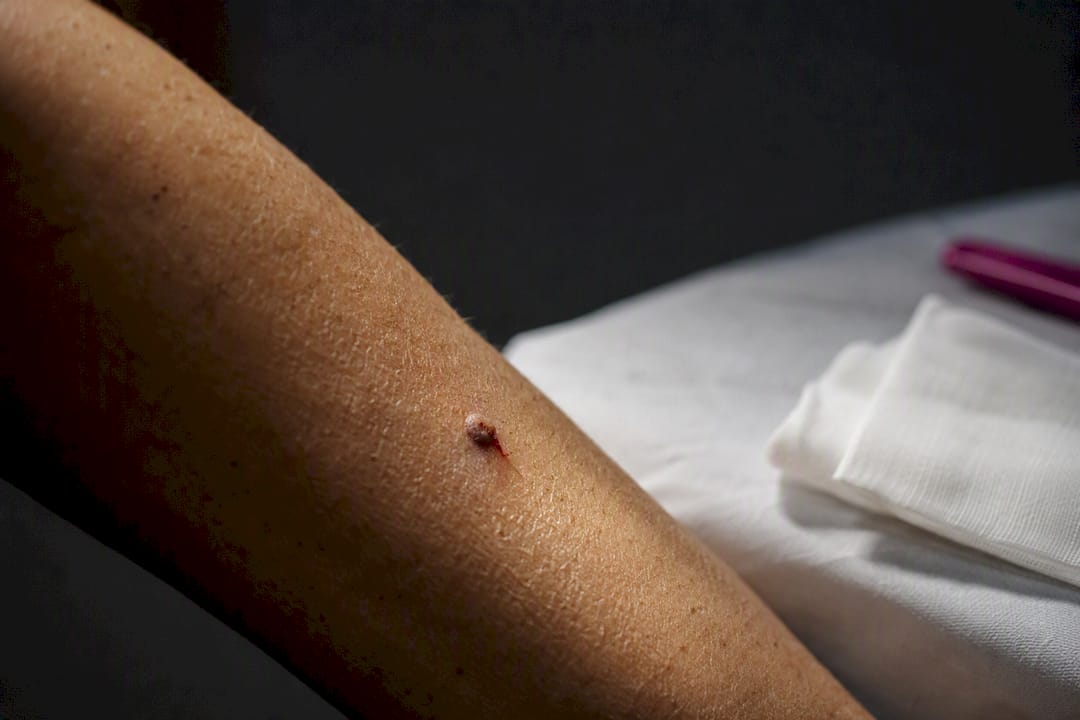
Bleeding alone doesn’t mean a mole is cancerous. Most cases trace back to a scratch, a shaving nick, or a strap rubbing against a raised mole. But bleeding that starts on its own, keeps coming back, or won’t heal within a few weeks is a genuine red flag, especially alongside ABCDE changes. Clean the area, take a photo for reference, and get it checked by a dermatologist if anything about it seems off.
TL;DR:
- Most bleeding moles result from physical trauma such as shaving, friction, or scratching and do not indicate cancer.
- Recurrent or persistent bleeding from a mole without clear cause signals a need for professional assessment, especially if it overlaps with ABCDE warning signs.
- Melanoma, basal cell carcinoma, and squamous cell carcinoma can all bleed, but each has distinct visual signs and typically requires biopsy for diagnosis.
- Immediate evaluation is warranted if a bleeding mole does not heal within weeks, recurrent bleeds occur, or the lesion shows ABCDE or ugly duckling features.
- A dermatology exam, often including dermoscopy and biopsy, is essential for accurate diagnosis and tailored treatment plans.
Table of Contents
- Common Noncausal Causes of a Bleeding Mole
- ABCDE, the “Ugly Duckling,” and Other Warning Signs
- Which Skin Cancers Can Cause a Mole to Bleed
- When to See a Dermatologist vs. When to Wait It Out
- What Happens During a Dermatology Evaluation
- First Aid for a Bleeding Mole: What to Do and What to Avoid
- Monitoring Your Moles and Reducing Future Risk
- How Rao Dermatology Approaches a Bleeding Mole
- Get a Bleeding Mole Checked at Rao Dermatology
- Sources
- FAQ
Common Noncausal Causes of a Bleeding Mole
Most bleeding moles bleed for a boring reason: something physically disturbed them. A razor catches a raised mole during shaving. A bra strap or backpack strap rubs the same spot for hours a day. A ring or necklace snags it. A fingernail scratches it during sleep. None of that points to cancer. It points to location and shape.
Raised or hairy moles catch on things more often simply because they stick up from the skin’s surface. A flat mole rarely gets nicked by a razor; a mole that sits like a small dome on your shoulder or under a bra line is a repeat target. Friction and shaving are among the most frequent triggers dermatologists see for this kind of superficial bleeding, and it usually stops fast with basic care.
Typical culprits include:
- Shaving nicks on facial or leg moles
- Friction from bra straps, waistbands, or backpack straps
- Jewelry catching on a raised mole
- Insect bites near or on a mole
- Scratching, especially during sleep
Here’s the distinction that actually matters: a scratch-and-heal cycle is normal. A mole that bleeds once from an obvious bump, scabs over, and heals within a week or two is behaving the way skin is supposed to behave. A mole that bleeds again a few days later with no new trauma, or one that never quite closes up, has moved into a different category. That pattern, not the bleeding itself, is what should get your attention.
ABCDE, the “Ugly Duckling,” and Other Warning Signs
Dermatologists use a simple five-letter checklist to flag moles worth a closer look, and it’s worth memorizing if you’ve ever had a bleeding one:
- Asymmetry. One half of the mole doesn’t match the other. Draw a line through the middle mentally; if the two sides look like different shapes, that’s a flag.
- Border. Edges that are ragged, notched, or blurred instead of smooth and well-defined.
- Color. Multiple shades of brown, black, tan, red, white, or blue within one mole, instead of one uniform tone.
- Diameter. Larger than 6 millimeters, roughly the size of a pencil eraser, though melanomas can occasionally be smaller.
- Evolving. Any change in size, shape, color, elevation, or symptom (itching, bleeding, tenderness) over weeks or months.
The ABCDE criteria come from established clinical guidelines used both in self-exams and professional dermatology visits, and they remain the fastest way to triage a suspicious spot.
The “ugly duckling” rule is arguably more useful for day-to-day self-checks than ABCDE. Instead of judging each mole against an abstract checklist, compare it against your other moles. Most people have a personal pattern: their moles tend to be a similar size, shape, and color. One mole that looks nothing like its neighbors, the outlier, deserves priority attention even if it doesn’t clearly break every ABCDE rule on its own. Dermatologists note that this comparative approach often catches irregularities faster than strict rule-by-rule checking.
Beyond ABCDE, watch for a sore that won’t heal, repeated crusting or scabbing over the same spot, new itching or tenderness with no obvious cause, and any bleeding that happens without a scratch, bump, or shave to explain it.
Which Skin Cancers Can Cause a Mole to Bleed
Bleeding shows up across several different skin cancers, not just melanoma, and the appearance often hints at which one you’re dealing with.
Melanoma is the one most people worry about, and for good reason: it’s the most dangerous form because it spreads more readily. A melanoma that ulcerates (breaks open at the surface) can bleed with minimal or no trauma, often alongside ABCDE changes like new color variation or an irregular border.
Basal cell carcinoma, the most common skin cancer overall, tends to show up differently. It often looks like a shiny, pearly bump, sometimes with visible small blood vessels, or a sore that crusts, bleeds, and seems to heal before reopening in the same spot.
Squamous cell carcinoma usually presents as a firm, red bump or a scaly patch that can turn into an open sore. Both basal cell and squamous cell carcinomas can appear as pink, red, or scaly patches that crust, bleed, and fail to heal on their own.
A few things to keep straight:
- Melanoma often arises from an existing mole or a new dark spot with ABCDE features.
- Basal cell carcinoma tends to look like a pearly bump or a persistent sore, more often on sun-exposed skin like the face, ears, and neck.
- Squamous cell carcinoma often looks like a firm red bump or a scaly, ulcerated patch.
- None of these can be reliably diagnosed by looking at them. A biopsy is the only way to confirm what a suspicious lesion actually is, and painless bleeding is not a reason to assume something is harmless.
If you want a deeper breakdown of how melanoma specifically develops and gets diagnosed, Rao Dermatology’s melanoma guide covers detection and treatment in more depth.
When to See a Dermatologist vs. When to Wait It Out
Not every bleeding mole needs an urgent appointment, but certain patterns should send you straight to a dermatologist rather than a wait-and-see approach.
See a dermatologist promptly if you notice:
- Bleeding with no clear cause, no scratch, no shave, no bump
- Bleeding that keeps recurring from the same mole over days or weeks
- A mole that hasn’t healed within two to three weeks
- Any ABCDE change or a mole that stands out from your others (the ugly duckling)
Short-term home care is reasonable when the cause is obvious. A minor shaving nick or a scratch that bleeds once, scabs, and heals on schedule doesn’t require a same-week appointment. Heavy, uncontrolled bleeding or a wound that looks infected can go to urgent care or your primary doctor first, but a suspicious lesion itself belongs in front of a dermatologist, not a general practitioner.
If you’re genuinely unsure which category you’re in, default to getting it looked at. There’s real clinical value in an evaluation even when the mole turns out to be completely benign, since it establishes a baseline for future checks and rules out anything serious early, when treatment options are simplest.
What Happens During a Dermatology Evaluation
A dermatology visit for a bleeding mole typically follows a predictable sequence, and knowing it in advance takes some of the anxiety out of the appointment.
- Physical exam and dermoscopy. The dermatologist examines the mole with the naked eye, then usually with a dermatoscope, a handheld magnifying tool with polarized light that reveals pigment patterns and vascular structures invisible otherwise.
- Biopsy, if warranted. Shave biopsies remove a thin top layer, punch biopsies take a small cylindrical core, and excisional biopsies remove the entire lesion with a margin of surrounding skin. Which one is used depends on the mole’s size, location, and how suspicious it looks.
- Pathology review. The tissue sample goes to a lab for microscopic analysis, which determines whether the growth is benign, precancerous, or malignant, and if malignant, which type.
- Treatment based on results. Benign lesions may need nothing further. Cancerous lesions might be treated with simple excision, Mohs surgery for certain skin cancers where tissue-sparing precision matters, or other procedural options depending on type, size, and location.
Recovery from a shave or punch biopsy is usually minor, a small bandage and a few days of care. For more detail on how dermatologists evaluate suspicious spots and how pathology results guide next steps, Rao Dermatology’s guide on the dermatologist’s role in skin cancer walks through the process further.
First Aid for a Bleeding Mole: What to Do and What to Avoid
For bleeding you can clearly trace to trauma, treat it like any other minor skin injury:
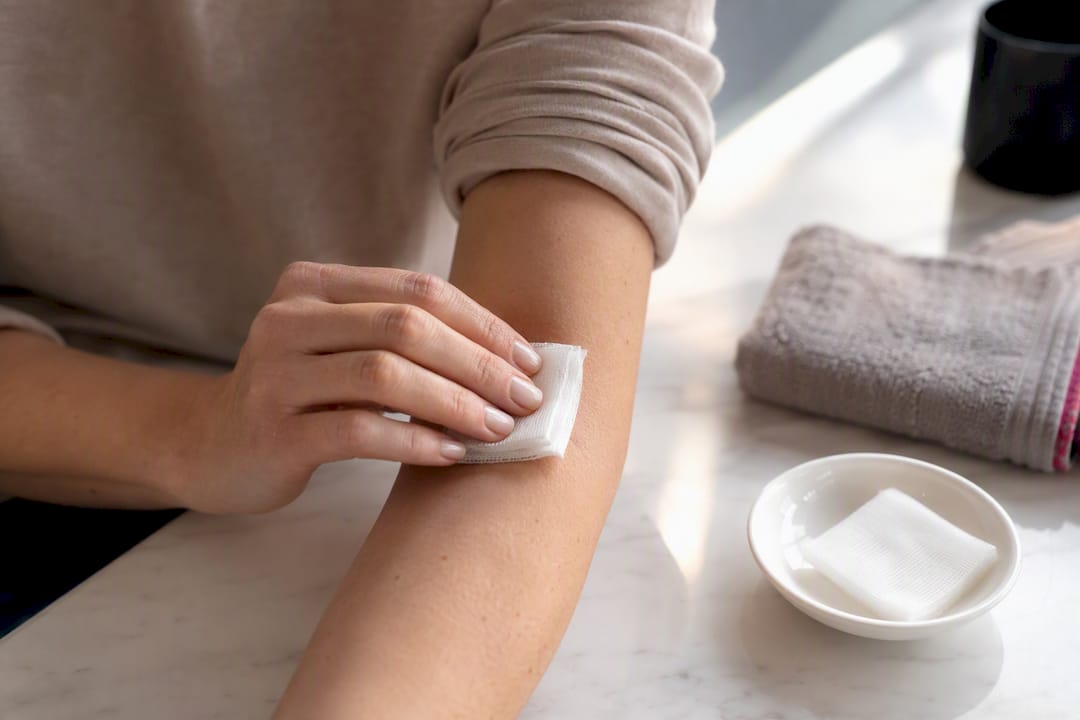
- Wash the area gently with mild soap and water.
- Apply direct pressure with a clean cloth or gauze for 10 to 15 minutes.
- Cover with a sterile adhesive bandage once bleeding slows.
- Keep the area clean and dry, and change the dressing daily until it fully heals.
Pro Tip: Snap a photo of the mole right after the bleeding stops, then again in a week. Side-by-side photos make it far easier to spot changes than memory alone, and you can hand them straight to a dermatologist if anything looks different.
Seek urgent care if bleeding won’t stop after steady pressure, if the wound is unusually large or deep, or if you see signs of infection like spreading redness, warmth, or pus.
What you should never do: don’t try to cut, scrape, or cauterize a mole yourself, and skip unproven home remedies like apple cider vinegar or iodine treatments. Clinicians consistently warn that DIY removal can obscure the tissue needed for an accurate diagnosis and delay proper treatment if the mole turns out to be something serious.
Monitoring Your Moles and Reducing Future Risk
A simple routine catches most problems early. Do a quick visual self-check monthly, comparing moles against each other using the ugly duckling method, and take photos of any mole you’re tracking so you have an objective record rather than relying on memory. Mayo Clinic recommends annual dermatologist skin checks for anyone at higher risk, including people with many moles, a personal or family history of skin cancer, or significant sun exposure history.
Sun protection remains the biggest lever you control. That means:
- Daily broad-spectrum sunscreen, SPF 30 to 50, reapplied every two hours outdoors
- Sun-protective clothing and wide-brim hats during peak UV hours
- Avoiding tanning beds entirely
People with dozens of moles or a strong family history often benefit from scheduled surveillance photography, where a dermatologist tracks the same moles visit after visit to catch subtle change early. For a full walkthrough of the self-check process, see Rao Dermatology’s step-by-step skin check guide.
How Rao Dermatology Approaches a Bleeding Mole
Most bleeding moles we see turn out to be benign, a shaving nick or friction spot that heals on its own. But “most” isn’t “all,” and that gap is exactly why evaluation matters even when a lesion looks minor.
Our approach starts with a board-certified dermatologist examining the mole directly, followed by dermoscopy to look beneath the visible surface. If anything about the pattern raises concern, a biopsy settles the question definitively rather than leaving it to guesswork. From there, we build a personalized follow-up plan, whether that means annual monitoring, more frequent surveillance photography, or a referral for treatment.
With extensive experience treating skin conditions across multiple locations, we’ve built our process around one principle: a five-minute check today beats a difficult conversation later.
— Rao Dermatology
Get a Bleeding Mole Checked at Rao Dermatology
A pharmacy visit or a search engine can tell you what a bleeding mole might be. Only a dermatologist can tell you what yours actually is, and Rao Dermatology’s skin cancer screening and treatment services are built around exactly that question, backed by board-certified providers and over 25 years of clinical experience across California, New Jersey, and New York.

Before your visit, take a few photos of the mole from different angles and jot down when the bleeding started, whether it’s happened more than once, and anything else that’s changed recently, size, color, texture. That short list helps your provider get to an answer faster. Appointments can include a full-body exam, dermoscopy, and a biopsy the same day if something looks suspicious. If you’ve noticed a mole bleeding without an obvious cause, book a skin cancer evaluation rather than waiting to see if it happens again.
This article is general information, not a substitute for advice from a qualified doctor. Consult a qualified healthcare professional about your own circumstances before acting on anything here.
Sources
- Bleeding mole: Causes, treatment, and pictures — Healthline
- ABCDEs of Melanoma: Warning Signs of Skin Cancer — Cleveland Clinic
- Signs and symptoms of skin cancer — CDC
- When to see a dermatologist about a skin change — MD Anderson
- Dear Mayo Clinic: Bleeding moles and skin checks — Mayo Clinic Q&A
FAQ
Are bleeding moles cancerous?
Not usually. Most bleeding moles are caused by trauma like shaving or friction, but spontaneous, recurrent, or nonhealing bleeding can signal melanoma or another skin cancer and needs a dermatologist’s evaluation.
What are the five warning signs of malignant melanoma?
The five signs follow the ABCDE rule: Asymmetry, Border irregularity, Color variation, Diameter over 6 millimeters, and Evolving size, shape, or symptoms.
Why did my mole start bleeding randomly?
Random bleeding with no scratch, shave, or bump behind it is a red flag rather than a normal skin reaction, and it warrants a dermatology visit to rule out melanoma or another skin cancer.
Why is my mole bleeding and scabbing?
A single bleed-and-scab cycle after an obvious injury is usually benign, but repeated crusting over the same spot without healing is a pattern dermatologists associate with both melanoma and non-melanoma skin cancers.
How much does a mole evaluation cost at Rao Dermatology?
Pricing for skin cancer screening and biopsy services is available directly through Rao Dermatology’s medical dermatology page, since costs vary by visit type and insurance coverage.
Recommended
Filed under: