
Clinician tested, treatment first plan to stop steroid rebound, switch to safe nonsteroidal topicals, and often clear perioral dermatitis in 4–8 weeks.
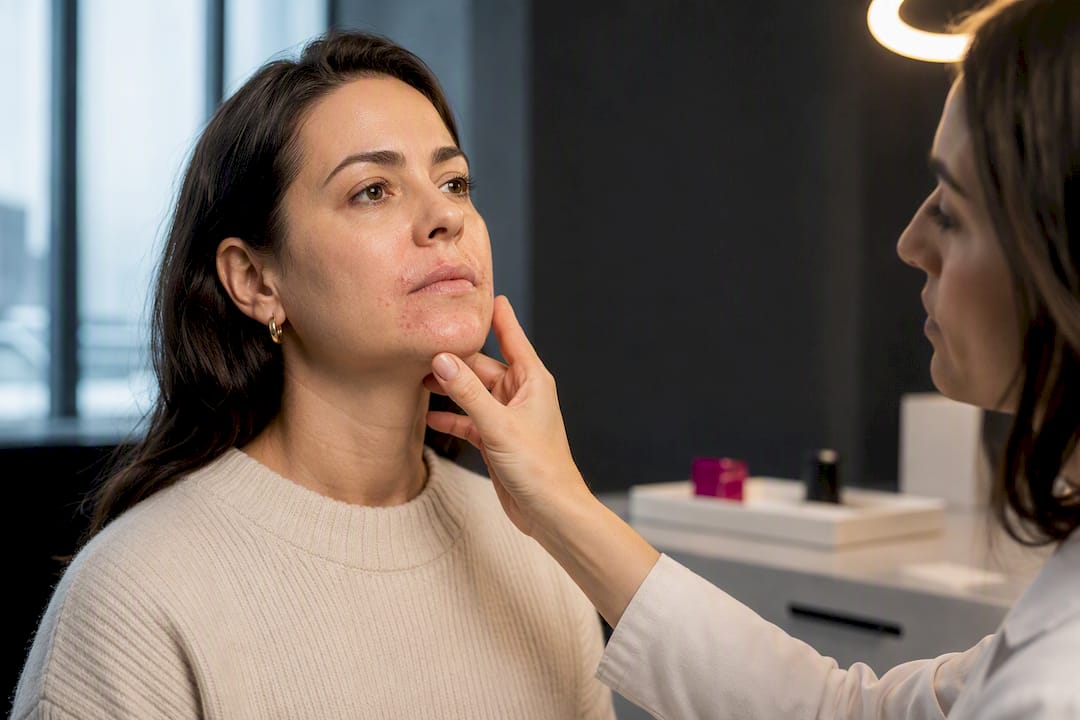
Stop applying any topical steroid to the area, including over-the-counter hydrocortisone, and expect symptoms to look worse for a week or two before they improve. Mild cases usually respond to nonsteroidal topicals like metronidazole or azelaic acid over several weeks. Moderate or stubborn cases typically need a short course of oral doxycycline, often lasting several weeks. If the rash spreads, keeps recurring, or fails to improve after consistent care, it’s time to see a dermatologist rather than keep experimenting on your own.
TL;DR:
- Topical steroids are the primary trigger for perioral dermatitis, and stopping them is essential to prevent worsening symptoms over the next 1 to 2 weeks.
- Nonsteroidal topicals like metronidazole, azelaic acid, or sulfur-based creams are effective first-line treatments, but require consistent application over 4 to 8 weeks.
- Oral doxycycline is recommended when topical therapies fail after several weeks or for more severe cases, with treatment lasting 4 to 8 weeks and a focus on sun protection.
- Avoid triggers such as heavy occlusive moisturizers, thick sunscreens, fluoride toothpaste, and exfoliating cleansers during treatment to prevent relapse.
- Expect initial skin worsening after stopping steroids, but progress should be judged over weeks by decreasing bumps and redness, with prompt follow-up if symptoms worsen or spread.
Table of Contents
- What Triggers Perioral Dermatitis (and What to Stop Now)
- Topical Treatments That Work Without Steroids
- When Do You Need Oral Antibiotics?
- How Long Until It Clears, and Why It Gets Worse First?
- Building a Zero Therapy Routine at Home
- Special Situations: Pregnancy, Kids, and Darker Skin Tones
- When to See a Dermatologist (and What Happens at the Visit)
- What Rao Dermatology Sees in Clinic
- Cleansing and Hygiene Habits That Actually Matter
- Does Diet or Stress Make Perioral Dermatitis Worse?
- Do Natural Remedies for Perioral Dermatitis Work?
- What Clinicians Wish Patients Understood
- Get an Individualized Treatment Plan From Rao Dermatology
- Sources
- FAQ
What Triggers Perioral Dermatitis (and What to Stop Now)
Topical steroids are the trigger dermatologists cite most often, whether it’s a prescription cream for eczema or a drugstore hydrocortisone stick used for a few too many weeks on facial redness. The steroid calms things down temporarily, then the rash comes back angrier once you stop, which pushes people to reapply. That loop is how a manageable irritation turns into a months-long flare.
Steroids aren’t the only culprit. Heavy, occlusive moisturizers, certain sunscreens (especially thick physical formulas), and fluoride toothpaste show up repeatedly in patient histories. So do foaming cleansers with sulfates and matte or long-wear foundations that sit on the skin all day.
Here’s what to cut starting today:
- Any topical steroid cream, gel, or ointment on the affected skin, no matter how mild
- Thick face creams, balms, or petroleum-based products around the mouth and nose
- Your current sunscreen, at least temporarily, until you can test a simpler formula
- Fluoride toothpaste, if you’re a heavy user or the rash sits close to your mouth
- Foaming or exfoliating cleansers, retinoids, and any “active” skincare in that zone
If your trigger is an inhaled or nasal steroid for asthma or allergies, don’t stop it cold. Talk to the prescribing doctor about rinsing your mouth after use or adjusting the delivery method, since abruptly discontinuing a respiratory medication carries its own risks.
Topical Treatments That Work Without Steroids
Nonsteroidal topicals are the backbone of first-line care because they calm inflammation without feeding the same rebound cycle that steroids cause. Each works a little differently, but the goal is the same: reduce redness and bumps while letting the skin barrier reset.
These agents are the standard nonsteroidal choices precisely because they don’t carry the rebound risk that comes with topical steroids. Azelaic acid and sulfur-based creams are also available over the counter, and Harvard Health notes they can help some patients, though a dermatologist should weigh in if self-care isn’t cutting it after a few weeks.
Mild, localized cases are the best candidates for topical monotherapy alone. If you fall into that category, give one product 4 to 8 weeks before judging whether it’s working or switching strategies.
A few practical notes:
- Apply a thin layer, once or twice daily as directed. More product doesn’t mean faster results.
- Introduce one new product at a time so you can tell what’s helping and what’s irritating.
- Calcineurin inhibitors help many patients, but a small number of case reports describe pimecrolimus itself triggering or worsening the rash in individual cases, so watch closely in the first two weeks.
- Stinging, burning, or new bumps after starting a product is a signal to pause and call your provider, not push through.
Pro Tip: Keep whatever topical you start on for the full trial window before switching. Bouncing between three products in three weeks makes it impossible to tell what’s actually working, and it re-irritates skin that’s already trying to heal.
When Do You Need Oral Antibiotics?
Oral tetracyclines come into play when topical therapy alone hasn’t worked after roughly 4 to 8 weeks, or when the rash is moderate to severe from the start. Doxycycline is the usual first choice, largely because it works through anti-inflammatory action rather than by killing bacteria, and it tends to cause fewer side effects than older tetracyclines like minocycline.
Combining anti-inflammatory topicals with a short course of oral therapy is often the fastest path to clearance for cases that resist topical treatment alone. A typical course runs 4 to 8 weeks, sometimes longer for stubborn cases, with your dermatologist reassessing along the way rather than committing to a fixed endpoint upfront.
A few things worth knowing before starting:
- Tetracyclines cause sun sensitivity, so daily sunscreen becomes non-negotiable during treatment.
- They aren’t used in pregnancy or in young children, which shifts the conversation toward erythromycin instead.
- Watch for stomach upset, which is the most common complaint, and mention any new symptoms at your follow-up rather than waiting for the next scheduled visit.
- If oral antibiotics and topical care both fail, some dermatologists consider isotretinoin or refer you for further workup to rule out a look-alike condition.
No medication carries an official FDA approval specifically for perioral dermatitis. Every regimen here is used off-label, tailored to how severe your case is and how you respond, which is exactly why working with a dermatologist who can adjust course matters more than chasing a single “correct” product.
How Long Until It Clears, and Why It Gets Worse First?
Topical therapy alone can take 4 to 8 weeks to show real improvement. Add oral antibiotics and you’re often looking at a similar window before the skin visibly calms down, sometimes stretching to 12 weeks for cases that started out more severe.

The part that catches most patients off guard: stopping topical steroids almost always triggers a rebound flare before things improve. Your skin looks worse for a stretch, sometimes lasting several weeks, before it starts looking better. This is expected, not a sign that treatment failed.
Judge progress by trend, not day-to-day appearance. Fewer new bumps and calming redness over a two-week span counts as real improvement, even if a few spots linger. Return sooner than your scheduled follow-up if you develop spreading redness, pus-filled bumps, or fever, which point to something beyond simple perioral dermatitis. Once clear, recurrence is common if steroids or other triggers creep back in, so ongoing avoidance matters more than a one-time fix.
Building a Zero Therapy Routine at Home
“Zero therapy” means exactly what it sounds like: stripping your routine down to almost nothing so irritated skin gets a chance to recover. Clinical guidance consistently points to this minimalist approach as the foundation everything else builds on, because piling active ingredients onto inflamed skin just prolongs the flare.
A realistic daily routine looks like this:
- Wash with a gentle, water-based cleanser, no foaming agents, no exfoliating beads, no fragrance.
- Pat dry rather than rub, and skip moisturizer entirely for the first week or two unless your skin feels genuinely tight.
- If you need moisture, choose a thin, non-occlusive lotion rather than a thick cream or balm.
- Trial a mineral sunscreen (zinc oxide or titanium dioxide) rather than a chemical formula, and apply it as a separate step rather than a tinted moisturizer with SPF baked in.
- Skip makeup entirely if you can manage it, or use the absolute minimum on unaffected skin only.
Once your skin clears, reintroduce products one at a time, waiting several days between each addition so you can catch a reaction before it becomes a full flare again. Rao Dermatology’s guide to skin care that actually works walks through gentle cleanser and moisturizer selection in more detail. Small daily habits matter too: shave carefully around the area, switch to a non-fluoride toothpaste if your rash sits near your mouth, and resist the urge to pick at flaking skin, which delays healing more than almost anything else.
Special Situations: Pregnancy, Kids, and Darker Skin Tones
Pregnancy changes the treatment plan meaningfully. Tetracyclines, including doxycycline, are avoided because of risks to fetal development, so erythromycin becomes the go-to oral option when topical treatment isn’t enough, always under a clinician’s direction.
Young children need a similarly adjusted approach. Tetracyclines are generally avoided in kids under 8 because of effects on developing teeth, which pushes pediatric dermatologists toward erythromycin or a longer trial of topical therapy before considering any oral medication.
Skin of color adds another layer of complexity, but not because the condition itself behaves differently. The real risk is what happens after: darker skin is more prone to postinflammatory hyperpigmentation, meaning dark or discolored marks can linger for months after the bumps and redness clear. Dermatologists treating patients with deeper skin tones often lean harder on gentle, non-irritating regimens specifically to limit that aftermath. If you’re pregnant, treating a young child, or noticing dark spots developing where the rash used to be, that’s a clear signal to get a specialist involved rather than manage it solo.
When to See a Dermatologist (and What Happens at the Visit)
Book an appointment if your rash is moderate to severe, if it hasn’t responded after a few weeks of consistent home care, if you’re pregnant, or if you’re genuinely unsure whether what you’re looking at is perioral dermatitis versus something else like acne or eczema. Diagnostic uncertainty alone is a good enough reason to go in.
A typical visit starts with a detailed history: what products you’ve used, whether you’ve applied any steroid creams recently, and how long the rash has been present. The exam itself is usually quick, since perioral dermatitis has a fairly distinctive look, though your dermatologist may rule out look-alikes before settling on a plan.
To make the visit more useful:
- Bring a list of every product you’ve applied to your face in the past month, including toothpaste and sunscreen
- Take photos of the rash over time on your phone, since flares fluctuate and a single day’s appearance can be misleading
- Write down when the rash started and what, if anything, seemed to trigger or worsen it
Expect a staged plan: topical therapy first for milder presentations, oral antibiotics added if needed, with a follow-up typically scheduled 4 to 8 weeks out to reassess.
What Rao Dermatology Sees in Clinic
Patients almost always come in mid steroid-rebound, having reapplied hydrocortisone one more time because the flare looked unbearable. Breaking that cycle is half the treatment. Care is typically staged with nonsteroidal topicals first, oral antibiotics if the response stalls, and upfront counseling about the rebound flare so patients don’t quit two weeks in.
The most common misstep is reaching for an OTC steroid cream out of habit during a flare. Photo tracking and a simple product log help catch that pattern early, along with any other trigger a patient might not connect to the rash.
Cleansing and Hygiene Habits That Actually Matter
Skin hygiene around perioral dermatitis is less about doing more and more about doing less, correctly. Wash your face no more than twice a day. Every extra cleanse strips natural oils the skin barrier needs to repair itself, and that barrier damage is often what keeps a flare going long after the original trigger is gone.
Water temperature matters more than people assume. Hot water aggravates inflamed skin and can worsen redness within minutes. Lukewarm water, applied briefly with your hands rather than a washcloth, is gentler on already-compromised skin.

Drying technique deserves its own mention. Pat the area dry with a clean, soft towel rather than rubbing, and use a separate towel for the affected zone if you can, since a towel that’s touched other parts of your face or body can transfer bacteria or residual product into irritated skin.
Razor hygiene matters for anyone shaving near the mouth or chin. A dull blade or old razor increases microtrauma to skin that’s already inflamed, so a fresh blade and a fragrance-free shaving product (or none at all if you can skip shaving temporarily) reduces additional irritation.
Pillowcases and phone screens are overlooked hygiene factors. Both make repeated contact with the lower face throughout the day and night, and both accumulate oil, bacteria, and residual product. Changing your pillowcase every two to three days during an active flare, and wiping down your phone screen regularly, removes a source of reintroduced irritants that has nothing to do with what you’re applying on purpose.
Does Diet or Stress Make Perioral Dermatitis Worse?
Diet and stress don’t cause perioral dermatitis the way topical steroids do, but both can influence how a flare behaves once it starts. Stress is the more consistently reported factor. It doesn’t create new triggers, but it can intensify inflammation and make an existing flare feel more stubborn, likely through the same stress-hormone pathways that worsen other inflammatory skin conditions like eczema and psoriasis.
Diet’s role is murkier and less consistently supported. Some patients report that spicy foods, hot beverages, or alcohol seem to correlate with flare intensity, possibly because they cause facial flushing that irritates already-inflamed skin rather than through any direct chemical trigger. This is an individual pattern worth tracking in your product log rather than a universal rule to follow, since there’s no broad evidence that eliminating any specific food group clears the condition.
What helps in practice is less about a specific diet and more about basic stress management: consistent sleep, regular movement, and whatever stress-reduction habit actually works for you, whether that’s exercise, meditation, or simply protecting your sleep schedule during a flare. None of this replaces the topical or oral treatments discussed earlier. Think of lifestyle adjustments as supporting the medical plan, not substituting for it. A patient who’s diligently applying metronidazole while running on four hours of sleep and constant stress is working against their own treatment, even if the skincare routine itself is correct.
Do Natural Remedies for Perioral Dermatitis Work?
Evidence for natural or alternative remedies is thin, and most of what circulates online isn’t backed by clinical study. That doesn’t mean every home remedy is useless, but it does mean the bar for “this replaces medical treatment” is one that almost nothing in this category clears.
Diluted apple cider vinegar rinses, raw honey masks, and tea tree oil applications show up constantly in patient forums and social media. None have solid clinical backing for perioral dermatitis specifically, and tea tree oil in particular can irritate already-inflamed skin, sometimes making things worse rather than better. If you want to try something in this category, patch test on unaffected skin first and stop immediately at any sign of stinging or increased redness.
Aloe vera has a slightly better case, mostly because it’s genuinely soothing and non-occlusive, which fits the zero therapy philosophy rather than working against it. It won’t clear the underlying inflammation the way metronidazole or doxycycline can, but as a calming layer during a flare, it’s low-risk.
The more useful “natural” intervention isn’t a remedy at all: it’s environmental. Dry indoor air, especially in winter, can worsen skin irritation generally, and some patients find a humidifier or air purifier helps reduce that added stress on compromised skin during heating season. That’s a reasonable complementary step. It is not a substitute for stopping the steroid trigger or starting an evidence-based topical.
What Clinicians Wish Patients Understood
Patients get frustrated because this rash tests patience in a way most skin issues don’t. The flare that follows stopping steroids feels like proof the plan isn’t working, when it’s actually proof the plan is finally working correctly.
Sticking with a nonsteroidal routine, even through a rough week or two, is what prevents this from becoming a recurring problem for years. Come to your appointment with your product list and photos ready. That preparation alone tends to shorten the path to a plan that fits your specific case.
— Rao Dermatology
Get an Individualized Treatment Plan From Rao Dermatology
Perioral dermatitis responds best to a plan built around your specific triggers and history, not a generic product recommendation pulled from a search result. Dermatologists diagnose the rash, rule out look-alike conditions, and build a staged treatment plan, starting with nonsteroidal topicals and escalating to oral therapy only if needed, with follow-up timed to your actual response rather than a one-size-fits-all schedule.

Booking a visit is straightforward across locations in California, New Jersey, and New York. Bring your product log and any photos of the flare’s progression, and expect your first visit to cover history, examination, and a clear next step rather than a rushed prescription handed over without explanation. Review the practice’s medical dermatology services to see the full scope of what’s offered, then schedule a consultation to start a plan built around what your skin actually needs.
Sources
This guide draws on clinical treatment guidance from Medscape/EMedicine, StatPearls via NCBI, Cleveland Clinic, the Merck Manual, and Harvard Health. For hands-on product guidance, see Rao Dermatology’s dermatitis management strategies.
- Perioral Dermatitis Treatment & Management — Medscape/EMedicine
- Perioral Dermatitis — StatPearls / NCBI
- Perioral Dermatitis: Treatment, Symptoms & Causes — Cleveland Clinic
- Perioral dermatitis: symptoms, treatment, and prevention — Harvard Health
FAQ
What is the fastest way to heal perioral dermatitis?
Stop all topical steroids immediately and start a nonsteroidal topical like metronidazole or azelaic acid. Expect a temporary worsening before improvement over 4 to 8 weeks, and add oral doxycycline if topical treatment alone isn’t enough.
Why do I suddenly have perioral dermatitis?
The most common cause is recent or ongoing use of a topical steroid, prescription or over-the-counter, though heavy moisturizers, certain sunscreens, and fluoride toothpaste can also trigger a flare.
What is the best cream to use for perioral dermatitis?
There’s no single best option since it depends on severity, but nonsteroidal topicals like metronidazole, azelaic acid, and calcineurin inhibitors are the standard first-line choices, with OTC azelaic acid or sulfur products as reasonable options to discuss with a dermatologist.
Why is perioral dermatitis so hard to get rid of?
It’s largely self-perpetuating: steroid creams that ease symptoms temporarily cause a rebound flare when stopped, which pushes many patients to reapply the very product that’s prolonging the problem. Breaking that cycle with a staged, nonsteroidal treatment plan is what finally resolves it.
When should I see a dermatologist for perioral dermatitis?
See a dermatologist if the rash is moderate to severe, hasn’t improved after a few weeks of consistent home care, or if you’re pregnant, unsure of the diagnosis, or noticing dark spots forming as it heals.
Recommended
Filed under: