
U.S. focused PRP hair pricing with real ranges for an initial series ($1,200–$5,200), expected maintenance, and the clinic factors that drive cost.
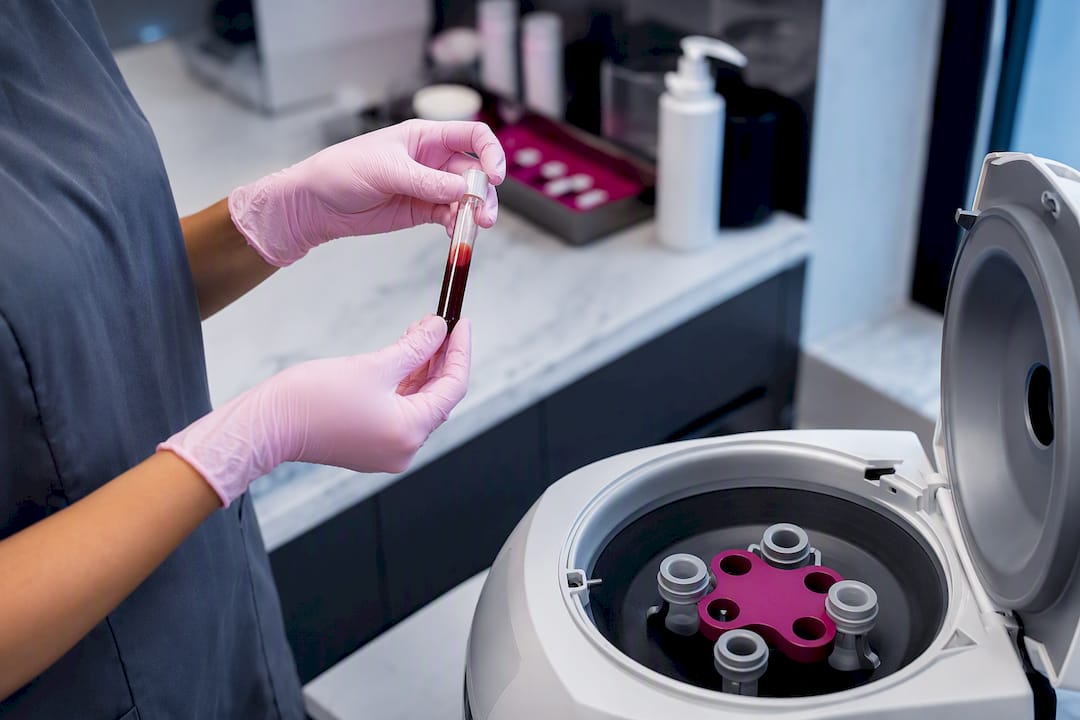
A single PRP session for hair loss in the U.S. typically costs several hundred to over a thousand dollars, with most patients paying a mid-range fee per visit. A full initial series of multiple sessions usually totals a few thousand dollars. Maintenance visits, add-ons, and provider choice can affect the total cost.
TL;DR:
- The total annual cost of PRP for hair loss often surpasses initial session prices, especially when factoring in maintenance and additional treatments.
- Provider experience, geographic location, preparation method, and additional therapies significantly influence the final price, with more experienced clinicians typically charging more.
- Most protocols recommend at least three to four sessions spaced four to six weeks apart, with ongoing maintenance to sustain results.
- PRP treatment costs vary greatly between clinics; transparency about preparation techniques and platelet concentration is crucial for assessing value.
- Patients should prioritize personalized quotes and comprehensive treatment plans over price alone, avoiding clinics with vague information or heavily discounted sessions.
Table of Contents
- PRP Hair Cost Per Session and Full-Course Pricing
- What Actually Drives the Price of PRP for Hair
- How Many PRP Sessions You’ll Actually Need
- Insurance, Financing, and Hidden Fees to Watch For
- How to Choose a PRP Provider Without Overpaying
- Rao Dermatology’s Approach to PRP Pricing
- The Real Cost Conversation Nobody’s Having
- Get a Personalized PRP Quote From Rao Dermatology
- Sources
- FAQ
PRP Hair Cost Per Session and Full-Course Pricing
That headline range hides a lot of variation, so it helps to see the math laid out. Budget clinics and med spas often advertise $250 to $500 per session, dermatology practices and hair restoration specialists tend to sit between $600 and $900, and boutique or concierge providers can charge $1,000 to $1,500 or more per visit, according to industry pricing data from Signature Hair Restoration.
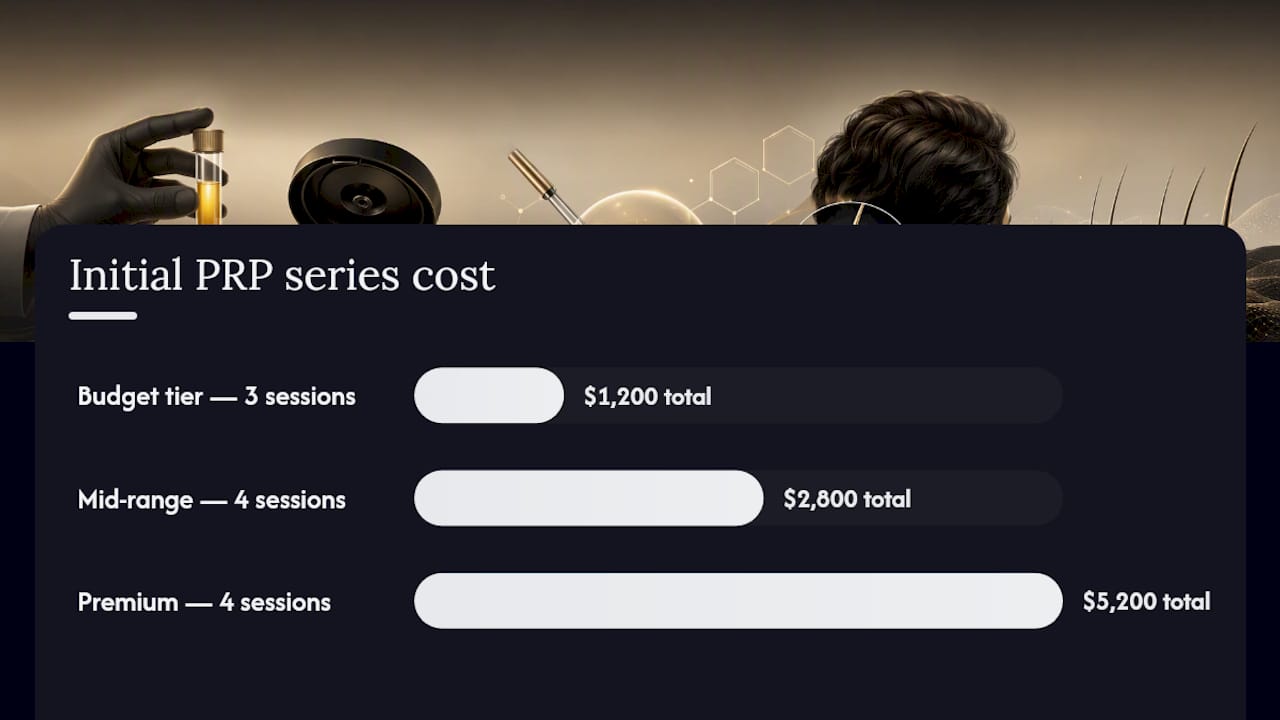
Here’s how that plays out across a typical initial series:
- Budget tier (3 sessions at $400 each): $1,200 total, paid session by session
- Mid-range tier (4 sessions at $700 each): $2,800 total before any package discount
- Premium tier (4 sessions at $1,300 each): $5,200 total, often bundled with diagnostics or add-ons
Most clinics offer a package rate for buying three or four sessions upfront rather than paying per visit. Those bundles typically cut the effective per-session price by 15% to 25%, according to Signature Hair Restoration. So a clinic charging $800 per single session might sell a four-session package for $2,600 instead of $3,200, which works out to $650 per visit.
Factor in maintenance and the first-year total cost increases. For example, completing an initial series followed by maintenance visits results in a total cost that is more representative than advertised session-starting prices and is useful for comparison with other hair restoration options.
What Actually Drives the Price of PRP for Hair
Two clinics offering “the same” PRP treatment can charge wildly different amounts, and the difference usually comes down to five factors.
Provider type and experience matter more than almost anything else. A board-certified dermatologist or hair restoration specialist running PRP as part of a broader treatment plan will usually charge more than a med spa offering it as a menu add-on, and that price gap often reflects differences in diagnostic workup, injection technique, and follow-up care.
Geography creates its own pricing tiers. The same protocol performed in New York City or Los Angeles can cost noticeably more than the identical treatment in a mid-sized metro, and small-city clinics often sit lowest of all, according to Signature Hair Restoration.
Preparation method is the variable most patients never ask about. Manual double-spin preparation, which some consensus taskforces recommend for concentrating platelets, takes more time and skill than a single-spin kit system, and that labor shows up in the invoice, per consensus recommendations published in PMC.
Add-ons stack quickly:
- Microneedling paired with PRP: often bundled, adding $100 to $300 per session
- Exosome or growth-factor add-ons: can add $200 to $500
- Topical minoxidil or oral finasteride prescribed alongside PRP: separate ongoing cost, not included in the PRP fee
Low-dose oral minoxidil requires medical supervision: it can cause fluid retention, a faster heart rate, and lowered blood pressure, so clinicians typically monitor blood pressure and ask about heart conditions before prescribing. It is not recommended during pregnancy or breastfeeding. Discuss these risks with a physician before starting.
Finasteride is FDA-indicated for men only. Women who are or may become pregnant must not handle crushed or broken finasteride tablets, due to the risk of harm to a male fetus. It can also cause sexual side effects (reduced libido, erectile dysfunction) in a minority of men, which usually resolve after stopping treatment. Discuss these risks with a physician before starting.
Treatment area and dosing round out the picture. A larger scalp area or a protocol targeting a higher platelet concentration takes longer to prepare and inject, which can extend session time and cost.
Pro Tip: Ask every clinic to state their preparation method and target platelet concentration before you book. Practitioners who measure and report platelet counts tend to deliver more consistent results, and that transparency is a better predictor of value than the price tag alone.
How Many PRP Sessions You’ll Actually Need
Consensus recommendations from clinical taskforces call for a minimum of three to five PRP sessions for androgenetic alopecia, with most protocols landing on three to four sessions spaced about four to six weeks apart, according to preparation and use guidelines published in PMC. Here’s what that timeline generally looks like in practice:
- Sessions 1 through 3 or 4 (initial series): Spaced four to six weeks apart, these build the foundation. Most patients don’t see meaningful change after just one visit.
- Months 3 through 6: Visible improvement in shedding and density typically shows up in this window, not immediately after the last session.
- Maintenance phase (every 4 to 12 months): Ongoing sessions help sustain results, since PRP’s effects fade without upkeep.
Severity matters too. Someone with early-stage thinning (lower Norwood or Ludwig grades) often responds with the standard three to four sessions, while more advanced hair loss may call for a longer initial series or a lower expectation of standalone results.
PRP rarely works best in isolation. Major clinical resources including the ISHRS note that PRP is commonly layered with minoxidil or finasteride, or used as an adjunct alongside a hair transplant rather than as a replacement for it. That combination approach usually means the total treatment cost includes ongoing medication expenses on top of the PRP sessions themselves, and it also means more realistic outcomes than PRP alone tends to deliver, per Harvard Health.
Insurance, Financing, and Hidden Fees to Watch For
PRP for hair loss is considered cosmetic in the U.S., not medically necessary, so insurance almost never covers it. Plan to pay out of pocket for the full course.
Before you book, ask for a written, itemized quote that separates these commonly overlooked charges:
- Initial consultation or scalp assessment fee (sometimes waived, sometimes $100 to $250)
- PRP kit or supply fee, billed separately from the “procedure fee” at some clinics
- Topical numbing cream or aftercare products
- Follow-up visits to check progress between sessions
HSA and FSA funds generally cannot be used for cosmetic PRP unless a physician documents medical necessity, so check with your plan administrator first. Many clinics also offer in-house payment plans or partner with third-party medical financing companies to spread the cost of a full series across several months.
How to Choose a PRP Provider Without Overpaying
Price alone tells you almost nothing about quality. Use this checklist instead:
- Confirm board certification. A dermatologist or hair restoration specialist with documented training carries more weight than a generic “PRP certified” med spa credential.
- Ask to see real before-and-after documentation, ideally from patients with a similar hair loss pattern to yours.
- Get the preparation method in writing. Double-spin versus single-spin, and the target platelet concentration, should be disclosed without hesitation.
- Confirm the full treatment plan up front, including session count, spacing, and what maintenance will cost a year from now.
Watch for these red flags: pricing well under $350 per session, which often signals diluted PRP or low draw volume rather than a genuine bargain, per pricing analysis from OC Weight Loss & Med Spa; vague answers about preparation technique; no discussion of realistic timelines; and heavy pressure to prepay for a large package before you’ve even had a consultation.
Pro Tip: If a clinic can’t tell you their platelet concentration target or preparation method within the first five minutes of asking, that’s a sign to keep looking.
Rao Dermatology’s Approach to PRP Pricing
A dermatology practice with more than 25 years in dermatology offers PRP evaluation across multiple locations. A consultation typically includes a scalp exam, a candidacy assessment based on your pattern and stage of hair loss, and a tailored recommendation on session count. You leave with a written quote instead of a vague estimate, so you know exactly what the full treatment plan will cost before you commit to anything.
The Real Cost Conversation Nobody’s Having
Most PRP pricing content sells you a per-session number and stops there, which is exactly backward. The number that matters is the annual cost of staying on protocol, because PRP is not a one-time fix. It is a maintenance therapy, and treating it like a single purchase is how people end up disappointed six months later when results fade and they haven’t budgeted for the follow-up sessions that were always part of the plan.
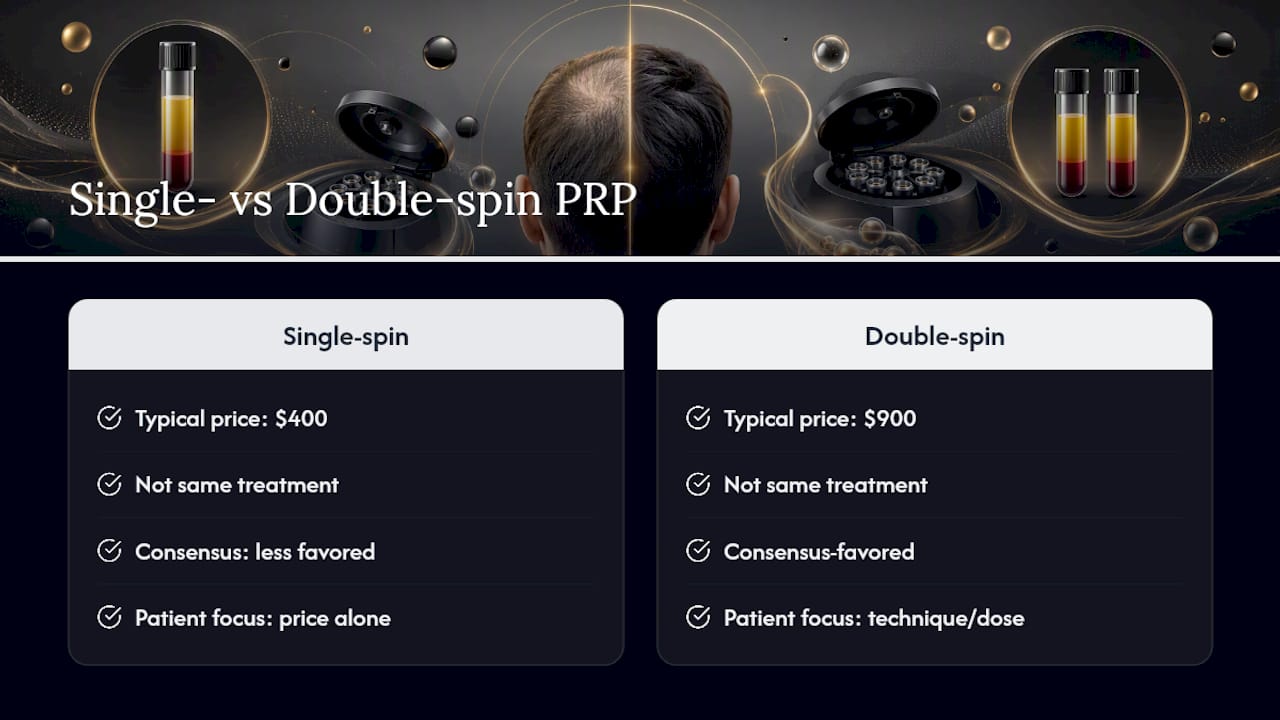
The bigger blind spot is preparation method. Patients compare prices across clinics as if the product were identical, when a $400 single-spin session and a $900 double-spin session are not the same treatment at different prices. They’re different treatments. Consensus guidance leans toward double-spin for a reason, and that detail deserves more attention than the invoice total does.
Prioritize the provider’s transparency about technique and dosing first. Let the price follow from that, not the other way around.
— Rao Dermatology
Get a Personalized PRP Quote From Rao Dermatology
Rao Dermatology gives you something most PRP pricing pages don’t: a written quote based on your actual scalp, not a generic advertised rate.

A consultation typically includes a hands-on scalp exam, a candidacy assessment tied to your specific hair loss pattern, and a session count and spacing recommendation grounded in your results, not a one-size-fits-all package. If microneedling or other combination treatments make sense for your goals, your provider will walk through those costs at the same visit rather than surprising you later. Multiple locations across several states can make ongoing maintenance visits easier to keep on schedule.
If you’re ready to see real numbers instead of estimates, visit Rao Dermatology’s services page to find a location near you and schedule your consultation.
Sources
- Consensus/recommendations for PRP preparation and use in androgenetic alopecia (PMC)
- PRP for Hair Loss: Procedure, Benefits & Costs | ISHRS
- PRP Hair Treatment Cost: 2026 Data | Signature Hair Restoration
This article is general information, not a substitute for advice from a qualified doctor. Consult a qualified healthcare professional about your own circumstances before acting on anything here.
FAQ
How much do 3 sessions of PRP cost?
Three sessions typically total $1,200 to $1,500 in most of the U.S.
Is PRP for hair worth the money?
For many patients with early to moderate thinning, PRP produces measurable improvement in density and shedding, but evidence is still described as mixed by resources like Harvard Health, so it works best paired with medical therapy rather than used alone as a permanent fix.
Is 3 sessions of PRP enough?
Three sessions meet the low end of consensus recommendations, but four sessions spaced four to six weeks apart is the more common protocol, and most patients still need ongoing maintenance visits every 4 to 12 months to sustain results.
Does PRP regrow hair permanently?
No treatment guarantees permanent results, and PRP’s effects fade without maintenance. Clinical resources including the ISHRS recommend ongoing sessions and, often, combination therapy with minoxidil or finasteride to hold onto gains long term.
Recommended
Filed under: