
Discover our comprehensive dermatitis management guide to effectively treat and prevent flares, protect your skin, and regain comfort.
Effective dermatitis management is defined as a structured, personalized approach that combines daily skincare, trigger avoidance, and evidence-based medical treatment to reduce inflammation, protect the skin barrier, and prevent recurring flares. The condition itself, clinically known as eczema or dermatitis, affects millions of Americans and ranges from mild irritation to debilitating chronic disease. Whether you are dealing with atopic dermatitis, contact dermatitis, or another subtype, the path forward requires more than a single cream or one-time prescription. This guide covers every layer of that path, from your morning moisturizing routine to the newest FDA-approved biologics, so you can build a plan that actually works for your skin.
What does a dermatitis management guide actually cover?
Dermatitis management is not a single treatment. It is a step-up system that begins with barrier support and self-care, then escalates to anti-inflammatory topicals, systemic medications, and biologics only when simpler measures fall short. Guideline-based care adopts this model specifically to limit corticosteroid exposure while keeping symptoms under control. Understanding the full spectrum matters because skipping foundational steps, like consistent moisturizing, makes every medication less effective. The three pillars are skincare routine, trigger management, and medical therapy. Each one reinforces the others.
What are the best daily skincare routines for dermatitis relief?
The foundation of any dermatitis relief guide starts in the bathroom. Bathing with lukewarm water for about 10 minutes using a gentle, fragrance-free cleanser is the standard recommendation from Mayo Clinic. Hot water strips the skin’s natural lipid barrier, which is already compromised in people with atopic dermatitis. After bathing, pat your skin dry with a soft towel rather than rubbing, then apply moisturizer within three minutes while the skin is still slightly damp.

Choosing the right moisturizer matters as much as applying it consistently. Thick creams and ointments outperform lotions because they contain more occlusive ingredients that lock in moisture. Products like CeraVe Moisturizing Cream, Vanicream Moisturizing Skin Cream, and Eucerin Original Healing Cream are widely recommended by dermatologists because they are fragrance-free, dye-free, and formulated for sensitive skin. Applying emollients at least twice daily, and immediately after every hand wash, keeps the barrier intact between flares.
Here are the core daily skincare rules to follow:
- Use water that feels lukewarm, not hot, and limit baths or showers to 10 minutes
- Choose soap-free, fragrance-free cleansers such as Dove Sensitive Skin or Cetaphil Gentle Skin Cleanser
- Pat skin dry gently and apply a thick emollient within three minutes of bathing
- Reapply moisturizer throughout the day, especially after washing hands
- Avoid fabric softeners and dryer sheets, which leave chemical residue on clothing
Pro Tip: Apply your topical medication first on affected areas, then layer your moisturizer on top. Applying emollient before medication dilutes the active ingredient and reduces its effectiveness.
Patients who use simplified daily regimens alongside medical treatments report better adherence and less reliance on corticosteroids over time. Consistency beats intensity every time with chronic skin conditions.
How to identify and avoid common triggers in dermatitis management
Avoidance is often the most effective treatment for allergic contact dermatitis, more effective than any topical medication. The problem is that triggers are highly individual, and identifying them requires deliberate observation. Common irritants include nickel in jewelry, latex, fragrances in personal care products, formaldehyde in clothing, and harsh cleaning chemicals. Allergens that cause delayed reactions, such as poison ivy or rubber accelerators in gloves, are harder to trace without professional testing.
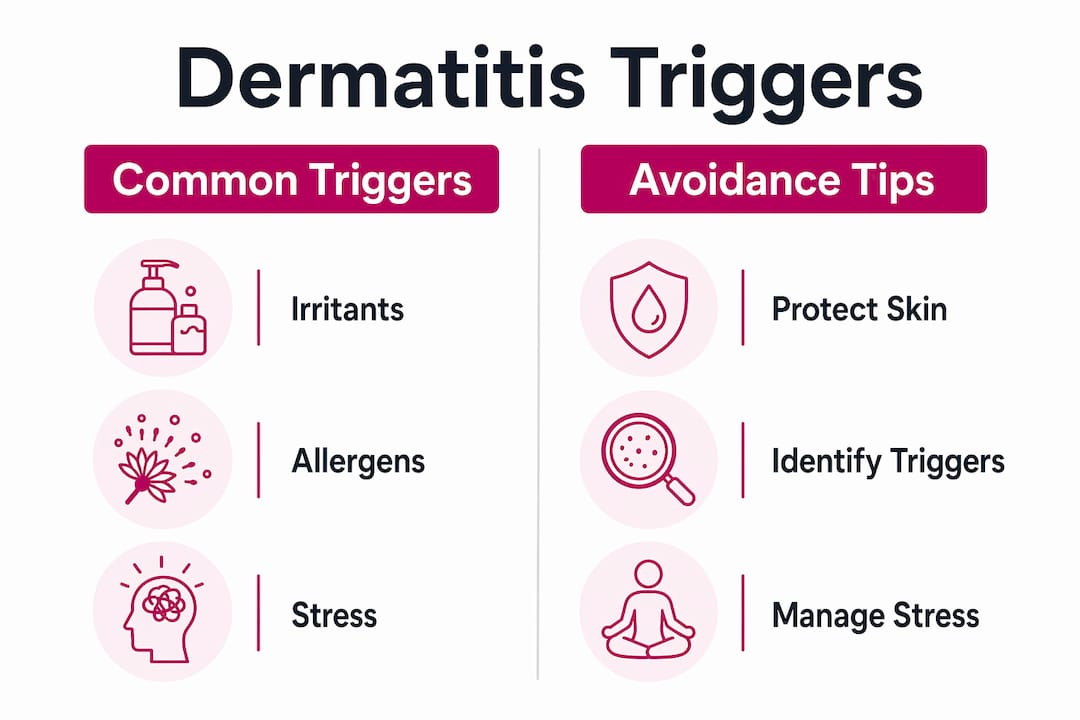
Patch testing is the gold standard diagnostic tool when allergic contact dermatitis is suspected but the trigger remains unidentified. A dermatologist applies small amounts of common allergens to the back under adhesive patches, reads results at 48 and 96 hours, and identifies specific sensitivities. This process removes the guesswork and gives you a concrete list of substances to avoid.
Beyond allergens, behavioral and environmental triggers play a significant role:
- Wear loose-fitting, 100% cotton clothing and avoid wool or synthetic fabrics directly against skin
- Use unscented laundry detergent and rinse clothing twice to remove residue
- Protect hands with nitrile gloves, such as Medicom SafeTouch nitrile gloves, when handling cleaning products or chemicals
- Manage psychological stress through structured techniques, since stress reliably worsens flares
- Keep a symptom diary to correlate flares with foods, products, or environmental exposures
Behavioral adaptations can be as effective as medications in preventing flare triggers, particularly for occupational hand eczema where repeated exposure to water and solvents is the primary driver.
What topical and systemic treatments effectively manage dermatitis symptoms?
Medical treatment for dermatitis follows a clear hierarchy based on severity and response. Topical corticosteroids are first-line treatments during acute flares and are applied before emollients. Potency selection is critical: high-potency steroids match thick skin areas like palms and soles, while low-potency formulas are required for the face, eyelids, and skin folds where absorption is higher and the risk of atrophy is greater.
| Treatment type | Examples | Best used for |
|---|---|---|
| Low-potency topical steroids | Hydrocortisone 1%, Desonide | Face, eyelids, skin folds, mild flares |
| Mid-to-high potency steroids | Triamcinolone, Betamethasone | Trunk, limbs, thicker skin during active flares |
| Calcineurin inhibitors | Tacrolimus (Protopic), Pimecrolimus (Elidel) | Sensitive areas, steroid-sparing maintenance |
| PDE4 and JAK inhibitors | Crisaborole (Eucrisa), Ruxolitinib (Opzelura) | Mild to moderate cases, steroid-free option |
| New non-steroidal topicals | Tapinarof (Vtama), Roflumilast cream | Mild to severe cases, recently FDA-approved |
Tapinarof and roflumilast creams received FDA approval recently, expanding the non-steroidal toolkit significantly. Both deliver anti-inflammatory effects without the skin atrophy risk associated with corticosteroids, which makes them particularly useful for long-term maintenance on sensitive areas.
For moderate to severe cases uncontrolled by topicals, the next step is systemic therapy. Dupilumab targets IL-4 and IL-13 pathways and is approved for patients as young as six months old, making it one of the most broadly applicable biologics in dermatology. Lebrikizumab and nemolizumab are newer biologics targeting different inflammatory pathways, offering options for patients who do not respond adequately to dupilumab. Phototherapy using narrowband UVB is another effective escalation option, particularly for patients who prefer to minimize systemic medication.
Pro Tip: After a flare resolves, taper your topical corticosteroid to every-other-day use for one to two weeks, then shift to twice-weekly application on historically affected areas. Stepping down gradually prevents rebound inflammation and reduces total steroid exposure over time.
All systemic treatments require medical supervision. Cyclosporine and azathioprine, older immunosuppressants still used in some cases, carry risks including kidney toxicity and increased infection susceptibility that demand regular monitoring.
How can lifestyle changes support long-term dermatitis care?
Lifestyle adjustments are not optional extras. They are the difference between a treatment plan that works and one that constantly requires escalation. Bleach baths reduce bacterial superinfection risk in selected patients, using a dilution of approximately 0.5 cup of unscented household bleach per standard 40-gallon bathtub, used once or twice weekly. The evidence on efficacy is mixed, so this approach is best reserved for patients with recurrent skin infections rather than applied universally.
Home environment adjustments that consistently help include:
- Maintain indoor humidity between 45% and 55% using a humidifier during dry winter months
- Keep bedroom temperature cool, since heat and sweating are common flare triggers
- Wash new clothing before wearing it to remove manufacturing chemicals and dyes
- Consider an air purifier with a HEPA filter if dust mites or pet dander are identified triggers
Diet plays a supporting role for some patients, particularly children with food-triggered atopic dermatitis. Common culprits include cow’s milk, eggs, wheat, soy, and peanuts, but elimination diets should only be pursued under medical guidance to avoid nutritional deficiencies. Probiotic supplementation shows modest benefit in some studies, particularly Lactobacillus rhamnosus GG, though results remain inconsistent across populations.
Stress management deserves more attention than it typically receives in skin rash management discussions. Cortisol released during psychological stress directly worsens skin barrier function and amplifies the inflammatory response. Techniques like mindfulness-based stress reduction (MBSR), cognitive behavioral therapy (CBT), and regular aerobic exercise all show measurable benefit in reducing flare frequency for patients with chronic atopic dermatitis.
What are the practical steps for managing a dermatitis flare-up?
Recognizing a flare early gives you the best chance of controlling it quickly. The first signs are usually increased itching, redness, and skin warmth before visible rash appears. Acting at that stage, rather than waiting for full-blown inflammation, shortens the flare duration significantly.
Follow these steps when a flare begins:
- Increase moisturizer application immediately, focusing on affected areas every two to three hours
- Apply your prescribed topical corticosteroid to inflamed skin before moisturizer, as directed by your dermatologist
- Use cool, wet compresses for 15 to 20 minutes to reduce itch and inflammation acutely
- Avoid scratching. Keep nails short and consider wearing cotton gloves at night to prevent unconscious scratching during sleep
- Contact your dermatologist if the skin shows signs of infection: yellow crusting, oozing, increased warmth, or fever
“An eczema action plan provides patients with clear, pre-agreed steps for both flare response and maintenance, improving adherence and outcomes through shared decision-making.” NEA-approved eczema action plans are a practical tool worth requesting from your dermatologist.
Short courses of oral corticosteroids are sometimes prescribed for severe flares, but they carry a rebound risk if stopped abruptly. Taper as directed and never extend the course without medical guidance. Bacterial superinfections, most commonly caused by Staphylococcus aureus, require antibiotic treatment and are a leading reason why flares become unmanageable without medical intervention.
Pro Tip: Build your personalized eczema action plan with your dermatologist during a stable period, not during a flare. Include your maintenance routine, your escalation steps, and the specific signs that should prompt a clinic call. Having it written down removes the guesswork when symptoms spike.
For patients managing atopic dermatitis long-term, the goal is not just treating flares but extending the time between them through consistent barrier care and trigger avoidance.
Key takeaways
Effective dermatitis management requires consistent barrier care, precise trigger avoidance, and a step-up treatment approach that matches therapy intensity to disease severity.
| Point | Details |
|---|---|
| Daily skincare is non-negotiable | Moisturize within three minutes of bathing using fragrance-free emollients at least twice daily. |
| Trigger identification drives outcomes | Patch testing and symptom diaries identify specific allergens and irritants that medication alone cannot address. |
| Match steroid potency to body area | High-potency steroids on thick skin, low-potency on the face and folds, to prevent atrophy. |
| Biologics expand treatment options | Dupilumab, lebrikizumab, and nemolizumab offer targeted relief for moderate to severe cases unresponsive to topicals. |
| An action plan prevents escalation | Pre-agreed flare response steps improve adherence and reduce the need for systemic treatments over time. |
What I’ve learned about managing dermatitis over the long term
After working with patients across New Jersey, New York, and California, the pattern I see most often is this: people arrive having tried multiple creams without a coherent strategy. They apply moisturizer inconsistently, use the wrong steroid potency for the wrong body area, and have never had patch testing despite years of unexplained flares. The problem is rarely a lack of available treatments. It is a lack of a structured plan.
What actually moves the needle is patient education paired with a written management protocol. When someone understands why they apply medication before moisturizer, or why they taper rather than stop steroids abruptly, they follow through. Compliance rates improve dramatically when the logic is explained, not just the instruction.
The newer biologics like dupilumab have genuinely changed outcomes for patients with moderate to severe atopic dermatitis who previously cycled through systemic immunosuppressants with serious side effects. But I want to be direct: biologics are not a shortcut around foundational care. Patients who skip the skincare routine and trigger avoidance steps still flare on biologics, just less severely. The hierarchy exists for a reason.
My practical advice is to stop treating dermatitis reactively and start treating it as a chronic condition that requires a maintenance mindset. Check in with cold weather flare prevention strategies before winter, not after your skin has already broken down. Small, consistent actions compound over months into significantly better skin health.
— Krunal
Get expert dermatitis care at Raodermatology
Managing dermatitis effectively requires more than over-the-counter products. It requires accurate diagnosis, the right treatment sequence, and a plan built around your specific triggers and skin type.

Raodermatology offers specialized medical dermatology services for patients with dermatitis across its California, New Jersey, and New York locations. The practice provides access to advanced dermatopathology diagnostics for precise skin evaluation, as well as the latest treatment options including FDA-approved biologics and non-steroidal topicals. Dr. Babar K. Rao and the clinical team build individualized management plans grounded in 25 years of dermatological expertise. Schedule a consultation to stop guessing and start treating your skin with a strategy that works.
FAQ
What is the first step in treating dermatitis?
The first step is establishing a consistent daily skincare routine: bathe with lukewarm water for 10 minutes using a gentle cleanser, then apply a thick, fragrance-free moisturizer within three minutes of drying off. This protects the skin barrier and reduces the frequency and severity of flares before any medication is needed.
What are the best creams for dermatitis?
First-line topical treatments include corticosteroids matched to the affected body area, calcineurin inhibitors like Tacrolimus (Protopic) for sensitive areas, and newer non-steroidal options like Tapinarof (Vtama) and Roflumilast cream. Over-the-counter emollients such as CeraVe Moisturizing Cream and Vanicream are recommended for daily barrier maintenance.
How do I know if I need a biologic for my eczema?
Biologics like dupilumab are indicated for moderate to severe atopic dermatitis that does not respond adequately to topical treatments and phototherapy. A dermatologist evaluates disease severity, treatment history, and patient age before recommending a biologic, since dupilumab is approved for patients as young as six months old.
Can lifestyle changes alone control dermatitis symptoms?
Lifestyle changes, including trigger avoidance, stress management, and consistent moisturizing, can significantly reduce flare frequency but rarely eliminate symptoms entirely in moderate to severe cases. They work best as the foundation of a broader management plan that includes appropriate medical treatment when needed.
What triggers dermatitis flares most commonly?
Common triggers include fragrances in personal care products, nickel in jewelry, harsh cleaning chemicals, wool and synthetic fabrics, psychological stress, and temperature extremes. Patch testing by a dermatologist is the most reliable way to identify specific allergens driving allergic contact dermatitis.
Recommended
Filed under: