
Discover what is preventative dermatology and why proactive skin care is key to maintaining your skin health. Learn effective strategies today!

Most people visit a dermatologist only after something goes wrong. A suspicious mole, a rash that won’t quit, a spot that’s been changing for months. But what is preventative dermatology, and why does waiting until something looks wrong put you at a real disadvantage? Preventive dermatology, the formally recognized term used in clinical and public health settings, is a proactive framework built around protecting your skin before damage occurs, catching early signs of disease, and maintaining the kind of skin health that actually holds up over time. It’s not just sunscreen. It’s a strategy.
Table of Contents
- Key takeaways
- What is preventative dermatology and how it’s structured
- Primary prevention: sun protection and daily skin habits
- Secondary prevention: catching skin changes early
- Medical prevention for high-risk patients
- Integrating preventive care into everyday life
- My take on what most patients get wrong
- See what Raodermatology can do for your skin
- FAQ
Key takeaways
| Point | Details |
|---|---|
| Prevention works in stages | Primary, secondary, and tertiary prevention each target different points in the skin disease timeline. |
| Sunscreen alone isn’t enough | Daily skin protection requires proper reapplication, sun avoidance during peak hours, and routine self-exams. |
| Early detection saves lives | Monthly self-exams combined with professional skin checks remain the most reliable way to catch skin cancer early. |
| High-risk patients need more | Chemoprevention options like oral nicotinamide can reduce new nonmelanoma skin cancers by 23% in high-risk individuals. |
| Dermatology visits aren’t just reactive | Professional exams are medical evaluations that serve a detection function, not just cosmetic or reactive care. |
What is preventative dermatology and how it’s structured
Preventive dermatology isn’t a single intervention. It operates across multiple layers, and understanding those layers helps you see exactly where your own habits and medical care fit in.
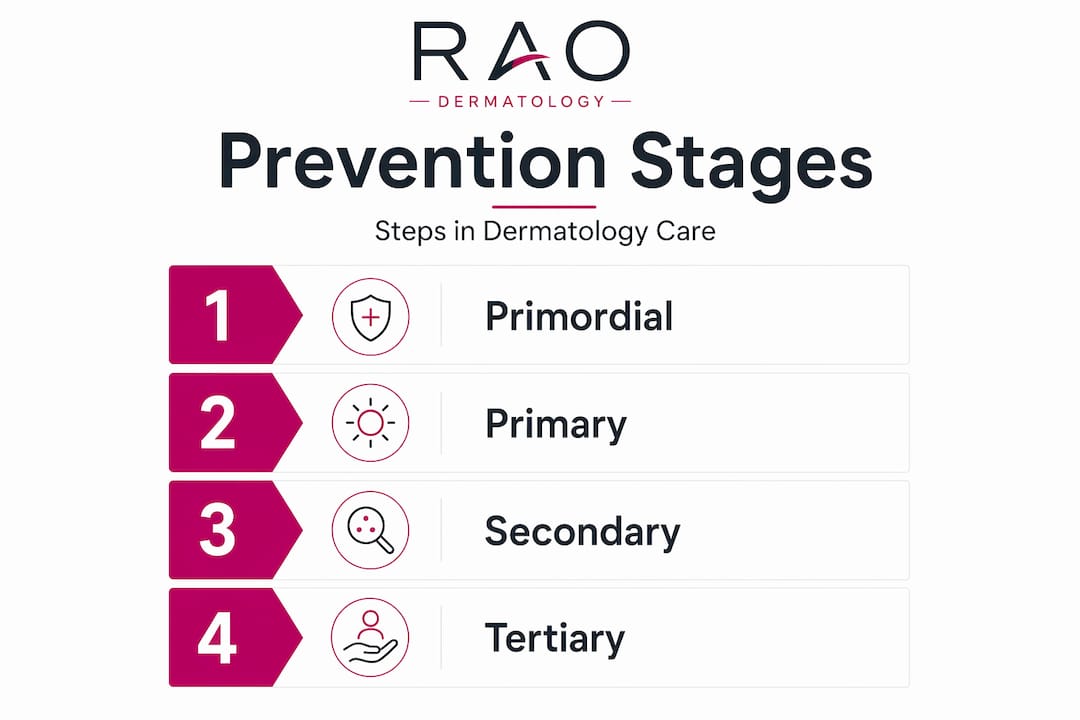
The public health model organizes prevention into distinct stages. Traditional prevention categories include primary prevention (stopping disease before it starts), secondary prevention (catching it early), and tertiary prevention (managing existing disease to reduce complications). Dermatology maps cleanly onto all three.
Here’s how each stage looks in practice:
| Prevention stage | Dermatology application | Example |
|---|---|---|
| Primordial | Population-level risk reduction | Public skin cancer awareness campaigns |
| Primary | Reducing UV exposure before disease onset | Daily broad-spectrum sunscreen, protective clothing |
| Secondary | Early detection before symptoms become severe | Monthly skin self-exams, clinical screenings |
| Tertiary | Managing diagnosed conditions | Treating actinic keratoses to prevent progression |
| Quaternary | Avoiding unnecessary medical interventions | Not over-treating benign lesions without clinical need |
The distinction between stages matters because most people conflate primary and secondary prevention. Wearing sunscreen and catching a melanoma early are both “preventive,” but they operate at entirely different points in the disease timeline. Both are necessary. Neither substitutes for the other.
Pro Tip: If you’ve already had a basal cell or squamous cell carcinoma removed, you’re no longer in the primary prevention stage for that lesion. Your care should now emphasize tertiary strategies, including field therapy and regular clinical monitoring.
Primary prevention: sun protection and daily skin habits
This is where most people’s understanding of skin health lives, and also where the most common mistakes happen.
UV rays are the leading cause of skin cancer, and broad-spectrum SPF 30 sunscreen blocks about 97% of UVB rays. That sounds reassuring until you realize that no sunscreen blocks 100%, and the average person applies far less than the tested amount. A palm-sized amount for the body, not a thin smear, is the actual standard.
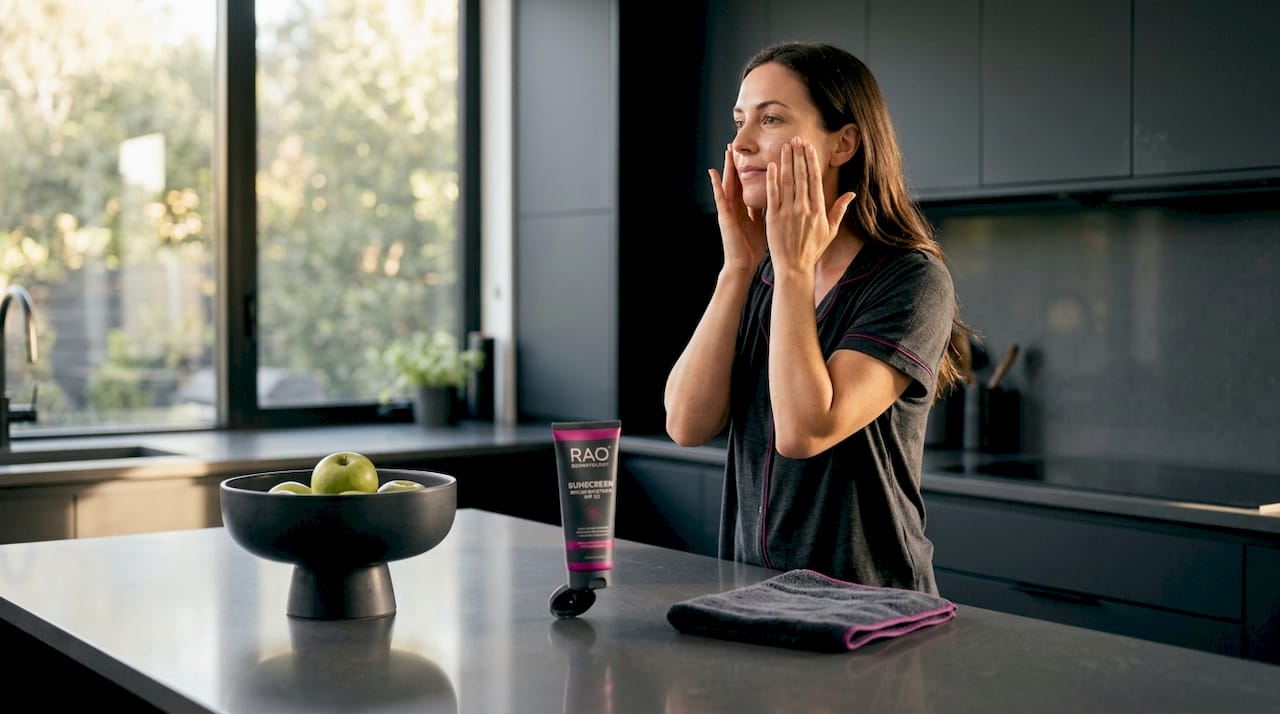
Timing and reapplication are where most prevention failures actually happen. Sunscreen needs to be applied 30 minutes before going outside and reapplied every two hours. After swimming or heavy sweating, reapply immediately, regardless of the clock. This is not a minor detail. It’s the single biggest gap between people who use sunscreen and people who use it correctly.
Beyond sunscreen, primary prevention for skin health includes:
- Avoiding outdoor activity between 10 a.m. and 4 p.m. when UV intensity peaks
- Wearing sun-protective clothing, wide-brim hats, and UV-blocking sunglasses
- Choosing shade intentionally, not just opportunistically
- Moisturizing right after showering to support your skin barrier before it loses hydration
- Using gentle skincare routines that avoid stripping natural oils
- Incorporating topical antioxidants like vitamin C, which help neutralize UV-triggered free radicals
One point that gets overlooked: darker skin tones still need broad-spectrum protection. Melanin provides some natural UVB shielding, but UVA penetrates deeply regardless of skin tone, contributing to photoaging and increasing melanoma risk. SPF 30 or higher is the recommendation for all skin types.
Pro Tip: Mineral sunscreens containing zinc oxide or titanium dioxide sit on top of the skin and are effective immediately after application. Chemical sunscreens need that 30-minute window to absorb and activate. If you’re often running out the door, mineral formulas remove a common excuse for skipping reapplication timing.
The Australian Slip! Slop! Slap! campaign is one of the clearest public health examples showing that behavioral education around sun protection actually moves the needle on melanoma incidence. Habits, not just products, are the core of primary prevention.
Secondary prevention: catching skin changes early
Primary prevention reduces risk. Secondary prevention is what catches problems before they become life-threatening. This is where self-exams and professional screenings come in.
Monthly skin self-exams are recommended by the American Academy of Dermatology even though the USPSTF has found insufficient evidence for routine asymptomatic screening at a population level. That distinction matters. The AAD’s position reflects clinical experience: patients who check their own skin consistently present with earlier-stage lesions.
Here’s how to conduct a thorough monthly self-exam:
- Use a full-length mirror in a well-lit room. Start from your scalp and part your hair to examine the skin underneath.
- Work down your face, ears, neck, and chest. Check the front and back of your torso.
- Examine both arms, including underarms and the spaces between your fingers.
- Check your lower body: front and back of legs, between toes, and the soles of your feet.
- Use a hand mirror for your back, buttocks, and the back of your neck.
- Look for the ABCDEs: Asymmetry, Border irregularity, Color variation, Diameter over 6mm, and Evolution (any change in size, shape, or color).
Any spot that bleeds without injury, itches persistently, or looks visibly different from the moles around it warrants prompt professional evaluation. Don’t wait for your annual appointment. These are the cases where speed directly affects outcomes.
Professional skin cancer screenings are medical evaluations, not routine wellness visits in the insurance sense. Understanding this distinction matters for how you schedule and bill these appointments. Patients often assume a “preventive” dermatology visit is coded and covered the same way a primary care wellness exam is. It usually isn’t. Talking to your insurance provider before your appointment prevents billing surprises.
Tools and apps marketed for skin monitoring can be useful for tracking changes over time with photos, but they are not diagnostic. Current evidence does not support AI-based mole analysis apps as a substitute for clinical evaluation.
Medical prevention for high-risk patients
Not everyone’s prevention plan looks the same. If you’ve had multiple skin cancers, you’re immunosuppressed, or you have a condition that increases UV sensitivity, general sunscreen advice isn’t sufficient. This is where preventive dermatology becomes specifically medical.
Chemoprevention with oral nicotinamide reduces new nonmelanoma skin cancers by 23% in high-risk patients. Retinoids can lower squamous cell carcinoma incidence, though side effects require clinical monitoring. Field therapy, including topical treatments like 5-fluorouracil and photodynamic therapy, targets large areas of precancerous change rather than individual lesions.
Here’s a practical comparison of prevention approaches by risk profile:
| Strategy | General population | High-risk patients |
|---|---|---|
| Sunscreen (SPF 30+) | Daily, broad-spectrum | Daily, often higher SPF |
| Self-exams | Monthly | Monthly or more frequently |
| Professional exams | Annually or as advised | Every 3 to 6 months |
| Chemoprevention | Not typically indicated | Oral nicotinamide, retinoids |
| Field therapy | Rarely needed | Topical 5-FU, PDT for field change |
| Personalized care plan | General guidance | Tailored protocol with dermatologist |
The takeaway is that photoprotection remains foundational even when medical treatments are layered in. Chemoprevention does not replace sunscreen. It supplements a baseline of consistent UV protection for patients whose skin has already shown vulnerability.
Integrating preventive care into everyday life
Knowing the theory is one thing. Building the actual habits is another.
Start with a morning routine that combines daily skin protection with your existing habits. Apply SPF after moisturizer, before makeup. Keep a travel-size sunscreen at your desk for midday reapplication. Set a phone reminder if that’s what it takes.
For your dermatology visits, come prepared:
- Bring a list of any new or changing spots, even ones you’re unsure about
- Mention any family history of melanoma or skin cancer
- Ask directly about your personal risk level and how often you should be screened
- Clarify how the visit will be billed before you leave the front desk
One of the most persistent myths worth addressing: dermatology is not just for people with active problems. Professional skin exams are medical evaluations, and they serve a detection function that self-exams can’t fully replicate. A dermatologist sees thousands of lesions a year. You see yours once a month under bathroom lighting.
Choosing a practice that prioritizes both prevention and treatment continuity means you’re not starting from scratch if something is found. Continuity of care is underrated in dermatology.
My take on what most patients get wrong
I’ve noticed a consistent pattern in how people approach skin health. They invest in products, not habits. They buy a $60 SPF serum and apply it three times a week. They download a mole-tracking app and check it once a year. The product becomes a substitute for the practice.
What actually works, in my experience, is boring. It’s the daily SPF, the monthly self-exam in good lighting, and the annual visit with a dermatologist who knows your skin history. None of that requires expensive products or advanced technology.
The other thing I’d push back on is the idea that preventive dermatology is only for people with fair skin or a family history of melanoma. Every skin type, every age, and every background benefits from the framework. Skin cancer in darker skin tones is often caught later because of the misconception that the risk doesn’t exist. It does.
The patients who do best long-term are not the ones with perfect habits. They’re the ones who show up consistently, ask questions, and treat their dermatologist as a partner rather than someone to call in a crisis.
— Krunal
See what Raodermatology can do for your skin

If you’ve been meaning to get a professional skin check or want a personalized prevention plan, Raodermatology is built exactly for that. With 25+ years of clinical experience across California, New Jersey, and New York, the practice offers skin cancer prevention and detection services that go well beyond a quick look at your moles. Whether you need a full-body screening, guidance on high-risk management, or access to all dermatology services including esthetic care that supports long-term skin health, Raodermatology brings the clinical depth and personalized attention that preventive care actually requires. Schedule your consultation and start building a skin health plan that works year-round.
FAQ
What is the difference between preventative and preventive dermatology?
The two terms mean the same thing. “Preventive dermatology” is the standard clinical term, while “preventative dermatology” is a commonly used variant. Both describe a proactive approach to reducing skin disease risk, supporting early detection, and maintaining skin health before problems develop.
How often should I get a professional skin check?
For most adults, once a year is the standard recommendation. If you have a history of skin cancer, multiple atypical moles, or a compromised immune system, your dermatologist may recommend exams every three to six months.
Does sunscreen alone prevent skin cancer?
No. Broad-spectrum SPF 30 blocks about 97% of UVB rays, but no sunscreen provides complete protection. Sun avoidance during peak UV hours, protective clothing, and regular self-exams are all necessary components of a complete prevention strategy.
What should I look for during a skin self-exam?
Use the ABCDE method: check for Asymmetry, irregular Borders, multiple Colors, Diameter larger than 6mm, and Evolution (any change in a spot over time). Any lesion that bleeds spontaneously or looks different from the others around it warrants prompt professional evaluation.
Can people with darker skin tones get skin cancer?
Yes. While melanin provides some natural UV protection, all skin types remain vulnerable to UVA damage and skin cancer. Skin cancer in darker skin tones is often diagnosed at a later stage due to the misconception that the risk is minimal, which makes regular self-exams and professional screenings equally important across all skin tones.
Recommended
- Medical Dermatology Essentials: Prevention, Treatment & Aesthetics | Rao Dermatology
- What dermatology really means for your skin health | Rao Dermatology
- How to prepare for your dermatology appointment: a step-by-step guide | Rao Dermatology
- Discover the benefits of seeing a dermatologist | Rao Dermatology
Filed under: