
Discover the crucial role of estheticians in skincare. Learn how they enhance your routine, offer treatments, and improve your skin's health!
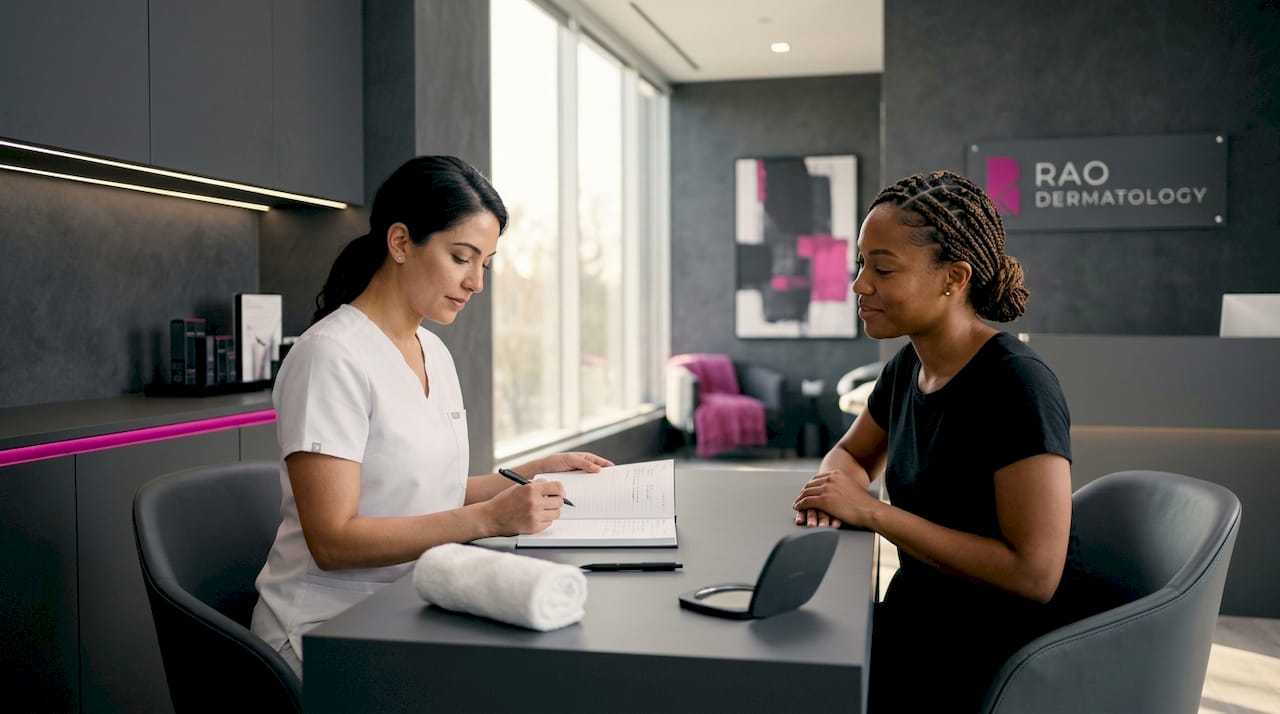
Most people assume estheticians and dermatologists do the same thing with different titles. They don’t. The role of estheticians in skincare is specific, licensed, and genuinely powerful within its defined boundaries. Estheticians are trained skincare professionals who perform cosmetic treatments, analyze your skin, recommend products, and teach you how to maintain results at home. They are not doctors, and they are not trying to be. Understanding exactly what they do, and what they cannot do, helps you get far more value from every appointment.
Table of Contents
- Key takeaways
- The role of estheticians in skincare: training and legal scope
- What estheticians actually do for your skin
- How estheticians teach you to care for your own skin
- When estheticians refer clients to dermatologists
- How to choose and work with an esthetician
- My honest take on what estheticians actually offer
- Experience personalized skincare at Raodermatology
- FAQ
Key takeaways
| Point | Details |
|---|---|
| Licensed cosmetic professionals | Estheticians are trained and licensed to perform skin analysis, facials, exfoliation, and cosmetic treatments. |
| Scope of practice matters | State regulations prevent estheticians from diagnosing conditions, prescribing medication, or performing invasive procedures. |
| Education is part of the service | Estheticians teach clients about skincare routines, product ingredients, and habits that sustain treatment results. |
| Referrals protect clients | When a condition requires medical attention, a professional esthetician refers you to a dermatologist rather than attempting treatment. |
| Best results come from collaboration | Combining esthetician services with medical dermatology care produces better, safer outcomes than either approach alone. |
The role of estheticians in skincare: training and legal scope
Before you let anyone touch your skin professionally, you should know what their training actually covers. Estheticians complete formal cosmetology or esthetics programs that range from roughly 260 to 1,500 hours depending on the state, covering anatomy, skin physiology, sanitation protocols, and hands-on treatment techniques. After completing their program, they must pass written and practical licensing exams to practice legally.
What that training qualifies them to do is specific. Here is what falls within a standard esthetician’s scope of practice:
- Skin analysis and client consultations
- Facials, extractions, and manual exfoliation
- Chemical exfoliants applied to the outermost skin layer
- Waxing, threading, and other hair removal methods
- Lash and brow services
- Product recommendations based on skin type and concerns
- Basic lymphatic massage and facial massage techniques
What they cannot do is equally important. State regulations restrict estheticians from performing invasive or tissue-altering procedures like deep chemical peels, microneedling, laser treatments, and injections without direct medical supervision. Any procedure that penetrates beyond the stratum corneum, the outermost layer of skin, falls outside their legal scope in most states.
Pro Tip: Before booking a treatment at a medical spa, verify whether a licensed esthetician or a medical professional will be performing the procedure. Some advanced treatments require a physician or nurse present on-site, and checking esthetician scope before you book protects you from receiving care outside legal limits.
Continuing education requirements also apply after initial licensing, with renewal cycles typically every one to two years and CE hours ranging from four to sixteen per cycle. This keeps practitioners current on new treatments, ingredient science, and evolving protocols.
What estheticians actually do for your skin
The services estheticians provide go well beyond a relaxing facial. Their hands-on treatments produce measurable improvements in tone, texture, hydration, and clarity when applied consistently and correctly.
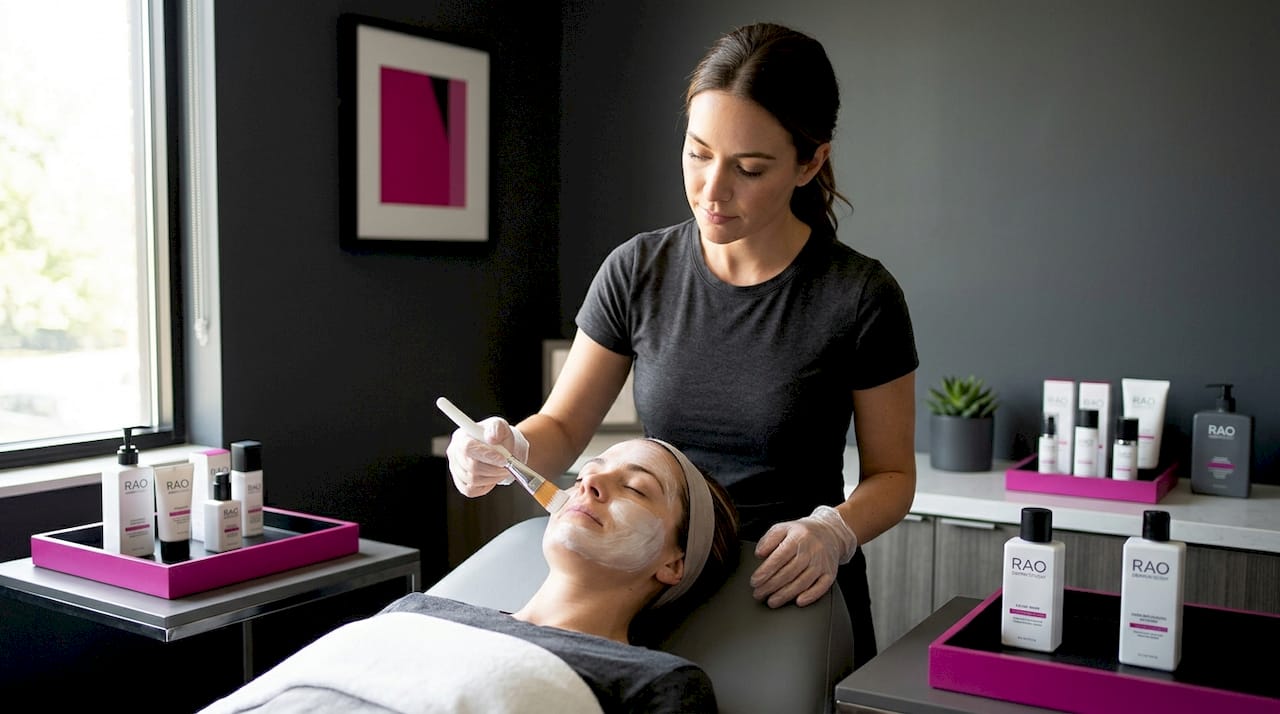
Here is a breakdown of common esthetician services and what they address:
| Service | Primary benefit | Typical concern addressed |
|---|---|---|
| Classic facial | Deep cleansing and hydration | Dullness, congestion, dehydration |
| Chemical exfoliation | Cell turnover acceleration | Uneven tone, fine lines, hyperpigmentation |
| Extractions | Clearing blocked pores | Blackheads, milia, congestion |
| Hydrafacial | Multi-step hydration and refinement | Multiple concerns in one session |
| Waxing and brow shaping | Hair removal and facial framing | Unwanted hair, brow definition |
| Back facial | Treating hard-to-reach areas | Back acne, clogged pores |
Estheticians are trained to begin every session with a consultation covering your concerns, health history, current products, and lifestyle factors, followed by a visual skin analysis under magnification. That assessment drives the entire treatment plan. A client with sensitive, reactive skin gets a very different protocol than someone dealing with oily, acne-prone skin.
Treatments like Hydrafacial are popular partly because they work across multiple concerns in a single session. But the real value comes from personalized customization. Providers emphasize consultations rather than standardized protocols precisely because boosters, suction levels, and serums need to match your skin’s specific needs to produce the best outcome.
Pro Tip: If your esthetician does not perform a skin analysis before your first treatment, that is a red flag. Personalized assessment is the foundation of effective esthetic care, not an optional extra.
When estheticians document your product usage, note ingredient sensitivities, and explain how your home routine connects to your in-office results, they are doing something that separates skilled practitioners from technicians who just follow a standard menu.
How estheticians teach you to care for your own skin
One of the most underrated benefits of esthetician services is the education that comes with them. A great esthetician does not just treat your skin. They teach you how to treat it yourself between appointments.
Here is how a skilled esthetician approaches client education:
- Assess your current routine. They review every product you are using, check for ingredient conflicts like retinol layered under an AHA without a barrier product, and identify whether your routine is helping or quietly causing harm.
- Explain the “why” behind product choices. Rather than handing you a list of products to buy, they explain what each ingredient does and why your skin specifically needs it. You leave understanding niacinamide versus hyaluronic acid versus peptides.
- Prioritize sun protection. Dermatologists emphasize barrier protection and consistent daily habits as foundational for healthy skin, and estheticians reinforce this in every consultation. SPF is not optional.
- Guide product layering order. Applying products in the wrong sequence can neutralize their effectiveness. Your esthetician shows you the correct order based on molecule size and pH requirements.
- Set realistic expectations. They help you understand that professional treatments accelerate results but home care maintains them. Without a consistent routine at home, even the best in-office treatment loses its impact within weeks.
This education role is where estheticians and skin health intersect most directly for long-term outcomes. A single facial does not change your skin. A changed routine, guided by expert advice, does. The barrier-first daily care approach that estheticians teach, focused on hydration, gentle cleansing, and protection, builds the foundation that makes all other treatments more effective.
You can explore how these daily skin health habits connect to broader dermatological care through resources like the ones Raodermatology publishes for patients.
When estheticians refer clients to dermatologists
This is where the importance of estheticians gets genuinely interesting. A professional esthetician’s ability to recognize when a client needs a doctor is just as valuable as their treatment skills.
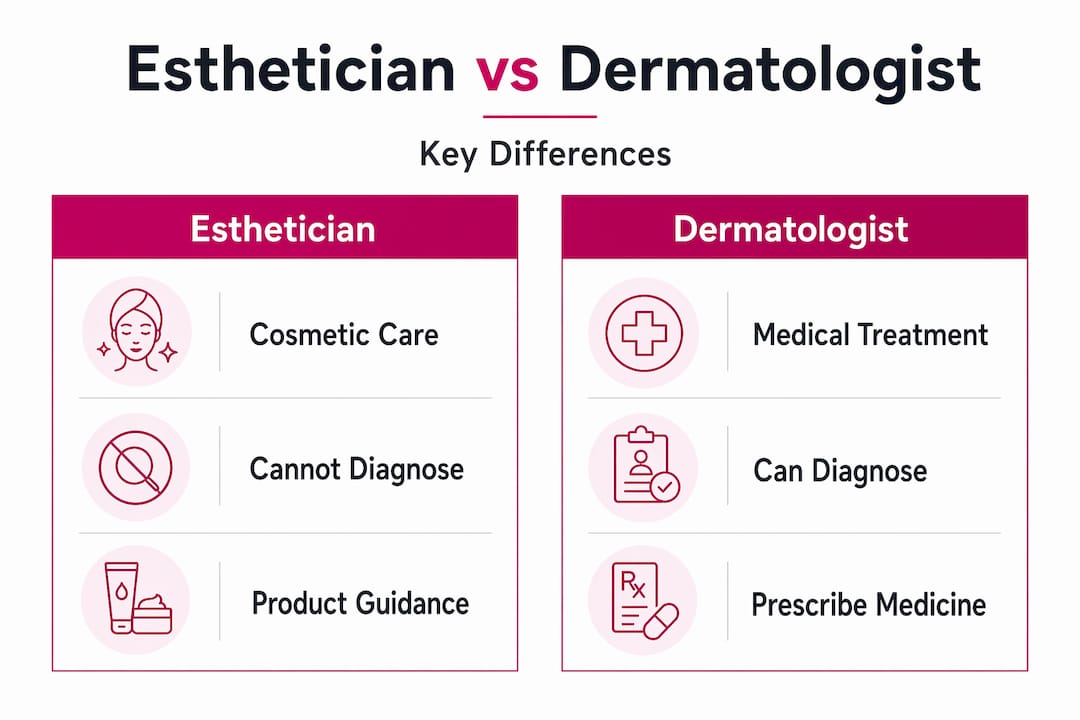
Estheticians cannot diagnose skin conditions or prescribe any medication. When they observe something during a skin analysis that falls outside cosmetic territory, their professional responsibility is to refer, not treat.
Here is how estheticians and dermatologists compare in scope:
| Function | Esthetician | Dermatologist |
|---|---|---|
| Skin analysis | Yes (visual and tactile) | Yes (clinical) |
| Diagnose skin conditions | No | Yes |
| Prescribe medication | No | Yes |
| Perform chemical peels | Superficial only | All depths |
| Treat active skin infections | No | Yes |
| Perform biopsies | No | Yes |
| Recommend OTC products | Yes | Yes |
Conditions that should trigger a referral include suspected skin cancer, severe or cystic acne that has not responded to OTC treatments, unexplained lesions or rashes, active infections, and conditions like psoriasis or eczema that require prescription management. Safe practice requires recognizing these signals and connecting clients with the right medical care rather than attempting cosmetic treatments over undiagnosed conditions.
In medical spa and dermatology clinic settings, estheticians often work directly alongside physicians. They provide cosmetic services that support but do not replace the physician’s role. Understanding this collaborative structure helps you use both professionals to their full potential. Raodermatology’s resource on referring dermatology patients explains how this handoff works in a clinical setting.
For anything that may require medical-level evaluation, like a changing mole or persistent skin irregularity, a skin cancer screening from a dermatologist is the appropriate step, not a facial.
How to choose and work with an esthetician
Finding the right esthetician is not complicated, but most people do it backwards. They choose based on price or proximity rather than fit and expertise.
Start with the consultation. Any esthetician worth booking will spend meaningful time asking about your concerns, medications, health history, and current routine before recommending anything. If they jump straight to selling a package, walk out.
Here are specific questions to ask before committing to a provider:
- What is your license type, and what state board are you certified through?
- Have you worked with clients dealing with my specific concerns before?
- What treatments do you offer, and are any performed under medical supervision?
- How do you handle skin reactions during or after treatment?
- Will you provide a written care plan and product guidance after my appointment?
Signs of a professional who knows their limits include transparency about what they cannot treat, clear explanations of how each service works, and willingness to refer you to a dermatologist when needed. An esthetician who claims to treat medical conditions or perform procedures outside their licensed scope is a liability, not an asset.
Pro Tip: Book a single consultation before committing to a treatment series. A 30-minute assessment tells you more about an esthetician’s skill and communication style than any online review.
Integrating esthetician services with cosmetic dermatology care gives you access to both the maintenance and enhancement that estheticians provide and the clinical diagnostics and prescription treatments that dermatologists offer. Neither replaces the other.
My honest take on what estheticians actually offer
I’ve spent a lot of time observing how clients approach skincare professionals, and the most common mistake I see is treating estheticians either as miracle workers or as glorified spa staff. Neither framing gets results.
What I’ve learned is that the best esthetician outcomes happen when clients stop expecting shortcuts. An esthetician who respects their scope of practice is not being limited. They are being professional. When they refer you to a dermatologist instead of attempting to treat a medical condition with a facial, they are doing the job correctly.
I’ve also noticed that clients who receive thorough skin education during appointments see dramatically better long-term results than those who only show up for treatments. The treatment is a catalyst. The home routine is the actual work.
My honest view on the importance of estheticians is this: they fill a critical gap between self-directed skincare and medical dermatology. That gap is larger than most people realize. Knowing how to layer your products, when to use actives, and how to protect your barrier is not intuitive. Having a skilled professional teach you once saves years of trial and error.
— Krunal
Experience personalized skincare at Raodermatology
If you are ready to take your skincare seriously, working with professionals who understand both the art and the clinical science of skin makes the difference.
Raodermatology offers facials and esthetic services performed by licensed estheticians within a practice that has served patients across California, New Jersey, and New York for over 25 years. Their estheticians work within a medical dermatology framework, meaning you get the benefits of expert cosmetic care backed by clinical oversight. Whether you are addressing dullness, congestion, hyperpigmentation, or aging concerns, treatment starts with a thorough consultation. Explore the full range of skincare and cosmetic services available and take the first step toward skin that actually reflects your effort.
FAQ
What does an esthetician do?
Estheticians perform cosmetic skincare treatments including facials, exfoliation, waxing, and lash services, and they educate clients on routines and product use. They work within a licensed scope that excludes medical diagnosis and prescription treatments.
Can an esthetician treat acne?
Estheticians can address mild to moderate acne through facials, extractions, and appropriate product guidance, but severe or cystic acne requires a dermatologist. Referrals are required when conditions go beyond cosmetic management.
How is an esthetician different from a dermatologist?
Dermatologists are medical doctors who diagnose and treat skin conditions, prescribe medication, and perform clinical procedures. Estheticians are licensed cosmetology professionals who provide cosmetic treatments and education but cannot diagnose or prescribe.
How often should you see an esthetician?
Most skin professionals recommend esthetician treatments every four to six weeks, which aligns with the skin’s natural cell turnover cycle. Your individual frequency depends on your skin concerns, treatment type, and home care routine.
Do estheticians need continuing education?
Yes. CE hours range from four to sixteen per renewal cycle depending on the state, keeping estheticians current on treatment protocols, new ingredients, and evolving skincare technology.
Recommended
Filed under: