
Struggling with bacne? Discover simple, clinic-backed solutions for clear skin with effective routines and habit changes. Start today!
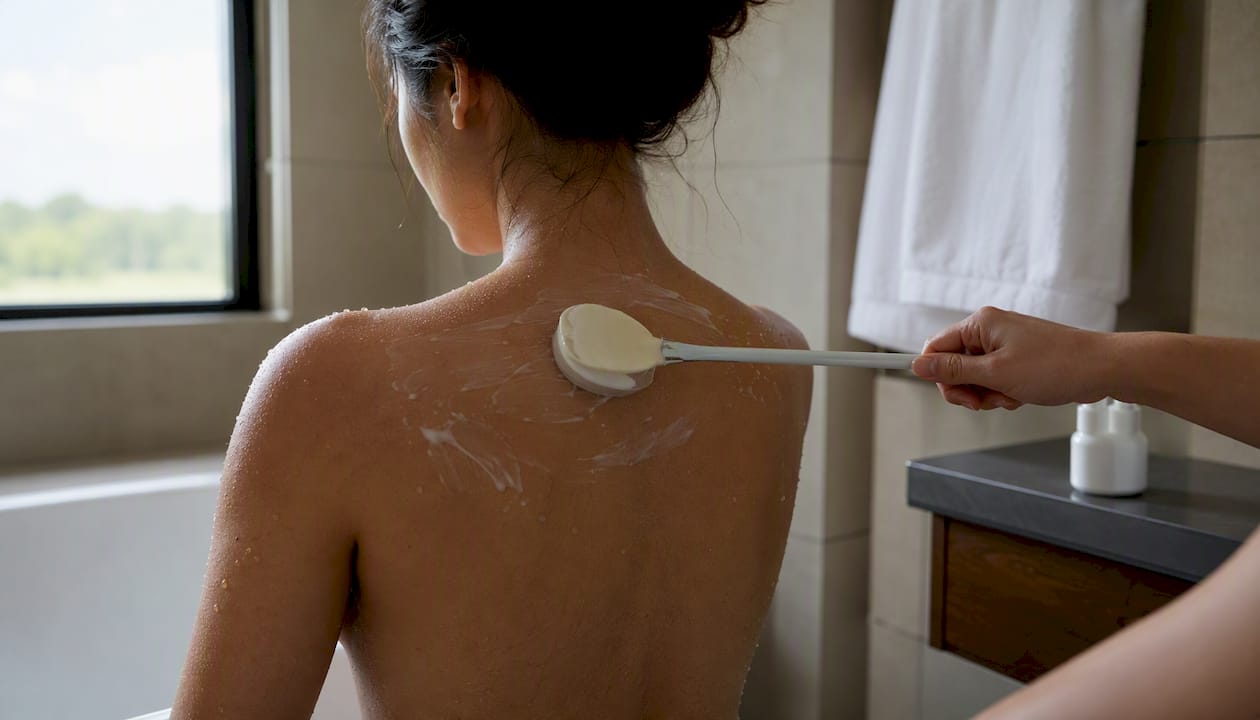
For most people, clearing back acne comes down to three things: a benzoyl peroxide wash used consistently, a leave-on retinoid applied with a long-handled applicator, and a few targeted habit changes around clothing and post-workout hygiene. Start there. If you see no meaningful improvement after 6–12 weeks of consistent use, that’s your signal to book a dermatologist appointment rather than keep cycling through products.
Start today with these steps:
- Switch to a benzoyl peroxide body wash and leave it on for a few minutes before rinsing
- Apply an OTC retinoid gel (such as adapalene) to dry skin on the back several nights per week to start
- Shower within 30 minutes of finishing a workout
- Swap synthetic workout shirts for cotton or moisture-wicking fabrics
- Wash pillowcases and back-contact towels frequently
- Use only non-comedogenic, oil-free moisturizer and sunscreen on the back
Most people see the first signs of improvement after several weeks. Meaningful clearing typically takes months with a consistent topical regimen. If you’re dealing with painful nodules, visible scarring, or lesions covering a large portion of your back, skip straight to a dermatologist rather than waiting out the OTC window.
Table of Contents
- What is bacne and how do you know how severe yours is?
- Why bacne happens and which triggers you can fix today
- OTC treatments that actually work for back acne
- Prescription and in-office options for moderate-to-severe bacne
- Daily habits that prevent bacne from coming back
- Side effects to know before you start
- When to see Rao Dermatology and what to expect
- Key Takeaways
- Why early treatment matters more than most people realize
- Rao Dermatology offers personalized bacne care across three states
- Authoritative sources and further reading
- FAQ
What is bacne and how do you know how severe yours is?
Back acne, commonly called bacne, is acne that forms on the back when hair follicles become clogged with oil, dead skin cells, and bacteria, specifically Cutibacterium acnes (formerly P. acnes). The result is inflammation inside the pilosebaceous unit, the same process that drives facial acne, though the back’s thicker skin and larger sebaceous glands make it harder to treat topically. Cleveland Clinic’s overview of back acne notes that trapped sweat, oil, and bacteria are the core drivers.
Lesion types range from non-inflammatory to deeply inflammatory:
- Blackheads and whiteheads: clogged pores, no redness, non-painful
- Papules: small, raised red bumps without a visible pus head
- Pustules: red base with a white or yellow pus-filled center
- Nodules: large, deep, painful lumps with no visible head
- Cysts: deep, fluid-filled, often painful, highest risk for scarring
Severity self-check:
- Mild: mostly blackheads, whiteheads, and a few small papules or pustules; no pain; no scarring
- Moderate: more numerous papules and pustules, some deeper lesions, mild tenderness, possibly some post-acne marks
- Severe: nodules or cysts, significant pain, active scarring, or lesions covering a large area of the back
Knowing where you fall matters because mild bacne responds well to OTC-only regimens, while moderate-to-severe cases almost always need prescription support to avoid permanent scarring.
Why bacne happens and which triggers you can fix today
The biology is straightforward: excess sebum, dead skin cells, and C. acnes bacteria combine inside a follicle, trigger an immune response, and produce the red, inflamed lesions you see. Back skin is thicker than facial skin and has larger, more active sebaceous glands, which is why bacne can be more stubborn than a breakout on your chin.
Several physical triggers make this worse and, importantly, are fixable:
- Delayed showering: sweat left on the back for more than 30–60 minutes after exercise gives bacteria a warm, nutrient-rich environment to proliferate. UW Medicine’s Right as Rain identifies friction and sweat from clothing and gear as material contributors to body acne flares.
Pro Tip: Rinse your hair conditioner off before you wash your back. Conditioner residue running down the skin is a surprisingly common and overlooked cause of persistent upper-back breakouts.
OTC treatments that actually work for back acne
The AAD’s treatment guidance supports benzoyl peroxide and adapalene as effective OTC options for body acne. Here’s how to use each one correctly on the back, where application is harder and skin is thicker.
The four core OTC actives
1. Benzoyl peroxide (BPO): The workhorse of any back acne treatment. It kills C. acnes bacteria directly and doesn’t carry antibiotic-resistance risk. Use a 5–10% body wash. Apply it, let it sit for 2–3 minutes while you do the rest of your shower routine, then rinse. For stubborn areas, a leave-on 2.5–5% BPO lotion applied at night is more effective than a rinse-off wash alone. Critical warning: BPO bleaches fabric. Use white or old towels, wear white or light-colored shirts to bed, and keep it off colored pillowcases.
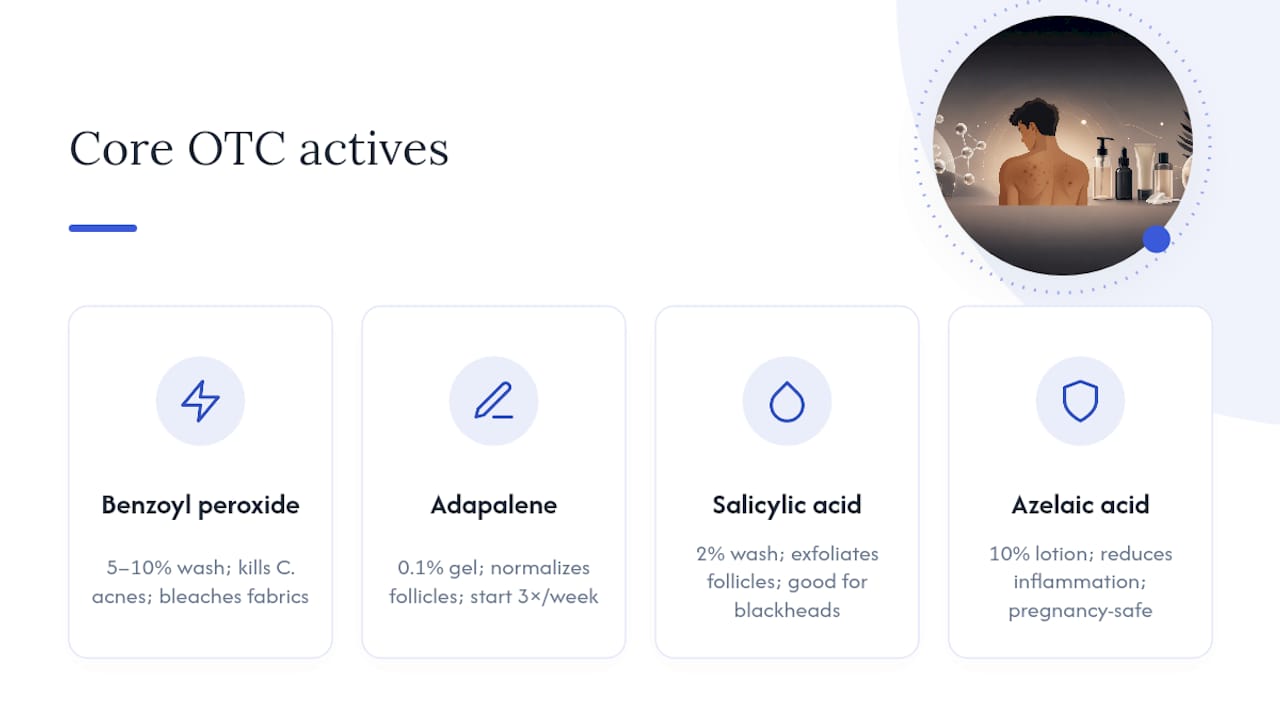
2. Adapalene 0.1% (OTC retinoid): Available without a prescription as Differin gel. It normalizes cell turnover inside the follicle, preventing the clogs that start the whole process. Apply a thin layer to dry skin on the back three nights per week initially, then increase to nightly as tolerated. Expect dryness and mild peeling in weeks 2–4. That’s normal. It doesn’t mean it’s not working.
3. Salicylic acid (BHA): A 2% salicylic acid body wash helps exfoliate inside the follicle and works well for blackhead-heavy bacne. It’s gentler than BPO and a good option for sensitive skin, though it’s less effective against inflammatory lesions.
4. Azelaic acid: Less commonly discussed but genuinely useful. A 10% azelaic acid lotion reduces inflammation, kills bacteria, and fades post-acne hyperpigmentation simultaneously. It’s one of the few OTC options safe during pregnancy and well-tolerated on sensitive skin.
How to apply treatments to your back
Reaching the middle of your back consistently is the single biggest practical obstacle to effective treatment. Options:
- A long-handled lotion applicator (available at most pharmacies for under $15) lets you apply leave-on products evenly without help
- A clean, soft-bristled back brush works for wash-off products only
- Ask a partner or housemate to apply leave-on treatments to the center of the back
Pro Tip: Apply adapalene to completely dry skin. Damp skin increases absorption and irritation. Wait at least 10 minutes after showering before applying.
Combining BPO and adapalene is safe and more effective than either alone, per JAAD acne guidelines. Apply BPO in the morning (or as a wash) and adapalene at night to minimize irritation. Never apply both at the same time.
Prescription and in-office options for moderate-to-severe bacne
When OTC treatments aren’t enough, a dermatologist can prescribe systemic or procedural options that work faster and more reliably for moderate-to-severe disease. A consensus panel on truncal acne found that oral medications are generally preferred over topical-only regimens for moderate-to-severe back acne, given the difficulty of achieving consistent coverage over a large surface area.
| Treatment | Best for | OTC vs Rx vs In-office | Safety considerations |
|---|---|---|---|
| Benzoyl peroxide | Mild to moderate | OTC | Fabric bleaching |
| Adapalene | Mild to moderate | OTC | Skin dryness and peeling |
| Oral doxycycline | Moderate to severe | Prescription | Possible gastrointestinal upset, photosensitivity, and antibiotic resistance risk |
| Spironolactone | Hormonal/female patients | Prescription | Requires monitoring, contraindicated in pregnancy |
| Isotretinoin | Severe, scarring, or refractory | Prescription | Requires strict pregnancy prevention and lab monitoring |
| Intralesional steroid | Large nodule or cyst | In-office | Risk of skin thinning with overuse |
| Laser / IPL | Inflammatory acne, scars, post-inflammatory hyperpigmentation | In-office | May cause temporary redness, cost considerations |
Prescription options explained:
- Oral doxycycline or minocycline:03389-3/fulltext) — First-line oral antibiotics for moderate-to-severe bacne. The JAAD guidelines03389-3/fulltext) strongly recommend combining them with a topical BPO to reduce antibiotic resistance risk. Courses are typically limited to 3–6 months.
In-office procedures:
Intralesional corticosteroid injections flatten a painful nodule or cyst within 24–72 hours. Chemical peels with salicylic or glycolic acid improve both active lesions and post-acne marks. For scarring and post-inflammatory hyperpigmentation, lasers and IPL are the most evidence-backed options. A prospective IPL study reported excellent or good outcomes in 85% of patients treated for chest and back acne, with only mild, transient side effects. Understanding how light-based treatments work at the wavelength level helps set realistic expectations for what IPL and laser can and can’t do.
Daily habits that prevent bacne from coming back
Treating active lesions and preventing new ones require parallel effort. These habits support whatever topical or prescription regimen you’re using.
- Wear breathable fabrics: loose cotton or technical moisture-wicking materials reduce friction and heat buildup. Avoid tight synthetic shirts during workouts.
- Shower promptly after exercise: within 30 minutes when possible. If you can’t shower immediately, use an oil-free cleansing wipe on the back to remove sweat and reduce bacterial load.
- Use non-comedogenic sunscreen: UV exposure doesn’t clear acne. It darkens post-inflammatory marks and prolongs the time it takes for the skin to return to an even tone. The AAD explicitly warns against the belief that tanning helps acne. Choose a spray or gel SPF labeled “non-comedogenic” for the back. For more on sun protection and pigmentation, Rao Dermatology’s sun safety guide covers evidence-based SPF use.
- Wash towels and pillowcases frequently: at least twice a week for towels that contact the back, and use a fresh towel to pat dry rather than rubbing.
- Launder workout clothes after every use: bacteria and sweat residue in fabric re-inoculate the skin at the next wear.
- Avoid abrasive scrubbing: loofahs and body brushes feel satisfying but damage the skin barrier and spread bacteria. A soft washcloth or your hands with a gentle cleanser is enough.
Pro Tip: If you use a BPO leave-on product at night, put a white cotton T-shirt on before bed. It protects your sheets from bleaching and keeps the product in contact with the skin longer.
Side effects to know before you start
Every effective bacne treatment carries predictable side effects. Knowing them in advance prevents unnecessary stops.
- Benzoyl peroxide: dryness, redness, and peeling in the first 2–4 weeks; fabric and hair bleaching (use white towels and old pillowcases); rare allergic contact dermatitis
- Adapalene/retinoids: dryness, flaking, and increased sun sensitivity; the “retinoid purge” (temporary increase in breakouts in weeks 2–4) is common and usually resolves
- Oral doxycycline: GI upset (take with food), photosensitivity (use sunscreen), and yeast infections in some women; courses should be limited to 3–6 months to reduce antibiotic resistance
- Isotretinoin: dry lips, skin, and eyes are nearly universal; requires monthly blood tests (liver enzymes, lipids) and strict pregnancy prevention through the iPLEDGE program; mood changes should be reported to the prescribing physician immediately
- Intralesional steroids: skin atrophy or hypopigmentation at the injection site if overused
Mitigation strategies:
- Introduce retinoids gradually: three nights per week for the first month, then increase
- Apply a fragrance-free, non-comedogenic moisturizer after adapalene to buffer dryness
- If irritation is severe, pause the retinoid for 3–4 days, then restart at a lower frequency
- Never use oral antibiotics beyond the prescribed course without re-evaluation
The JAAD guidelines03389-3/fulltext) specifically recommend combining topical BPO with any antibiotic regimen to reduce the risk of antibiotic-resistant C. acnes strains developing. This is not optional; it’s a core antibiotic stewardship principle.
When to see Rao Dermatology and what to expect
Some bacne genuinely needs clinical care. The signs that warrant booking an appointment rather than continuing to troubleshoot at home:
- No meaningful improvement after 6–12 weeks of consistent, correctly applied OTC treatment
- Painful nodules or cysts anywhere on the back
- Visible scarring or pitting forming
- Post-inflammatory hyperpigmentation that isn’t fading after several months
- Significant emotional distress or avoidance of activities because of bacne
At a first visit, Rao Dermatology’s clinicians conduct a focused skin exam, assess lesion type and count, review your current product regimen and any prior prescriptions, and build a tailored plan. That plan may include prescription topicals, oral medications, or procedural options depending on severity. For scarring and hyperpigmentation, in-clinic options include laser resurfacing and IPL, chemical peels, and intralesional injections for active nodules. Rao Dermatology’s customized acne treatment approach reflects the practice’s emphasis on individualized plans rather than one-size-fits-all protocols.
What to bring to your appointment:
- A list of every product currently on your back (washes, moisturizers, sunscreens)
- Photos of your back taken over the past few weeks to show progression
- Any prior prescriptions for acne, even if you stopped using them
- Your insurance card; Rao Dermatology accepts many major insurance plans for medical dermatology visits
Rao Dermatology operates across California, New Jersey, and New York. For a full list of services and locations, visit the practice website.
Key Takeaways
Consistent use of benzoyl peroxide plus adapalene, combined with targeted habit changes, clears most mild-to-moderate bacne within 3–4 months; no improvement after 6–12 weeks is a clear signal to see a dermatologist.
| Point | Details |
|---|---|
| Start with BPO + adapalene | A benzoyl peroxide wash and OTC adapalene applied correctly are the most evidence-backed first steps for mild-to-moderate bacne. |
| Apply treatments to dry skin | Use a long-handled applicator; apply adapalene to completely dry skin to reduce irritation and improve even coverage. |
| Expect results at 6–8 weeks | Initial improvement often appears at 6–8 weeks; meaningful clearing typically takes 3–4 months with consistent use. |
| Escalate at 6–12 weeks | If no clear improvement after 6–12 weeks of consistent OTC use, book a dermatologist rather than switching products again. |
| Rao Dermatology for clinical care | Rao Dermatology offers prescription topicals, oral therapies, and in-office procedures (laser, IPL, injections) across California, New Jersey, and New York. |
Why early treatment matters more than most people realize
The conventional wisdom on bacne is to “try everything OTC first and see a doctor only as a last resort.” That framing costs people months of unnecessary frustration and, more seriously, leaves them at risk for scarring that is far harder to treat than the original acne.
Back acne scars differently than facial acne. The back’s thicker dermis means nodules and cysts sit deeper, and when they resolve without treatment, they’re more likely to leave atrophic scars or raised keloid-type marks, particularly in patients with darker skin tones. Post-inflammatory hyperpigmentation on the back can persist for a year or longer without targeted treatment. Waiting 12 months to see a dermatologist because “it’s just bacne” often means arriving with a scarring problem on top of an active acne problem.
The other underappreciated issue is antibiotic stewardship. Many patients cycle through multiple courses of oral antibiotics from urgent care or primary care without a concurrent topical BPO, which is exactly how antibiotic-resistant C. acnes develops. A dermatologist structures the antibiotic course correctly, limits its duration, and builds in the topical combination that protects long-term efficacy.
Early, appropriate treatment, whether that’s a well-structured OTC regimen or a timely prescription, reduces the total treatment burden. Patients who start a tailored plan early rarely need isotretinoin. Those who wait often do.
Rao Dermatology offers personalized bacne care across three states
Clearing back acne on your own is possible for mild cases, but moderate-to-severe bacne responds faster and more completely with a clinician-designed plan. Rao Dermatology brings 25+ years of dermatologic expertise to patients across California, New Jersey, and New York, with access to prescription topicals, oral therapies, and in-office procedures including IPL, laser resurfacing, and chemical peels for active acne and post-acne marks.
A first appointment typically covers a full skin assessment, a review of what you’ve already tried, and a concrete treatment plan you leave with that day. For patients with scarring or hyperpigmentation, esthetic and procedural services are available alongside medical treatment. Insurance is accepted for medically necessary dermatology visits. To see the full range of services or find the location nearest you, visit Rao Dermatology’s services page and book an appointment.
Authoritative sources and further reading
The guidance in this article draws on the following peer-reviewed and clinical sources:
- Guidelines of care for the management of acne vulgaris - Journal of the American Academy of Dermatology
- Acne: Diagnosis and treatment
- Back Acne (“Bacne”): Symptoms, Causes & Treatment
- Consensus Report on Truncal Acne: The Korean Acne and Rosacea Society Experts Panel
- Prospective IPL study for chest and back acne (PMC article)
- 8 Ways to Treat Body Acne | Right as Rain by UW Medicine
- Back acne: How to get rid of back acne
Consult a board-certified dermatologist for a personalized assessment. This article provides general information, not medical advice.
FAQ
What gets rid of bacne quickly?
Benzoyl peroxide wash left on for 2–3 minutes before rinsing is the fastest OTC option for reducing bacterial load. A dermatologist can also inject a large nodule with corticosteroid for visible improvement within 24–72 hours.
How do you get rid of back acne for good?
A consistent regimen of benzoyl peroxide plus adapalene, combined with habit changes like showering after workouts and wearing breathable fabrics, clears most mild-to-moderate bacne within 3–4 months; severe or recurring cases typically need prescription oral therapy or in-office treatment.
How do you stop back acne from forming?
Shower within 30 minutes of exercise, wear loose breathable fabrics, avoid backpack straps that rub the skin, and use only non-comedogenic products on the back, per UW Medicine’s body acne prevention guidance.
When should you see a dermatologist for bacne?
See a dermatologist if you have painful nodules or cysts, visible scarring, or no meaningful improvement after 6–12 weeks of consistent OTC treatment; Rao Dermatology offers clinical evaluation and prescription options across California, New Jersey, and New York.
Recommended
- Customized Acne Treatment Solutions | Manhattan Dermatology | Rao Dermatology | Rao Dermatology
- Skin Care Tips for Patients: What Actually Works | Rao Dermatology
- Dermatologist-Recommended Skincare Routines for Healthier Skin | Rao Dermatology
- 5 Essential Reasons to Choose Professional Medical Acne Treatment Over DIY Solutions | Rao Dermatology
Filed under: