
Discover what advanced dermatology technology means today. Explore non-invasive techniques and AI's role in accurate skin diagnosis and treatment.
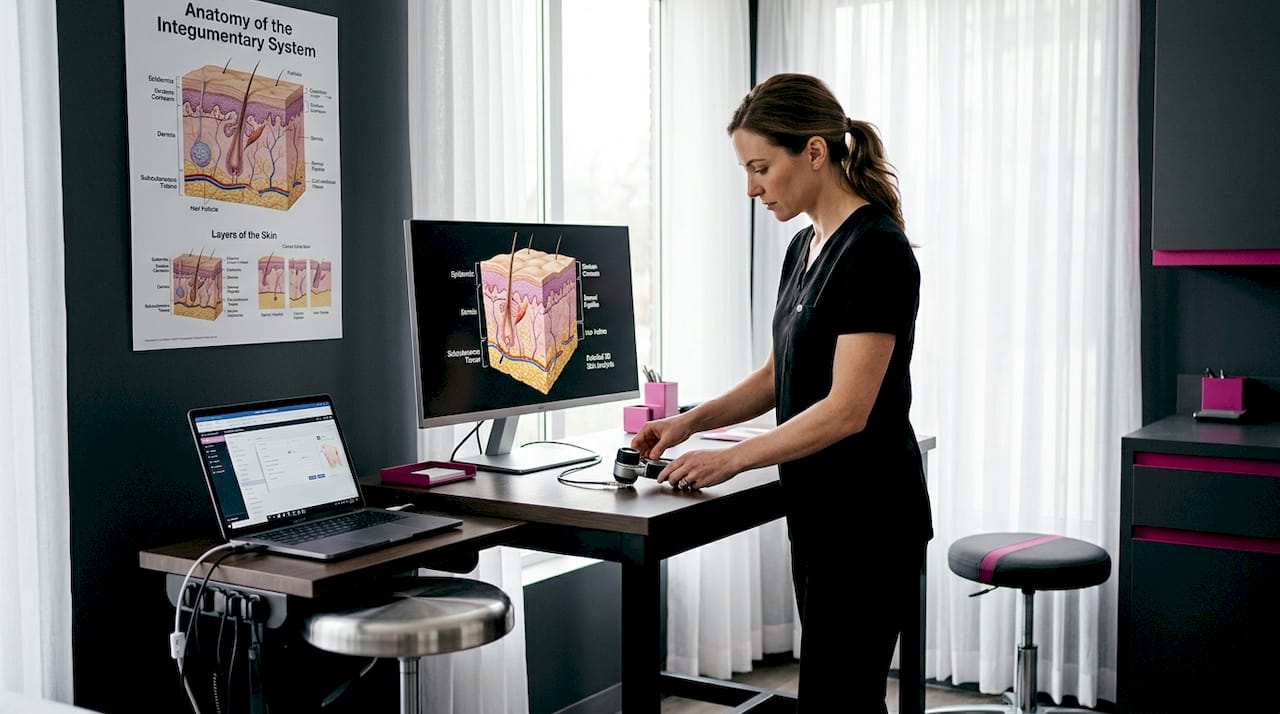
Most people picture a dermatologist visit as a quick visual exam followed by a prescription or referral. What is advanced dermatology technology, then, and why does it matter so much more than that? The answer goes well beyond better lighting or sharper scalpels. Today’s dermatology uses non-invasive optical imaging, AI-powered lesion analysis, and precision therapeutic tools that give clinicians near-cellular views of your skin without a single cut. These tools are changing how conditions get diagnosed, monitored, and treated — often before symptoms even become visible to the naked eye.
Table of Contents
- Key takeaways
- Advanced imaging technologies in modern dermatology
- Clinical advantages of precision dermatology diagnostics
- Emerging therapeutic technologies in skin care
- Comparing dermatology imaging technologies
- My perspective on where this technology actually changes care
- Experience advanced skin care at Raodermatology
- FAQ
Key takeaways
| Point | Details |
|---|---|
| Non-invasive imaging is here now | OCT and LC-OCT visualize skin at near-cellular resolution without biopsy or tissue removal. |
| AI improves diagnostic accuracy | AI-assisted platforms reach sensitivity and specificity comparable to experienced dermatologists, reducing diagnostic error. |
| Fewer unnecessary biopsies | LC-OCT used after dermoscopy raises diagnostic specificity to roughly 87%, sparing patients avoidable procedures. |
| Therapeutics are advancing too | Topical drugs like ABT-263 show real wound-healing gains in clinical models, pointing toward new anti-aging treatments. |
| Technology still needs clinician oversight | Responsible AI integration requires human review to prevent bias and maintain patient safety. |
Advanced imaging technologies in modern dermatology
To understand what advanced dermatology technology actually means in practice, start with imaging. Traditional dermoscopy gives dermatologists a magnified surface view of a lesion. It is useful, but it is still a surface view. The latest advancements in dermatology move well past that.
Optical Coherence Tomography (OCT) is one of the foundational technologies reshaping the field. The VivoSight Dx Pro, for example, captures a full 3D OCT scan in approximately 15 seconds, with imaging depth exceeding 1 mm and a field of view of 6x6 mm. No incision. No discomfort. You get a real-time cross-sectional picture of the entire subsurface architecture of a lesion, including live microvascular blood flow.
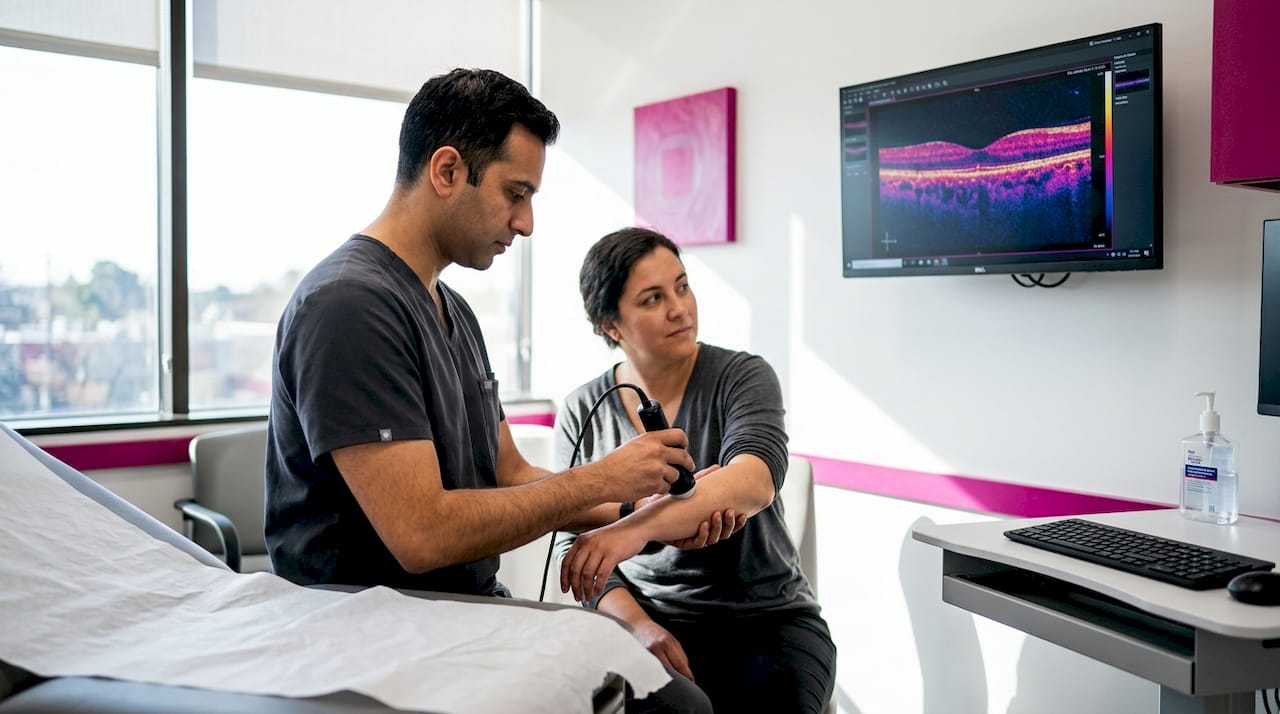
Line-field confocal optical coherence tomography (LC-OCT) takes this further by functioning as what researchers describe as an “optical biopsy.” It delivers near-cellular resolution imaging of the epidermis and superficial dermis, giving clinicians structural detail that was previously only available after physically removing tissue. Patients get answers faster, and the diagnostic process is far less stressful.
Spectroscopy with machine learning adds another layer of objectivity. DermaSensor, for instance, trained its algorithms on 2,000+ histopathology-confirmed lesions to provide point-of-care risk assessment that goes beyond what a visual exam alone can offer. The platform processes spectral data through machine learning models to flag lesions that warrant further review.
A few standout features that define these imaging platforms:
- Real-time, non-invasive visualization of skin architecture at depths greater than 500 micrometers
- Integration with AI interpretation layers that flag abnormal patterns automatically
- Standardized acquisition protocols that make longitudinal monitoring possible and reproducible
- Portability improvements that allow clinic-based use without specialized radiology infrastructure
Pro Tip: If you are preparing for a dermatology appointment involving advanced imaging, ask your provider whether OCT or LC-OCT is available. Knowing which tool your clinician uses helps you ask more precise questions about your results.
Clinical advantages of precision dermatology diagnostics
Understanding how dermatology technology works means looking at what it actually changes in clinical outcomes, not just what it can theoretically do.
The clearest example is the two-step diagnostic workflow pairing dermoscopy with LC-OCT. Using LC-OCT as a second-line tool after dermoscopy raises diagnostic specificity from roughly 73% to 87% without losing sensitivity. That means fewer patients undergo biopsies for lesions that turn out to be benign. For anyone who has experienced the anxiety of waiting on a biopsy result, that improvement is not trivial.
Beyond the numbers, here is what benefits of advanced dermatology look like in a clinical sequence:
- Initial screening with dermoscopy flags suspicious lesions for closer review.
- LC-OCT imaging provides near-cellular structural data, helping clinicians confirm or rule out malignancy at the subsurface level.
- Dynamic OCT captures real-time microvascular blood flow, which helps assess inflammation and distinguish vascular tumor patterns from benign structures.
- AI-assisted analysis overlays algorithmic interpretation on acquired images, supporting consistent assessment across patient visits.
- Follow-up scanning uses the same standardized acquisition protocol to monitor treatment response over time rather than relying on visual memory alone.
This longitudinal monitoring capability is something traditional dermatology simply cannot replicate. Repeatable OCT workflows with AI quantitative analysis allow clinicians to see whether a treated lesion is responding, stable, or changing, with objective measurements rather than impressionistic comparisons.
“Successful AI adoption in dermatology demands balanced integration, maintaining clinician oversight to avoid bias and error.” This reflects what researchers reviewing AI diagnostic performance consistently find: the technology performs best when it supports clinicians, not replaces their judgment.
AI-enabled dermatology diagnosis currently achieves around 81% sensitivity and 76% specificity in controlled study conditions, which is competitive with dermatologist performance in those same settings. The patient experience also improves meaningfully. Non-invasive procedures reduce recovery time, eliminate scarring risk from unnecessary biopsies, and allow more frequent monitoring without adding procedural burden.
Emerging therapeutic technologies in skin care
Advanced dermatology is not only about seeing the skin better. What are new dermatology technologies doing on the treatment side? The answers point toward a future where therapy is as precise as diagnosis.
One of the more striking recent developments involves topical drug therapy targeting cellular senescence, the process by which aging cells stop dividing but refuse to die and instead release inflammatory signals. ABT-263, applied topically, has shown that 80% of treated subjects healed wounds by day 24, compared to 56% in control groups. The mechanism works by clearing senescent cells from wound sites in aged tissue, accelerating the natural repair process. The potential application extends well beyond wound healing into anti-aging skin treatments, and it connects naturally to broader discussions about healthier, younger-looking skin that dermatologists are increasingly equipped to address.
On the diagnostic-therapeutic boundary, thermo-dermoscopy is a technology worth knowing. It uses microneedle-encoded upconversion lifetime mapping to measure tattoo temperature with 0.1°C resolution, enabling real-time detection of early micro-melanomas in vivo. That level of thermal precision was not available in clinical settings even a few years ago.
Key developments shaping the future of dermatology technology include:
- Topical senolytic agents accelerating wound repair and reducing age-related skin deterioration
- Thermo-dermoscopy platforms enabling video-rate early melanoma detection without excision
- Microneedle-based temperature mapping for spatially resolved skin diagnostics
- Treatment personalization using AI-matched therapy protocols based on lesion imaging data
Pro Tip: When exploring advanced skin treatment options, ask your dermatologist whether they use any imaging-guided treatment planning tools. The connection between precise diagnosis and targeted therapy is where the biggest patient benefits are emerging.
Comparing dermatology imaging technologies
Every technology has limits, and understanding those constraints helps you make sense of what your clinician recommends and why.
| Technology | Imaging depth | Resolution | Best use case | Key limitation |
|---|---|---|---|---|
| Dermoscopy | Surface only | Moderate | Initial lesion screening | No subsurface data |
| OCT (e.g., VivoSight Dx Pro) | Greater than 1 mm | High for structural view | Subsurface architecture, vascular mapping | Lower cellular resolution than LC-OCT |
| LC-OCT | ~500 μm | Near-cellular | Epidermis and superficial dermis assessment | Restricted to superficial layers; misses deeper pathology |
| DermaSensor (spectroscopy + AI) | Point-of-care signal | Algorithmic | Objective risk stratification at primary care level | Dependent on training data quality |
| Thermo-dermoscopy | Surface thermal mapping | 0.1°C thermal precision | Early melanoma detection, vascular assessment | Still emerging; limited clinical availability |
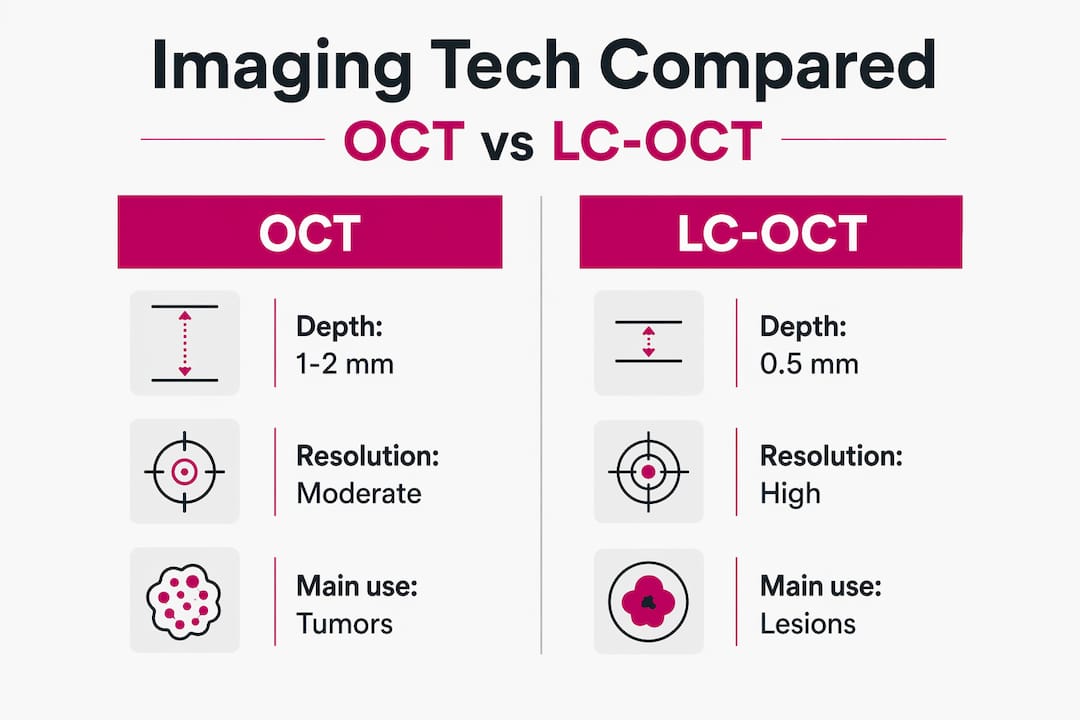
A few practical realities shape where and when each tool gets used. LC-OCT’s imaging depth of approximately 500 micrometers makes it exceptional for conditions like basal cell carcinoma and melanoma staging in the upper skin layers, but it cannot image deep dermal structures. OCT reaches deeper but trades some cellular resolution to do so. Spectroscopy platforms like DermaSensor are designed for primary care and community settings where a dermatologist is not on site, which expands access but requires robust training data to perform reliably.
Cost and training requirements also matter. These platforms require clinicians who understand both the technology’s capabilities and its failure modes. Understanding how technology reshapes dermatology helps patients ask sharper questions when choosing a provider who offers these tools.
My perspective on where this technology actually changes care
I’ve spent considerable time reviewing how these imaging and AI tools translate from research settings into real clinical workflows, and what strikes me most is not the technology itself. It is the patient confidence shift.
When someone can look at a cross-sectional image of their own lesion on a screen and have a clinician walk them through what the imaging shows, anxiety drops. I’ve seen this consistently. People who previously dreaded biopsy waits become far more engaged with their monitoring schedule when they understand what is being measured and why. That is not a small thing. Patient engagement is one of the strongest predictors of treatment adherence and early detection.
What I think most guides underestimate is the responsibility side. AI tools that reach 81% sensitivity sound impressive until you consider that the remaining 19% represents real people with real missed diagnoses. Responsible integration means that these systems flag cases for clinician review, not bypass it. Any practice adopting these tools without robust human oversight protocols is using them wrong, regardless of the vendor’s marketing claims.
My honest advice to anyone exploring advanced skin treatment options is to ask two questions before committing to a procedure or a practice: What imaging does this clinic use to inform this recommendation? And how does the clinician interpret results beyond the algorithm’s output? Those two questions separate practices that use technology as a genuine diagnostic asset from those that use it as a differentiator on a brochure.
— Krunal
Experience advanced skin care at Raodermatology
Raodermatology brings over 25 years of expertise and a genuine commitment to using the best available tools for both medical and cosmetic skin care across California, New Jersey, and New York.
Whether you need precise skin cancer detection and treatment using the latest imaging-guided approaches, or you want to explore cosmetic dermatology services informed by the newest advances in skin science, Raodermatology’s team brings clinical rigor and personalized care together. The practice also offers specialized dermatopathology services that complement advanced imaging for a complete diagnostic picture. Explore the full range of dermatology services and request a consultation to see how today’s technology can work directly for your skin health.
FAQ
What is advanced dermatology technology in simple terms?
Advanced dermatology technology refers to non-invasive imaging systems, AI-assisted diagnostic tools, and precision therapeutic platforms that allow clinicians to visualize, analyze, and treat skin conditions with greater accuracy than traditional visual examination alone.
How does LC-OCT differ from a standard biopsy?
LC-OCT captures near-cellular resolution images of the epidermis and superficial dermis without removing any tissue, while a standard biopsy requires cutting and laboratory processing. LC-OCT results are available in real time during the appointment.
Can AI replace a dermatologist for skin diagnosis?
No. AI diagnostic tools currently reach around 81% sensitivity in controlled studies, which means they work best as a support layer under clinician oversight rather than as a standalone replacement for dermatologist judgment.
What are the benefits of non-invasive dermatology imaging?
Non-invasive imaging eliminates biopsy-related discomfort, reduces scarring risk, provides immediate results, and enables repeated monitoring over time without adding procedural burden to the patient.
Is thermo-dermoscopy available at most dermatology practices?
Not yet. Thermo-dermoscopy with microneedle-encoded thermal mapping is an emerging diagnostic modality with strong early results for melanoma detection, but clinical availability remains limited to specialized or research-affiliated practices as of 2026.
Recommended
- How technology is reshaping dermatology for better skin care | Rao Dermatology
- Photodynamic Therapy for Actinic Keratosis: Advanced Treatment at Rao Dermatology | Rao Dermatology
- Melanoma Detection & Treatment: Advanced Skin Cancer Care at Rao Dermatology | Rao Dermatology
- Photodynamic Light Therapy: Advanced Skin Rejuvenation Treatment | Rao Dermatology
Filed under: