
Discover the key differences between cosmetic and medical dermatology to choose the right care for your skin health. Make informed decisions!

Many people walk into a dermatologist’s office thinking all skin care falls into the same bucket. A rash, a wrinkle, a mole, a sunspot — it all seems like “skin stuff,” right? But this assumption can lead to missed diagnoses, wasted money, and real health risks. Medical and cosmetic dermatology are two distinct fields with different goals, different processes, and very different implications for your insurance coverage and long-term health. Whether you’re in California, New Jersey, or New York, knowing which type of care applies to your situation is one of the most important health decisions you can make.
Table of Contents
- What is medical dermatology?
- What is cosmetic dermatology?
- Key differences between cosmetic and medical dermatology
- How practices integrate both for comprehensive skin care
- Why starting with medical dermatology protects your health
- Explore medical and cosmetic dermatology services
- Frequently asked questions
Key Takeaways
| Point | Details |
|---|---|
| Medical vs cosmetic focus | Medical dermatology addresses health conditions, while cosmetic dermatology improves appearance. |
| Insurance coverage | Insurance can cover medical dermatology if medically necessary, but cosmetic procedures are typically self-pay. |
| Integrated care advantage | Many clinics combine both specialties for comprehensive skin care, starting with medical evaluation. |
| Start with health | Always ensure skin health is evaluated by a medical dermatologist before pursuing cosmetic changes. |
| Personalized approach | Consider your skin health and personal goals to choose the right services for you. |
What is medical dermatology?
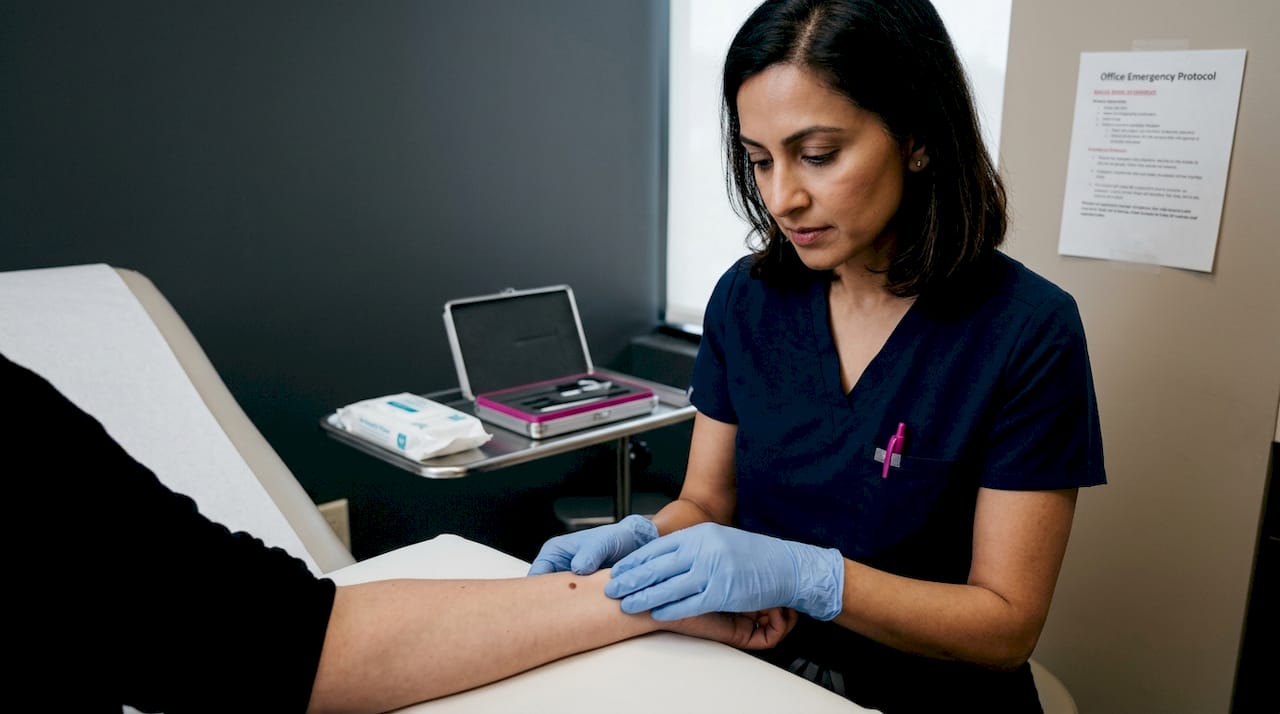
Medical dermatology is the branch of skin care focused on diagnosing and treating conditions that affect the health and function of your skin, hair, and nails. Think of it as dermatology with a clinical purpose: the goal is to identify disease, manage chronic conditions, and protect your overall health. This is not about looking better. It’s about feeling well and catching problems before they escalate.
Medical dermatologists are licensed physicians who complete medical school, a residency in dermatology, and often additional fellowship training. They are equipped to treat a wide range of conditions, from common to complex:
- Skin cancer (basal cell carcinoma, squamous cell carcinoma, melanoma)
- Eczema and atopic dermatitis
- Psoriasis
- Acne (moderate to severe, cystic, and hormonal)
- Rosacea
- Fungal, bacterial, and viral skin infections
- Allergic contact dermatitis
- Hair loss conditions like alopecia areata
- Autoimmune skin diseases like lupus and pemphigus
Procedures within medical dermatology often include skin biopsies to test suspicious lesions, mole removal with pathological testing, cryotherapy for precancerous spots, patch testing for allergies, and phototherapy for chronic inflammatory diseases. If you live in a high-UV-exposure state like California, annual full-body skin checks are especially relevant. Early detection of melanoma, for example, can increase the five-year survival rate from 30% to over 99% when caught at stage one.
“Medical dermatology treatments are usually covered by insurance when deemed medically necessary.” — Medical vs Cosmetic Dermatology
This is a major practical consideration. If your dermatologist diagnoses a condition like psoriasis, eczema, or a suspicious lesion, your insurance plan in New York, New Jersey, or California will typically cover the evaluation and treatment. You’ll want to bring your insurance card, document your symptoms thoroughly, and ask your provider to code the visit appropriately. For guidance on medical treatments for skin infections and related conditions, it helps to understand what qualifies for coverage before your appointment. You can also learn more about medical dermatology in Manhattan and what those visits typically look like for new patients.
What is cosmetic dermatology?
Cosmetic dermatology sits on the aesthetic side of skin care. These are elective treatments designed to improve the appearance of your skin, not treat a disease. If medical dermatology is about what your skin needs to stay healthy, cosmetic dermatology is about what you want your skin to look like.
Services in this category range widely. Common cosmetic procedures include:
- Botox and neuromodulators for reducing fine lines and wrinkles
- Dermal fillers (like hyaluronic acid fillers) for volume restoration
- Laser resurfacing for sun damage, pigmentation, and texture
- Chemical peels for brightening and skin renewal
- Microneedling for collagen stimulation
- CoolSculpting or body contouring
- Hydrafacials and medical-grade facials
- Sclerotherapy for cosmetic vein removal
- Platelet-rich plasma (PRP) therapy for hair and skin rejuvenation
These procedures are performed by dermatologists, cosmetic surgeons, nurse practitioners, physician assistants, and licensed estheticians depending on the state and the specific treatment. Cosmetic dermatology providers in New Jersey, for example, operate under different scope-of-practice regulations than those in California, where esthetic licensing requirements are particularly detailed.
One critical point: cosmetic procedures are typically elective and self-pay. Your health insurance will not cover Botox injections or laser skin tightening because those services don’t treat a diagnosed medical condition. Costs vary significantly. A single Botox session might run $300 to $700, while a full laser resurfacing treatment can cost several thousand dollars. Planning your cosmetic goals alongside your budget is essential.
Pro Tip: Before booking a cosmetic procedure, ask your provider whether a medical evaluation has ruled out any underlying conditions in the area you want treated. A spot you want lasered away might actually warrant a biopsy first.
Understanding how to navigate the world of cosmetic dermatology referrals can also save you time and prevent you from jumping straight to aesthetic treatments when your skin needs medical attention first.
Key differences between cosmetic and medical dermatology
Understanding each field individually helps, but a direct comparison makes the decision clearer when you’re standing at the crossroads.
| Feature | Medical dermatology | Cosmetic dermatology |
|---|---|---|
| Primary goal | Treat disease, restore health | Enhance or improve appearance |
| Examples | Skin cancer treatment, eczema, psoriasis | Botox, fillers, laser, facials |
| Insurance coverage | Usually covered if medically necessary | Typically elective and self-pay |
| Provider type | Board-certified dermatologist (MD/DO) | MD, NP, PA, or licensed esthetician |
| Urgency | Can be urgent (suspicious moles, infections) | Elective and scheduled at your preference |
| State regulation | Heavily regulated across CA, NJ, NY | Varies by procedure and provider type |
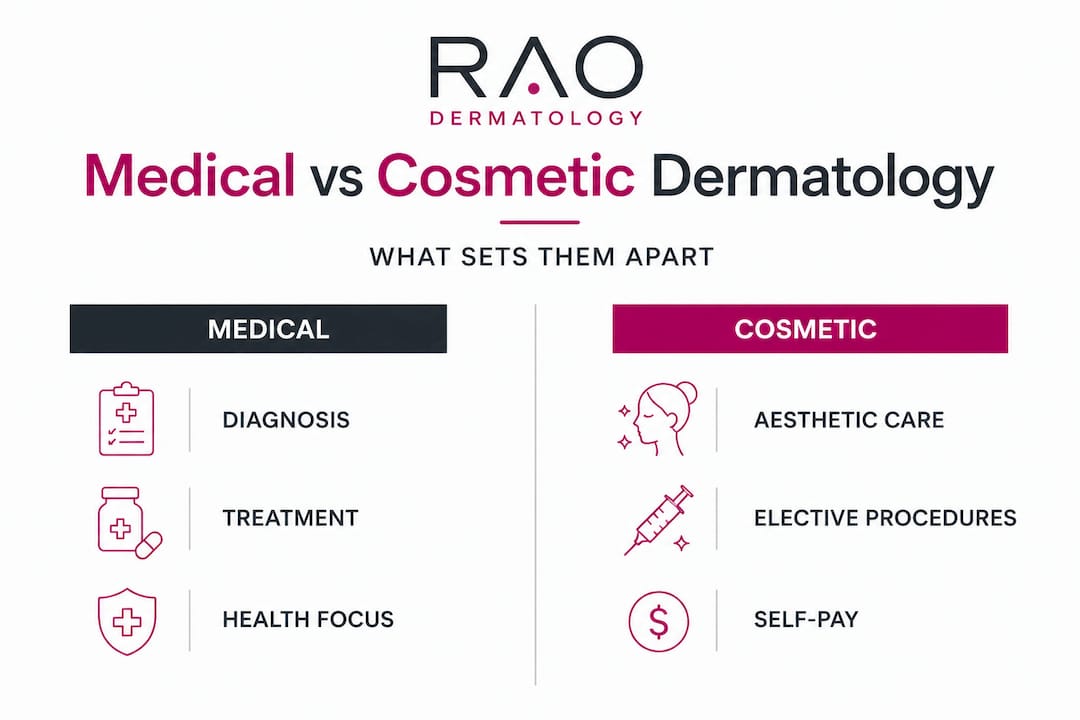
As the comparison between medical and cosmetic dermatology shows, the core distinction really comes down to intent: are you treating a problem, or enhancing a feature? This also affects dermatology differences in how providers document and bill for their services.
A few nuances are worth noting:
- Acne can fall into both categories. Severe, scarring acne is treated medically. Post-acne scar revision using laser or microneedling is cosmetic.
- Hair loss may be medical (alopecia) or cosmetic (thinning due to aging).
- Mole removal can be medical (suspicious lesion) or cosmetic (benign but bothersome).
The reasons to see a dermatologist for a medical evaluation are numerous. Beyond skin cancer screening, conditions like psoriasis affect nearly 7.5 million Americans, according to the American Academy of Dermatology, and many patients go years without a proper diagnosis. In dense metro areas like New York City, Los Angeles, and Newark, access to board-certified dermatologists means you have the resources to get both medical and cosmetic needs addressed under one roof — but only if you understand which track you’re on.
One more consideration specific to California, New Jersey, and New York: all three states have enacted consumer protection rules around cosmetic procedures. California’s Medical Board and the New York State Department of Health, for instance, require certain aesthetic procedures to be performed or supervised by licensed physicians. Knowing your rights helps you vet your provider more effectively.
How practices integrate both for comprehensive skin care
The best dermatology practices don’t treat medical and cosmetic care as separate silos. Today, many clinics in California, New Jersey, and New York offer both under one roof, and that model benefits you in concrete ways.
Here’s how a typical integrated evaluation works:
- Initial consultation and medical history review. A board-certified dermatologist reviews your health history, family history of skin cancer, and current skin concerns.
- Full-body or targeted skin exam. Even if you came in for cosmetic reasons, a trained medical eye scans for irregularities, suspicious lesions, or signs of systemic disease.
- Diagnosis and medical treatment planning. If any medical conditions are found, treatment is prioritized before aesthetic procedures are scheduled.
- Cosmetic consultation (when appropriate). Once medical clearance is confirmed, a cosmetic evaluation addresses your aesthetic goals with a tailored plan.
- Follow-up and monitoring. Both medical conditions and cosmetic outcomes are tracked over time, keeping your full skin health picture in view.
This model matters because skin disease doesn’t always look alarming. A flat brown spot might look like a candidate for a laser treatment, but it could be a lentigo maligna, a form of early melanoma. Many practices integrate both specialties specifically to catch these overlapping situations and ensure patients aren’t pursuing cosmetic fixes for what are actually medical problems.
Pro Tip: When contacting a dermatology practice for the first time, ask specifically whether a board-certified dermatologist will perform your initial skin evaluation, regardless of whether your primary interest is cosmetic. This one question can significantly change your care experience.
Exploring comprehensive dermatology services gives you a sense of what an integrated practice looks like. For patients navigating these decisions for the first time, reviewing medical dermatology essentials can frame what to expect. And if you’re a new patient, practical tips for new patients can help you show up prepared.
Why starting with medical dermatology protects your health
Here’s a perspective built from over 25 years of seeing patients across multiple states: the biggest mistake people make is not skipping the dermatologist entirely. It’s going in with cosmetic goals and never getting the medical foundation checked first.
We’ve seen patients who spent months investing in laser treatments and serums for what turned out to be an early-stage squamous cell carcinoma. The appearance improved temporarily, the underlying disease progressed. This happens more than most people realize, and it’s one of the most preventable outcomes in dermatology.
Cosmetic interventions are not diagnostic tools. A chemical peel will not tell you whether a patch of skin has precancerous cells. A filler will not reveal whether facial asymmetry is neurological in origin. These tools improve appearance — they are not designed to assess health. That’s why understanding dermatology’s true impact on your overall wellness shifts how you prioritize your care.
The honest truth is that cosmetic results are also better when medical issues are addressed first. Skin that has untreated inflammation, active infections, or chronic disease responds poorly to aesthetic procedures. Eczema-prone skin is not ready for aggressive chemical peels. Rosacea-affected skin may worsen with certain lasers if the underlying condition isn’t managed. Treating the medical problem first doesn’t delay your cosmetic goals — it protects them.
Our advice: when you sit down with a dermatologist and you have both medical and cosmetic interests, let the medical questions lead. Explore all your care options once your baseline health picture is clear. The cosmetic results will be safer, more effective, and longer-lasting because of it.
Explore medical and cosmetic dermatology services
Taking care of your skin should never feel like guesswork. At Rao Dermatology, patients in California, New Jersey, and New York have access to integrated care that begins with medical expertise and extends into personalized cosmetic services — all coordinated by a team with more than 25 years of experience.

Whether you need a skin cancer screening, a treatment plan for psoriasis, or a cosmetic consultation for laser resurfacing, our practice brings both paths together for you. Start with medical dermatology services to get a thorough evaluation and a clear diagnosis. From there, explore cosmetic dermatology services designed to enhance your results on a healthy foundation. And if skin cancer is a concern, our dedicated skin cancer care team is ready to guide you from screening through treatment. Book your evaluation and take the first step toward skin care that’s both safe and effective.
Frequently asked questions
Does insurance cover cosmetic dermatology procedures?
No, cosmetic procedures are typically elective and self-pay, meaning your health insurance will not cover treatments like Botox or laser resurfacing unless there is a documented medical necessity.
Which should I choose first: medical or cosmetic dermatology?
Always start with a medical evaluation first to rule out serious underlying skin conditions before pursuing any cosmetic treatments.
What are common medical dermatology treatments?
Common treatments include skin cancer screenings, acne management, eczema and psoriasis care, and skin infection diagnosis, all of which are typically covered when medically necessary.
Can cosmetic procedures help with medical skin issues?
Cosmetic procedures are designed primarily for aesthetic improvement and should not substitute for medical treatment. Your provider should address any underlying conditions before recommending aesthetic services, consistent with the integrated model that many practices now follow.
Are dermatology practices in California, New Jersey, and New York different?
Many practices in all three states offer integrated medical and cosmetic dermatology, but local licensing regulations, provider scope-of-practice rules, and insurance networks can vary, so it’s worth confirming your provider’s qualifications and your coverage before your visit.
Recommended
- Medical vs Cosmetic Dermatology: Understanding the Key Differences | Rao Dermatology
- Medical Dermatology vs Cosmetic Dermatology: Understanding the Key Differences | Rao Dermatology
- How to navigate cosmetic dermatology referrals for better skin | Rao Dermatology
- Medical Dermatology Essentials: Prevention, Treatment & Aesthetics | Rao Dermatology
- Self-Care and Aesthetic Treatments for Moms
- Tehnologii AI în estetică facială | aBeauty Clinique ®
Filed under: