
Discover what is medical dermatology and how it goes beyond skin deep—impacting health and life with innovative treatments. Learn more!

Most people think of dermatology as the place you go when your skin looks bad. A persistent blemish, an unwanted wrinkle, a patch of uneven tone. That picture is incomplete in a way that can genuinely cost you. Medical dermatology covers conditions that affect your immune system, signal systemic disease, and yes, threaten your life. As treatments advance with biologics and targeted therapies, and as the line between medical and cosmetic care continues to blur, understanding what medical dermatology actually does has never been more important for patients in California, New Jersey, and New York.
Table of Contents
- Defining medical dermatology: More than skin deep
- What conditions are treated in medical dermatology?
- Medical vs cosmetic dermatology: Where does the line blur?
- Advances and challenges in medical dermatology
- Screening, prevention, and practical steps for patients
- Why today’s patients should rethink medical dermatology
- Next steps: Connect with expert medical dermatology care
- Frequently asked questions
Key Takeaways
| Point | Details |
|---|---|
| Wide range of conditions | Medical dermatology covers everything from skin cancer to autoimmune diseases and rare disorders. |
| Blurred lines with cosmetic care | Treatments often overlap, with some medical therapies offering aesthetic benefits too. |
| Early screening saves lives | Routine skin exams and prompt medical action are vital for prevention and better health outcomes. |
| Personalized treatment needed | New therapies demand individualized approaches, especially for complex skin disorders. |
| Dermatology is for everyone | Comprehensive care isn’t just for severe illness; proactive visits improve overall skin health. |
Defining medical dermatology: More than skin deep
Medical dermatology is the branch of medicine focused on diagnosing and treating diseases of the skin, hair, and nails. It goes far beyond acne or cosmetic concerns. A medical dermatologist is a physician who evaluates symptoms, runs diagnostic tests, performs biopsies, and manages conditions that can range from mildly annoying to life-altering or fatal.
The medical dermatology essentials you need to understand include the fact that this field covers a genuinely wide spectrum. On one end, you have common, manageable conditions like acne, eczema, and fungal infections. On the other end, you have serious autoimmune diseases, rare cancers, and genetic skin disorders that require specialized expertise and long-term management.
Common conditions treated in medical dermatology include:
- Skin cancer, including melanoma, basal cell carcinoma, and squamous cell carcinoma
- Eczema and atopic dermatitis, chronic inflammatory conditions affecting millions
- Psoriasis, an autoimmune disease that affects the skin and joints
- Acne, from mild teenage breakouts to severe cystic forms
- Infections, including bacterial, viral, and fungal types
- Autoimmune blistering diseases like pemphigus and bullous pemphigoid
- Contact and allergic dermatitis, triggered by environmental or chemical exposure
The complexity here is real. As Dr. Warren Heymann noted in a career-spanning interview, rare subtypes like acral lentiginous melanoma, mucosal melanoma, and autoimmune diseases such as pemphigus and bullous pemphigoid represent some of the most challenging cases in all of medicine, requiring dermatologists who understand immunology, pathology, and systemic disease simultaneously. Transplant dermatology, which addresses the skin complications that arise after organ transplantation, is another example of just how far this specialty reaches.
“The skin is a window into the rest of the body. Diagnosing what you see on the surface often means understanding what is happening systemically.” This is the perspective that drives modern medical dermatology services at practices like ours.
What conditions are treated in medical dermatology?
With the definition explained, let’s break down the specific conditions addressed by medical dermatologists. The range is broader than most patients realize, and recognizing where your own concerns fall on this spectrum can help you get faster, better care.

| Condition | Category | Key features |
|---|---|---|
| Melanoma | Skin cancer | Irregular moles, color changes, rapid growth |
| Basal cell carcinoma | Skin cancer | Pearly bumps, usually sun-exposed areas |
| Eczema | Inflammatory | Itchy, red, dry patches on skin |
| Psoriasis | Autoimmune | Thick, scaly plaques, often on elbows and knees |
| Pemphigus vulgaris | Autoimmune blistering | Painful blisters on skin and mucous membranes |
| Acne vulgaris | Common inflammatory | Comedones, pustules, cysts |
| Fungal infections | Infectious | Ringworm, athlete’s foot, nail fungus |
| Contact dermatitis | Allergic/irritant | Localized rash after exposure to a trigger |
Understanding treating skin allergies is a good example of where patients often discover medical dermatology can do far more than they expected. What looks like a simple rash may actually be a sign of a systemic allergy, an autoimmune process, or even an early infection requiring prescription treatment.
Here is how a typical diagnosis and treatment process unfolds in medical dermatology:
- Initial consultation: You describe your symptoms, history, and any known triggers or exposures.
- Visual examination: The dermatologist examines the affected skin, often using a dermatoscope for detailed imaging.
- Diagnostic testing: This may include a skin biopsy, patch testing for allergies, or blood work to check for systemic causes.
- Diagnosis: The physician identifies the condition based on clinical findings and test results.
- Treatment planning: A personalized plan is created, which may include topical treatments, oral medications, biologics, or procedures.
- Follow-up and monitoring: Chronic conditions like psoriasis and dermatitis require ongoing management and regular check-ins to adjust treatment as needed.
For skin infection treatments, the approach also includes identifying whether the infection is bacterial, fungal, or viral, since the wrong treatment can actually worsen symptoms or allow the infection to spread.
Rare conditions like acral lentiginous melanoma and pemphigus vulgaris demand subspecialty knowledge that goes well beyond a general practitioner’s scope. Patients with these conditions need a dermatologist experienced in complex cases.
Pro Tip: If you notice a new or changing spot, a rash that won’t resolve, or a skin issue that correlates with joint pain or fatigue, don’t wait for your annual physical. Book a dermatology appointment directly. Earlier evaluation almost always means simpler, more effective treatment.
Medical vs cosmetic dermatology: Where does the line blur?
Understanding what medical dermatology treats sets up a common patient question: how does it differ from cosmetic care, and where do they intersect?
The clearest distinction is purpose. Medical dermatology diagnoses and treats disease. Cosmetic dermatology improves appearance. But the boundary between them is getting less distinct every year, and that’s actually good news for patients.
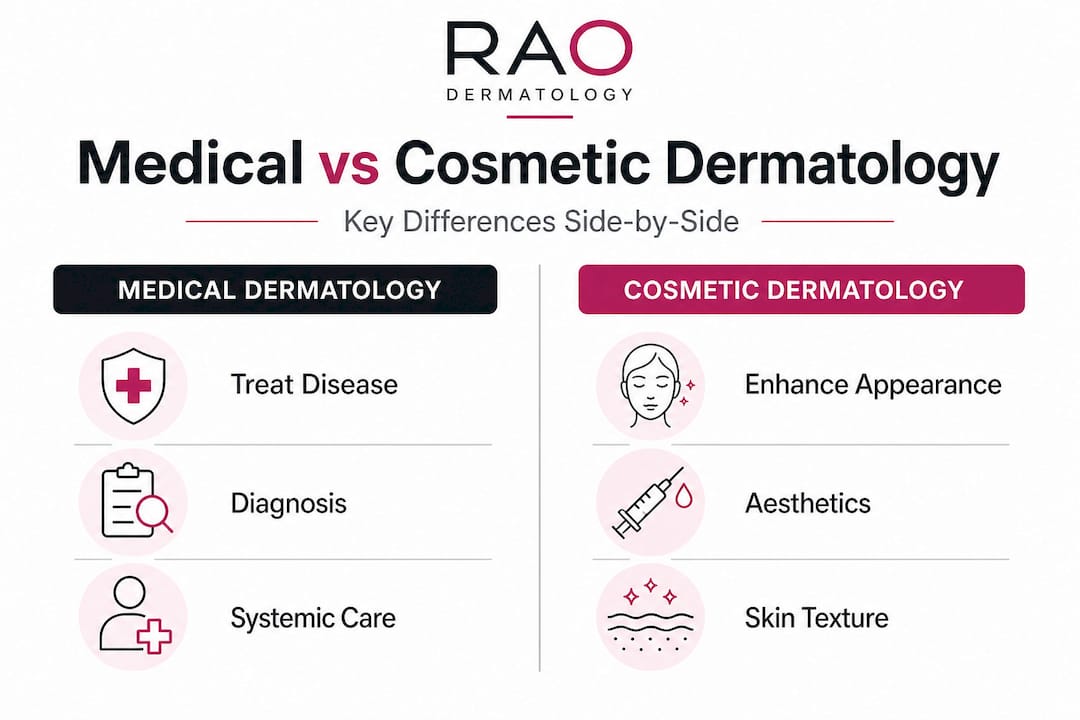
| Feature | Medical dermatology | Cosmetic dermatology |
|---|---|---|
| Primary goal | Treat and manage disease | Improve appearance |
| Insurance coverage | Often covered | Usually out-of-pocket |
| Examples | Skin cancer removal, eczema treatment, psoriasis management | Botox, fillers, laser resurfacing |
| Overlap area | Laser for rosacea, acne scar treatment | Same procedures may address both |
| Who performs | Dermatologist physician | Dermatologist or licensed esthetician |
As biologics and newer therapies reshape what’s possible, the overlap is expanding. Laser treatments, for example, were once purely cosmetic. Now the same technology treats rosacea (a medical condition) and reduces texture and tone irregularities (a cosmetic benefit) in a single session. You can explore the full picture in our breakdown of medical vs cosmetic dermatology and the specific cosmetic dermatology differences that affect your coverage and care options.
Key areas where the two fields overlap:
- Laser treatments: Used for both rosacea management and skin tone correction
- Chemical peels: Address both acne (medical) and pigmentation (cosmetic)
- Injectables: Botox treats hyperhidrosis (excessive sweating, a medical issue) and reduces wrinkles
- Topical retinoids: Prescribed for acne and used cosmetically for anti-aging
Pro Tip: Before assuming a treatment is “just cosmetic,” check with your dermatologist. Some procedures that improve appearance also qualify for insurance coverage when they address a documented medical condition.
Advances and challenges in medical dermatology
With treatment options expanding, let’s examine what’s new and what still needs work in medical dermatology.
The biggest shift in recent years has been the rise of biologics and JAK inhibitors (a class of drugs that block specific immune pathways). These medications have transformed how we manage chronic inflammatory conditions like psoriasis and atopic dermatitis. Where patients once cycled through treatments that partially worked or caused significant side effects, many now achieve near-complete clearance with biologic therapy.
Recent advances shaping the field:
- Biologics for psoriasis: Medications like dupilumab and secukinumab target specific immune proteins to reduce inflammation with precision
- JAK inhibitors for eczema: Oral and topical JAK inhibitors offer new options for patients who didn’t respond to traditional therapies
- Immunotherapy for melanoma: Checkpoint inhibitors have significantly improved survival rates for advanced melanoma
- Teledermatology: Virtual consultations allow patients in remote or underserved areas to access early skin cancer detection and routine condition management without traveling
Despite this progress, real challenges remain. As Dr. Heymann pointed out, comparative studies on biologics and JAK inhibitors are lacking, creating personalization gaps. Two patients with identical psoriasis diagnoses may respond completely differently to the same biologic. Without robust head-to-head data, treatment selection can involve costly trial and error. The high cost of these medications is also a barrier for many patients, even those with insurance.
“Advances in dermatology are extraordinary, but they also demand that patients and physicians stay informed. A treatment that transforms one patient’s life may not work for another, and cost remains a genuine obstacle to access.”
Teledermatology is useful, and our medical dermatology advances have incorporated it where appropriate. But it has firm limits. A virtual visit cannot perform a biopsy. It cannot fully evaluate a lesion’s texture, firmness, or depth. For any suspicious skin change, an in-person evaluation is irreplaceable.
Statistic to know: Melanoma is among the most common cancers in the United States, yet when caught early, the five-year survival rate exceeds 99%. When it spreads to distant organs, that rate drops to roughly 30%. This gap makes early access to in-person medical dermatology critical.
Screening, prevention, and practical steps for patients
Finally, let’s bring together practical advice. A clear path for how patients should approach screening, prevention, and proactive skin care.
Routine annual skin cancer screening is one of the highest-value health investments you can make. It costs little time, requires no preparation, and can identify cancers before they become serious. Early screening is directly tied to better skin cancer outcomes, and yet many patients wait until something looks alarming before scheduling an appointment.
Actionable steps every patient should take:
- Schedule a full body skin exam once a year, even if you have no obvious concerns. Your dermatologist will examine areas you cannot easily see yourself.
- Perform monthly self-checks, looking for new moles, changes in existing spots, or persistent patches that itch, bleed, or don’t heal.
- Apply broad-spectrum SPF 30 or higher sunscreen daily, not just at the beach. UV exposure accumulates during everyday activities like commuting or walking outside.
- Wear protective clothing and seek shade between 10 a.m. and 4 p.m. when UV radiation is most intense.
- Avoid tanning beds entirely. They significantly increase your risk of melanoma, particularly for patients under 35.
- Tell your dermatologist about your full health history, including medications, autoimmune conditions, and family history of skin cancer or disease.
- Don’t dismiss chronic skin issues like a recurring rash, persistent itch, or dry patches. These may signal conditions that respond well to early treatment.
Prevention also means understanding your personal risk profile. Patients with fair skin, a history of sunburns, a family history of melanoma, or a compromised immune system are at elevated risk and may benefit from screening more frequently than once per year. Explore skin health essentials and the full scope of skin cancer prevention care to understand what level of monitoring is right for you.
Additional preventive practices that make a measurable difference:
- Keep your skin barrier healthy with fragrance-free moisturizers, especially if you have eczema or sensitive skin
- Stay hydrated and maintain a balanced diet, since skin health reflects internal health
- Avoid known irritants and allergens if you have contact dermatitis
- Report any new skin symptoms during other medical appointments, since your internist or specialist may miss early dermatological signs
Pro Tip: Your annual skin exam can catch signs of more than just cancer. Dermatologists regularly identify early signs of autoimmune conditions, nutritional deficiencies, and systemic diseases during routine exams. Treating your skin checkup as a whole-body health tool pays dividends.
Why today’s patients should rethink medical dermatology
Here is the honest truth we see at Rao Dermatology across our California, New Jersey, and New York locations: most patients come to us far later than they should. They come for cosmetic concerns and then, in the course of that visit, we find something that genuinely worries us. Or they’ve been managing a chronic condition with over-the-counter products for years, not knowing that prescription options could have resolved it long ago.
Medical dermatology is not just for people with visible, severe disease. It’s for anyone with skin, which means everyone. The blur between medical and cosmetic care, and the early screening advantage for skin cancer outcomes, both point to the same conclusion: proactive engagement with medical dermatology improves your health and your quality of life in ways that reactive care simply cannot replicate.
We’ve watched biologics change the lives of patients who had lived with severe psoriasis for decades. We’ve caught melanomas at stage one that a patient almost didn’t mention because they “didn’t want to make a fuss.” These aren’t rare stories. They’re Tuesday afternoon in our offices.
The expanding toolkit in medical dermatology, from biologics to dermatoscopy to teledermatology, means you have more options than ever. But options only help if you show up. The patients who benefit most from prevention and treatment insights are the ones who stay engaged, ask questions, and treat their skin health as the serious matter it is.
Skin health isn’t about vanity. It’s about catching systemic disease early, managing chronic conditions before they damage your quality of life, and staying ahead of the only organ you can actually see every single day.
Next steps: Connect with expert medical dermatology care
When you’re ready to take your skin health seriously, whether that means a routine screening, managing a chronic condition, or exploring what’s possible with today’s advanced treatments, Rao Dermatology is here with 25-plus years of expertise and locations across California, New Jersey, and New York.

Our team provides personalized skin cancer prevention services including full body exams, advanced dermatoscopy, and surgical care. For complex cases, our diagnostic dermatopathology services give you answers that general practitioners simply cannot provide. And when your needs extend to appearance and confidence, our cosmetic dermatology offerings deliver results backed by medical expertise, not just aesthetics training. Contact us today to schedule your consultation and make your skin health a priority.
Frequently asked questions
What is the main difference between medical and cosmetic dermatology?
Medical dermatology focuses on diagnosing and treating skin diseases, while cosmetic dermatology improves appearance and aesthetics. The line between them is increasingly blurred, as some treatments address both medical conditions and cosmetic outcomes.
What are common skin diseases treated by medical dermatologists?
Medical dermatologists treat skin cancer, eczema, psoriasis, acne, infections, autoimmune diseases, and rare conditions like pemphigus and bullous pemphigoid, among many others.
Can medical dermatology help with skin cancer prevention?
Yes. Early screening and routine annual checkups are among the most effective tools for detecting skin cancer early, when it is most treatable and survivable.
Are cosmetic treatments sometimes used for medical conditions?
Yes. Laser treatments, for example, can address rosacea as a medical condition while also improving skin tone, and Botox treats hyperhidrosis in addition to its cosmetic uses.
What are the limitations of teledermatology?
Teledermatology is a useful access tool for consultations and follow-ups, but it cannot perform biopsies and may miss subtle or tactile diagnostic findings that require an in-person exam.
Recommended
- Medical Dermatology Essentials: Prevention, Treatment & Aesthetics | Rao Dermatology
- Your step-by-step cosmetic dermatology consultation guide | Rao Dermatology
- What dermatology really means for your skin health | Rao Dermatology
- How to prepare for your dermatology appointment: a step-by-step guide | Rao Dermatology
Filed under: