
Discover examples of medical dermatology services and what to expect. Understand treatments like surgery and biologics to enhance your skin health!
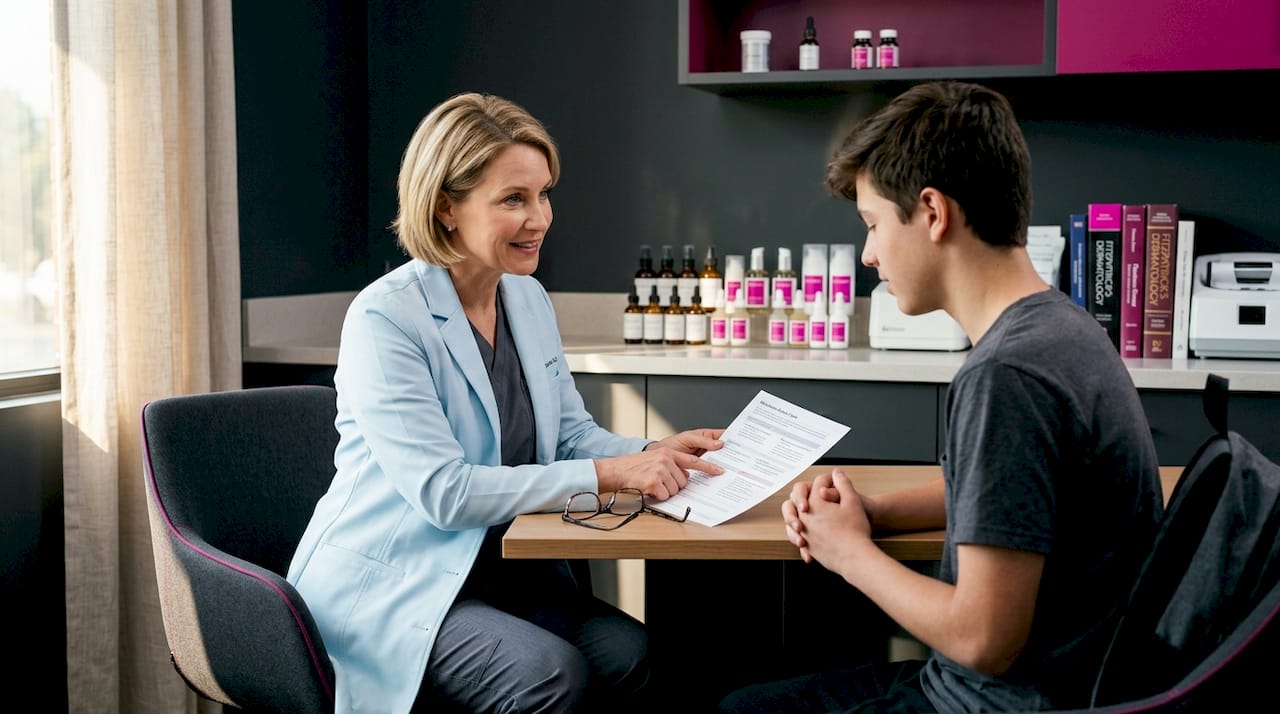
If you’ve ever stared at a list of dermatology services and felt more confused than when you started, you’re not alone. The examples of medical dermatology services available today span everything from prescription creams to surgical cancer removal, and knowing which one applies to your situation makes a real difference in outcomes. This article breaks down the most common and specialized medical skin care services, explains what each one involves, and helps you understand when each type of treatment is typically used so you can have a more informed conversation with your dermatologist.
Table of Contents
- Key takeaways
- 1. Examples of medical dermatology services: topical and systemic treatments
- 2. Phototherapy and light-based treatments
- 3. Mohs micrographic surgery for skin cancer
- 4. Skin biopsies, cryotherapy, and excisions
- 5. Management of chronic skin conditions
- 6. Photodynamic therapy for skin cancer and photodamage
- 7. How to choose the right medical dermatology service
- My perspective on where medical dermatology is heading
- Explore personalized medical dermatology at Raodermatology
- FAQ
Key takeaways
| Point | Details |
|---|---|
| Medical dermatology covers far more than acne | Services range from skin cancer surgery and phototherapy to biologic injections for eczema and psoriasis. |
| Biologics have changed pediatric care | Updated AAD guidelines now favor biologics over systemic steroids for children with atopic dermatitis. |
| Phototherapy requires session commitment | Narrowband UVB is more tolerable than broadband UVB, but both require multiple weekly sessions for results. |
| Mohs surgery is precision skin cancer removal | It offers the highest cure rate for certain skin cancers by examining tissue margins in real time during surgery. |
| Personalized plans outperform generic protocols | No two patients respond identically, so combining modalities based on your skin type and history matters. |
1. Examples of medical dermatology services: topical and systemic treatments
The most frequently used examples of medical dermatology services start with medicated topicals and prescription oral drugs. These are the frontline tools for conditions like acne, eczema, psoriasis, rosacea, and atopic dermatitis.
Common options include:
- Topical steroids to reduce inflammation in eczema flares and contact dermatitis
- Retinoids (both topical and oral) for acne, photodamage, and certain precancerous changes
- Topical and oral antibiotics for inflammatory acne or skin infections
- Biologics such as dupilumab, which targets specific inflammatory pathways in eczema
- JAK inhibitors like upadacitinib for moderate-to-severe atopic dermatitis in adults and adolescents
One of the biggest shifts in recent years involves pediatric care. The American Academy of Dermatology now recommends against systemic corticosteroids for children with atopic dermatitis, with biologics approved for use in children as young as 6 months. This is a genuine paradigm shift, not a minor update.
For acne specifically, personalized acne treatment combining topical, oral, and in-office approaches consistently yields better outcomes than a single generic protocol. No single prescription works for everyone.
Pro Tip: If your skin condition has not responded to two or three topical treatments, ask your dermatologist specifically about biologics or systemic options. Many patients stay on ineffective topicals far too long before escalating care.
2. Phototherapy and light-based treatments
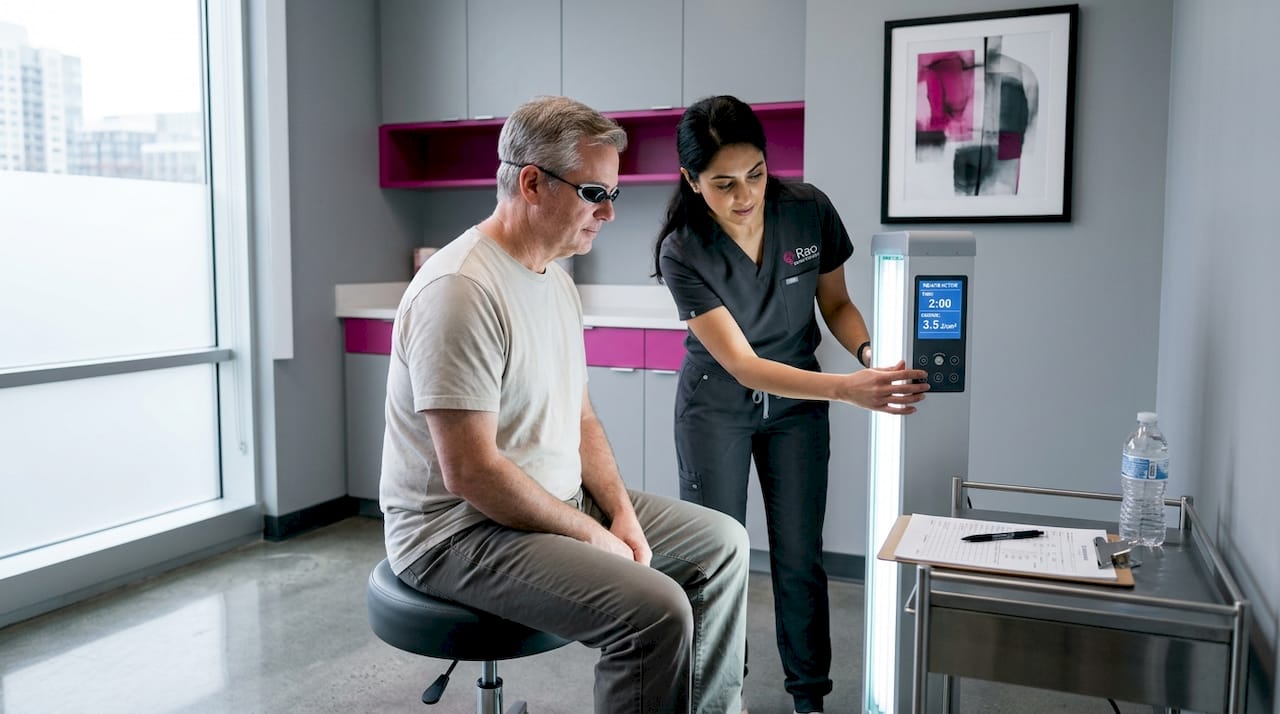
Phototherapy is one of the most underappreciated types of dermatology treatments available in a medical setting. It uses controlled doses of ultraviolet light to suppress the immune overactivity driving conditions like psoriasis, eczema, and vitiligo.
The two main forms are:
- Narrowband UVB phototherapy targets a precise wavelength (311 to 313 nm) and is now preferred for atopic dermatitis and psoriasis
- Broadband UVB covers a wider spectrum but comes with more side effects and less tolerance
A clinical comparison found that narrowband UVB had zero withdrawals compared to four in the broadband group, making it the better choice for most patients. For those managing chronic psoriasis, UVB light therapy can reduce reliance on systemic medications significantly.
Photodynamic therapy (PDT) is a separate category worth noting. It combines a photosensitizing agent applied to the skin with a specific light source to destroy abnormal cells. PDT is particularly effective for superficial basal cell carcinoma and actinic keratosis. Critically, PDT treats not just the tumor but the surrounding photodamaged skin, offering a proactive approach to preventing future cancers in the same area.
Pro Tip: Phototherapy requires consistency. Most protocols call for two to three sessions per week over 8 to 12 weeks. Missing sessions resets progress, so factor scheduling into your decision before starting.
3. Mohs micrographic surgery for skin cancer
Mohs micrographic surgery is widely considered the gold standard for removing certain types of skin cancer, particularly basal cell carcinoma and squamous cell carcinoma on the face, scalp, hands, or other areas where tissue preservation matters.
During the procedure, a dermatologic surgeon removes thin layers of tissue one at a time and examines each layer under a microscope immediately. This continues until no cancer cells remain. The process allows for maximum preservation of healthy tissue, which is why Mohs produces outstanding cosmetic outcomes in sensitive areas.
What patients should expect:
- Local anesthesia through field block injection, which typically takes 5 to 10 minutes to reach full effect
- Multiple rounds of tissue removal, each followed by lab analysis, so the procedure can take several hours
- Postoperative discomfort peaks the night of the procedure; most patients manage it with over-the-counter pain relievers
- Reconstruction of the surgical site may be done the same day or delayed to optimize healing, depending on defect size
Pro Tip: Arrange a ride home before your Mohs appointment. Even though you’re awake the entire time, the combination of local anesthesia and procedure length makes driving afterward unwise for most patients.
4. Skin biopsies, cryotherapy, and excisions
These are the everyday procedural dermatology service examples that most patients will encounter at some point. They are less complex than Mohs surgery but no less important for accurate diagnosis and treatment.
| Procedure | What it treats | Typical recovery |
|---|---|---|
| Shave biopsy | Superficial lesions, suspected skin cancers | 5 to 10 days |
| Punch biopsy | Deeper lesions, inflammatory conditions | 1 to 2 weeks |
| Excision | Benign and malignant growths | 2 to 4 weeks |
| Cryotherapy | Warts, actinic keratoses, minor lesions | 1 to 2 weeks |
| Brachytherapy (post-excision) | Keloid recurrence prevention | Weeks to months |
Cryotherapy uses liquid nitrogen to freeze and destroy abnormal tissue. It is fast, requires no anesthesia, and works well on actinic keratoses and common warts. For keloids, surgical excision alone has a high recurrence rate. Adding postoperative brachytherapy drops the keloid recurrence rate to 3.1 to 15%, compared to 14 to 29.3% with radiotherapy alone.
5. Management of chronic skin conditions
Chronic conditions like psoriasis, eczema, and acne require ongoing management, not one-time treatment. This is where medical dermatology practices genuinely distinguish themselves from urgent care or general practice settings.
| Condition | Treatment options | Notes |
|---|---|---|
| Psoriasis | Topical steroids, biologics, narrowband UVB | Biologics often needed for moderate to severe disease |
| Atopic dermatitis | Dupilumab, JAK inhibitors, phototherapy | Systemic steroids avoided in children |
| Acne | Topicals, oral antibiotics, isotretinoin, in-office procedures | Combination therapy most effective |
| Rosacea | Topical ivermectin, oral doxycycline, laser | Triggers matter as much as medication |
The key to managing chronic conditions is building a treatment plan that adjusts over time. A patient with moderate psoriasis may start with phototherapy, move to a biologic when phototherapy becomes impractical, and use topicals to manage flares in between. Raodermatology’s approach to personalized dermatology reflects this principle of layering therapies based on what the patient’s skin is doing right now, not what a general protocol says to do.
Long-term monitoring matters, too. Patients on systemic agents like methotrexate or cyclosporine need regular bloodwork. Those on biologics require periodic reassessment to confirm continued efficacy. The relationship with your dermatologist is, by design, an ongoing one.
6. Photodynamic therapy for skin cancer and photodamage
PDT deserves its own section because it sits at the intersection of cancer treatment, prevention, and cosmetic improvement. It is one of the clearest examples of skin health services that do multiple jobs at once.
A photosensitizing agent is applied to the skin and absorbed preferentially by abnormal cells. After a defined incubation period, a specific light source activates the agent, destroying the targeted cells. The surrounding healthy tissue is largely spared.
PDT is frequently used for:
- Superficial basal cell carcinoma in patients who are poor surgical candidates
- Actinic keratosis, particularly when multiple lesions are present across a broad area
- Photodamage and field cancerization, where PDT treats the full field rather than just individual lesions
- Off-label use in acne and rosacea, with emerging evidence supporting its effectiveness
For a deeper look at how this works in practice, Raodermatology’s resource on photodynamic therapy for actinic keratosis covers the clinical process in accessible detail.
7. How to choose the right medical dermatology service
Knowing the dermatology treatment options available is useful. Knowing which one fits your situation is better. Here is how to think through the decision.
Several factors should guide you:
- Severity of your condition: Mild acne responds to topicals. Moderate-to-severe disease typically needs systemic or biologic therapy.
- Your age and overall health: Children, pregnant patients, and those with immune conditions have different treatment constraints.
- Tolerability: Some patients cannot commit to three phototherapy sessions per week. Others want to avoid needles entirely. Both are valid and should influence your plan.
- Treatment goals: Clearing skin fast before an event calls for different tools than achieving long-term remission with minimal side effects.
- Accurate diagnosis first: This one is non-negotiable. Misdiagnosis risks are real, especially with symptom-based prescribing. Using topical steroids on an undiagnosed fungal infection, for example, can worsen the condition significantly.
| Scenario | Recommended starting point |
|---|---|
| Mild localized eczema | Topical corticosteroids, emollients |
| Moderate psoriasis | Phototherapy or biologic evaluation |
| Suspected basal cell carcinoma | Surgical consultation, possible Mohs or PDT |
| Recurrent keloids | Excision plus postoperative brachytherapy |
| Pediatric atopic dermatitis | Biologic consultation per AAD guidelines |
The most important step is getting a proper diagnosis from a board-certified dermatologist before committing to any treatment path. General practitioners often handle mild skin conditions well, but complex or persistent cases belong with a specialist.
My perspective on where medical dermatology is heading
I’ve followed the evolution of skin condition treatments closely, and the shift I find most striking is not any single drug. It’s the collapse of the one-size-fits-all mindset. For decades, the default response to eczema was a steroid cream and a handshake. That is no longer acceptable care by any serious standard.
What I’ve seen work consistently is the combination of accurate diagnosis, layered treatment planning, and genuine follow-up. A patient who gets evaluated once and handed a prescription without a follow-up appointment is not getting medical dermatology. They’re getting a guess.
The biologics era has also forced dermatologists to get more precise about what they are treating. You don’t prescribe dupilumab casually. You confirm the diagnosis, you assess severity, and you monitor the patient. That rigor has improved outcomes across the board, even for patients who don’t end up on biologics, because the standard of evaluation has risen.
My strongest advice to anyone exploring these options: ask your dermatologist not just what they are prescribing, but why that treatment over the alternatives. A good dermatologist will have a clear answer. That answer is what distinguishes medical dermatology at its best from a prescription pad.
— Krunal
Explore personalized medical dermatology at Raodermatology
Raodermatology has over 25 years of experience treating the full range of skin conditions across New Jersey, New York, and California. Whether you are dealing with a suspicious lesion, a chronic condition that has not responded to prior treatment, or a skin cancer diagnosis that needs expert surgical management, Raodermatology’s team brings clinical depth and individualized care to every case. The practice offers comprehensive dermatology services including phototherapy, Mohs surgery, PDT, biologic therapies, and full chronic condition management. For patients concerned about skin cancer specifically, Raodermatology’s dedicated skin cancer treatment services cover screening, diagnosis, and advanced removal techniques. Schedule a consultation and get a treatment plan built around your skin, not a generic protocol.
FAQ
What are common examples of medical dermatology services?
Medical dermatology services include skin biopsies, Mohs surgery, phototherapy, prescription topical and systemic medications, cryotherapy, and photodynamic therapy. These address conditions ranging from acne and eczema to skin cancer.
How is medical dermatology different from cosmetic dermatology?
Medical dermatology focuses on diagnosing and treating skin diseases and conditions, while cosmetic dermatology addresses appearance-related concerns like wrinkles, pigmentation, and skin texture. Many practices offer both, but the clinical focus and insurance coverage differ significantly.
Is phototherapy safe for long-term use?
Narrowband UVB phototherapy is considered safe for extended use under medical supervision and shows better tolerability than broadband UVB, with no withdrawals recorded in narrowband groups in clinical trials. Your dermatologist will monitor cumulative exposure over time.
When should I consider Mohs surgery over other skin cancer treatments?
Mohs surgery is typically recommended for skin cancers in cosmetically sensitive or functionally critical areas, recurrent tumors, or cancers with poorly defined borders. It provides real-time margin assessment, which gives it a higher cure rate than standard excision for these cases.
Can children receive biologic treatments for eczema?
Yes. Updated AAD guidelines now support the use of biologics for pediatric atopic dermatitis, with some approved for children as young as 6 months, replacing the prior reliance on systemic corticosteroids that carry significant risks for developing patients.
Recommended
Filed under: