
Gain insight into understanding skin cancer risk factors and learn vital steps to protect yourself and your family from this common threat.
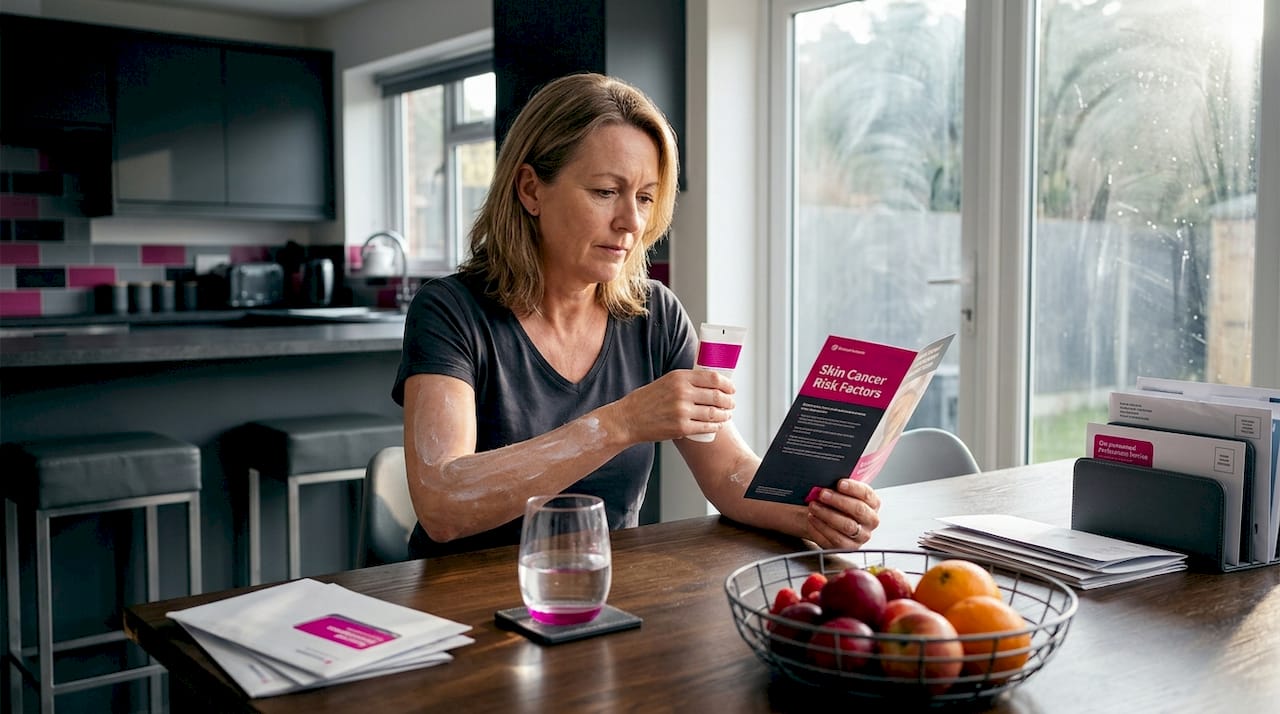
Skin cancer is the most commonly diagnosed cancer in the United States, yet most people underestimate their personal risk. Lifetime melanoma risk is about 3% for White individuals, but it still reaches 0.5% for Hispanic people and 0.1% for Black individuals, meaning no one is completely off the hook. What makes skin cancer especially tricky is that the factors driving your risk go far beyond whether you burn easily at the beach. This guide breaks down exactly what increases your risk, how UV exposure works at the cellular level, and the concrete steps you can take right now to protect yourself and your family.
Table of Contents
- What are the primary risk factors for skin cancer?
- How UV exposure affects your skin cancer risk
- Additional risk factors: Immunosuppression, genetics, and rare cases
- What you can do: Prevention and early detection strategies
- A dermatologist’s take: What most people get wrong about skin cancer risk
- Take the next step with Rao Dermatology
- Frequently asked questions
Key Takeaways
| Point | Details |
|---|---|
| Risk is complex | Skin cancer risk depends on genetics, skin type, sun exposure patterns, and certain medical factors. |
| UV is a key factor | Both repeated sun exposure and intense burns can increase your chances of skin cancer. |
| Prevention works | Daily sun protection and regular skin exams are proven ways to lower your risk. |
| Early detection saves lives | Finding skin cancer early leads to a 99 percent five-year survival rate for melanoma. |
| Dermatologists can help | A qualified dermatologist partners with you to identify risks and create a prevention plan. |
What are the primary risk factors for skin cancer?
Skin cancer does not develop randomly. A well-established set of factors either raises or lowers the likelihood that abnormal skin cells will form and spread. The more you understand these factors, the better equipped you are to take targeted action.
Skin cancer risk factors fall into two broad categories: modifiable and non-modifiable. Non-modifiable factors are things you were born with or circumstances you cannot change. Modifiable factors are habits and exposures you have direct control over.
Non-modifiable risk factors include:
- Fair skin, light hair, and light eyes
- Skin that burns easily or rarely tans
- A large number of moles (especially more than 50)
- Atypical or irregularly shaped moles
- A personal history of skin cancer
- A family history of skin cancer or melanoma
- Older age
- Inherited genetic conditions affecting DNA repair
Modifiable risk factors include:
- Frequent unprotected sun exposure
- History of severe sunburns, especially in childhood or adolescence
- Regular use of tanning beds
- Outdoor work or activities without adequate sun protection
- Living at high altitude or near the equator where UV intensity is higher
The primary risk factors for skin cancer also include UV exposure from both natural sunlight and artificial sources like tanning beds. This is an important point because many people assume tanning beds are a controlled, safer alternative to the sun. They are not.
One misconception worth addressing head-on: people with darker skin tones are not immune to skin cancer. While the melanoma risk by race shows a significantly lower lifetime incidence in Black (1 in 1,000) and Hispanic (1 in 200) populations compared to White individuals (1 in 33), people of color still develop skin cancer, often at later stages because the warning signs go unnoticed longer.
| Risk factor | Modifiable? | Impact level |
|---|---|---|
| Fair skin / burns easily | No | High |
| Family history of melanoma | No | High |
| Frequent tanning bed use | Yes | High |
| Chronic unprotected sun exposure | Yes | High |
| Many moles (>50) | No | Moderate |
| Occasional unprotected sun | Yes | Moderate |
| Living at high altitude | Partially | Moderate |
Understanding where you land across these categories gives you a starting point for having a real conversation with your dermatologist about screening frequency and prevention priorities.
How UV exposure affects your skin cancer risk
Understanding your risk starts with knowing how UV exposure works and why both everyday and occasional exposure can make a big difference.

When ultraviolet radiation hits your skin, it does not just cause a temporary tan or a painful burn. UV radiation causes DNA damage in skin cells, triggering mutations that can disrupt normal cell growth. Over time, these mutations accumulate, and when the body’s repair mechanisms cannot keep up, abnormal cells can multiply into cancer.
There are two main types of UV rays to understand:
- UVB rays cause direct DNA damage and are the primary driver of sunburn.
- UVA rays penetrate more deeply, contributing to premature aging and indirect DNA damage. UVA rays are present year-round, even on cloudy days, and pass through glass.
The pattern of exposure matters as much as the total amount. Basal cell carcinoma (BCC) and squamous cell carcinoma (SCC), the two most common types, tend to develop from chronic, cumulative UV exposure. Think of the person who spends decades working outdoors without sunscreen. Melanoma, on the other hand, is more closely linked to intermittent intense exposure, particularly blistering sunburns.
| Cancer type | UV pattern | Common locations |
|---|---|---|
| Basal cell carcinoma (BCC) | Chronic, cumulative | Face, neck, hands |
| Squamous cell carcinoma (SCC) | Chronic, cumulative | Ears, lips, hands, scalp |
| Melanoma | Intense, intermittent | Back (men), legs (women), anywhere |
The sunburn data is stark. Five or more blistering sunburns between the ages of 15 and 20 increase melanoma risk by 80% and nonmelanoma skin cancer risk by 68%. That statistic should change the way you think about protecting teenagers and young adults, not just children.
“The absence of a visible sunburn does not mean your skin is undamaged. UVA rays cause silent, cumulative harm that adds up over years before any visible sign appears.”
Here are actionable steps to reduce your UV-related risk starting today:
- Check the UV index in your area every morning before going outside.
- Plan outdoor activities before 10 a.m. or after 4 p.m. when UV intensity drops.
- Wear UPF-rated clothing and a wide-brimmed hat whenever you spend extended time outdoors.
- Apply broad-spectrum SPF 30 or higher sunscreen and reapply every two hours.
- Never use tanning beds, regardless of how infrequently you plan to use them.
For practical guidance tailored to different skin types and lifestyles, our sun protection tips page offers season-by-season advice.
Pro Tip: Even one severe sunburn before age 20 can meaningfully increase your lifetime melanoma risk. Protecting your kids from sunburns is one of the most impactful cancer-prevention moves you can make as a parent.
Additional risk factors: Immunosuppression, genetics, and rare cases
Beyond sunlight, other health and genetic factors can dramatically change your risk profile.
Most people think of skin cancer as a sun problem. But for a meaningful portion of patients, the underlying issue is a compromised immune system or a genetic condition that reduces the body’s ability to repair UV-induced DNA damage.
High-risk groups beyond standard sun exposure:
- Organ transplant recipients on long-term immunosuppressive medications
- Individuals undergoing chemotherapy or living with HIV
- People with xeroderma pigmentosum, a rare inherited disorder that severely limits DNA repair
- Individuals with a history of arsenic exposure through contaminated water, certain medications, or occupational exposure
- Those with a strong family history of melanoma or related syndromes like familial atypical mole and melanoma (FAMM) syndrome
Immunosuppression significantly elevates SCC risk, and arsenic exposure independently increases both keratinocyte cancer and melanoma risk. Organ transplant recipients, for example, develop SCC at rates 65 to 250 times higher than the general population. This is not a small statistical blip. It represents a population that absolutely needs aggressive, regular dermatological monitoring.
Genetic syndromes add another layer of complexity. Xeroderma pigmentosum is one example where even minimal UV exposure can produce disproportionate DNA damage because the repair enzymes are defective. Patients with this condition face a skin cancer risk thousands of times higher than average and require near-total sun avoidance from early childhood.
For people with darker skin, there is a specific type of melanoma worth understanding: acral lentiginous melanoma. This form appears on the palms, soles of the feet, and under fingernails or toenails. Locations that most self-exams and even some clinical exams overlook. It is not related to sun exposure in the traditional sense, making the usual “stay out of the sun” messaging inadequate for everyone.
“Darker skin may be less likely to develop typical sun-induced melanoma, but it is more prone to delayed diagnosis for hidden types that appear in areas rarely examined.”
A broader melanoma overview can help you understand the different subtypes and why location on the body matters for diagnosis and treatment.
What you can do: Prevention and early detection strategies
With a clear understanding of what increases risk, here’s what you can actively do to protect yourself and your family.
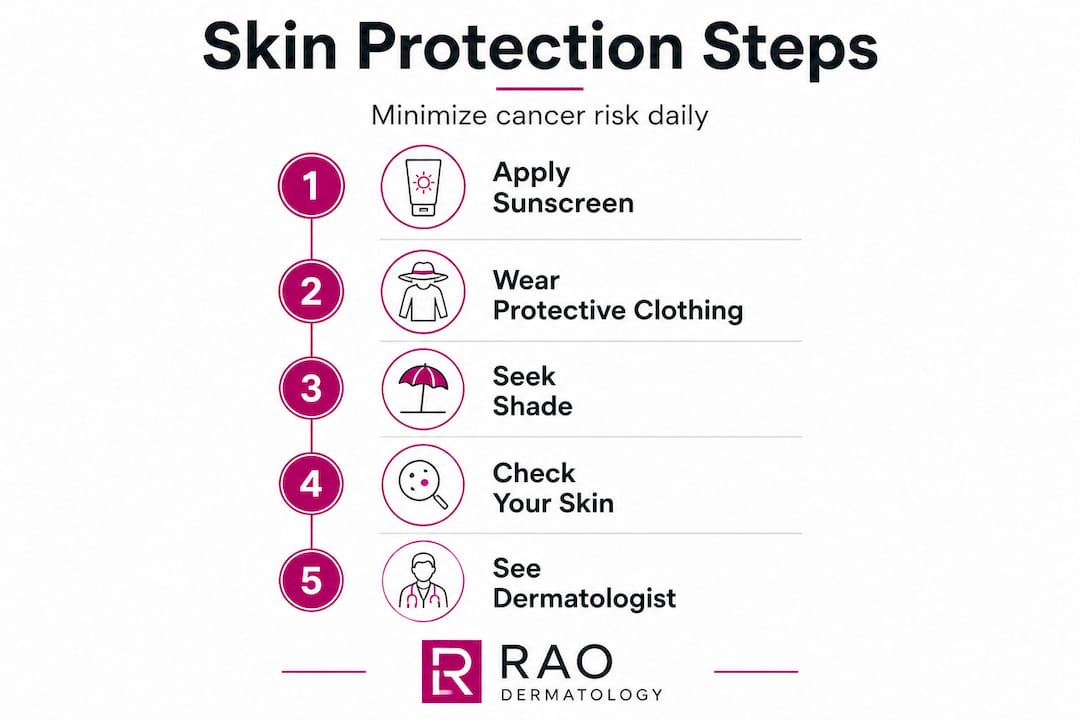
Prevention is straightforward in principle, but it requires consistency. Most skin cancers are preventable, and all of them are more treatable when caught early. That combination makes prevention and early detection your two most powerful tools.
Daily and situational prevention habits:
- Seek shade between 10 a.m. and 4 p.m. when UV radiation is strongest
- Wear a broad-brimmed hat that shades your face, neck, and ears
- Choose UV-blocking sunglasses to protect the skin around your eyes
- Apply broad-spectrum SPF 30+ sunscreen using about one ounce for your body and one teaspoon for your face, reapplied every two hours outdoors
- Wear UPF-rated clothing for extended outdoor exposure
- Never use tanning beds or sunlamps under any circumstances
- Check your medications for photosensitivity warnings, as some common drugs increase UV sensitivity
For monthly skin self-exams, follow these steps:
- Stand in a well-lit room with a full-length mirror and a hand mirror.
- Examine your face, scalp (use a comb to part hair), neck, and ears.
- Check your chest, abdomen, and both sides of your arms.
- Use the hand mirror to check your back and buttocks.
- Sit and carefully examine your legs, between your toes, and the soles of your feet.
- Check your fingernails and toenails for dark streaks or discoloration.
- Use the ABCDE rule: look for Asymmetry, irregular Border, unusual Color, Diameter over 6mm, and any Evolution (change over time).
Skin self-exam steps are easy to build into a monthly routine, and knowing your own skin is the single best preparation for catching changes early.
For people at higher risk, including those with fair skin, a history of sunburns, more than 50 moles, or a family history of melanoma, scheduling an annual skin cancer screening with a dermatologist is critical. Early detection yields a 99% five-year melanoma survival rate, compared to significantly lower rates when the disease is diagnosed at advanced stages. Annual screenings also allow dermatologists to monitor borderline moles with precision tools.
For additional guidance on what changes to watch for, our self-exam details page walks through common warning signs with visual examples.
Pro Tip: Photograph your moles every three to six months using consistent lighting and angles. A simple photo log makes it far easier to notice gradual changes that might otherwise go undetected until they become a concern.
A dermatologist’s take: What most people get wrong about skin cancer risk
One of the most consistent patterns we see in practice is this: patients arrive for their first skin cancer screening after a concerning spot has already been there for months or years. They waited because they assumed they were low risk. No family history. Not particularly fair. No recent sunburns. What they did not realize is that skin cancer risk is cumulative and context-dependent, not binary.
The biggest misconception is that skin cancer is primarily a problem for fair-skinned people who vacation in Florida. That framing leaves out the construction worker with a medium complexion who has spent 30 years outside without adequate sun protection. It leaves out the South Asian patient whose acral melanoma developed under a toenail. And it leaves out the transplant recipient whose immunosuppression medications have quietly elevated their SCC risk for years.
The second thing most patients miss is the importance of knowing their personal history in detail. Do you remember how many significant sunburns you had as a teenager? Did a parent or sibling ever have an unusual skin lesion removed? These details matter enormously for determining how often you need screening and what tools your dermatologist should use.
We also want to address the “no sunburn, no damage” myth directly. UVA rays cause real, measurable DNA changes in skin cells even when you walk away with a perfect tan. The damage is just invisible in the short term. Years of gradual tanning without burning still accumulates meaningful UV exposure in your skin’s cellular record.
Dermatoscopy and early detection technology has transformed what dermatologists can see compared to a basic visual exam. These tools allow us to evaluate the internal structure of moles and lesions with precision that the naked eye simply cannot match. The point is: partnering with a dermatologist is not just about catching cancer after it develops. It is about building a longitudinal record of your skin that makes any change detectable earlier and more accurately.
Prevention is a lifelong practice, not a single appointment. The patients who fare best are those who build sun protection habits in their 20s and 30s, schedule consistent annual screenings, and treat any skin change as worth reporting rather than waiting to see if it resolves on its own.
Take the next step with Rao Dermatology
Understanding your risk is the first step. Acting on it is what actually protects you. At Rao Dermatology, we combine 25 plus years of clinical expertise with advanced diagnostic technology to give every patient a thorough, personalized skin cancer risk assessment.

Whether you need your first baseline screening, monitoring for high-risk conditions, or guidance on a mole you have been watching, our team across California, New Jersey, and New York is ready to help. Explore our skin cancer services to learn how we approach prevention and detection for patients at every risk level. You can also browse our full list of dermatology services to see how medical and cosmetic care work together at our practice. Booking is straightforward, and our providers will give you a clear, practical plan tailored to your skin type and history.
Frequently asked questions
Can you get skin cancer even if you have dark skin?
Yes. While the overall risk is lower, people with dark skin can develop skin cancer, particularly acral melanoma on palms, soles, and nails, where it is often detected at a later stage.
How often should I check my skin for cancer?
Perform a self-exam monthly and schedule annual dermatologist exams for high-risk individuals, including those with fair skin, more than 50 moles, family history, or immunosuppression.
Which sunscreen is best for preventing skin cancer?
Use a broad-spectrum SPF 30+ sunscreen every day, reapply every two hours when outdoors, and use enough product. Most people apply far less than the recommended amount.
Are tanning beds safe if you use them rarely?
No. Any tanning bed use increases risk because UV exposure from tanning beds is classified as a primary risk factor for all types of skin cancer, including melanoma. There is no safe level of tanning bed use.
What is the 5-year survival rate for melanoma when found early?
When melanoma is detected in its earliest stage, the five-year survival rate reaches 99%, which is why regular screening is one of the highest-value steps you can take for your long-term health.
Recommended
- Skin Cancer Awareness Month: 5 Expert Tips to Protect Your Skin in 2024 | Rao Dermatology
- What Causes Skin Cancer? Understanding Risk Factors and Prevention | Rao Dermatology
- Annual Skin Cancer Screening: Why You Need One Every Year | Rao Dermatology
- Annual Skin Cancer Screening: Your Complete Guide to Dermatology Checkups | Rao Dermatology
Filed under: