
Learn why see a dermatologist to detect skin issues early, manage conditions, and achieve your skincare goals safely and effectively.

Most people assume a dermatologist’s waiting room is filled with patients chasing smoother skin or fewer wrinkles. That assumption misses the full picture by a wide margin. Dermatologists are frontline specialists who detect life-threatening skin cancers, manage chronic inflammatory conditions, and protect patients from complications that general practitioners often overlook. Whether you have a suspicious mole, a stubborn rash, or a cosmetic goal you want to reach safely, a dermatologist brings a level of precision and accountability that matters. Understanding both dimensions of this specialty can genuinely change how you think about skin care.
Table of Contents
- Medical reasons for seeing a dermatologist
- Cosmetic and esthetic motivations: Safety and professional guidance
- Board certification and expertise: Why it matters
- Dermatology for all ages: Pediatric and adult needs
- Taking skin health seriously: What most people overlook about dermatology
- Start your journey with professional dermatological care
- Frequently asked questions
Key Takeaways
| Point | Details |
|---|---|
| Routine skin checks | Annual screenings help detect skin cancer and other issues early for better outcomes. |
| Cosmetic safety first | Board-certified dermatologists ensure evidence-based, safe procedures with patient-centered care. |
| Expertise matters | Certification and experience protect you from risks and provide comprehensive skin solutions. |
| All ages benefit | Dermatologists tailor their approach for children, adults, and seniors to address unique skin needs. |
| Ask the right questions | Targeted questions about risks, recovery, and certification empower you to make informed choices. |
Medical reasons for seeing a dermatologist
After introducing the broad value of dermatology, let’s start with the most critical health-related reasons for seeing a specialist.
Skin is your body’s largest organ, and it sends signals that trained eyes can read. Dermatologists diagnose and treat over 3,000 distinct conditions, including eczema, psoriasis, rosacea, acne, and melanoma. Many patients arrive having lived with a condition for years, assuming it was just sensitive skin or a seasonal allergy. In reality, conditions like skin issues and intolerance can reflect deeper inflammatory or immune responses that require targeted medical management rather than over-the-counter creams.
Why routine skin checks matter so much
Skin cancer is the most common cancer in the United States. Early detection is the single most powerful tool available. Melanoma caught at stage one carries a five-year survival rate above 98%, but survival drops sharply once the cancer has spread to lymph nodes or distant organs. That gap between early and late detection is exactly why health-driven dermatologist visits should be a regular part of your health calendar, not just a reaction to a visible problem.
Common skin conditions that require professional evaluation:
- Eczema (atopic dermatitis): Chronic itching and inflammation that can escalate without prescription-strength treatment
- Psoriasis: An autoimmune condition that affects joints in addition to skin if left unmanaged
- Acne: Can cause permanent scarring when not treated with appropriate prescription options
- Seborrheic keratosis: Benign growths that can mimic melanoma to the untrained eye
- Rosacea: Frequently misidentified as adult acne; requires specific management to prevent progression
The following comparison shows why a professional evaluation is far superior to self-diagnosis:
| Skin condition | DIY misidentification risk | What a dermatologist provides |
|---|---|---|
| Melanoma | Very high (often mistaken for a mole) | Dermoscopy, biopsy, and staging |
| Psoriasis | Moderate (confused with eczema) | Prescription biologics, phototherapy |
| Rosacea | High (confused with acne) | Correct topicals and laser options |
| Seborrheic keratosis | High (feared as cancer) | Clinical reassurance or removal |
| Acne | Low for diagnosis, high for severity | Isotretinoin, antibiotics, hormonal therapy |
The importance of regular visits cannot be overstated, especially for patients with fair skin, a family history of skin cancer, or significant sun exposure over the years.
Pro Tip: Schedule an annual full-body skin cancer screening every year, even if your skin looks fine. Dermatologists use specialized dermoscopy tools to spot lesions that are invisible to the naked eye. Catching a problem in its earliest stage is always the better outcome.
Cosmetic and esthetic motivations: Safety and professional guidance
Once health motivations are understood, it’s equally important to examine the role of dermatologists in safe cosmetic procedures.
The cosmetic side of dermatology is legitimate, popular, and growing fast. Treatments like Botox (botulinum toxin injections), dermal fillers, chemical peels, laser resurfacing, and microneedling are now performed millions of times each year in the United States. However, the line between a great result and a serious complication often comes down to who is holding the needle.
Botox risks and warnings are real, ranging from minor bruising and asymmetry to rare but severe complications like infection, necrosis (tissue death), or migration of the toxin. These risks shrink dramatically when the provider is a board-certified dermatologist who understands facial anatomy and can recognize early signs of a complication.
Questions every patient should ask before a cosmetic procedure
Before booking any esthetic appointment, you deserve clear and specific answers. The American Academy of Dermatology recommends consumers ask questions before cosmetic procedures because safety in cosmetic dermatology depends entirely on evidence-based practice and informed consent.
Here is a step-by-step list of questions to bring to your consultation:
- What procedure do you recommend for my specific concern, and why? Generic answers are a red flag.
- What are the realistic risks and side effects? Any provider who only describes perfect outcomes is not being honest.
- How long is the recovery, and what are the post-treatment restrictions? Laser treatments and deep peels require significant downtime.
- What results should I realistically expect? Request to see before and after photos from actual patients treated at that practice.
- What is your training and board certification? This is not rude. It is necessary.
- What happens if I experience a complication? A prepared provider will have a clear protocol.
Reviewing questions to ask your dermatologist before your appointment helps you walk in as an informed patient rather than a passive recipient of advice. A good consultation guide can make the process far less intimidating.
“Cosmetic dermatology is a valid reason to see a dermatologist, but safety hinges on using evidence-based procedures and asking targeted questions about options, expected results, risks, recovery, and qualification (board certification).” — American Academy of Dermatology
Understanding the distinction between medical vs cosmetic safety matters because cosmetic procedures carry real clinical implications and should never be treated as purely superficial decisions.
Pro Tip: Always ask to see before and after photos of patients with a similar skin tone and concern to yours. If a provider cannot show you these or becomes evasive, take that as a warning and seek a second opinion.
Board certification and expertise: Why it matters
To further ensure best outcomes, let’s look at how board certification underpins dermatologist expertise and credibility.
Board certification is not just a credential hanging on a wall. It represents years of residency training, passing rigorous written and oral examinations, and ongoing continuing medical education. A board-certified dermatologist has demonstrated competency in diagnosing and treating the full range of skin diseases, not just the cosmetic procedures that generate the most revenue.
Non-certified providers, including some medical spas and non-physician injectors, may offer many of the same services at lower price points. The risk, however, is significant. Without formal dermatology training, providers may miss underlying skin pathology, use incorrect technique, or fail to recognize complications before they become serious.
| Provider type | Training depth | Medical diagnosis capability | Complication management |
|---|---|---|---|
| Board-certified dermatologist | 3+ years residency plus fellowship | Yes, full scope | Yes, trained and equipped |
| General practitioner | Limited skin training | Partial | Limited |
| Medical spa provider (non-MD) | Variable, often short courses | No | Minimal |
| Esthetician (licensed) | State-licensed for esthetics only | No | No |
Understanding the board-certified dermatologist benefits goes beyond credentials. It means you are receiving care from someone who can recognize when your cosmetic concern is actually a medical one and act accordingly.
How to verify board certification:
- Ask the provider directly and confirm the specific board (American Board of Dermatology is the gold standard)
- Check the AAD safety guidelines for consumer verification resources
- Look up the provider’s name through your state medical board’s public license lookup tool
- Ask how many years they have practiced dermatology specifically
If you are still exploring your options, a practical starting point is knowing how to find a dermatologist who combines medical depth with cosmetic skill. Both dimensions matter, regardless of why you are initially making the appointment.
Dermatology for all ages: Pediatric and adult needs
Having addressed certification and expertise, let’s explore the breadth of dermatological care across all ages.
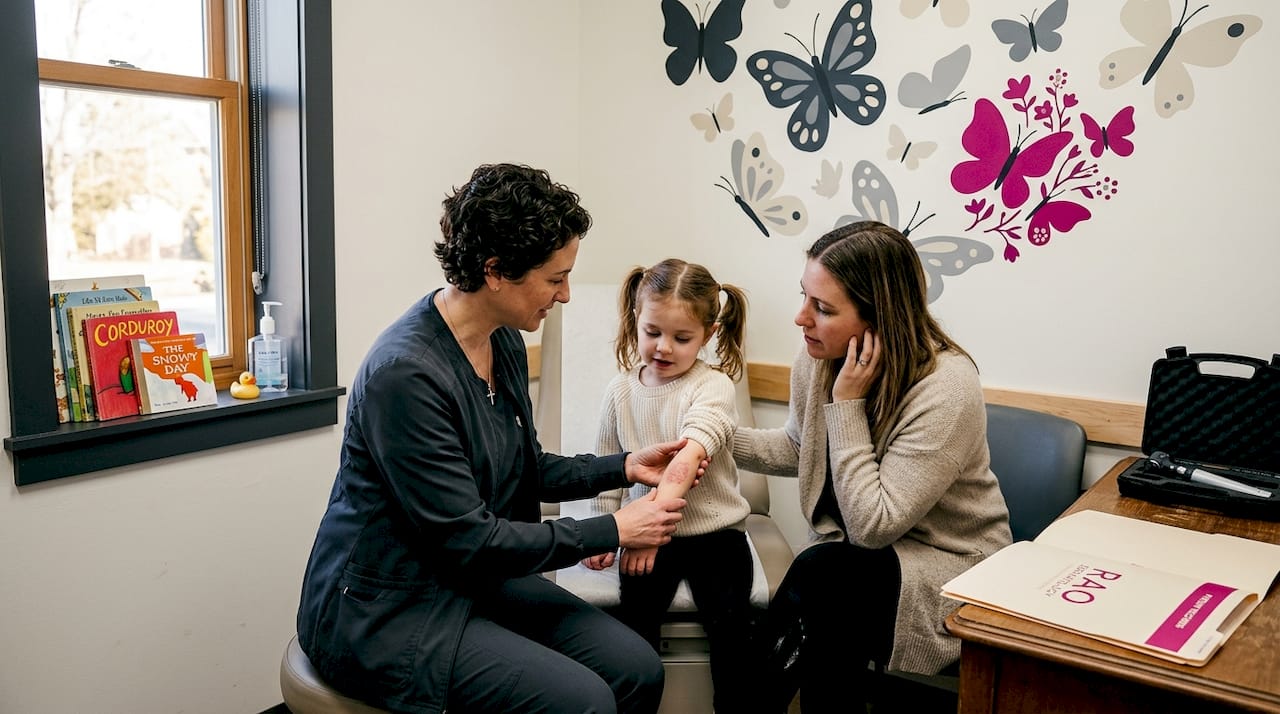
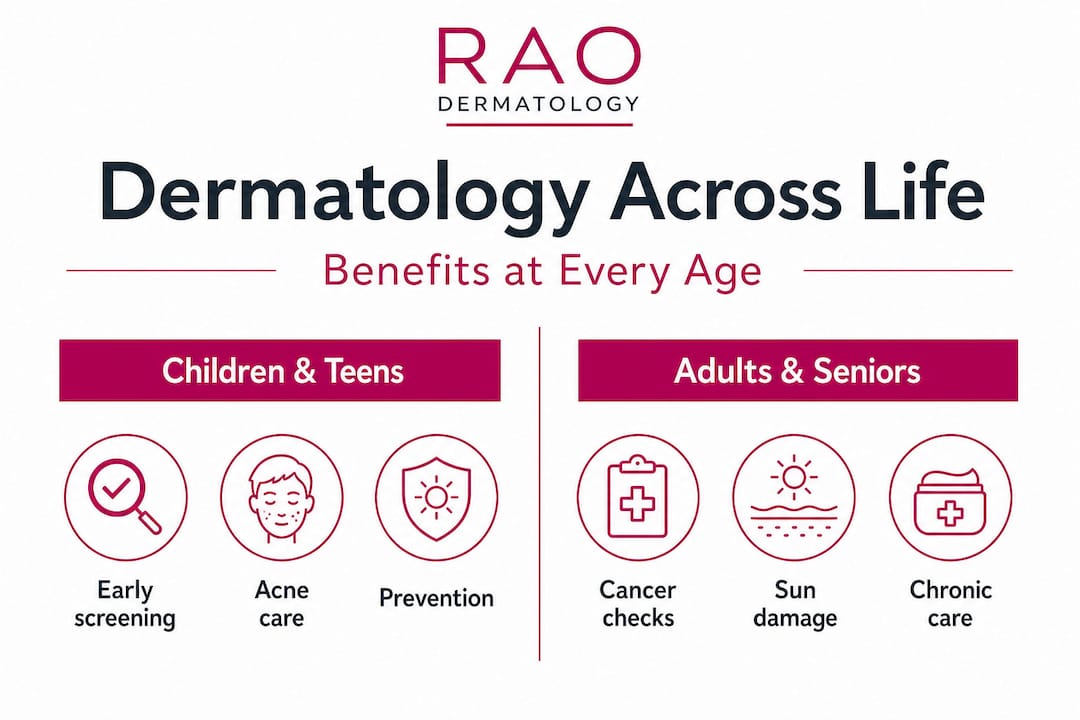
Skin changes constantly from birth through old age, and dermatologists adapt their approach accordingly. The conditions seen in a six-year-old look nothing like those in a sixty-year-old, and the treatments are just as different.
Pediatric skin health
Children are vulnerable to a specific range of skin conditions that require gentle, age-appropriate intervention. Pediatric dermatology addresses concerns like:
- Eczema: Affects up to 20% of children and can severely disrupt sleep and development
- Birthmarks and vascular lesions: Some require monitoring or early intervention to prevent complications
- Molluscum contagiosum: A viral skin infection common in school-age children
- Warts: Highly contagious and often persistent without treatment
- Allergic contact dermatitis: Reactions to products, plants, or materials
Early dermatological care for children can prevent conditions from progressing into chronic problems. It also spares families from years of mismanagement with products that are not designed for pediatric skin.
Adolescent concerns
Teenagers face a distinct set of challenges. Acne is the most common, affecting nearly 85% of adolescents at some point. Beyond acne, adolescents also present with pigmentation issues, stretch marks, and early signs of sun damage, especially in regions with high UV exposure like California. Effective early intervention can prevent the kind of scarring and confidence loss that follows poorly managed teenage acne.
Adult and senior skin care
Adults carry cumulative sun damage, early skin cancers, and chronic conditions that build over decades. Seniors face thinning skin, increased fragility, and a higher baseline risk for both benign and malignant lesions. Understanding skin of color expertise is equally important because conditions present differently across skin tones and require customized diagnostic approaches.
For patients where a biopsy is needed, dermatopathology services allow the tissue to be examined at a microscopic level for the most accurate diagnosis possible. This level of precision matters enormously when a diagnosis informs a surgical or oncological treatment plan.
Pro Tip: When selecting skin care products at any age, avoid assuming that “natural” means safe or appropriate. Ask your dermatologist to review your current routine before your first appointment. Products meant for one age group or skin type can actively worsen conditions in another.
Taking skin health seriously: What most people overlook about dermatology
Here is a perspective you will not find in most guides about visiting a dermatologist.
Most patients come in with a specific complaint and a specific goal. They want the mole looked at. They want their acne cleared. They want Botox. There is nothing wrong with any of that. But the patients who get the best long-term outcomes are the ones who let their dermatologist look at the whole picture, not just the presenting complaint.
We have seen patients come in for a filler consultation and leave with an early melanoma referral that saved their lives. We have seen patients who spent years managing what they thought was adult acne, only to learn it was rosacea with a hormonal trigger that needed a completely different treatment. Cosmetic goals and medical screening are not competing priorities. They coexist on every visit when your provider is doing the job right.
The AAD’s consumer guidance explicitly places patient safety above aesthetic outcomes because the same skin that you want to look good also needs to stay healthy. A dermatologist who only answers the cosmetic question without evaluating skin health is not giving you the full value of the specialty.
Our editorial position, built from 25+ years of clinical experience across New Jersey, New York, and California, is simple: skin health and skin aesthetics are the same conversation. Insist that your provider treats them that way. Read about our approach to holistic dermatology care to understand why this philosophy leads to better outcomes across every patient type.
Start your journey with professional dermatological care
Taking what you have learned and turning it into action is the most important step.

At Rao Dermatology, our board-certified specialists offer the full spectrum of dermatologist services across California, New Jersey, and New York, built on Dr. Babar K. Rao’s 25+ years of expertise. Whether your priority is skin cancer screening, management of a chronic condition, or exploring our esthetic services, every appointment includes a medical-grade evaluation of your skin health. We combine clinical precision with patient-centered care so that your cosmetic goals and long-term skin wellness move forward together. Contact us today to book a consultation at the location nearest to you.
Frequently asked questions
What warning signs indicate I should see a dermatologist immediately?
Unusual moles that change color, shape, or size; persistent sores that do not heal; rapid unexplained skin changes; or severe allergic reactions all warrant an urgent dermatologist evaluation rather than a wait-and-see approach.
How do I know if my provider is board-certified?
Ask directly, then verify through your state medical board or the American Academy of Dermatology’s public directory. Board certification is the clearest signal that your provider has completed rigorous, specialty-specific training.
Can dermatologists help with cosmetic concerns safely?
Yes. Board-certified dermatologists apply evidence-based techniques and conduct a skin health assessment before any cosmetic procedure, which reduces risk and leads to better results than receiving treatment from providers without formal dermatology training.
Is pediatric dermatology different from adult care?
Yes. Pediatric dermatologists specialize in the specific conditions, skin sensitivities, and developmental considerations of childhood, adapting every treatment to the patient’s age, skin type, and overall health profile.
What questions should I ask during a cosmetic appointment?
Ask which procedure best addresses your specific concern, what the realistic risks and recovery look like, what results you should expect, and confirm the provider’s board certification status before agreeing to any treatment.
Recommended
- Why Regular Dermatologist Visits Are Essential for Healthy Skin | Rao Dermatology
- Why Choose a Board-Certified Dermatologist: Benefits and Expertise Explained | Rao Dermatology
- When to See a Dermatologist in Manhattan: Medical & Cosmetic Skin Care | Rao Dermatology
- How to prepare for your dermatology appointment: a step-by-step guide | Rao Dermatology
Filed under: