
Learn how to select cosmetic procedures confidently. This expert guide helps you assess your needs, choose the right options, and avoid regrets.
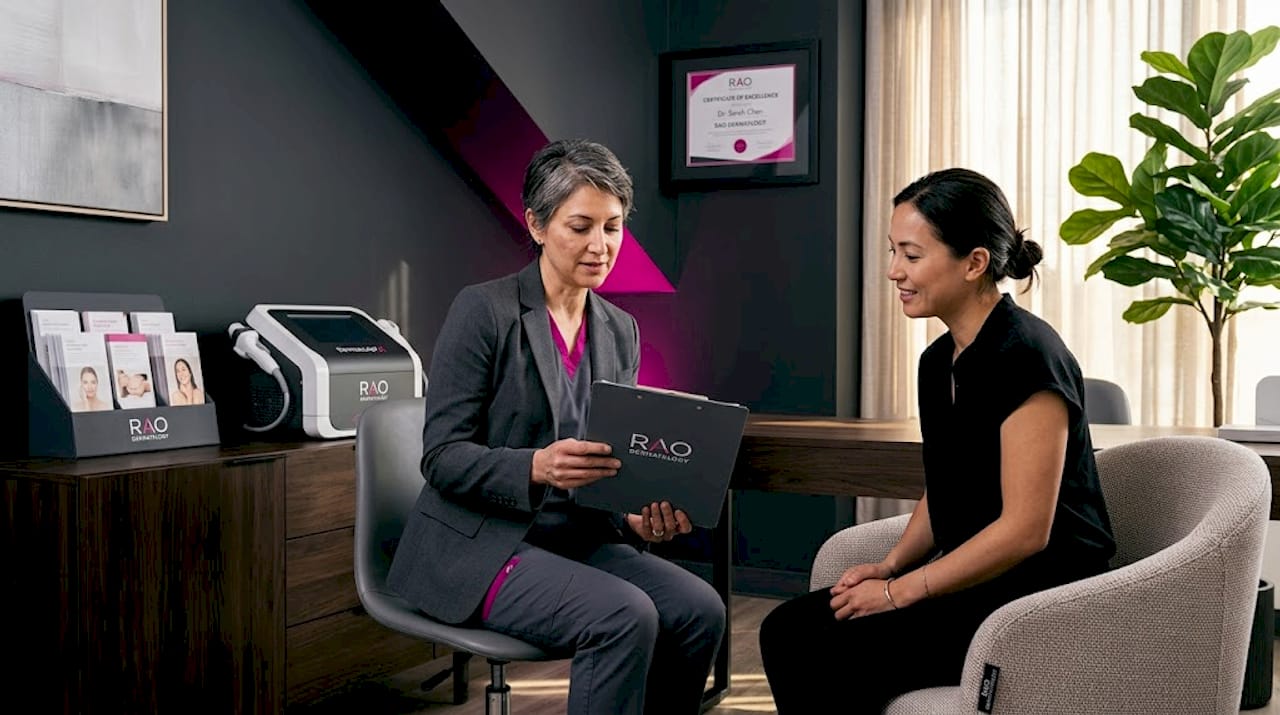
Choosing the right cosmetic treatment feels straightforward until you’re actually facing the decision. The moment you start researching, you’re hit with a flood of options, conflicting information, and pressure from every direction. Knowing how to select cosmetic procedures that genuinely fit your goals, health, and lifestyle takes more than a quick Google search. This guide walks you through everything, from checking your motivations to vetting providers to managing your expectations after the fact, so you can move forward with confidence instead of regret.
Table of Contents
- Key takeaways
- How to select cosmetic procedures that match your real goals
- Surgical vs. non-surgical: knowing your options
- Researching and vetting cosmetic providers
- How to prepare for cosmetic treatment consultations
- Managing expectations during recovery
- My honest take on choosing cosmetic procedures
- Your next step with Rao Dermatology
- FAQ
Key takeaways
| Point | Details |
|---|---|
| Start with self-assessment | Understand your motivations and emotional readiness before researching any specific procedure. |
| Match procedures to your lifestyle | Surgical and non-surgical options have very different recovery demands and longevity trade-offs. |
| Vet your provider thoroughly | Board certification, clinic licensing, and red-flag behaviors all determine whether a provider is trustworthy. |
| Prepare for your consultation | Bring your medical history, clear goals, and direct questions to get the most from your appointment. |
| Manage recovery expectations | Emotional and physical downtime after procedures is frequently underestimated, so plan ahead. |
How to select cosmetic procedures that match your real goals
Before you compare fillers versus facelifts, you need to do something harder. You need to look at why you want a procedure in the first place.
Patients who pursue cosmetic work driven by internal motivations, like wanting to feel more confident in their own skin or reclaiming how they looked before an illness, consistently report higher satisfaction than those acting on external pressure. When the motivation is “my partner wants this” or “I saw someone else’s results on social media,” disappointment tends to follow.
Ask yourself these questions honestly before moving forward:
- Am I doing this for myself, or to satisfy someone else’s expectations?
- Is this a stable desire I’ve held for a while, or is it tied to a specific stressful period in my life?
- Do I have realistic expectations about what a procedure can and cannot fix?
- Am I in a mentally and emotionally stable place to handle recovery?
- Do I have a support system, friends, family, or a counselor, that can help me through the process?
Timing matters more than most people acknowledge. A divorce, job loss, or major life transition can amplify the desire for change, but that does not automatically mean a cosmetic procedure is the right response to those feelings. Choosing cosmetic treatments during an emotionally turbulent period often leads to decisions that feel less aligned once life stabilizes.
Pro Tip: If you find yourself unable to answer these questions clearly, talk to a therapist or counselor before booking a consultation. Many providers actually encourage this step for patients who have complex emotional histories tied to appearance concerns.
Surgical vs. non-surgical: knowing your options
Once you’ve confirmed your motivations are grounded, the next step is understanding what cosmetic procedure options actually exist and what separates them.
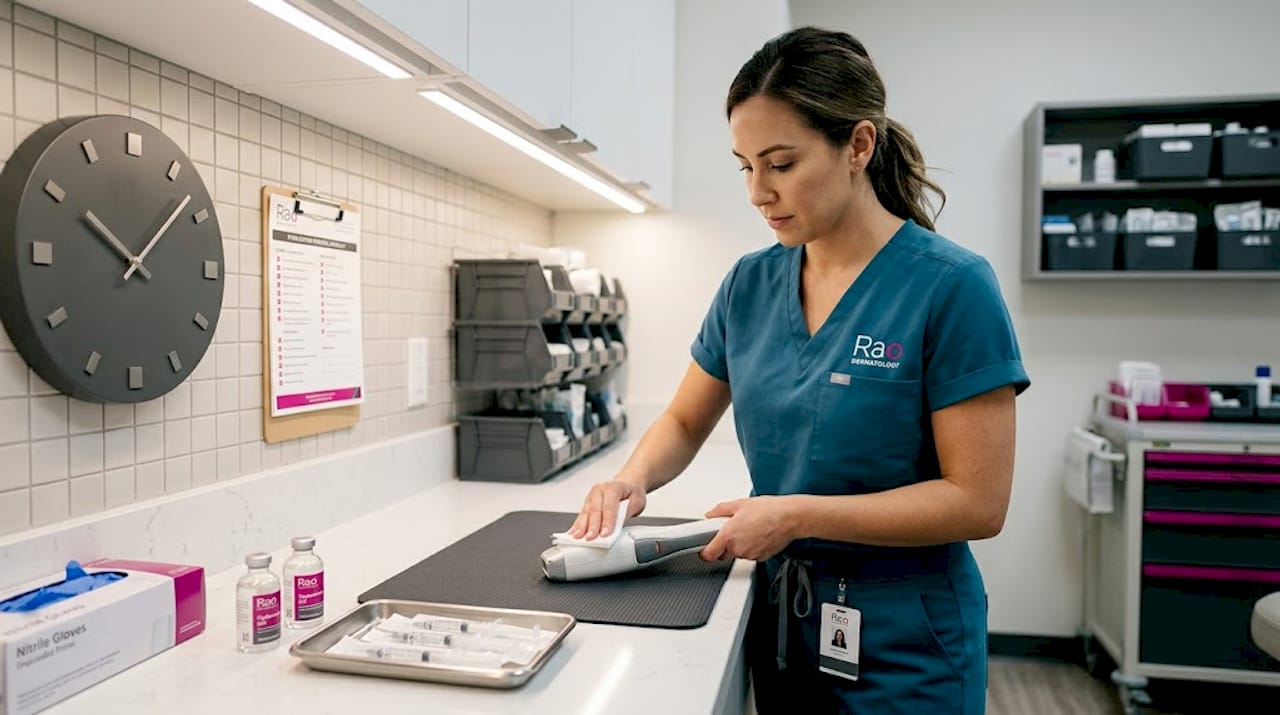
The most commonly requested surgical procedures include breast augmentation, liposuction, nose reshaping, eyelid surgery, tummy tuck, and facelift, according to Hopkins Medicine’s cosmetic surgery overview. On the non-surgical side, options like dermal fillers, Botox, chemical peels, laser resurfacing, and microneedling have exploded in popularity because they require little to no downtime.
Here’s where the real trade-off lives. Surgical options deliver more dramatic, permanent results, but they come with longer recovery periods, greater risk, and higher upfront cost. Non-surgical procedures offer gradual, subtle improvements that need periodic maintenance to sustain. Neither is inherently better. The right choice depends entirely on your goals, your schedule, your budget, and your tolerance for risk.
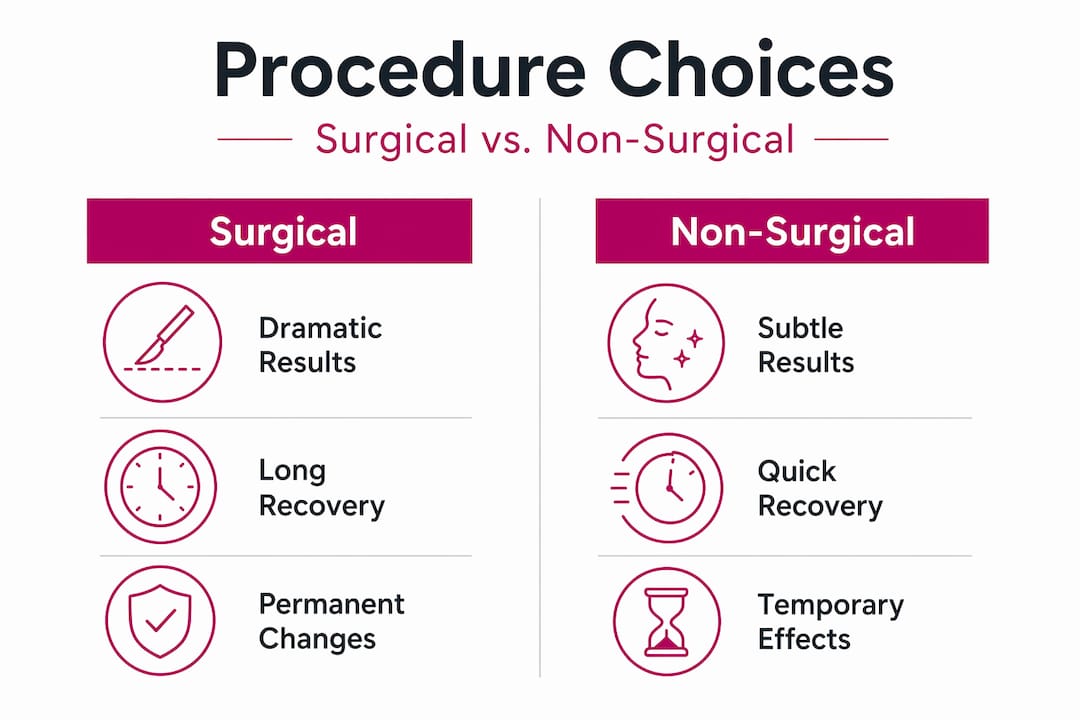
| Factor | Surgical procedures | Non-surgical procedures |
|---|---|---|
| Results | Dramatic, long-lasting | Subtle, gradual |
| Recovery time | Weeks to months | Days or none |
| Longevity | Often permanent | Requires maintenance |
| Cost | Higher upfront | Lower per session |
| Risk level | Higher (anesthesia, scarring) | Lower overall |
| Ideal for | Significant structural changes | Maintenance, early signs of aging |
Reading that table honestly against your life is one of the most practical steps in finding the right procedure for you. If you travel constantly for work, a six-week surgical recovery simply may not fit. If you want a permanent change to your nose’s structure, no filler will give you what surgery can. Non-surgical options like laser treatments or skin rejuvenation therapies are excellent bridges for people wanting improvement without committing to surgery.
Researching and vetting cosmetic providers
This is where most people either do the work right or cut corners and pay for it later.
Board certification, relevant training, and membership in recognized professional associations are non-negotiable starting points when you’re evaluating any provider. Cosmetic dermatology and plastic surgery are specialized fields, and credentials are the baseline proof that a practitioner has met rigorous standards.
Beyond credentials, here are the red flags that should stop you from booking:
- The provider pushes you to sign up or pay a deposit on the same day as your first consultation.
- You’re offered time-limited discounts designed to create urgency.
- The procedure is offered in a non-clinical setting like a spa room, hotel, or someone’s home.
- Your medical history is barely reviewed before a treatment is recommended.
- Aggressive upselling of additional procedures you never asked about happens during the appointment.
A reputable provider operates as your partner, not a salesperson. They take time to understand your medical history, ask about medications and prior treatments, and give you space to think before committing. Practitioners who offer time-limited deals or perform procedures outside clinical settings should be avoided outright.
When you’re narrowing your choices, ask these specific questions during your search:
- Is the provider board-certified in dermatology or plastic surgery?
- Does the clinic hold current state licensing and liability insurance?
- Can they show you before-and-after photos of patients with similar concerns to yours?
- What is their process for handling complications?
- Are they willing to share patient references?
Pro Tip: Search the provider’s name alongside your state’s medical board website. Most states maintain public databases where you can confirm active licensure and check for any disciplinary actions. This takes five minutes and can save you from a serious mistake.
For more guidance on finding quality dermatologists in your area, Rao Dermatology has a practical resource that lays out exactly what to look for and what to avoid.
How to prepare for cosmetic treatment consultations
Once you’ve found a provider you trust, the consultation is your most valuable tool. Use it wisely.
A thorough initial consultation should last between 30 and 90 minutes. If a provider rushes through your medical history, skips a medication review, or jumps straight to pricing, that is a serious quality control issue. Walk away.
Here’s what to bring and do before your appointment:
- Write down your complete medical history, including any past surgeries, medications, supplements, and allergies.
- Compile a list of your goals, written in specific terms, not vague phrases like “look younger.”
- Bring reference photos only as communication aids, not as rigid targets to hit.
- Prepare a list of direct questions about the procedure’s steps, risks, recovery timeline, and aftercare.
- Ask specifically what happens if results are not what you expected and what corrective options exist.
Gathering full details on expected pain, recovery time, risks, complications, and aftercare before committing to any procedure is what separates informed patients from regretful ones. The consultation is also where you evaluate the provider’s communication style. Do they listen? Do they explain trade-offs without minimizing concerns?
| What to bring | Why it matters |
|---|---|
| Medical history and medication list | Prevents dangerous interactions or contraindications |
| Written list of goals | Keeps the conversation focused and specific |
| Reference images | Helps align visual expectations between you and the provider |
| Prepared questions | Ensures you leave with complete information |
| Insurance or payment options | Clarifies financial feasibility before committing |
After the consultation, take a cooling-off period. A few days of reflection is standard practice at reputable clinics, and any provider who pressures you to decide on the spot is not worth your trust or your money. Reviewing a step-by-step consultation guide beforehand can help you walk in fully prepared.
Managing expectations during recovery
Getting the procedure right is only half the work. Managing what comes after is where many people get blindsided.
The emotional impact of recovery is frequently underestimated, even for non-surgical procedures. Even a Botox appointment or a chemical peel can involve swelling, bruising, or temporary social withdrawal. Surgical procedures involve a longer arc of physical and emotional adjustment, including weeks where results look worse before they look better.
Keep these realities in mind during the post-procedure period:
- Final surgical results can take three to twelve months to fully reveal themselves as swelling resolves.
- Non-surgical results often require multiple sessions before the intended effect is visible.
- Emotional dips, even feelings of regret, are common in the first weeks after surgery and do not necessarily indicate a bad outcome.
- Follow-up appointments are not optional. They are the mechanism through which your provider catches complications early.
- Ongoing maintenance is a real cost, both financially and in time, for non-surgical procedures.
“Having a good support system and realistic expectations are vital for recovery satisfaction. Patients who prepare emotionally for the process tend to report better overall outcomes than those who only plan for the physical side.”
If something feels wrong, whether a result looks uneven, healing is not progressing normally, or your emotional state is deteriorating significantly, contact your provider immediately. Do not wait and hope it resolves. Corrective treatments exist, and early intervention almost always leads to better outcomes than delayed action.
My honest take on choosing cosmetic procedures
I’ve seen two kinds of patients walk through the process of choosing cosmetic treatments. The first kind does the research, sits with the decision, asks hard questions, and comes out the other side satisfied even when the results are not perfect. The second kind moves fast, chases trends, picks a provider based on price or proximity, and ends up frustrated despite technically getting what they asked for.
What I’ve learned is that the single biggest predictor of satisfaction is not the procedure itself. It’s how clearly the patient understood what they were signing up for before it happened. When expectations are calibrated to reality, minor imperfections become acceptable. When expectations are based on social media filters or someone else’s results, even excellent outcomes feel like failures.
The patients I’ve seen regret their decisions almost always had one thing in common. They rushed. Whether it was rushing the research, rushing the provider selection, or rushing past their own reservations, speed was the enemy. Cosmetic procedures are not emergency decisions, and treating them like one is how you end up spending more to fix something than you would have spent doing it right the first time.
My strongest advice is to let the decision breathe. Give yourself a set waiting period, thirty days minimum, between your first consultation and your final commitment. If after thirty days you still want it for the same reasons you wanted it originally, you are probably in the right place. If your motivation has shifted, that is useful information worth examining.
— Krunal
Your next step with Rao Dermatology
If you’ve done the reflection, researched your options, and you’re ready to explore cosmetic dermatology treatments with a board-certified team, Rao Dermatology is built exactly for this moment.
With 25 years of experience across California, New Jersey, and New York, the team at Rao Dermatology takes a personalized approach to every consultation. Dr. Babar K. Rao and the practice’s licensed estheticians cover everything from non-invasive facials and esthetic services to advanced cosmetic treatments, all delivered in fully licensed clinical settings with patient education at the center of every appointment. Browse the full range of available services to see what fits your goals, and reach out to schedule a consultation at a location near you.
FAQ
What is the first step in choosing cosmetic treatments?
Start with an honest self-assessment of your motivations. Patients driven by internal goals like self-confidence consistently report higher satisfaction than those acting on external pressure or social trends.
How long should a cosmetic consultation last?
A thorough initial consultation should last between 30 and 90 minutes. Any provider who rushes through your medical history, skips medications, or bypasses consent forms is showing a significant quality control red flag.
What are the biggest red flags when vetting a cosmetic provider?
Major red flags include same-day pressure to book, time-limited discount offers, procedures performed outside clinical settings, and aggressive upselling of treatments you never requested.
How do surgical and non-surgical procedures differ in longevity?
Surgical procedures deliver more dramatic and often permanent results, while non-surgical options provide gradual improvements that require ongoing maintenance sessions to sustain over time.
How do I prepare for a cosmetic procedure consultation?
Bring your full medical history, a written list of specific goals, reference images, and prepared questions about risks, recovery, and aftercare. Taking a cooling-off period after the consultation before committing is standard practice at reputable clinics.
Recommended
Filed under: