
Discover the crucial role of dermatology in aging. Unlock effective treatments for healthier, younger-looking skin tailored to your needs!
Dermatology’s Role in Healthier, Younger-Looking Skin

Aging skin is not simply a cosmetic inconvenience. It is a complex biological process that affects how your skin protects you, heals itself, and responds to the environment around it. Many people in California, New Jersey, and New York spend years experimenting with drugstore creams and trendy serums before realizing that real, lasting improvement requires a different approach. Modern dermatology bridges the gap between how your skin looks and how it functions, offering proven strategies that go far beyond moisturizer. This guide walks you through the science of skin aging, the treatments that actually work, and how to build a personalized plan that fits your skin, your age, and where you live.
Table of Contents
- How the skin ages: Causes and challenges
- Evidence-based dermatology approaches for aging skin
- Personalized plans: Matching treatments to your needs
- Latest innovations: What’s new and what works
- A fresh perspective: What most people miss about skin aging
- How Rao Dermatology can help you age beautifully
- Frequently asked questions
Key Takeaways
| Point | Details |
|---|---|
| Aging skin is preventable | Expert dermatology guidance can delay visible aging and improve both health and appearance. |
| Personalization matters most | Your age, skin type, and environment should shape your anti-aging plan for best results. |
| Combination therapies perform best | Mixing procedures and topicals usually outperforms single treatments against signs of aging. |
| Innovations drive better outcomes | New lasers, exosomes, and advanced care deliver measurable improvements beyond old approaches. |
How the skin ages: Causes and challenges
Understanding why skin ages is the first step to doing something meaningful about it. Skin aging falls into two overlapping categories: intrinsic aging, which is driven by your genetics and the natural passage of time, and extrinsic aging, which is driven by your environment. Both categories chip away at the structural proteins that keep skin firm, smooth, and resilient.
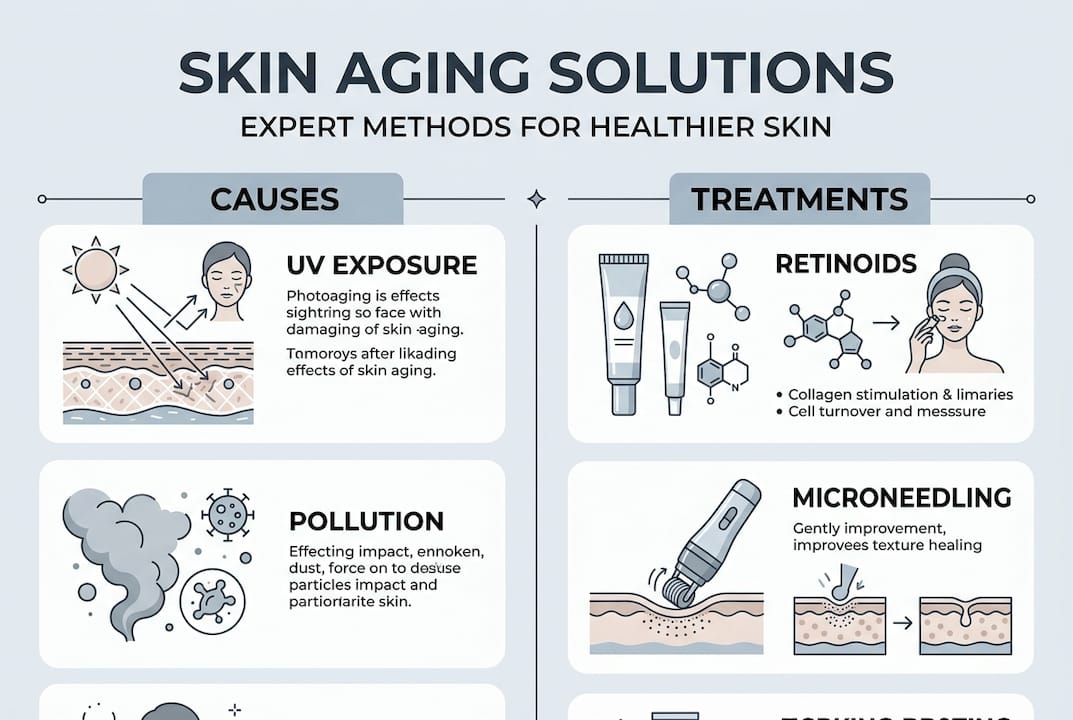
At the molecular level, UV radiation and air pollution are among the most destructive forces your skin faces every day. These environmental stressors trigger a process called reactive oxygen species (ROS) production. ROS are unstable molecules that damage cells, break down collagen, and trigger chronic inflammation. Research confirms that UV and pollution degrade collagen by activating matrix metalloproteinases (MMPs), enzymes that essentially digest the skin’s structural scaffolding. Dermatology counters this through collagen stimulation using retinoids and lasers, antioxidant protection, and newer approaches that target senescent cells.
For patients living in high-sunshine states like California or in dense urban environments like New York and New Jersey, daily environmental exposure is especially high. The cumulative damage from years of UV exposure and pollution is one reason why residents in these areas often benefit the most from early dermatological intervention.
The visible signs of this underlying damage include:
- Fine lines and deep wrinkles, caused by collagen loss and repetitive facial movements
- Uneven skin tone and hyperpigmentation, from UV-induced melanin overproduction
- Sagging and decreased elasticity, as elastin fibers weaken and fat pads shift
- Rough texture and enlarged pores, from reduced skin cell turnover
- Dryness and a compromised skin barrier, as ceramide production declines with age
“Skin aging is not a single event. It is a series of molecular changes accumulating over decades, many of which dermatology can significantly slow or reverse.”
What makes this especially important is that each person’s skin ages differently based on their Fitzpatrick phototype (a scale from I to VI measuring skin’s response to UV), lifestyle habits, stress levels, and geographical location. A one-size-fits-all approach to aging skin rarely works. That is why understanding medical dermatology essentials matters long before cosmetic concerns even enter the picture. A board-certified dermatologist considers all of these factors when building a plan that actually fits your skin.
Evidence-based dermatology approaches for aging skin
With the challenges of skin aging understood, let’s break down exactly how dermatology intervenes and which strategies offer the best results.
Not all anti-aging treatments are created equal. Some have decades of clinical research behind them. Others are newer but show strong early results. Knowing the difference helps you make smarter decisions about your skin.
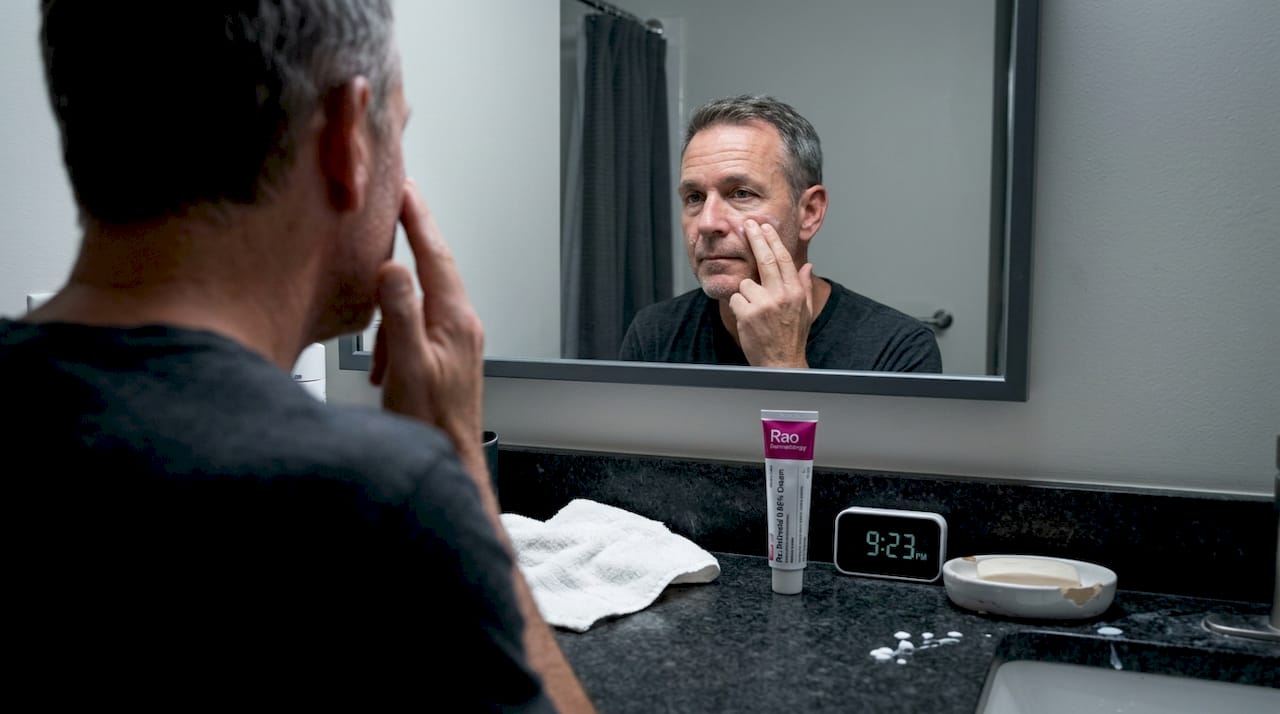
Topical retinoids remain the gold standard for anti-aging skincare. A recent network meta-analysis found that isotretinoin performs best for fine wrinkles, tazarotene is most effective for coarse lines, and tretinoin along with retinol address hyperpigmentation most reliably. Collagen supplements show consistent evidence for improving elasticity, though results for hyaluronic acid and carotenoid supplements remain less consistent across studies. This level of specificity is something a dermatologist uses every day when choosing your treatment.
Here is a comparison of common treatments to help you visualize how they perform across different aging concerns:
| Treatment | Best for | Evidence level | Key consideration |
|---|---|---|---|
| Tretinoin (Retin-A) | Hyperpigmentation, fine lines | Strong | May cause initial irritation |
| Isotretinoin | Fine wrinkles | Strong | Prescription only, monitoring required |
| Tazarotene | Deep/coarse wrinkles | Strong | Higher retinoid potency |
| Laser resurfacing | Texture, tone, collagen | Strong | Varies by skin tone and type |
| Neurotoxins (Botox) | Dynamic wrinkles | Strong | Temporary, needs repeat treatment |
| Collagen supplements | Skin elasticity | Moderate | Results in 8 to 12 weeks |
| Chemical peels | Discoloration, texture | Moderate to strong | Depth determines recovery time |
The power of dermatology does not stop at single treatments. Multimodal combination therapy, meaning pairing two or more approaches, consistently outperforms using just one treatment. For example, combining a topical retinoid with periodic laser treatments produces synergistic collagen remodeling that neither therapy achieves on its own.
Here is how most dermatologists build a structured approach:
- Start with a skin assessment. Identify key concerns, skin type, and tolerance levels.
- Establish a daily foundation. SPF 30 or higher every morning, a retinoid or retinol at night.
- Add targeted topicals. Vitamin C serums, niacinamide, or prescription-strength agents for specific concerns.
- Layer in professional treatments. Peels, lasers, or injectables based on severity and goals.
- Reassess and adjust. Skin changes over time, and plans should too.
Pro Tip: If you are new to retinoids, start with retinol two nights per week and gradually increase frequency over four to six weeks. This dramatically reduces irritation and helps your skin adapt without setting back your progress.
Curious about how professional-grade procedures can reverse signs of aging more effectively than over-the-counter products? Your dermatologist can match the right intervention to your specific concern. For at-home guidance, a dermatologist-recommended skincare routine is the essential starting point.
Personalized plans: Matching treatments to your needs
Now that you know the range of available therapies, let’s discuss why and how your personal plan is crafted for your unique skin and goals.
No two patients walk into a dermatology office with identical concerns. A 32-year-old with oily skin in Los Angeles has very different needs than a 55-year-old with dry skin in Newark. Personalization is not a marketing buzzword in dermatology. It is a clinical necessity.
Recent clinical research confirms that treatment plans must be tailored to phototype and age. Preventive strategies are prioritized in patients in their 30s, often including neurotoxins like Botox to prevent dynamic wrinkle formation, as well as microneedling to stimulate collagen before significant loss has occurred. By the 40s and beyond, the approach shifts to regenerative strategies, working to rebuild collagen, restore volume, and correct accumulated damage. Retinoid irritation also requires careful monitoring at any age, and combination approaches must be balanced to avoid overtreatment.
Here is how personalization typically breaks down across key variables:
| Patient profile | Primary focus | Recommended start |
|---|---|---|
| 30s, light skin (Type I-II), high UV exposure | Prevention, early collagen support | SPF, retinol, antioxidant serum |
| 30s, darker skin (Type IV-VI), urban setting | Hyperpigmentation prevention | Gentle retinoid, niacinamide, sun protection |
| 40s-50s, moderate aging signs | Collagen regeneration, volume | Tretinoin, filler, laser |
| 50s+, advanced photoaging | Resurfacing, skin barrier repair | Ablative laser, rich moisturizers, peels |
Climate matters too. California patients face intense, year-round UV exposure and often deal with photoaging earlier than expected. New York and New Jersey patients face cold winters that compromise the skin barrier and hot, humid summers. A dermatologist who understands your regional environment factors that into your care plan, not just your age and skin type.
- Avoid over-the-counter overload. Using too many active ingredients at once causes irritation, not improvement.
- Communicate your lifestyle. Whether you exercise outdoors daily or work in an air-conditioned office all day changes what your skin needs.
- Think long term. The best anti-aging plans are built for years, not weeks.
- Ask about phototype-specific risks. Darker skin tones require extra care around pigmentation and post-inflammatory hyperpigmentation.
Pro Tip: Before starting any new prescription treatment, ask your dermatologist for a patch test period of two weeks. This gives your skin a chance to respond before you commit to a full routine, saving you weeks of unnecessary irritation.
Exploring modern dermatology treatments gives you a sense of just how much innovation is available today for every skin type and concern.
Latest innovations: What’s new and what works
Having covered how plans are individualized, it is time to look at what is coming next and what actually works beyond the hype.
Dermatology is moving faster than most patients realize. Several innovations have made the jump from research labs to clinical practice in the past few years, and the results are genuinely exciting. But it is important to separate what has solid evidence behind it from what is still experimental.
The 1927nm thulium laser is one of the most discussed tools in current anti-aging dermatology. When paired with antioxidant-based pre and post-care regimens, research shows this laser reduces senescence biomarkers in treated skin. Senescence refers to the state where old, damaged cells stop dividing but refuse to die, instead releasing inflammatory signals that accelerate aging in surrounding tissue.
Exosome microneedling is another innovation producing measurable, lasting results. Exosomes are tiny cell-derived particles that carry growth factors and signaling molecules. When delivered via microneedling channels into the skin, they trigger sustained regeneration. Studies document improvements lasting up to 21 months, with a 41% reduction in pore size and a 42% reduction in erythema (redness). These are not subtle changes.
Injectable fillers for hand rejuvenation are also gaining research support, showing results that are comparable to vitamin C infusion therapy for treating photoaging on the backs of the hands. This is an underappreciated concern for many patients in their 50s and 60s.
Key innovations worth knowing about:
- Senolytics: Experimental drugs and compounds that selectively clear senescent cells. Research into SASP (senescence-associated secretory phenotype) shows these inflammatory signals are a major driver of visible aging. Targeted senolytic therapies are still in clinical development but show real promise, especially for patients with darker phototypes (Fitzpatrick V and VI), who experience unique aging patterns including greater dyschromia and volume loss.
- Reticular fibroblast targeting: Research now links specific fibroblast cell populations to age-related skin barrier decline, opening doors to more precise regenerative therapies.
- Energy-based device upgrades: Next-generation lasers and radiofrequency devices offer better safety profiles for a broader range of skin tones.
By the numbers: Exosome microneedling maintains a 41% improvement in pore appearance and 42% reduction in redness at 21 months post-treatment, which outperforms many traditional approaches for long-term rejuvenation.
For patients interested in learning how technologies translate to real-world results, exploring advanced skin rejuvenation options is a practical next step. And if you have wondered how treatments like chemical peels vs. microdermabrasion compare for overall skin quality, the answer depends heavily on your personal skin profile.
A fresh perspective: What most people miss about skin aging
Here is what we see repeatedly across our patients in California, New Jersey, and New York: people come in frustrated after spending hundreds of dollars on products that promised dramatic results and delivered almost none. They tried five serums, two devices, and a subscription box, all without a single conversation with a qualified dermatologist.
The uncomfortable truth is that self-medicating aging skin often makes things worse. Mismatched active ingredients cause barrier damage. Overuse of exfoliants triggers persistent redness. And time spent on the wrong products is time your skin could have spent actually healing.
What actually works is the combination of medical guidance and cosmetic intention. When you treat aging as both a health issue and an aesthetic concern, you stop chasing quick fixes and start building genuine skin resilience. Achieving rejuvenation without surgery is very possible with the right professional guidance, but it requires honesty about where your skin is now and what it needs. Fewer wrinkles are a side effect of genuinely healthier skin, not the goal itself.
How Rao Dermatology can help you age beautifully
Ready to take a step toward healthier, more vibrant skin? Rao Dermatology brings together board-certified dermatologists and licensed estheticians across California, New Jersey, and New York to give you care that is both medically sound and aesthetically thoughtful.

Whether you are in your 30s and focused on prevention or in your 50s looking to regenerate what time has taken, our team builds personalized plans that match your skin type, goals, and lifestyle. Our cosmetic dermatology services cover everything from injectables and laser treatments to advanced resurfacing, while our esthetic services provide professional-grade skincare treatments tailored to you. With over 25 years of experience and a commitment to staying current with the latest science, we are here to guide every stage of your skin’s journey.
Frequently asked questions
What is the most effective dermatology treatment for wrinkles?
The best option depends on wrinkle type. A network meta-analysis found isotretinoin most effective for fine wrinkles, tazarotene for coarse lines, and tretinoin or retinol for hyperpigmentation, making dermatologist guidance essential for choosing the right retinoid.
Can dermatology really prevent aging or just improve appearance?
Dermatology does both. By countering the ROS and MMP-driven collagen breakdown caused by UV and pollution, dermatological treatments actively slow the aging process rather than simply masking its effects.
How are treatments personalized for skin of color?
Patients with darker skin tones experience distinct aging patterns including dyschromia and greater volume loss, so dermatologists select gentler, more targeted treatments that minimize the risk of post-inflammatory hyperpigmentation.
What is the benefit of combining treatments versus a single therapy?
Multimodal combination approaches consistently outperform single treatments by targeting multiple aging mechanisms simultaneously, producing results that are more comprehensive and longer lasting than any one therapy alone.
Recommended
- Essential Vitamins for Healthy, Glowing Skin: A Dermatologist’s Guide | Rao Dermatology
- National Healthy Skin Month: Essential Dermatologist-Approved Tips for Year-Round Skin Health | Rao Dermatology
- Medical Dermatology Essentials: Prevention, Treatment & Aesthetics | Rao Dermatology
- Dermatologist-Recommended Skincare Routines for Healthier Skin | Rao Dermatology
Filed under: