
Discover how XTRAC therapy effectively treats psoriasis, vitiligo, and eczema, offering patients meaningful improvement under professional care.
XTRAC Therapy: Is It Right for Psoriasis, Vitiligo & Eczema?
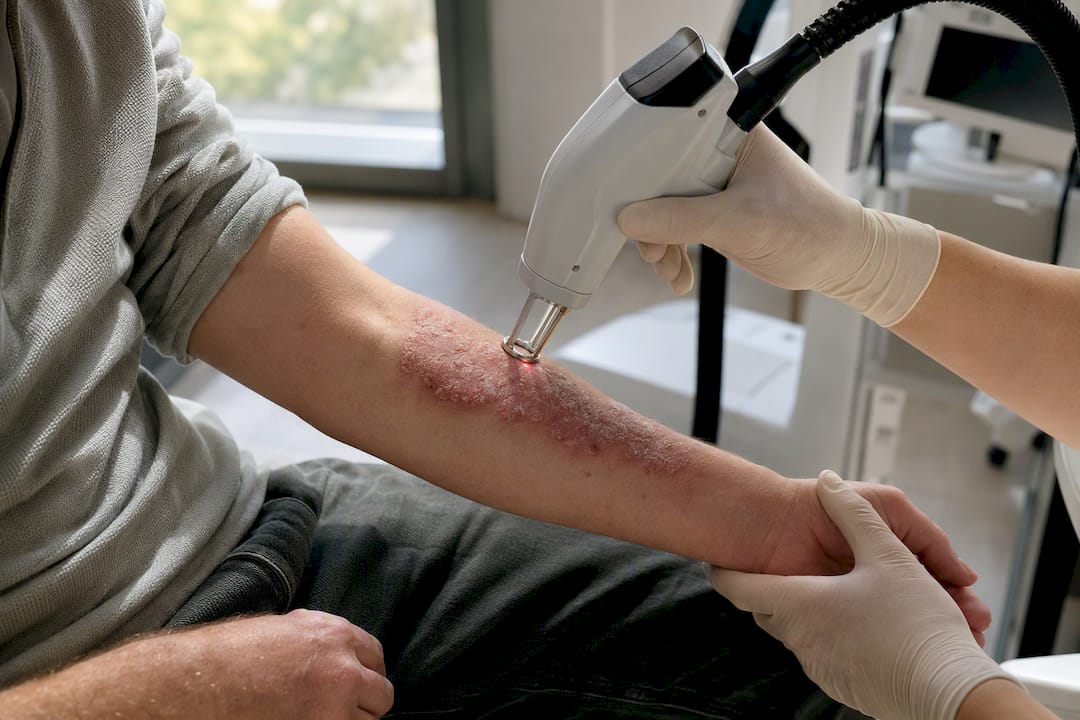
XTRAC therapy is a legitimate, FDA-cleared treatment for localized psoriasis, vitiligo, and atopic dermatitis, and most patients who try it under dermatology supervision see meaningful clearing within a handful of sessions. It isn’t a cure, and it isn’t for everyone, but the evidence behind it is stronger than most laser treatments marketed to skin patients.
- FDA clearance: XTRAC devices have carried 510(k) clearance since the early 2000s, with newer models and dosing accessories cleared as recently as 2018.
- Study result: One trial found 92% of patients reached mPASI-75 within about five sessions using an optimal dosing protocol.
- Best fit: Localized plaques covering less than 10 to 20% of body surface area, treated 2 to 3 times weekly (or less often with newer protocols).
- Next step: Ask your dermatologist whether XTRAC fits your case and whether your insurer requires prior authorization.
Key Takeaways
XTRAC therapy works by delivering concentrated 308 nm UVB directly to diseased skin, producing faster clearance than whole-body phototherapy in many localized cases.
| Point | Details |
|---|---|
| FDA-cleared device | XTRAC systems and the MMD dosing tip carry 510(k) clearance for psoriasis, vitiligo, and atopic dermatitis. |
| Fast response in trials | One study found 92% of patients reached mPASI-75 in about five sessions using an OTD protocol. |
| Best for localized disease | Ideal candidates have plaques covering under 10 to 20% of body surface area. |
| Insurance requires prior treatment failure | Coverage typically depends on documented topical therapy that didn’t work first. |
| Rao Dermatology offers guided evaluation | Multi-location clinics assess candidacy and help coordinate insurance benefits before starting XTRAC. |
This article is general information, not a substitute for advice from a qualified doctor. Consult a qualified healthcare professional about your own circumstances before acting on anything here.
Table of Contents
- What Is XTRAC Therapy and How Does the Laser Work?
- Which Skin Conditions Does XTRAC Treat Best?
- What Happens During an XTRAC Session?
- How Effective Is XTRAC, According to the Evidence?
- What Are the Side Effects and Who Should Avoid It?
- What Does XTRAC Cost, and Will Insurance Cover It?
- What Should You Look for in an XTRAC Provider?
- Why Targeted Excimer Light Often Beats Whole-Body Phototherapy
- Sources
- FAQ
What Is XTRAC Therapy and How Does the Laser Work?
XTRAC uses a handheld excimer laser that fires a 308 nanometer beam of monochromatic UVB light directly onto affected skin. Unlike a phototherapy booth that bathes your entire body in UV light, the laser tip touches down only on the plaque, vitiligo patch, or eczema flare, sparing the surrounding healthy skin from unnecessary exposure.
That precision changes the math. Because clinicians aren’t worried about overexposing healthy tissue, they can push a much higher UV dose into the diseased skin per visit than any whole-body unit would allow.
Dosing isn’t guesswork. Clinicians typically start with a minimal erythema dose (MED) test to see how a patient’s skin reacts, then adjust using either the standard handpiece or the MMD tip, an accessory cleared by the FDA in 2018 that supports optimal therapeutic dose (OTD) protocols. These OTD approaches often mean fewer total visits.
The XTRAC AL7000 system is described in its FDA filing as a handheld xenon chloride excimer laser with operator-selected output, built specifically for targeted phototherapy. Later models (AL8000, AL10000) extended the same principle with refinements to power and handpiece design.
- 308 nm wavelength targets diseased skin only
- MED-based dosing personalizes each patient’s exposure
- MMD tip enables OTD protocols for faster response
- FDA 510(k) clearance covers multiple device generations
Pro Tip: Ask whether your provider uses MED-based dosing or a fixed protocol. Individualized dosing tends to produce faster, more consistent clearing than a one-size-fits-all setting.
Which Skin Conditions Does XTRAC Treat Best?
XTRAC’s clearest track record is with plaque psoriasis, but its FDA-cleared uses extend well beyond that. A recent review of excimer light applications notes the therapy’s use has expanded across several dermatologic conditions with a generally favorable tolerability profile.
- Plaque psoriasis, including scalp and palmoplantar (palm and sole) involvement
- Vitiligo, where the laser can stimulate repigmentation in localized patches
- Atopic dermatitis (eczema) in stubborn, focal areas
- Other photoresponsive conditions your dermatologist may flag as candidates
The best candidates have localized disease, generally under 10 to 20% of body surface area, and have already tried topical treatments without adequate results. Children can sometimes be treated with pediatric dermatology oversight, and pregnant or breastfeeding patients should discuss timing with their doctor, since phototherapy decisions in pregnancy are individualized rather than standardized.
Certain patients should steer clear or proceed only with caution: people with lupus, xeroderma pigmentosum, or a personal history of melanoma face real risks from added UV exposure, and your dermatologist should screen for these before the first session.
What Happens During an XTRAC Session?
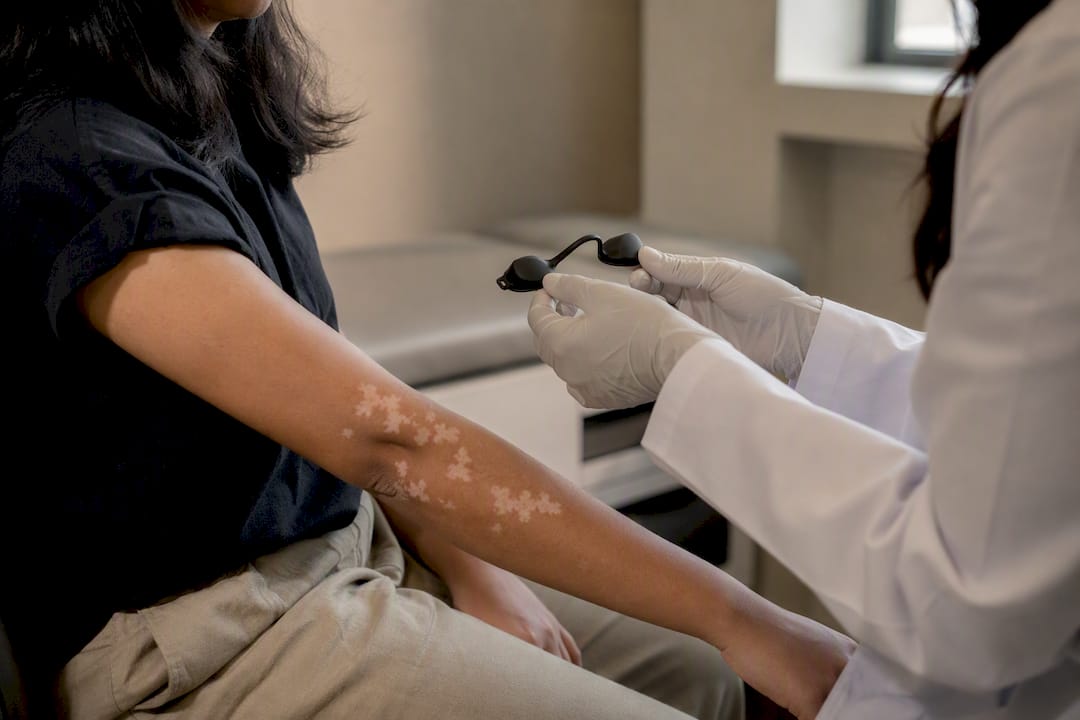
A session is quick. You’ll get protective eyewear, the clinician will identify each lesion, select a dose based on your skin’s prior response, and pass the laser handpiece over the targeted area for a matter of minutes. Most visits run short enough to fit into a lunch break.
Scheduling depends on the protocol. Traditional courses run 2 to 3 treatments per week, while OTD protocols using the MMD tip can space sessions out further while still driving results. Most courses run multiple sessions, though your dermatologist will adjust based on your response.
One study found patients reached mPASI-75, meaning at least 75% improvement, in an average of just five sessions when treated with an OTD protocol. That’s a fast timeline compared to many oral or topical treatments, which can take weeks to show comparable change.
Afterward, expect some transient redness at the treatment site, similar to a mild sunburn. Blistering or temporary pigment changes happen occasionally, particularly at higher doses. Your provider will likely recommend gentle moisturizers, sun avoidance on treated areas, and sometimes a topical adjunct to support results between visits.
- In-office session: eye protection, lesion mapping, laser pass, done in minutes
- Typical course: several sessions depending on protocol and response
- Common aftercare: sun protection, moisturizer, monitoring for blistering
How Effective Is XTRAC, According to the Evidence?
The data on XTRAC is more specific than what you’ll find for most in-office laser treatments. In that same J Drugs Dermatol trial, patients using the OTD protocol maintained at least 50% improvement (mPASI-50) for an average of roughly 60 days after finishing treatment, and the therapy was well tolerated throughout.
Guideline-level reviews back this up structurally. Evidence syntheses covering targeted UVB phototherapy describe excimer lasers as an effective option for localized plaque psoriasis, generally recommending 2 to 3 treatments weekly for maximum benefit, and note they often outperform excimer light devices or localized narrowband UVB in comparative use.
Payer data adds a durability angle. Aetna’s clinical policy on laser treatment for psoriasis notes that responses tend to increase up through roughly 13 treatments, and that remissions commonly last 4 to 6 months once a course is complete.
The honest caveat: most of this evidence covers localized disease specifically, and long-term durability data beyond a few months is still limited. XTRAC isn’t positioned as a permanent fix. It’s a tool for driving significant, repeatable improvement in a contained area.
- Rapid response: mPASI-75 in about five sessions in trial data
- Guideline support for 2 to 3 weekly treatments in localized disease
- Remission commonly lasting 4 to 6 months, per payer policy review
- Evidence base strongest for localized plaques, thinner for long-term tracking
What Are the Side Effects and Who Should Avoid It?
Side effects tend to be mild and short-lived. The most common is localized redness resembling a sunburn, and Healthline’s consumer summary lists erythema, blistering, and pigment changes (both lightening and darkening) as the primary risks patients should expect.
- Erythema (redness) at the treatment site, usually resolving within days
- Occasional blistering, especially with higher doses
- Temporary hyperpigmentation or hypopigmentation
- Mild tenderness or a warm sensation immediately after treatment
Absolute and relative contraindications include lupus, xeroderma pigmentosum, a personal history of melanoma or other skin cancers, and certain immunosuppressive conditions. Pregnant or breastfeeding patients should discuss phototherapy timing with their obstetrician and dermatologist together rather than assuming it’s automatically off the table.
Clinicians manage risk through MED-based dose testing before treatment, mandatory eye protection during sessions, and careful tracking of cumulative UV exposure across a course.
What Does XTRAC Cost, and Will Insurance Cover It?
Cost varies by geographic market, number of sessions, and whether you’re insured or paying cash, so there’s no single national price tag that applies to every patient. What’s consistent is the coverage pattern: insurers generally treat XTRAC as medically necessary only after documented failure of topical therapy, and usually only for localized disease under about 10% body surface area, per Aetna’s policy language.
Before booking, call your insurer directly and ask about prior authorization requirements. Many plans want documentation showing you’ve already tried topical steroids or other first-line treatments without success.
The manufacturer also runs a patient rebate program for eligible individuals, which can offset some cash-pay costs. Ask your clinic’s billing team whether you qualify, and always confirm both insurance benefits and rebate eligibility before your first session so you know your real out-of-pocket number.
- Cost drivers: total sessions, region, insured vs. cash-pay status
- Insurance typically requires documented topical treatment failure first
- Manufacturer rebate program may reduce cash costs for eligible patients
- Confirm both coverage and rebate eligibility before starting treatment
What Should You Look for in an XTRAC Provider?
Not every clinic offering “laser treatment” runs the same equipment or protocol, so a little vetting up front saves frustration later.
- Confirm the provider is a board-certified dermatologist, not a med spa technician operating without direct physician oversight.
- Ask whether the practice offers in-office XTRAC treatment or refers out, since referrals add delays and coordination gaps.
- Ask about experience with OTD and MMD protocols specifically, not just generic phototherapy.
- Confirm the clinic has staff who handle insurance benefit verification and prior authorization, since this paperwork trips up a lot of patients.
- Bring a question list covering realistic timelines, side-effect management, and how XTRAC will coordinate with any medications you’re already using.
Watch for red flags: any provider promising guaranteed full clearance, skipping a documented follow-up plan, or allowing treatment without direct medical supervision.
Pro Tip: Ask the clinic which specific device model they use and whether they document your dosing protocol at each visit. That paper trail matters if you switch providers or need records for insurance appeals.
Why Targeted Excimer Light Often Beats Whole-Body Phototherapy
Because the excimer laser confines its 308 nm beam to affected skin, clinicians can safely push a much higher per-lesion UV dose than whole-body narrowband UVB allows. That concentrated dosing is a major reason targeted excimer therapy often clears plaques faster than full-body light boxes.
This isn’t a marginal advantage. Clinical evidence tied to OTD protocols shows this dosing edge translating into real speed gains for patients with stubborn, localized plaques.
- Faster clearance timelines in many localized cases
- Fewer total treatments needed compared to standard whole-body phototherapy
- Particularly useful for hard-to-treat spots like scalp, palms, and soles
A Clinic’s View on XTRAC Therapy
Rao Dermatology has offered XTRAC across its California, New Jersey, and New York locations, and the pattern we see matches the published research: patients with focal, stubborn plaques tend to respond well when treatment is dosed carefully and monitored consistently.
- Multi-location access across three states
- Direct clinician supervision at every visit
- Coordination with existing psoriasis and dermatitis care plans
Ready to Find Out if XTRAC Is Right for You?
If topical treatments haven’t cleared your plaques, vitiligo patches, or eczema flares, an XTRAC evaluation is a reasonable next move to raise with your dermatologist. Rao Dermatology’s team can assess candidacy, walk through realistic timelines, and help verify insurance benefits before you commit to a course of treatment.
Bring a photo timeline of your affected areas and your current medication list to your first visit. That gives your dermatologist a fuller picture and speeds up the prior-authorization process if your insurer requires it. Explore Rao Dermatology’s full range of services or schedule a consultation to see whether XTRAC fits your specific case. Every treatment plan follows a medical evaluation. No one starts XTRAC without an individualized assessment first.
Sources
- Treatment of Plaque Psoriasis With an Excimer Laser Utilizing an Optimal Therapeutic UVB Dose Protocol - Journal of Drugs in Dermatology
- PMC: Review / guideline coverage including excimer laser recommendations
- Laser Treatment for Psoriasis and Other Selected Skin Conditions - Aetna clinical policy bulletin
FAQ
How Much Does XTRAC Laser Treatment Cost?
Cost varies by region, number of sessions, and insurance status, so there’s no fixed nationwide price. Ask your clinic’s billing team for a personalized estimate and check whether you qualify for the manufacturer’s rebate program.
Does Insurance Cover XTRAC?
Confirm prior-authorization requirements with your insurer before scheduling.
How Long Does XTRAC Last?
Remissions commonly last 4 to 6 months following a completed course, according to payer policy data, though results vary by patient and condition severity.
Does XTRAC Work for Vitiligo?
XTRAC is FDA-cleared for vitiligo, and its targeted 308 nm beam can stimulate repigmentation in localized patches. Response varies by patch location and duration, so ask your dermatologist to set realistic expectations for your specific case.
Recommended
Filed under: