
Discover why regular skin checks are vital for early detection of skin cancer. Learn how self-exams and professional screenings can save lives.
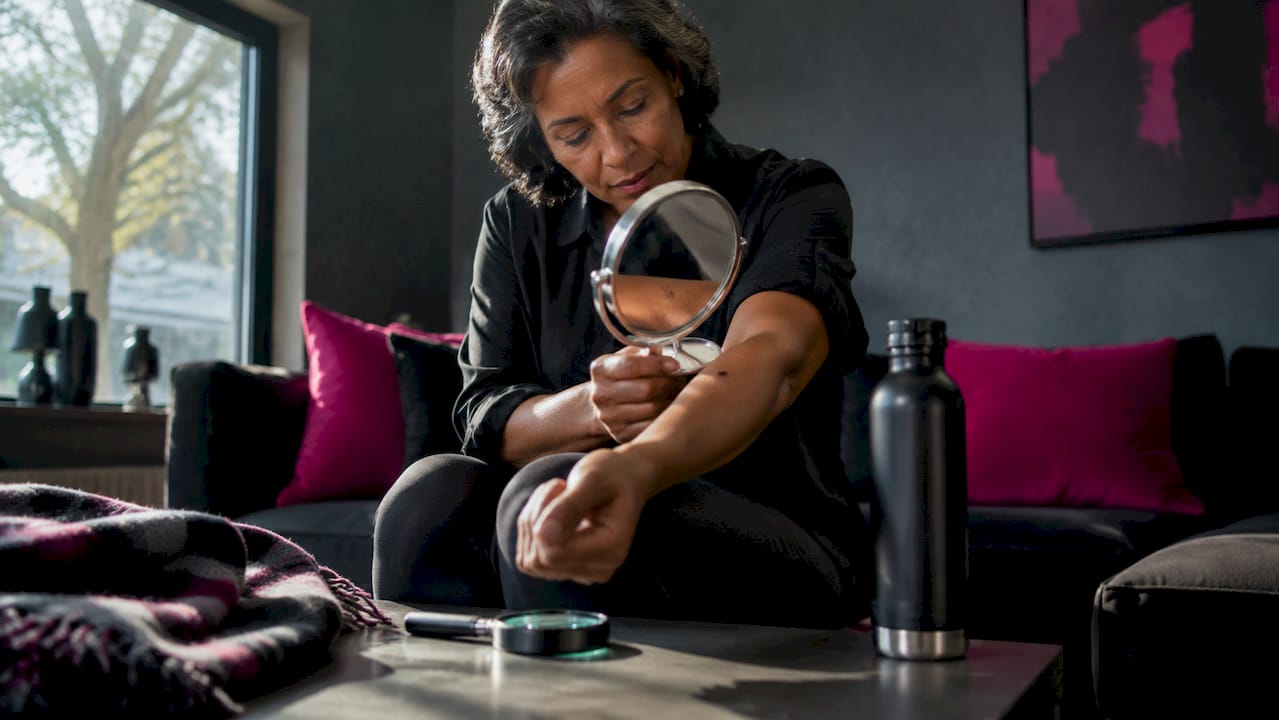
Regular skin checks are periodic examinations of your skin to identify new or changing moles, spots, or lesions that could signal skin cancer or other conditions. The two forms are monthly self-exams and professional screenings by a dermatologist, and both serve a distinct purpose. Sun exposure causes over 90% of all skin cancers, which makes proactive monitoring the most reliable defense available. Memorial Sloan Kettering Cancer Center recommends monthly self-exams as the baseline standard for catching suspicious lesions before they progress. When you understand why regular skin checks work, you stop treating them as optional.
What do regular skin checks actually involve?
Regular skin checks fall into two categories: self-exams you perform at home and professional screenings conducted by a board-certified dermatologist. Each has a specific role, and neither replaces the other.
Self-exams: what to look for and how
A monthly self-exam takes about 10 minutes and requires a full-length mirror, a handheld mirror, and good lighting. You are looking for anything that fits the ABCDE criteria:
- Asymmetry: one half does not match the other
- Border: edges are ragged, notched, or blurred
- Color: uneven shading or multiple colors within one spot
- Diameter: larger than a pencil eraser (about 6mm)
- Evolving: any change in size, shape, color, or new symptoms like bleeding
The scalp, back, and soles of the feet are the spots most people miss. A handheld mirror solves that problem. Raodermatology’s self-examination guide walks through exactly how to cover every zone systematically.
Pro Tip: Perform your self-exam on the same day each month, right after a shower. Consistency builds the skin familiarity that makes abnormal changes obvious.
Professional screenings: tools and techniques
A professional skin exam goes well beyond what you can see with a mirror. Dermatologists use a dermatoscope, a handheld device that magnifies the skin surface and reveals structures invisible to the naked eye. For patients with many moles or a history of atypical lesions, dermatoscopy and mole mapping provide a detailed photographic baseline that tracks changes over time. If a lesion looks suspicious, the dermatologist performs a biopsy, removing a small tissue sample for laboratory analysis. That step confirms or rules out malignancy with certainty.
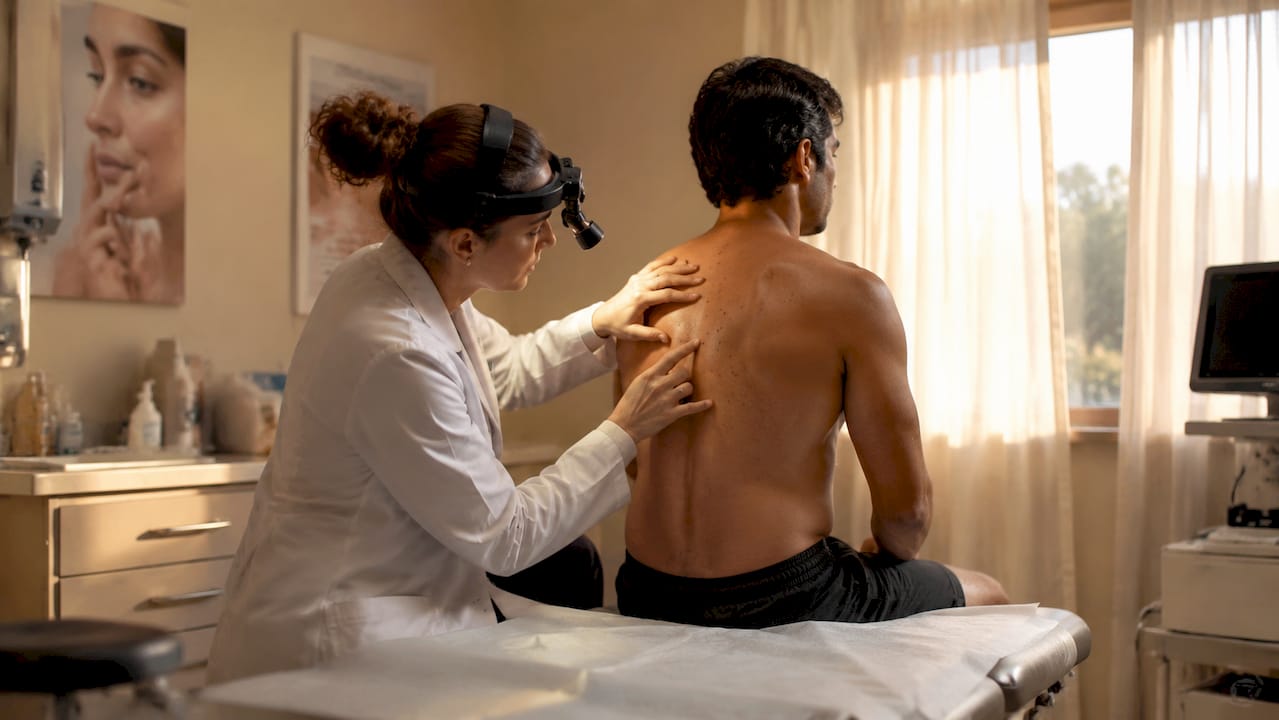
Why regular skin checks matter: the evidence on early detection
The case for consistent skin monitoring is not theoretical. A 2026 study published in MDPI’s Cancers journal found that dermatologic screening before melanoma diagnosis is directly linked to thinner tumors and a higher proportion of in situ melanomas. Thinner tumors mean the cancer has not yet invaded deeper tissue. That single factor is the strongest predictor of survival.
“Professional dermatologic screenings significantly contribute to detecting melanoma early, reducing tumor thickness and mortality risk.” — MDPI Cancers, 2026
Melanoma caught at the in situ stage, before it spreads, has a near-100% five-year survival rate. The same cancer detected after it has spread to distant organs drops to roughly 30%. That gap is not a minor statistical difference. It is the difference between an outpatient procedure and systemic treatment.
Non-melanoma skin cancers tell the same story. Basal cell carcinoma and squamous cell carcinoma are highly curable with early detection. Both are among the most common cancers in the United States, and both respond well to straightforward removal when caught before they grow or spread. The challenge is that neither type causes pain in early stages, so visual detection is the only reliable method.
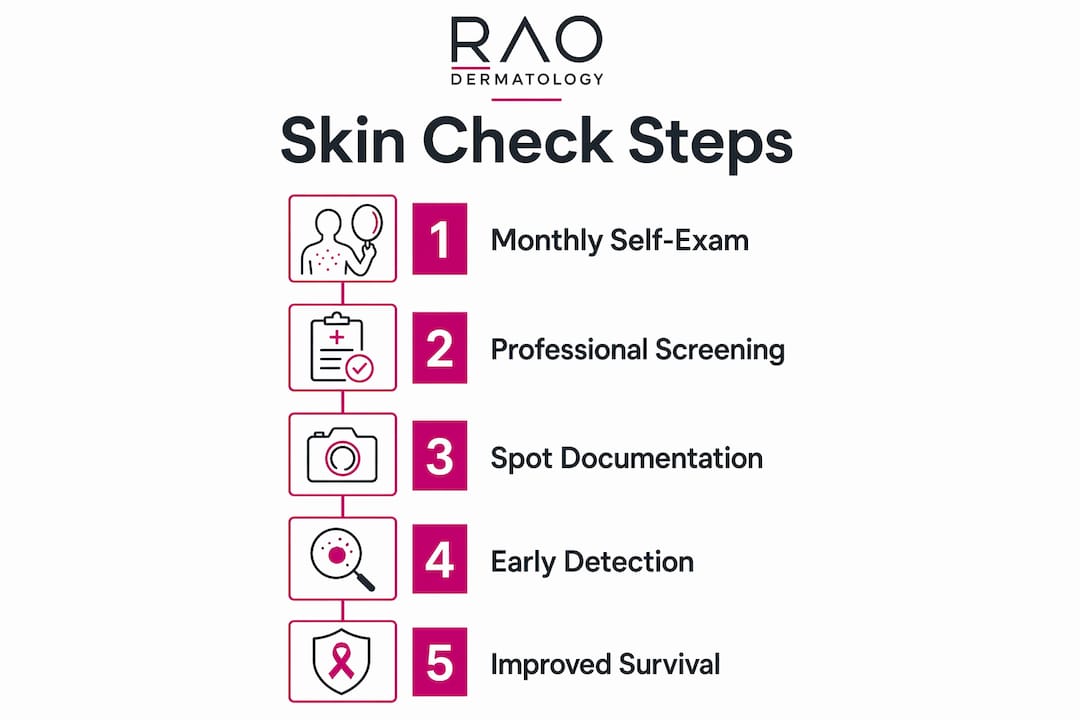
Regular checks also reduce anxiety. Establishing a skin baseline gives you a clear picture of what is normal for your body. When you know what your moles looked like six months ago, a new spot does not trigger panic. It triggers a specific, informed question for your dermatologist. That shift from vague worry to focused awareness is a real quality-of-life benefit.
Understanding the full picture of early skin cancer detection helps you see why timing is everything in treatment outcomes.
Who should get professional skin screenings and how often?
Screening frequency is not one-size-fits-all. Your personal risk profile determines how often you need a professional exam.
- Annual exams for high-risk individuals. People with a personal or family history of skin cancer, atypical moles, or significant lifetime sun exposure should see a dermatologist every year without exception.
- Every 1–2 years for moderate-risk individuals. If you have fair skin, a high mole count, or a history of blistering sunburns, annual or biannual visits are appropriate depending on your dermatologist’s assessment.
- As needed for low-risk individuals. People with no risk factors and no history of suspicious lesions may not need yearly professional exams. A baseline exam in your 30s followed by periodic check-ins is a reasonable starting point.
- Monthly self-exams for everyone. Regardless of risk level, monthly self-exams are the standard recommendation from major cancer centers including Memorial Sloan Kettering Cancer Center.
The most important step is talking to a dermatologist who can assess your specific risk factors and build a personalized screening schedule. Generic guidelines are a starting point, not a final answer.
Pro Tip: Bring a list of any spots that have changed since your last visit. Dermatologists can examine dozens of patients daily, so your observations are genuinely useful clinical data.
Practical tips for thorough skin checks at home and at the doctor
Effective self-exams require a system, not just a glance. Using a handheld mirror to inspect the scalp, back, and other hard-to-see areas is the standard method recommended by Cancer Research UK and dermatology practices worldwide.
Photographing suspicious spots adds another layer of accuracy. Place a ruler next to the lesion before taking the photo so you have a size reference. Photographic documentation lets you compare the same spot across months and gives your dermatologist concrete visual evidence rather than a verbal description.
One concept worth knowing is the “ugly duckling” sign. Most moles on a given person look similar to each other. A lesion that looks noticeably different from the rest, the one that stands out, is the one that deserves attention. This principle catches lesions that technically pass the ABCDE criteria but are still abnormal for that individual.
| Exam type | Frequency | Key tools | What to document |
|---|---|---|---|
| Self-exam | Monthly | Full-length mirror, handheld mirror | Photos with ruler, date, location on body |
| Professional screening | Annually or as advised | Dermatoscope, mole mapping | Dermatologist notes, biopsy results |
| Follow-up visit | As directed | Comparison photos | Changes since last visit |
At a professional exam, speak up. Tell your dermatologist about any spot that has changed, itched, bled, or simply caught your attention. Dermatologists are trained observers, but you live in your skin every day. Your input narrows the focus and improves the exam.
Raodermatology’s monthly self-exam guide provides a step-by-step walkthrough with illustrations for each body zone.
Common misconceptions about skin cancer screening
Several persistent myths lead people to skip checks or misunderstand their purpose.
- “I don’t need a screening if I have no symptoms.” Skin cancer rarely causes pain or discomfort in early stages. Visual changes are the primary signal, which is exactly why waiting for symptoms is the wrong strategy.
- “Dark skin tones don’t get skin cancer.” Skin cancer occurs across all skin tones. People with darker skin are often diagnosed at later stages because the myth of immunity delays their screening.
- “One professional exam is enough.” Skin changes over time with age, sun exposure, and hormonal shifts. A single exam captures one moment. Regular checks capture the pattern.
- “Screening always leads to unnecessary procedures.” Overdiagnosis is a real concern in low-risk populations, which is why targeted screening based on risk profile is the current standard. Blanket annual screenings for everyone are not universally recommended. Risk-based screening minimizes unnecessary biopsies while protecting those who need close monitoring.
The global picture is also worth noting. Screening guidelines differ between the United States Preventive Services Task Force, the American Academy of Dermatology, and international bodies. The AAD supports professional skin exams for at-risk individuals. The USPSTF has not issued a universal recommendation for asymptomatic adults. That difference does not mean screening is ineffective. It reflects ongoing debate about population-level cost-benefit analysis, not individual clinical value.
Key takeaways
Regular skin checks are the most reliable method for catching skin cancer early, when treatment is most effective and least invasive.
| Point | Details |
|---|---|
| Self-exams are monthly | Use the ABCDE criteria and a handheld mirror every month to catch changes between professional visits. |
| Professional exams match your risk level | High-risk individuals need annual dermatology visits; low-risk individuals may need them less often. |
| Early detection changes outcomes | Melanoma caught at the in situ stage has near-100% survival; late-stage detection drops survival rates sharply. |
| Documentation improves accuracy | Photographing spots with a ruler creates a trackable record that benefits both self-exams and dermatologist visits. |
| Targeted screening reduces overdiagnosis | Risk-based screening protects high-risk patients while avoiding unnecessary procedures for low-risk individuals. |
What I’ve learned from watching patients skip their annual checks
Most people who skip skin checks are not uninformed. They know they should go. They simply underestimate how fast a lesion can change in 12 months, and they overestimate their ability to notice a slow, subtle shift without a baseline to compare against.
The patients who catch melanoma early almost always have one thing in common: they showed up consistently. Not because they were anxious or hypochondriac, but because they had built the habit. They knew their skin. When something changed, they recognized it immediately because they had a mental and photographic record to compare it against.
The misconception I see most often is that a self-exam is a substitute for a professional screening. It is not. A dermatoscope reveals subsurface structures that no mirror can show. Mole mapping creates a digital archive that tracks dozens of lesions simultaneously. These are clinical tools, and they exist because the naked eye has real limits.
The other thing worth saying directly: skin checks are not just for people who spend hours in the sun. Indoor workers develop skin cancers on areas that rarely see sunlight. Genetics, immune status, and prior radiation exposure all contribute. If you are waiting for a “good reason” to schedule a screening, your skin history is already reason enough.
Build the habit before you have a reason to be worried. That is when it does the most good.
— Krunal
Start your skin health routine with Raodermatology

Raodermatology brings 25+ years of dermatologic expertise across California, New Jersey, and New York, with a focused practice in skin cancer prevention, detection, and treatment. Whether you are scheduling your first professional screening or managing a complex history of atypical moles, the team at Raodermatology builds a personalized plan based on your actual risk profile. Advanced tools including dermatoscopy and dermatopathology services support accurate diagnosis at every stage. Do not wait for a visible change to prompt action. Schedule your professional skin exam with Raodermatology and establish the baseline that makes every future check more effective.
FAQ
How often should I do a skin self-exam?
Monthly self-exams are the standard recommendation from Memorial Sloan Kettering Cancer Center. Performing them on the same day each month builds the skin familiarity needed to spot changes quickly.
What is the ABCDE rule in skin checks?
The ABCDE rule stands for Asymmetry, Border, Color, Diameter, and Evolving. Any mole or spot that meets one or more of these criteria warrants a professional evaluation.
Who needs annual professional skin exams?
People with a personal or family history of skin cancer, atypical moles, or significant sun exposure should have a professional skin exam every year. Lower-risk individuals may need them less frequently based on a dermatologist’s assessment.
Can skin cancer develop in areas not exposed to the sun?
Yes. While sun exposure causes over 90% of skin cancers, lesions can develop on areas with minimal sun exposure due to genetic factors, immune conditions, or prior radiation. A full-body exam covers all zones, not just sun-exposed skin.
What happens if a dermatologist finds a suspicious spot?
The dermatologist will typically perform a biopsy, removing a small tissue sample for laboratory analysis. This step confirms whether the lesion is benign, precancerous, or malignant and determines the appropriate next steps.
Recommended
- Why Early Skin Cancer Detection Is Important | Rao Dermatology
- Skin cancer screening: early detection and prevention | Rao Dermatology
- Complete Guide to At-Home Skin Cancer Checks: What You Need to Know | Rao Dermatology
- Essential Guide to Skin Self-Examination: What to Look for Between Dermatology Visits | Rao Dermatology
Filed under: