
Discover why does skin age and learn the biological factors behind skin aging. Empower yourself with knowledge for better skincare decisions.
Skin aging is the structural and functional decline of skin tissue driven by two simultaneous processes: intrinsic biological changes within your cells and extrinsic damage from your environment. Collagen and elastin, the proteins that keep skin firm and springy, degrade over time through both routes. UV radiation, pollution, and smoking accelerate that degradation far beyond what biology alone would cause. Understanding why does skin age at this level gives you a real foundation for making smarter decisions about prevention and treatment, not just chasing the latest product trend.
Why does skin age at the cellular level?
Skin aging begins inside the cell, long before you see a wrinkle. Two biological processes drive the visible changes: the skin’s structural proteins break down, and its ability to repair itself slows down.
The outermost layer of skin, the epidermis, thins by roughly 6% every decade. That thinning matters because a thinner epidermis is slower to heal and more vulnerable to environmental damage. A cut that healed in a week at age 25 may take two weeks at age 55.
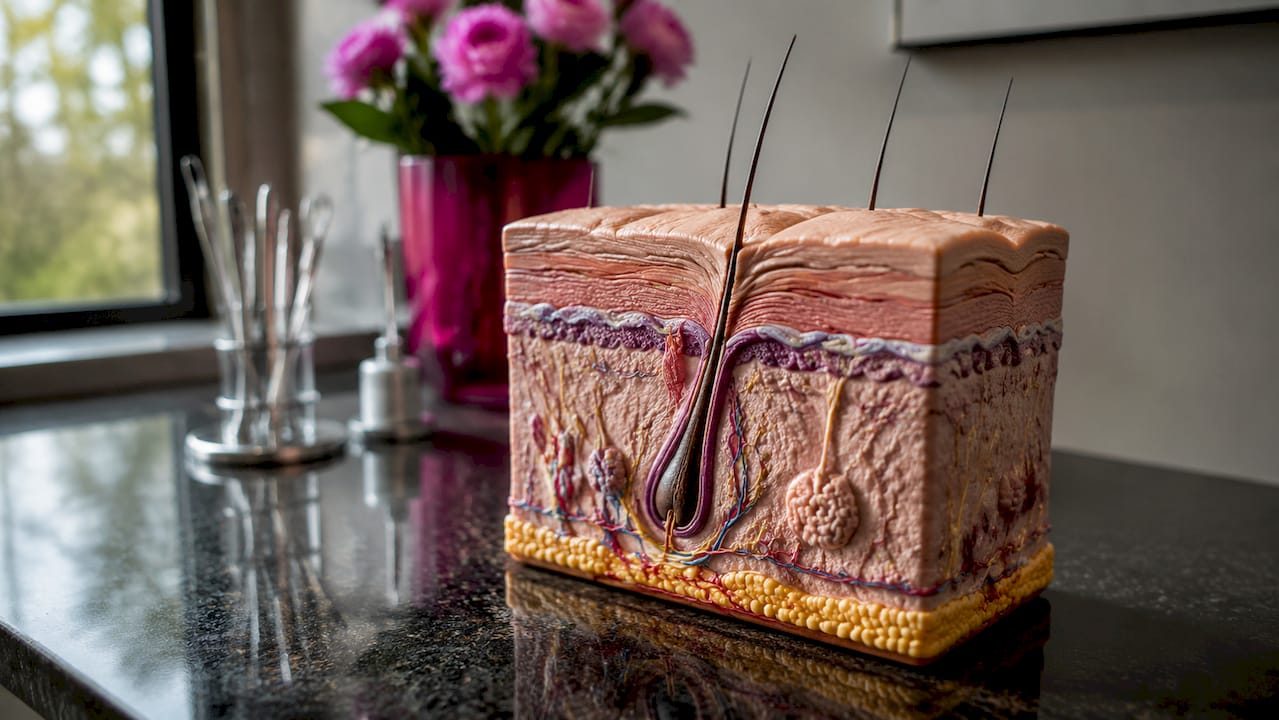
Below the epidermis, fibroblasts are the cells responsible for producing collagen. As you age, fibroblast activity declines, and collagen synthesis drops with it. Less collagen means less structural support, which translates directly into sagging and fine lines. Elastin, the protein that lets skin snap back after stretching, also degrades and is not efficiently replaced.
Cellular senescence and stem cell exhaustion
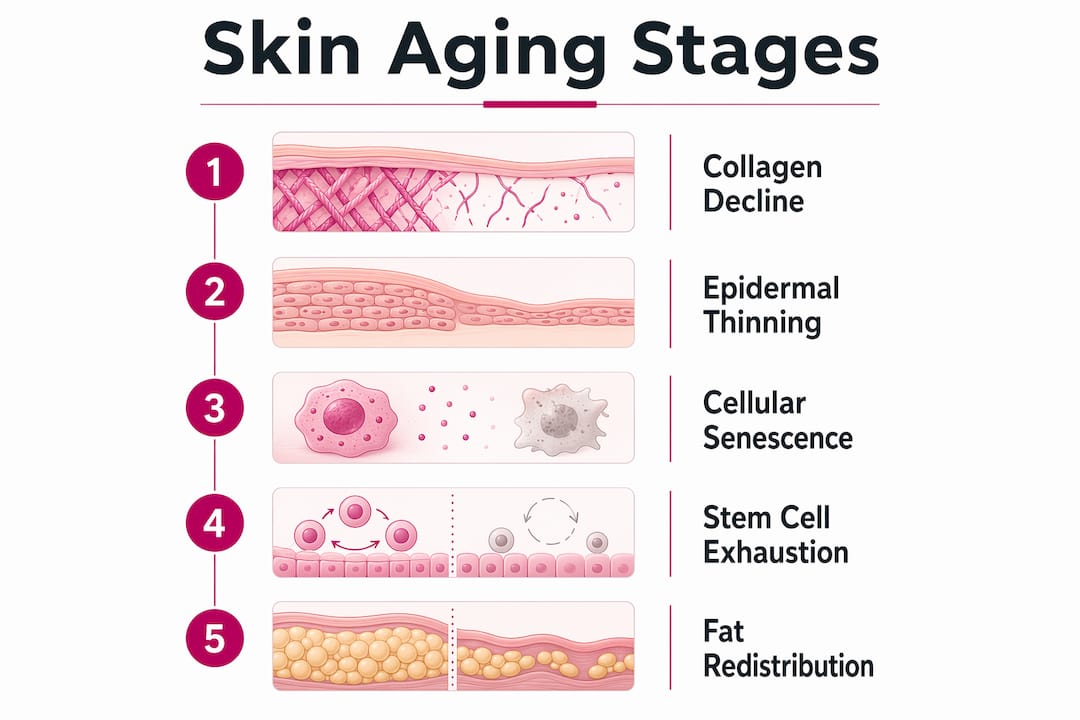
Cellular senescence is the state where cells stop dividing but refuse to die. Senescent cells accumulate in aging skin and release inflammatory signals that damage surrounding tissue. Stem cell exhaustion compounds this problem. As the pool of skin stem cells shrinks, the skin loses its capacity to regenerate new, healthy cells.
- Epidermal thinning: The epidermis loses roughly 6% of its thickness per decade, reducing the skin’s barrier function.
- Collagen decline: Fibroblasts produce less collagen, weakening the skin’s structural scaffold.
- Elastin degradation: Skin loses its ability to rebound from stretching or compression.
- Cellular senescence: Aging cells accumulate and release inflammatory compounds that damage healthy tissue.
- Stem cell exhaustion: Fewer regenerative cells mean slower turnover and reduced repair capacity.
Facial aging also involves the redistribution of fat. Fat volume loss and downward shifting in the face causes hollowing around the eyes and cheeks, and sagging along the jawline. This structural change is distinct from collagen loss and explains why topical creams alone cannot fully restore a youthful contour.
Pro Tip: Retinoids, the vitamin A derivatives found in prescription tretinoin and over-the-counter retinol products, are among the most studied compounds for stimulating fibroblast activity and slowing collagen breakdown.
How do external factors speed up skin aging?
Intrinsic aging is inevitable, but most of the visible aging you see in the mirror is not. UV light and sun exposure cause 90% of visible skin aging, a process dermatologists call photoaging. That statistic reframes the entire anti-aging conversation. Genetics and biology set the baseline, but your environment determines how fast you get there.
“Photoaging is not just accelerated aging. It is a distinct biological process where UV radiation directly damages DNA, degrades collagen, and triggers chronic inflammation in skin tissue.” — Cleveland Clinic
Here are the major external factors that accelerate the causes of skin aging:
- UV radiation: Both UVA and UVB rays penetrate skin, generate free radicals, and directly break down collagen and elastin fibers. UVA rays penetrate glass and cloud cover, meaning daily incidental exposure adds up year-round.
- Air pollution: Particulate matter and ozone generate oxidative stress in skin cells. Pollution exposure has been linked to increased pigmentation and accelerated wrinkle formation in urban populations.
- Smoking: Cigarette smoke reduces blood flow to the skin, starving it of oxygen and nutrients. It also directly degrades collagen through chemical compounds in tobacco smoke.
- Poor sleep: During deep sleep, the body releases growth hormone, which supports tissue repair. Chronic sleep deprivation disrupts this cycle and visibly accelerates skin deterioration.
- Diet: Diets high in refined sugar promote glycation, a process where sugar molecules attach to collagen fibers and make them stiff and brittle.
The aging skin barrier becomes less efficient at blocking these stressors and slower to repair the damage they cause. This creates a compounding effect. The older your skin, the more vulnerable it becomes to the same environmental exposures it once handled with ease.
What role do genetics and epigenetics play?
Genetics explains roughly half of why your skin ages the way it does. The heritability of skin wrinkles is approximately 50%, meaning your DNA sets a significant portion of your aging trajectory. The other 50% comes from lifestyle and environment, which is where you have real leverage.
Epigenetics is the layer of biology that sits between your genes and your behavior. Epigenetic modifications, particularly DNA methylation, act as switches that turn genes on or off. As you age, these switches drift from their original settings, a process called epigenetic drift. That drift disrupts normal gene regulation and contributes to the functional decline seen in aging skin.
| Factor | Mechanism | Impact on Skin |
|---|---|---|
| Genetic inheritance | DNA sequence variations | Sets baseline aging rate and wrinkle tendency |
| DNA methylation drift | Epigenetic switch changes | Disrupts gene regulation, accelerates functional decline |
| UV-driven DNAm acceleration | Photoaging modifies methylation patterns | Ages skin biologically before visible signs appear |
| Lifestyle behaviors | Modify epigenetic marks | Past habits leave lasting biological imprints |
Past sun exposure and solarium use cause DNA methylation age acceleration in skin, leaving biological marks before any visible signs appear. This means the UV damage you accumulated in your 20s is already written into your skin’s epigenome, even if wrinkles have not yet appeared. The implication is significant: sun protection is not just cosmetic, it is biological damage prevention at the molecular level.
Pro Tip: Epigenetic age tests, such as those based on the Horvath clock, can now estimate your skin’s biological age separately from your chronological age. Ask your dermatologist whether this type of assessment is relevant for your skin health goals.
Is skin aging a systemic collapse, not just a surface problem?
The most current research frames skin aging not as a collection of isolated cellular failures but as an ecosystemic collapse spanning molecular, tissue, and systemic levels. That framing changes what effective treatment looks like.
Skin does not age in isolation. The gut-skin axis, the communication pathway between your gut microbiome and your skin, plays a documented role in skin inflammation and barrier function. Dysbiosis, an imbalance in gut bacteria, correlates with increased skin inflammation and accelerated aging. Hormonal changes, particularly the decline of estrogen during menopause, directly reduce collagen synthesis and skin thickness.
Systemic inflammation, sometimes called “inflammaging,” is a low-grade chronic inflammatory state that increases with age. It damages skin tissue from the inside out, independent of any external stressor. This is why intrinsic aging combined with exposome stressors, including pollution and smoking, produces outcomes far worse than either factor alone.
- Microbiome dysregulation: Shifts in skin and gut bacteria increase inflammation and impair the skin barrier.
- Hormonal decline: Reduced estrogen and growth hormone lower collagen production and slow repair.
- Inflammaging: Chronic low-grade systemic inflammation degrades skin tissue continuously.
- Interconnected failures: Molecular, cellular, and tissue-level changes reinforce each other, making single-target treatments insufficient.
This systemic view explains why no single cream or serum can fully reverse aging. Treatments that address only one pathway, say collagen stimulation, leave the other drivers untouched.
What habits and treatments actually slow skin aging?
Reducing environmental stressors is as important as adding products to your routine. This is not a minor point. Because aging skin’s barrier repair is already compromised, every additional stressor causes more damage than it would in younger skin. Prevention compounds over time in the same way damage does.
The most evidence-backed habits to prevent skin from aging prematurely include:
- Daily broad-spectrum SPF 30 or higher: This is the single highest-return intervention for slowing photoaging. Apply it every morning, including overcast days and days spent mostly indoors near windows.
- Consistent moisturizing: A compromised skin barrier loses water faster. Moisturizers containing ceramides, hyaluronic acid, or niacinamide help maintain barrier integrity.
- Retinoid use: Prescription tretinoin and retinol products stimulate collagen production and accelerate cell turnover. They are the most clinically validated topical anti-aging compounds available.
- Not smoking: Smoking accelerates collagen degradation and restricts blood flow. Quitting at any age produces measurable skin improvements within months.
- Sleep and diet: Prioritizing 7–9 hours of sleep and limiting refined sugar reduces glycation and supports nightly tissue repair.
For professional interventions, skin rejuvenation treatments such as laser resurfacing, chemical peels, and microneedling stimulate collagen production at a depth topical products cannot reach. Dermal fillers address the fat volume loss and structural changes that no topical product can correct. These treatments work best when combined with the daily habits above, not as substitutes for them.
Key takeaways
Skin aging is a multifactorial process driven by biology, environment, genetics, and systemic health, and addressing it effectively requires action across all four dimensions.
| Point | Details |
|---|---|
| Intrinsic aging starts at the cell | Collagen decline, epidermal thinning, and cellular senescence begin decades before visible signs appear. |
| UV radiation dominates external aging | Photoaging causes 90% of visible skin changes, making daily SPF the highest-return prevention habit. |
| Genetics accounts for about half | Roughly 50% of wrinkle development is heritable; lifestyle and environment control the other half. |
| Epigenetic damage is real and early | Past sun exposure accelerates biological skin age before wrinkles appear, measured through DNA methylation. |
| Skin aging is systemic, not just surface | Gut health, hormones, and chronic inflammation all contribute, which is why single-target treatments fall short. |
The part most anti-aging advice gets wrong
I have spent years reading the research on skin aging, and the gap between what the science says and what most people believe is striking. Most anti-aging marketing treats skin aging as a collagen problem with a collagen solution. The actual biology is far more layered than that.
What the 2026 research from The EMBO Journal makes clear is that skin aging is a systemic failure, not a surface deficiency. The gut-skin axis, epigenetic drift, and inflammaging are not fringe concepts. They are central mechanisms. Yet the conversation in most skincare aisles is still dominated by moisturizers and serums that address maybe one layer of a five-layer problem.
The epigenetics findings are the part I find most underappreciated. The biological age of your skin, as measured by DNA methylation patterns, can diverge significantly from your chronological age based on past behaviors. That means the sun exposure you got at 22 is not just a memory. It is encoded in your skin’s biology right now. That is not meant to be discouraging. It is meant to reframe what “prevention” actually means. You are not just preventing future wrinkles. You are preventing future biological age acceleration.
My honest recommendation is to stop thinking about anti-aging as a product category and start thinking about it as a systemic health practice. SPF every day. Sleep seriously. Manage inflammation through diet. Then layer in professional treatments where topical products hit their ceiling. That combination addresses the actual causes of skin aging rather than just the symptoms.
— Krunal
How Raodermatology can help you address skin aging
If the biology of skin aging makes one thing clear, it is that effective treatment requires more than a good skincare routine.

Raodermatology, founded by Dr. Babar K. Rao with over 25 years of dermatology experience across California, New Jersey, and New York, offers a full range of professional options for patients ready to go beyond the drugstore aisle. From medical-grade skin rejuvenation services including laser treatments and chemical peels, to cosmetic dermatology procedures tailored to your skin’s specific needs, the practice builds individualized care plans grounded in current science. Explore the full range of dermatology services to find the right starting point for your skin health goals.
FAQ
What is the main cause of skin aging?
Skin aging results from two combined processes: intrinsic biological changes such as collagen decline and cellular senescence, and extrinsic damage from UV radiation, pollution, and lifestyle factors. UV exposure alone accounts for 90% of visible skin aging.
Why does skin lose elasticity as we age?
Skin loses elasticity because fibroblasts produce less elastin and collagen over time, and existing fibers degrade without adequate replacement. Cellular senescence and reduced stem cell activity further limit the skin’s ability to repair and regenerate these structural proteins.
Can you actually prevent skin from aging?
You cannot stop intrinsic aging, but you can significantly slow the extrinsic component. Daily broad-spectrum sunscreen, retinoid use, not smoking, and consistent sleep are the most evidence-backed habits for reducing the rate of visible skin aging.
How do genetics affect skin aging?
Genetics accounts for approximately 50% of wrinkle development, setting your baseline aging rate. The remaining 50% is shaped by lifestyle and environmental exposures, meaning behavioral choices have a measurable impact on how your skin ages.
What is photoaging and how is it different from normal aging?
Photoaging is UV-induced skin damage that causes premature structural breakdown of collagen and elastin, distinct from the gradual biological decline of intrinsic aging. It produces darker pigmentation, deeper wrinkles, and a rougher texture faster than chronological aging alone would.
Recommended
Filed under: