
Discover what is fractional laser and how it rejuvenates skin. Learn about benefits like reduced wrinkles, acne scars, and faster healing.

Fractional laser is defined as a skin resurfacing technology that delivers laser energy in thousands of microscopic columns, treating only a portion of the skin surface at a time. This approach, formally called fractional photothermolysis, preserves untreated tissue between each column to speed healing and reduce recovery time. Devices like the UltraPulse CO2 laser pioneered this method, and it remains the foundation of modern cosmetic skin resurfacing. Patients seek fractional laser treatment for skin rejuvenation, acne scar improvement, wrinkle reduction, and hyperpigmentation control, making it one of the most requested procedures in cosmetic dermatology today.
What is fractional laser and how does it resurface skin?
Fractional laser skin resurfacing works by splitting a single laser beam into thousands of tiny, focused columns of light called microthermal treatment zones. Each column penetrates the skin at a controlled depth, creating a precise injury that triggers the body’s natural repair process. The skin between those columns stays completely intact. That intact tissue is the key advantage: it acts as a reservoir of healthy cells that migrate inward to rebuild the treated zones quickly.
This is fundamentally different from older, full-field ablative lasers, which removed the entire surface of the skin in one pass. Full ablation produced dramatic results but came with weeks of downtime and a higher risk of complications. Fractional treatment zones separated by untreated tissue support rapid re-epithelialization compared to full ablative resurfacing. That means faster healing with less risk.
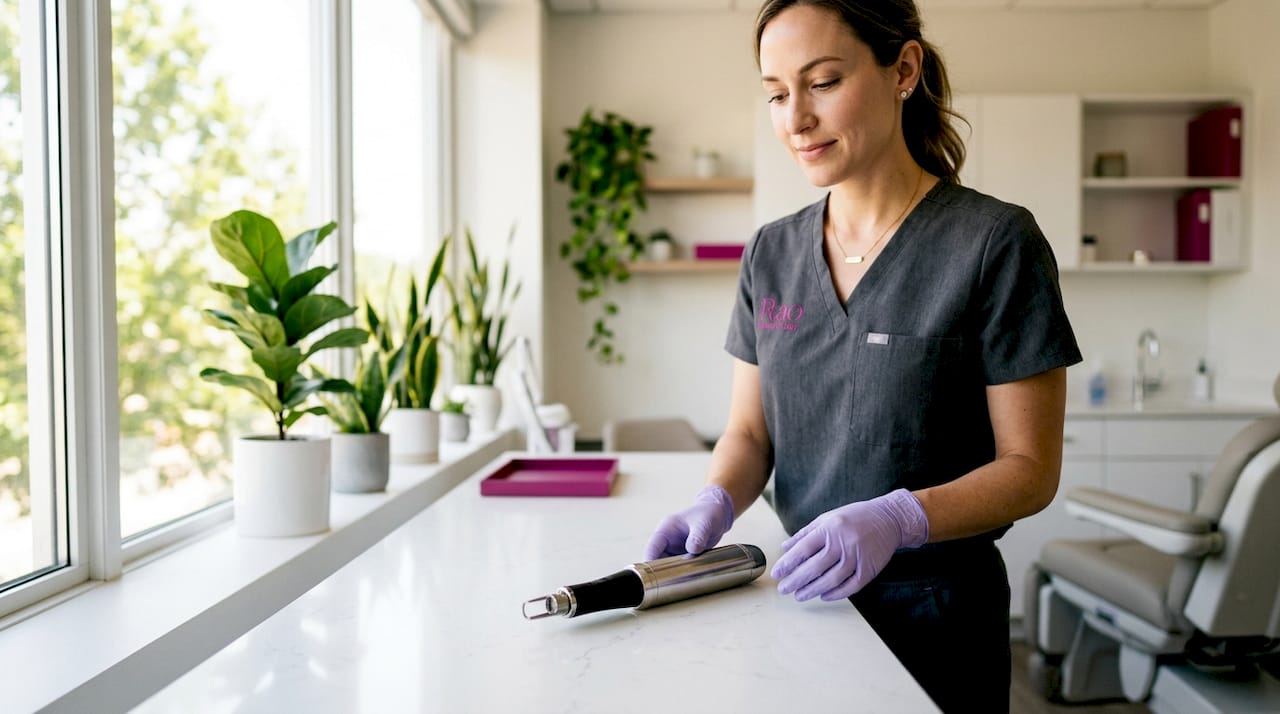
A useful way to think about it: full ablative resurfacing renovates an entire floor at once, forcing you out of the house for weeks. Fractional laser renovates the floor tile by tile, letting you stay home while the work gets done. The end result is comparable, but the disruption is far smaller.
How does fractional laser work at the biological level?
The skin improvement from fractional laser treatment goes far deeper than surface removal. The controlled thermal injury from each microthermal zone triggers a three-phase wound healing response: inflammation, proliferation, and remodeling. Each phase builds on the last, and the cumulative effect is measurably better skin texture, tone, and elasticity over weeks and months.
The remodeling phase is where the real transformation happens. Molecular pathways including MMPs, TGF-β, bFGF regulate collagen remodeling during wound repair induced by fractional laser treatment. Heat shock proteins (HSPs) and specific microRNAs also participate in this process. These signals tell fibroblasts to produce new collagen and elastin, replacing damaged or disorganized fibers with structured, younger-looking tissue.
Fractional laser benefits stem from biological modulation of wound healing rather than simple surface skin removal. This distinction matters clinically. It explains why patients continue to see improvement for three to six months after a single session, long after the skin surface has healed. The biology keeps working even when the visible recovery is complete.
Pro Tip: Ask your dermatologist about the number of passes and energy settings planned for your session. Higher density and energy produce deeper remodeling but also longer recovery. Matching those parameters to your skin condition and schedule is the difference between a good result and a great one.
The key biological signals involved in fractional laser remodeling include:
- MMPs (matrix metalloproteinases): Break down old, disorganized collagen to make room for new fibers
- TGF-β (transforming growth factor beta): Stimulates fibroblast activity and new collagen synthesis
- bFGF (basic fibroblast growth factor): Promotes cell proliferation and tissue repair
- HSPs (heat shock proteins): Protect cells and regulate the stress response during thermal injury
- miRNAs: Fine-tune gene expression during the remodeling phase
What are the differences between ablative and non-ablative fractional lasers?
The two main categories of fractional lasers produce different results, require different recovery times, and suit different patients. Choosing between them is one of the most important decisions in planning a fractional laser treatment.
Ablative fractional lasers remove skin tissue, while non-ablative lasers heat deeper skin without epidermal removal. Ablative lasers achieve faster results with some downtime; non-ablative lasers offer milder treatments with less recovery time. The CO2 laser, operating at a wavelength of 10,600 nm, is the most widely used ablative fractional device. The Erbium:YAG laser is another ablative option, producing slightly less thermal damage and a shorter recovery.
Non-ablative fractional lasers, such as the 1550 nm Fraxel Restore, heat the dermis without removing the epidermis. The surface stays intact, redness resolves within a few days, and patients can return to normal activities quickly. The tradeoff is that multiple sessions are typically needed to match the results of a single ablative treatment.
| Feature | Ablative fractional laser | Non-ablative fractional laser |
|---|---|---|
| Mechanism | Removes skin columns (vaporizes tissue) | Heats dermis without epidermal removal |
| Common devices | CO2 (10,600 nm), Erbium:YAG | Fraxel Restore (1550 nm), 1927 nm thulium |
| Downtime | 5–10 days typical | 1–3 days typical |
| Results per session | Significant, often after 1–2 sessions | Gradual, usually requires 3–5 sessions |
| Best for | Deep wrinkles, acne scars, significant sun damage | Mild texture issues, pigmentation, maintenance |
| Risk of side effects | Moderate, higher in darker skin types | Lower overall risk profile |
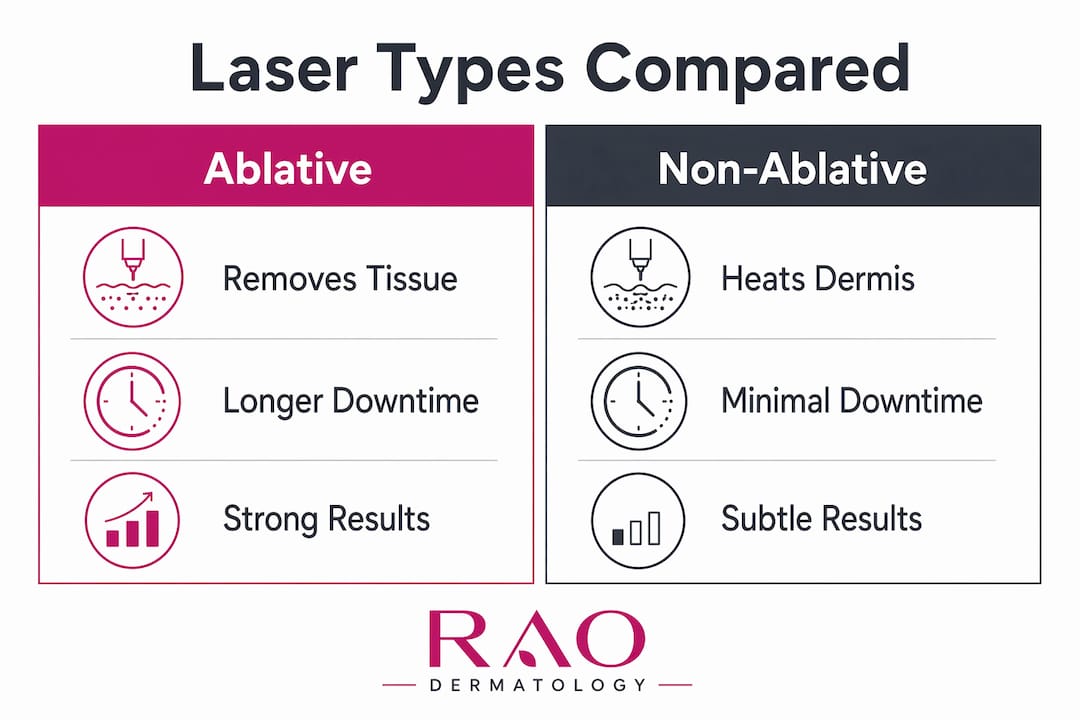
Device parameters including energy, density, and pulse stacking determine penetration depth, downtime, and risk profile. A skilled provider adjusts these settings based on the patient’s skin type, condition severity, and tolerance for downtime. There is no universal setting that works for every patient.
What are the clinical benefits of fractional laser treatments?
Fractional ablative CO2 laser is widely recognized as a gold standard for non-surgical skin rejuvenation worldwide. That designation reflects decades of clinical evidence across diverse patient populations and skin conditions. The range of treatable concerns is broad, which is part of why the technology has remained central to cosmetic dermatology for over two decades.
The core clinical benefits of fractional laser treatment include:
- Wrinkle reduction: Collagen remodeling tightens skin and softens fine lines, particularly around the eyes and mouth
- Acne scar improvement: Fractional laser for scars addresses atrophic (depressed), hypertrophic (raised), and surgical scars by remodeling the underlying collagen architecture
- Skin texture refinement: Enlarged pores, rough texture, and uneven tone respond well to the resurfacing effect
- Hyperpigmentation control: Fractional lasers reduce sun spots, melasma, and post-inflammatory pigmentation by targeting melanin-rich cells
- Skin tightening: Thermal stimulation of the dermis produces measurable tightening, particularly in the lower face and neck
Non-ablative fractional lasers improve pigmentation and scar thickness with lower side effects compared to fully ablative methods. This makes them a practical choice for patients who cannot afford significant downtime or who have milder concerns. For deeper scars or more advanced photoaging, ablative fractional CO2 laser delivers more substantial remodeling in fewer sessions.
Patient selection drives outcomes as much as device choice does. A patient with Fitzpatrick skin type I or II and moderate acne scarring will respond differently than a patient with type IV skin and melasma. Matching the treatment to the patient is the foundation of good results. You can read more about laser treatment options to understand how different devices compare for specific skin concerns.
What should patients know before and after fractional laser treatment?
Preparation and aftercare determine a significant portion of the final result. A technically excellent laser session can be undermined by poor pre-treatment preparation or inadequate post-care. Patient outcomes rely heavily on appropriate selection and comprehensive pre- and post-care protocols.
Pre-treatment steps typically include:
- Skin type assessment: Fitzpatrick skin typing guides device selection and parameter settings to reduce pigmentation risk
- Sun avoidance: Patients should avoid direct sun exposure for at least four weeks before treatment to reduce the risk of post-inflammatory hyperpigmentation
- Topical preparation: Some protocols include retinoids or hydroquinone in the weeks before treatment to prime the skin and reduce pigmentation risk
- Antiviral prophylaxis: Patients with a history of cold sores may receive antiviral medication before ablative treatments to prevent herpes simplex reactivation
After treatment, the skin needs consistent barrier support. Post-procedure care including barrier protection and sun avoidance are critical to reduce risks like post-inflammatory hyperpigmentation after fractional ablative laser treatments. Patients should apply a gentle, fragrance-free moisturizer frequently, avoid picking or rubbing treated skin, and use broad-spectrum SPF 30 or higher every day without exception.
Common fractional laser side effects include erythema (redness), swelling, and a sandpaper-like skin texture during the first week. These are expected and resolve as the skin heals. The more serious risk is post-inflammatory hyperpigmentation, which occurs more frequently in patients with darker skin tones. Choosing an experienced provider who understands skin type-specific protocols significantly reduces this risk.
Pro Tip: Plan your fractional laser session at least two weeks before any major event. Even with non-ablative treatments, redness and mild peeling can persist for several days. Ablative sessions may require 7–10 days of visible recovery.
Raodermatology provides detailed post-procedure care instructions that walk patients through each phase of recovery, from the first 24 hours through the full healing period.
Key takeaways
Fractional laser skin resurfacing delivers measurable results because it triggers the body’s own collagen remodeling pathways, not just because it removes surface skin.
| Point | Details |
|---|---|
| Core mechanism | Fractional lasers treat microscopic columns of skin while preserving surrounding tissue to speed healing. |
| Ablative vs. non-ablative | CO2 ablative lasers produce faster, deeper results; non-ablative options suit patients who need minimal downtime. |
| Biological benefit | Collagen remodeling via MMPs, TGF-β, and bFGF continues for months after the skin surface heals. |
| Clinical uses | Acne scars, wrinkles, hyperpigmentation, and skin texture all respond to fractional laser treatment. |
| Aftercare is non-negotiable | Sun avoidance and barrier protection after treatment directly reduce the risk of hyperpigmentation. |
What I’ve learned from watching fractional laser evolve in clinical practice
The technology has matured considerably since early fractional devices first appeared. What strikes me most is how often patients arrive expecting a single session to solve everything. The biology simply does not work that way. Collagen remodeling is a slow process, and the best results I have seen come from patients who commit to the full protocol, including preparation, proper aftercare, and realistic timelines.
The other thing that gets underestimated is device selection. Not every fractional laser is the same, and not every provider adjusts parameters for individual skin types. I have seen patients with darker skin tones treated aggressively with ablative settings that were appropriate for lighter skin, resulting in hyperpigmentation that took months to resolve. Skin type assessment is not a formality. It is the foundation of a safe treatment plan.
Combining fractional laser with adjunct therapies is an area worth watching. Combination approaches are an evolving area to optimize treatment outcomes, personalized by clinical scenario. Pairing fractional resurfacing with platelet-rich plasma (PRP) or topical growth factors after treatment appears to accelerate healing and enhance collagen output, though protocols vary by practice.
The most common misconception I encounter is that non-ablative means no downtime at all. Patients are surprised when they experience three days of redness and mild swelling after a non-ablative session. Setting that expectation clearly before treatment prevents a lot of unnecessary concern. A well-informed patient heals better, follows aftercare more consistently, and reports higher satisfaction, regardless of the device used.
— Krunal
Fractional laser treatments at Raodermatology
Raodermatology brings 25 years of cosmetic dermatology experience to every fractional laser consultation, with locations across California, New Jersey, and New York.
The practice offers a range of cosmetic laser treatments for skin rejuvenation, acne scar management, and texture improvement, with device selection and parameters tailored to each patient’s skin type and goals. Dr. Babar K. Rao and the clinical team assess every candidate individually before recommending a treatment plan. A full overview of available procedures is listed on the Raodermatology services page. Schedule a consultation to find out which fractional laser approach fits your skin and your timeline.
FAQ
What is fractional laser used for most often?
Fractional laser treatment is most commonly used for acne scar improvement, wrinkle reduction, and skin rejuvenation. It also treats hyperpigmentation, enlarged pores, and uneven skin texture.
How many fractional laser sessions are typically needed?
Ablative fractional CO2 laser often produces significant results in one to two sessions. Non-ablative fractional treatments typically require three to five sessions to achieve comparable improvement.
Is fractional laser safe for darker skin tones?
Fractional laser is safe for darker skin tones when performed by an experienced provider using appropriate settings. Non-ablative devices and conservative parameters reduce the risk of post-inflammatory hyperpigmentation in Fitzpatrick skin types IV through VI.
What are the most common fractional laser side effects?
The most common side effects are redness, swelling, and mild peeling, which resolve within a few days to two weeks depending on treatment intensity. Post-inflammatory hyperpigmentation is the most significant risk and is minimized with proper pre-treatment preparation and sun protection.
How long do fractional laser results last?
Results from fractional laser skin resurfacing typically last one to three years, depending on the condition treated, the patient’s skin type, and sun exposure habits after treatment. Maintenance sessions extend and preserve the outcome.
Recommended
Filed under: