
Discover how fillers can restore volume and smooth lines safely. Learn their benefits and the importance of FDA-approved products.

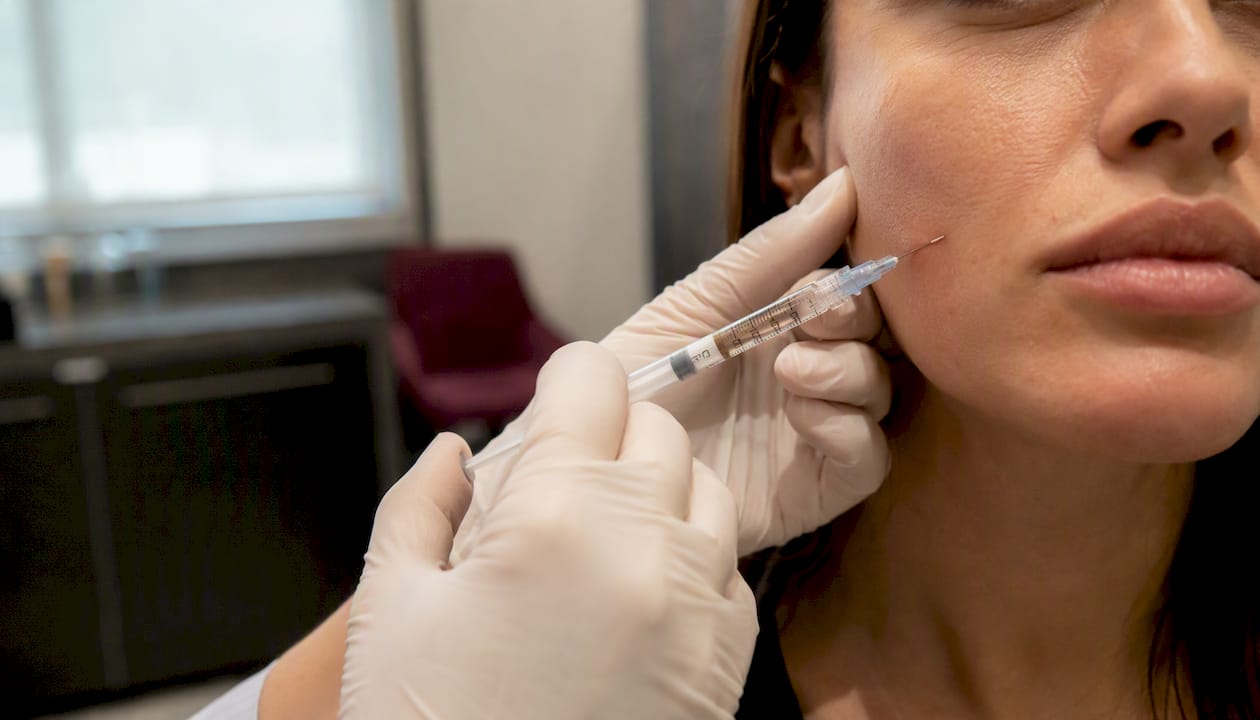
Dermal (injectable) fillers are medical-grade gel substances injected beneath the skin to restore volume, smooth lines, or improve facial contours without surgery. According to the American Board of Cosmetic Surgery, more than 1 million people choose fillers annually as a non-surgical rejuvenation option. The single most important thing to know before you book: only use FDA-approved products administered by a licensed, trained clinician. Vascular complications, including tissue loss and vision changes, are rare but real, and they are almost always linked to technique and anatomical knowledge.
Key Takeaways
Dermal fillers are FDA-regulated medical devices that restore volume and smooth lines when administered by a licensed clinician using approved products.
| Point | Details |
|---|---|
| What fillers are | Gel substances injected beneath the skin to restore volume, smooth lines, and improve facial contours. |
| Five main types | HA (reversible), CaHA, PLLA, PMMA, and autologous fat each differ in duration, reversibility, and best use case. |
| Most critical safety step | Use only FDA-approved products administered by a licensed, trained clinician to minimize serious complication risk. |
| Reversibility varies | HA fillers can be dissolved with hyaluronidase; CaHA, PLLA, PMMA, and fat transfer cannot be reversed. |
| Rao Dermatology | Offers dermal filler consultations across California, New Jersey, and New York, with hyaluronidase on-site and individualized treatment planning. |
This article is general information, not a substitute for advice from a qualified doctor. Consult a qualified healthcare professional about your own circumstances before acting on anything here.
Table of Contents
- How do fillers actually work in the skin?
- What types of fillers are available in the U.S.?
- What should you expect at a filler appointment?
- What are the risks and complications of fillers?
- How are filler complications treated?
- Who is a good candidate for fillers?
- How long do filler results last?
- What do fillers cost, and how long does a session take?
- What is the FDA’s role in regulating fillers?
- What experienced injectors actually focus on
- A note from Rao Dermatology
- Ready to talk to a licensed clinician about fillers?
- Sources
- FAQ
How do fillers actually work in the skin?
Fillers work through two distinct mechanisms: they either physically occupy space to add immediate volume and lift, or they act as a scaffold that stimulates your body’s own collagen production over time. The mechanism depends entirely on the material.
Placement depth matters more than most patients realize. A clinician injects into one of three tissue planes depending on the goal:
- Intradermal (dermis): Superficial placement for fine lines and surface irregularities
- Subcutaneous: Mid-depth placement for volume restoration in cheeks, lips, and nasolabial folds
- Supraperiosteal (above bone): Deep placement for structural support along the jawline or cheekbones
Think of it this way: a needle enters the skin, deposits filler at a precise depth, and the surrounding tissue responds. For hyaluronic acid (HA) fillers, the gel physically lifts and hydrates the area on contact. For poly-L-lactic acid (PLLA), the particles dissolve gradually and trigger collagen synthesis over weeks to months. Same injection, very different biology.
Common treatment areas include:
- Lips (volume and definition)
- Nasolabial folds (the lines from nose to mouth)
- Cheeks and midface (volume restoration)
- Jawline and chin (contouring)
- Tear troughs (under-eye hollows)
- Temples (volume loss from aging)
- Hands (restoring fullness)
As Stanford Medicine notes, fillers are specifically designed to restore volume lost through aging, not to tighten or remove excess skin. That distinction matters when setting realistic expectations.
Pro Tip: Ask your injector which tissue plane they plan to use and why. An experienced clinician should explain the depth rationale for your specific anatomy, not just the product they’re using.
What types of fillers are available in the U.S.?
The American Society of Plastic Surgeons categorizes fillers by material, and that material determines almost everything: how long it lasts, whether it can be reversed, and what risks it carries. There are five main classes used in the U.S.
A few things worth knowing about how clinicians choose between these:
- HA fillers are the default for lips, superficial lines, and first-time patients because they are reversible with hyaluronidase if something goes wrong.
- CaHA (Radiesse) is firmer and better suited for deeper structural support, like cheekbone projection or jawline definition, where you need a product that holds its shape.
- PLLA (Sculptra) is not a quick fix. It requires a series of sessions and builds results gradually, making it a better fit for patients who want a natural, progressive improvement rather than immediate change.
- PMMA (Bellafill) is the only FDA-approved filler with permanent microspheres. That longevity is a feature and a risk: if you dislike the result or develop a complication, there is no dissolving it.
- Fat transfer is the only option that requires a surgical harvest step (liposuction). Results vary because some of the transferred fat is reabsorbed, and outcomes depend heavily on the surgeon’s technique.
What should you expect at a filler appointment?
A standard filler appointment runs 30–60 minutes from check-in to discharge, though the injection itself typically takes 15–30 minutes. The visit has three distinct phases.
Before your appointment
- Complete a full medical history review. Disclose all medications, including blood thinners like aspirin, ibuprofen, and fish oil, which increase bruising risk.
- Avoid blood-thinning supplements for at least one week before, unless medically necessary. Check with your prescribing physician before stopping any prescription medication.
- Confirm no active infection at or near the planned injection site. Cold sores, active acne, or skin infections are contraindications until resolved.
- Review your allergy history. Lidocaine allergies are relevant since many fillers contain it as a built-in anesthetic.
- Bring a list of prior filler treatments, including product names and dates if known. Prior filler in an area affects how a clinician plans the new treatment.
During the procedure
Your clinician will photograph your face before starting, then mark injection points based on your anatomy and goals. Topical numbing cream is applied 15–30 minutes before injection, and many HA fillers contain lidocaine to reduce discomfort during placement. You will feel pressure and possibly mild stinging. Bruising can appear immediately. Most patients describe the experience as uncomfortable but manageable.
After the procedure
- First 24 hours: Avoid strenuous exercise, alcohol, and lying face-down. Swelling and bruising are normal.
- Days 2–3: Swelling peaks, then begins to resolve. Avoid massaging the area unless your clinician specifically instructs it.
- First two weeks: The filler settles into its final position. HA results are visible immediately; PLLA results build over 4–6 weeks.
- Touch-up timing: Most clinicians schedule a two-week follow-up to assess results and address any asymmetry before adding more product.
Pro Tip: Before-and-after photography is standard practice at reputable clinics. If a provider does not photograph you before injecting, ask why.
What are the risks and complications of fillers?
Risks range from minor and expected to rare but life-threatening. Understanding the difference helps you respond appropriately if something goes wrong.
Common early side effects (hours to days)
- Bruising and swelling at injection sites
- Redness and tenderness
- Mild asymmetry from swelling
- Itching or firmness at the injection point
These typically resolve within 7–14 days without treatment.
Timing-based complication overview
| Complication | Timing | Symptoms | Typical Management |
|---|---|---|---|
| Bruising and swelling | Hours to days | Discoloration, puffiness | Cold compress, arnica; resolves spontaneously |
| Infection | Days to weeks | Warmth, pain, purulent discharge | Antibiotics; drainage if needed |
| Vascular occlusion | Minutes to hours | Blanching, dusky/mottled skin, severe pain | Immediate hyaluronidase (HA), warm compress, urgent referral |
| Vision changes / blindness | Minutes | Sudden visual loss, eye pain | Emergency ophthalmology; hyaluronidase |
| Nodules / granulomas | Weeks to months | Firm lumps under skin | Hyaluronidase (HA), steroids, antibiotics, surgical excision |
| Biofilm infection | Weeks to months | Recurrent swelling, low-grade inflammation | Prolonged antibiotics, drainage |
| Migration | Months to years | Filler visible outside treated area | Hyaluronidase (HA), surgical removal |
| Skin necrosis | Hours to days | Dusky, painful skin; tissue breakdown | Urgent hyaluronidase, wound care, specialist referral |
A systematic review published in PMC covering 123 studies confirmed that vascular complications, including necrosis and blindness, are recognized risks tied directly to anatomy and injection technique. The same review noted that delayed immune responses, including granulomas, can be linked to product impurities or cross-linking agents rather than the HA itself.
Red flags requiring immediate action: Sudden severe pain during injection, skin blanching or a dusky/mottled appearance, and any visual disturbance are emergencies. Stop the procedure, apply a warm compress, and contact an emergency provider immediately. Do not wait to see if symptoms resolve on their own.
How are filler complications treated?
Some fillers are reversible; many complications have established treatments when caught early. The key phrase is “caught early,” because the window for effective intervention is narrow.
Managing suspected vascular occlusion (step by step)
- Stop injecting immediately at the first sign of blanching, mottling, or patient-reported severe pain.
- Apply a warm compress to encourage vasodilation.
- Administer high-dose hyaluronidase promptly if an HA filler was used. This is the most time-sensitive step.
- Massage the area gently to encourage filler dispersion and blood flow restoration.
- Refer urgently to an ophthalmologist or emergency department if the patient reports any visual changes. Vision loss from filler embolism is a medical emergency.
This protocol is supported by the PMC literature review, which identifies immediate recognition and prompt hyaluronidase administration as the accepted best practice for HA-related vascular events.
For other complications:
- Nodules and granulomas: Hyaluronidase for HA-based lumps; intralesional steroids or antibiotics for inflammatory nodules; surgical excision in rare refractory cases.
- Biofilm infections: Require prolonged antibiotic courses, often 4–6 weeks, targeting atypical organisms.
- Migration: Hyaluronidase dissolves migrated HA; non-HA migration may require surgical correction.
- Skin necrosis: Wound care, hyperbaric oxygen in some cases, and specialist referral.
Pro Tip: Before booking any filler appointment, ask your provider directly: “Do you have hyaluronidase on-site, and what is your emergency protocol for vascular occlusion?” A clinician who hesitates or cannot answer clearly is not the right choice.
Who is a good candidate for fillers?
The ideal candidate is a healthy adult with realistic expectations about what fillers can and cannot do. Fillers restore volume and soften contours; they do not remove excess skin or replace the results of a surgical facelift when significant laxity is present, as the American Society of Plastic Surgeons makes clear.
General candidacy considerations:
- Adults over 21 (FDA-approved indications for most products)
- Mild to moderate volume loss, wrinkles, or contour irregularities
- Good overall health with no active skin infections
- Realistic expectations and willingness to follow pre- and post-care instructions
Common contraindications
- Pregnancy or breastfeeding: Fillers are not studied in these populations; most clinicians defer treatment.
- Active infection at the injection site: Cold sores, acne cysts, or any open wound in the treatment area.
- Allergy to filler components: Lidocaine allergy, or documented allergy to HA or other filler materials.
- Certain autoimmune or inflammatory conditions: Active lupus, rheumatoid arthritis flares, or conditions requiring immunosuppressants may increase complication risk.
- Blood-clotting disorders or anticoagulant therapy: Increases bruising and hematoma risk significantly.
- History of severe allergic reactions (anaphylaxis): Requires careful pre-treatment evaluation.
For a detailed look at filler candidacy criteria, including how prior treatments and implants affect planning, Rao Dermatology’s candidacy guide covers the full picture.
Pre-consultation checklist
Before scheduling, review these factors with your provider:
- Current medications (prescription and over-the-counter, especially blood thinners)
- Recent cosmetic procedures (laser, chemical peels, other injectables)
- Dental implants or facial implants near the planned treatment area
- History of keloid scarring or hypertrophic scarring
- Prior filler complications or dissatisfaction with previous results
- Herpes simplex history (prophylactic antivirals may be recommended before lip injections)
How long do filler results last?
Results vary depending on the product, treatment area, and individual factors. No filler is truly permanent except for those containing PMMA microspheres. Longevity tends to be shorter in high-movement areas like the lips and longer in areas like the cheeks or temples. Factors such as injection depth, patient metabolism, activity level, and smoking habits can also influence duration. Different filler classes differ in typical duration, with some offering shorter-term results and others lasting multiple years.
For a deeper look at how long dermal fillers last and what drives those timelines, the maintenance variables are worth reviewing before you plan your schedule.
What do fillers cost, and how long does a session take?
A single filler syringe in the U.S. typically costs several hundred to over a thousand dollars, depending on the product, geographic market, and injector’s level of training. Treatment sessions vary in cost based on the number of syringes used and procedures performed, with fat transfer involving a surgical component priced accordingly.
Cost variables worth knowing:
- Geography: Prices in New York, Los Angeles, and San Francisco run higher than national averages.
- Injector credentials: Board-certified dermatologists and plastic surgeons typically charge more than nurse injectors or medical spas, and that premium often reflects training depth and emergency preparedness.
- Product selection: Premium HA brands (Juvéderm Voluma, Restylane Lyft) cost more per syringe than standard formulations.
- Number of syringes: Most treatment plans require more than one syringe for natural-looking results; a single syringe in the lips is common, but full midface restoration may need two to four.
Session timeline
- Check-in and consultation review: 10–15 minutes
- Topical anesthetic application: 15–30 minutes
- Injection procedure: 15–30 minutes
- Post-procedure assessment and instructions: 10–15 minutes
- Total visit: 60–90 minutes for a first appointment
Social downtime is typically 3–7 days (bruising and swelling visible to others). Medical downtime is minimal; most patients return to desk work the same day. Avoid major social events, photoshoots, or important meetings within the first week.
What is the FDA’s role in regulating fillers?
Dermal fillers are regulated as medical devices in the U.S., not as drugs or cosmetics. The FDA classifies many fillers as Class III devices, the highest-risk device category, which requires premarket approval (PMA) rather than simple clearance. Each approved filler has a specific labeled indication tied to anatomic location and patient age.
Key regulatory points:
- Device-specific approvals: An HA filler approved for nasolabial folds is not automatically approved for lip augmentation. Injectors use products off-label regularly, and that is legal, but it shifts the risk-benefit calculus.
- Product codes LMH and PKY: The FDA uses these codes to track approved filler devices; both HA and non-HA products fall under this classification system.
- Distribution and training requirements: Some manufacturers distribute products only to providers who complete vendor-specific training programs, a requirement the FDA documents in its executive summary.
- No fillers are approved for breast augmentation or body contouring: The FDA explicitly warns against using injectable fillers in these areas.
The FDA’s consumer guidance is direct: choose a licensed provider, verify the product is FDA-approved, and never accept filler injections at non-medical settings like home parties or unlicensed spas.
Silicone injections marketed as fillers are not FDA-approved for facial soft tissue augmentation and carry serious long-term risks including granuloma formation and migration. If a provider offers “permanent liquid filler” at a significantly lower price, that is a warning sign.
What experienced injectors actually focus on
Natural-looking rejuvenation is the standard of care, not dramatic volume. Overfilling raises the risk of migration, vascular compression, and the “pillow face” appearance that has become associated with poor filler technique. Experienced injectors prioritize tissue goals and product rheology over brand loyalty.
Choosing the right filler is a tissue-goal decision. A firmer CaHA product suits deep structural support; a softer, lightly cross-linked HA suits superficial lip lines. The American Board of Cosmetic Surgery’s filler guide describes this principle clearly: plane and rheology matter more than brand preference.
Clinician best practices include:
- Staged approach: Start with conservative volume and assess at two weeks before adding more. It is easier to add than to dissolve.
- Photographic documentation: Standardized before-and-after photos at every visit.
- Combination planning: Fillers paired with neuromodulators (like Botox) often produce more natural results than either alone, because muscle movement affects how filler settles.
- Anatomical mapping: High-risk injection zones (glabella, nasolabial fold base, periorbital area) require specific technique modifications to reduce vascular risk.
Questions to ask at your consultation
- What is your training and board certification?
- Which specific product do you recommend for my goals, and why?
- Do you have hyaluronidase on-site?
- What is your protocol if I develop a vascular complication?
- Can I see before-and-after photos of patients with similar anatomy?
- How many syringes do you anticipate I will need, and what is the total cost?
At Rao Dermatology, the approach to cosmetic dermatology centers on individualized treatment planning, conservative initial volumes, and thorough documentation, consistent with the clinical standards described here.
Pro Tip: A consultation that takes less than 15 minutes and skips your medical history is a red flag. A good injector asks more questions than you do.
A note from Rao Dermatology
Every patient who walks in asking about fillers deserves a straight answer about what the treatment can realistically do, what it cannot do, and what the risks look like for their specific anatomy and health history. Safety is not a disclaimer. It is the first clinical decision. With 25+ years of experience across locations in California, New Jersey, and New York, Rao Dermatology approaches every filler consultation as a medical evaluation first and an aesthetic conversation second. That sequence is what keeps patients safe and satisfied.
Ready to talk to a licensed clinician about fillers?
Knowing what fillers are is the first step. Getting a treatment plan built around your anatomy, goals, and health history is the one that actually matters.

Rao Dermatology’s licensed clinicians offer dermal filler consultations across multiple locations in California, New Jersey, and New York. Every appointment starts with a full medical history review, a discussion of realistic outcomes, and a clear explanation of which products are appropriate for your goals. No pressure, no overselling, and hyaluronidase is always on-site.
To see the full range of cosmetic and medical services available, visit Rao Dermatology’s services page. When you are ready, schedule a consultation and bring the pre-visit checklist from this article. Your injector will thank you.
Sources
- Review of the Adverse Effects Associated with Dermal Filler Treatments: Part I — PMC
- Dermal Fillers | American Society of Plastic Surgeons
- Injectable Dermal Fillers Guide | American Board of Cosmetic Surgery
- Dermal Filler Do’s and Don’ts for Wrinkles, Lips and More | FDA
- Fillers | Cosmetic Surgery - Stanford Medicine
FAQ
What are dermal fillers used for?
Dermal fillers restore volume, smooth wrinkles and folds, plump lips, and improve facial contours without surgery. Common treatment areas include the cheeks, nasolabial folds, lips, jawline, and under-eye hollows.
Are fillers safe?
Fillers are generally safe when administered by a licensed clinician using FDA-approved products. Serious complications like vascular occlusion and vision changes are rare but recognized risks tied to technique and anatomy, which is why provider selection matters.
Are fillers good or bad?
Fillers are neither inherently good nor bad. They are effective, well-studied tools for non-surgical facial rejuvenation when used appropriately, with realistic expectations, and by a qualified injector. Risks increase significantly with unqualified providers or non-approved products.
Can filler results be reversed?
Hyaluronic acid fillers can be dissolved with hyaluronidase, making them the most reversible option. CaHA (Radiesse), PLLA (Sculptra), PMMA (Bellafill), and autologous fat cannot be reversed once placed.
How long do fillers last?
Duration depends on the product and treatment area. HA fillers typically last 6–18 months, CaHA lasts 12–18 months, PLLA builds results over months and can last 2 or more years, and PMMA microspheres are long-lasting at 5+ years. Lips metabolize filler faster than less mobile areas like the cheeks or temples.
Recommended
Filed under: