
Understanding sun damage is crucial for skin health. Learn how UV rays harm your skin and increase cancer risk. Protect yourself now!
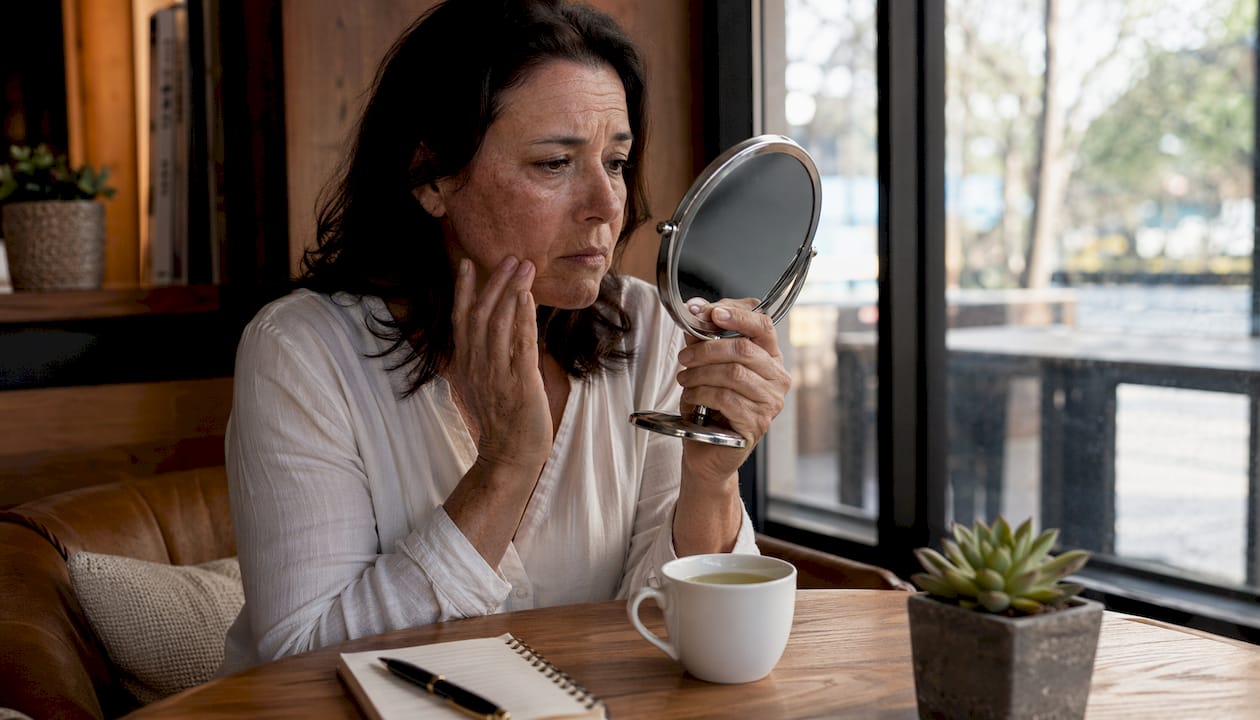
Sun damage is defined as the cumulative harm ultraviolet (UV) radiation causes to skin cells, DNA, and connective tissue. Understanding sun damage matters because one American dies every hour from skin cancer, making UV exposure the leading preventable cause of skin cancer in the United States. The effects of sun exposure range from visible wrinkles and dark spots to invisible DNA mutations that raise cancer risk over decades. Damage builds quietly, often long before any warning sign appears on the surface.
How do UV rays actually damage your skin?
UV radiation travels in two forms that affect skin differently. UVA rays penetrate deep into the dermis, breaking down collagen and elastin. UVB rays hit the outer skin layers and directly damage DNA in skin cells. Both types contribute to cancer risk, and UVA also amplifies UVB’s carcinogenic effects, meaning the combination is more dangerous than either alone.

The cellular damage follows a clear chain. UV radiation strikes the DNA inside skin cells and creates mutations. The skin’s immune system then tries to repair the damage, but repeated exposure overwhelms that defense. UV radiation destroys epidermal Langerhans cells, the immune sentinels of the skin, weakening the body’s ability to catch and destroy abnormal cells before they multiply.
Tanning is not a sign of healthy skin. A suntan signals cellular DNA damage, with the skin producing melanin as a protective response to injury. A “base tan” provides minimal protection and does not prevent further UV harm. Dermatologists classify tanning beds as carcinogens for this exact reason.
One underappreciated source of UV exposure is ordinary glass. UV rays penetrate windows, meaning a daily commute or an afternoon near a sunny office window adds to your lifetime UV total. Short, indirect exposures accumulate into significant damage over years.
Pro Tip: Check the UV index each morning using a weather app. On days when the index reaches 3 or higher, apply sunscreen before you leave the house, even if you plan to spend most of the day indoors.
What are the signs of sun damage to watch for?
Visible sun damage falls into two categories: acute and chronic. Acute damage appears within hours of overexposure as sunburn, redness, swelling, and blistering. Chronic damage, known clinically as photoaging, develops over years and is far harder to reverse.
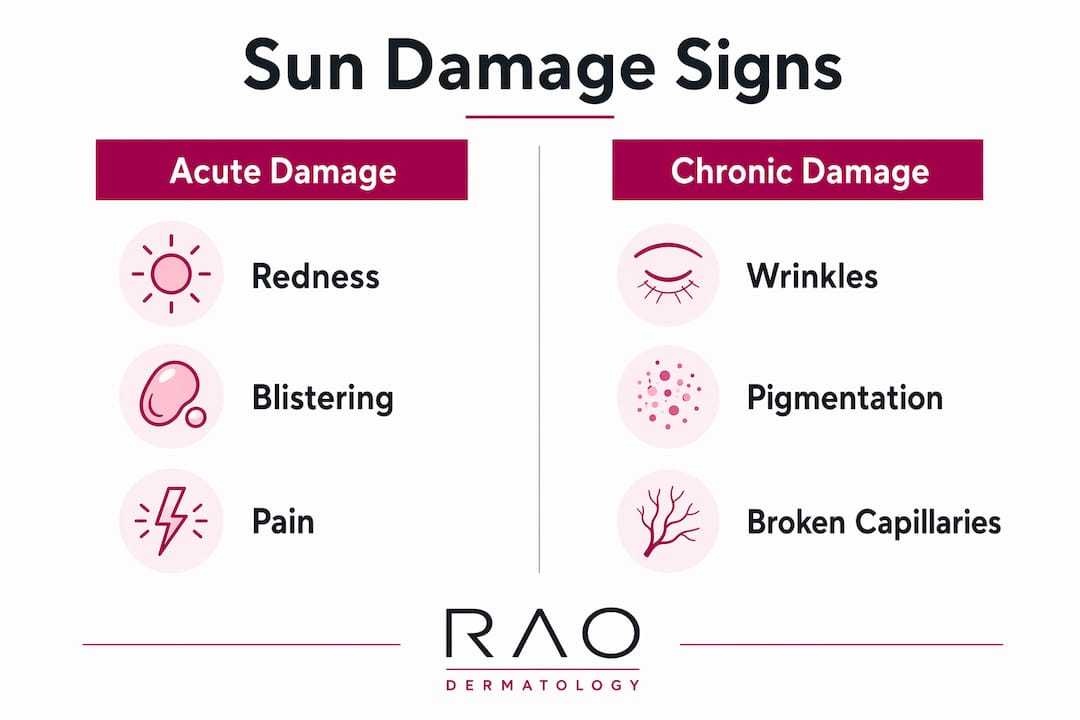
Photoaging produces coarse wrinkles, mottled pigmentation, telangiectasia (broken capillaries), and rough skin texture on areas that receive the most sun. The face, neck, hands, and chest are the most affected. Many patients focus on the face but overlook the back of the neck, the tops of the ears, and the “V” of the chest, all of which receive consistent daily exposure.
The table below summarizes how acute and chronic sun damage present differently.
| Feature | Acute sun damage | Chronic sun damage (photoaging) |
|---|---|---|
| Timing | Hours after exposure | Years of cumulative exposure |
| Skin changes | Redness, pain, blistering | Wrinkles, dark spots, rough texture |
| Capillary changes | Flushing | Broken capillaries (telangiectasia) |
| Pigmentation | Temporary redness | Permanent sun spots, uneven tone |
| Reversibility | Heals within days | Partially reversible with treatment |
Some signs of damage are invisible to the naked eye. Precancerous lesions called actinic keratoses often feel like rough, scaly patches before they become visible. Catching these early matters because untreated actinic keratoses can progress to squamous cell carcinoma. A board-certified dermatologist can identify these lesions during a routine skin exam, even when patients cannot see or feel them.
How to prevent sun damage effectively
Prevention is the single most effective tool against UV-related skin harm. The CDC recommends avoiding peak sun hours, wearing protective clothing, and applying SPF 30+ sunscreen as the core strategy. These habits work best when practiced every day, not just at the beach.
A practical daily prevention plan includes the following steps:
- Apply broad-spectrum sunscreen with at least SPF 30 every morning, including on cloudy days. Broad-spectrum coverage protects against both UVA and UVB rays.
- Reapply sunscreen every two hours when outdoors if the UV index is 3 or higher. Sweat and water reduce effectiveness faster than most people expect. Learn more about choosing the right sunscreen for your skin type.
- Wear a wide-brimmed hat to protect the scalp, ears, and back of the neck. These are among the most commonly missed areas during sunscreen application.
- Use UV-protective sunglasses rated to block 99–100% of UVA and UVB light. UV rays damage the delicate skin around the eyes and contribute to cataracts.
- Seek shade between 10:00 AM and 4:00 PM, when UV radiation is strongest.
- Wear tightly woven, long-sleeved clothing for extended outdoor activities. Clothing with a UPF (Ultraviolet Protection Factor) rating offers measurable, consistent protection.
Oral supplements like Polypodium leucotomos and nicotinamide can reduce UV-related skin damage as adjuncts, but neither replaces physical protection. Nicotinamide in particular requires attention to dosing. Think of supplements as a backup layer, not a substitute for sunscreen and shade.
Pro Tip: Pay extra attention to the “forgotten zones”: the tops of your ears, the back of your neck, and the V-shaped area of your chest. These spots receive daily UV exposure but are frequently missed during sunscreen application.
Many patients underestimate how much UV exposure they accumulate from everyday activities. Driving, walking to a parking lot, and sitting near windows all contribute. Daily sun protection is necessary even when outdoor time feels minimal. Raodermatology’s sun safety guide covers these everyday habits in detail.
What sun damage treatment options are available?
Treating sun damage depends on how deep the injury goes. Superficial changes respond well to medical and cosmetic interventions. Deeper structural damage to collagen and DNA is less reversible, which is why treating sun damage early produces better outcomes than waiting for visible signs to worsen.
Common treatment modalities include:
- Topical retinoids: Prescription vitamin A derivatives that accelerate cell turnover, reduce fine lines, and improve uneven pigmentation. They are among the most studied treatments for photoaging.
- Chemical peels: Controlled application of acids (glycolic, salicylic, trichloroacetic) to remove damaged outer skin layers and stimulate new cell growth.
- Photodynamic therapy (PDT): A light-activated treatment that targets and destroys precancerous actinic keratoses while improving overall skin texture.
- Laser resurfacing: Ablative and non-ablative lasers address wrinkles, pigmentation, and broken capillaries at varying depths.
- Cryotherapy: Liquid nitrogen applied directly to actinic keratoses to freeze and remove precancerous lesions.
- Topical chemotherapy agents: Prescription creams like 5-fluorouracil treat widespread actinic keratoses across large skin areas.
Topical retinoids, chemical peels, and photodynamic therapy improve visible signs of photoaging, but they reduce superficial changes more effectively than deep structural ones. No treatment fully reverses decades of UV damage. Continued sun protection after any treatment is non-negotiable, since treated skin remains vulnerable to further UV injury.
Monitoring is as important as treatment. Patients with a history of significant sun exposure need regular skin checks to catch new actinic keratoses or early skin cancers before they progress.
How does sun damage relate to skin cancer risk?
UV-induced DNA damage is the primary driver of the three most common skin cancers. Melanoma, basal cell carcinoma, and squamous cell carcinoma all develop from cumulative UV exposure and a history of sunburns. Understanding this connection is the clearest argument for consistent prevention.
The three skin cancers differ in behavior:
- Basal cell carcinoma (BCC): The most common skin cancer. It grows slowly and rarely spreads, but it can cause significant local tissue destruction if left untreated.
- Squamous cell carcinoma (SCC): More aggressive than BCC. SCC can spread to lymph nodes and internal organs, particularly in patients who are immunocompromised.
- Melanoma: The least common but most deadly skin cancer. It develops from pigment-producing cells and can metastasize rapidly if not caught early.
Risk factors beyond UV exposure include fair skin, a personal or family history of skin cancer, a large number of moles, and a history of tanning bed use. Tanning beds are classified as Group 1 carcinogens by the International Agency for Research on Cancer, placing them in the same category as tobacco.
UV radiation does not just burn the surface. It alters the genetic code inside skin cells, and those mutations accumulate silently over years before a cancer becomes visible. Prevention is not cosmetic. It is the most direct way to reduce your lifetime cancer risk.
Prevention remains the most powerful intervention. Raodermatology’s skin cancer prevention and detection services are designed to catch UV-related changes before they become life-threatening.
Key Takeaways
Consistent, daily sun protection is the single most effective action you can take to reduce UV-related skin damage and lower your lifetime risk of skin cancer.
| Point | Details |
|---|---|
| UV rays cause two types of harm | UVA drives aging and cancer risk; UVB directly damages DNA in skin cells. |
| Tanning signals injury | Any tan means skin cells have been damaged, not protected. |
| SPF 30+ is the minimum | Apply broad-spectrum sunscreen daily and reapply every two hours outdoors. |
| Early signs matter | Rough, scaly patches may be actinic keratoses, which are precancerous and treatable. |
| Treatment works best early | Retinoids, chemical peels, and PDT improve superficial damage; deep changes are harder to reverse. |
What I’ve learned from years of watching patients underestimate the sun
Most patients who come in with significant photoaging or a new skin cancer diagnosis share one thing in common: they never thought their daily UV exposure was enough to cause real harm. They weren’t sunbathers. They just drove to work, sat near windows, and spent weekends outdoors without thinking much about it. That pattern, repeated over 20 or 30 years, is exactly how cumulative damage works.
The “base tan” myth is one of the most persistent misconceptions I encounter. Patients genuinely believe that a light tan before a vacation provides protection. It does not. A tan is the skin’s distress signal, not a shield. The melanin produced in response to UV injury offers only marginal protection against further damage and does nothing to repair the DNA mutations already made.
What I find most encouraging is that visible signs of sun damage, even significant ones, should prompt evaluation rather than alarm. Catching an actinic keratosis early, or identifying a melanoma at stage one, changes outcomes dramatically. The skin tells a story if you know how to read it. A board-certified dermatologist can read that story clearly, even when the patient cannot see anything concerning. If you notice new rough patches, changing spots, or anything that looks different from surrounding skin, that is reason enough to schedule a check. Proactive skin health management, starting now, pays dividends for decades.
— Krunal
Raodermatology’s approach to sun-damaged skin
Raodermatology brings over 25 years of specialized dermatology experience to the evaluation and treatment of sun-damaged skin across California, New Jersey, and New York.

Whether you are concerned about early photoaging, suspicious spots, or your overall skin cancer risk, Raodermatology’s team provides thorough skin evaluations and personalized care plans. From skin cancer prevention and detection to cosmetic treatments for visible sun damage, the practice covers the full range of medical and aesthetic needs. Patients also have access to esthetic services that address texture, pigmentation, and other surface-level effects of UV exposure. Schedule a skin evaluation to get a clear picture of where your skin stands and what steps make sense for your health.
FAQ
What is sun damage, exactly?
Sun damage is the harm UV radiation causes to skin cells, DNA, and collagen over time. It includes both visible changes like wrinkles and dark spots, and invisible changes like DNA mutations that raise cancer risk.
Can sun damage be reversed?
Superficial sun damage responds to treatments like topical retinoids, chemical peels, and photodynamic therapy. Deeper structural changes to collagen and DNA are not fully reversible, which makes early treatment and consistent prevention the most effective approach.
How do I know if I have precancerous sun damage?
Actinic keratoses, the most common precancerous lesions, appear as rough, scaly patches on sun-exposed skin. A board-certified dermatologist can identify and treat them during a routine skin exam before they progress to squamous cell carcinoma.
Does sunscreen on cloudy days actually matter?
UV rays penetrate cloud cover and reach the skin even on overcast days. Applying broad-spectrum SPF 30+ sunscreen daily, regardless of weather, is the standard recommendation from dermatologists and public health authorities.
How often should I get a professional skin check?
Annual full-body skin exams are recommended for most adults, with more frequent checks for patients who have a history of skin cancer, significant sun exposure, or a large number of moles. Talk to a dermatologist to determine the right schedule for your risk level.
Recommended
Filed under: