
Clinic backed safety advice for under eye filler: five questions to ask before treatment, the emergency signs to watch for, and steps that lower...
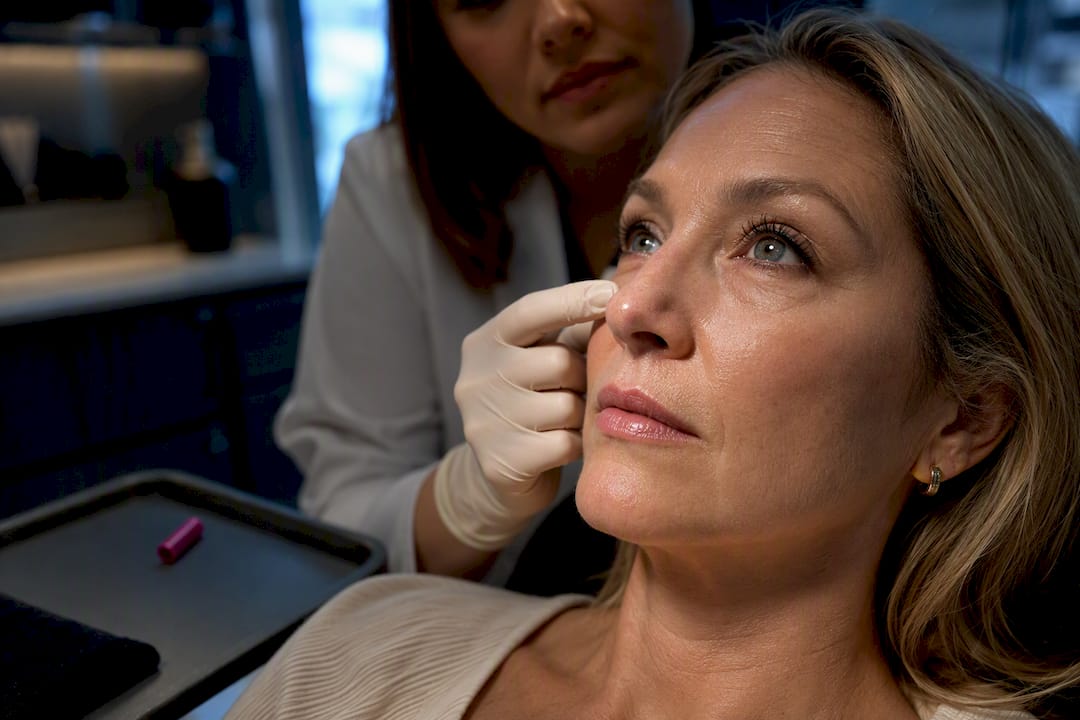
Under-eye filler is safe for most people when the right product and technique are used, but the exception matters enormously. Bruising, swelling, and mild lumps are common and fade within one to two weeks. The rare danger is vascular occlusion, where filler blocks a blood vessel and threatens skin or vision. Your risk hinges almost entirely on your injector’s skill, not luck, and any sudden severe pain, skin blanching, or vision change after injection is a medical emergency.
TL;DR:
- The risk of vascular occlusion during under-eye filler is very low but can cause permanent tissue damage or vision loss if not treated within minutes to hours.
- Most side effects, like bruising, swelling, and lumps, typically resolve within one to four weeks with proper aftercare such as cold compresses and avoiding blood thinners.
- Choosing a highly trained, experienced injector using hyaluronic acid and micro-injections significantly reduces risks compared to unqualified practitioners or improper techniques.
- Certain conditions, such as festoons, autoimmunity, or prior eyelid surgery, increase the likelihood of poor results or complications, making surgical options safer for some patients.
- Long-term issues like bluish discoloration or filler migration can develop months or years later, often requiring correction with hyaluronidase or further treatment.
Table of Contents
- Common Under Eye Filler Side Effects and How Long They Last
- Serious Under Eye Filler Complications and Warning Signs
- Why Under Eye Filler Risks Happen: Anatomy, Products, and Technique
- How to Reduce Under Eye Filler Safety Risks Before Treatment
- What to Do If Something Goes Wrong After Filler
- Who Should Avoid Under Eye Fillers
- Long-Term Risks of Under Eye Filler You Should Know About
- Is Under Eye Filler Worth the Risk? The Psychological Side
- Rao Dermatology’s Approach to Under Eye Filler Safety
- Considering Under Eye Filler? Start With a Real Consultation
- Sources
- FAQ
Common Under Eye Filler Side Effects and How Long They Last
Most people who get tear trough filler experience something mild in the first few days. Bruising, early swelling, redness, and tenderness at the injection sites are the most frequently reported reactions in clinical reviews of periorbital hyaluronic acid (HA) filler, and they typically resolve on their own without any intervention beyond patience and ice.
Small lumps or contour irregularities can also show up under the thin skin of the lower eyelid. This area has almost no subcutaneous fat to camouflage a misplaced droplet of product, so imperfections that would be invisible on the cheek or lip can be obvious here. The good news: because HA fillers bind water and settle over time, many minor bumps smooth out within two to four weeks as the product integrates into the tissue.
Here’s the general timeline you can expect:
- Days 1 to 3: Peak swelling and bruising, sometimes worse than you’d guess from the size of the treated area.
- Days 4 to 7: Bruising shifts color (purple to green to yellow) and swelling starts dropping noticeably.
- Week 2: Most visible bruising is gone; residual puffiness may linger, especially in the morning.
- Weeks 3 to 4: Product settles fully, and any minor lumps typically flatten or become far less noticeable.
Aftercare during the first 48 hours matters more than people assume. Cold compresses (never applied directly against bare skin) reduce swelling and constrict small vessels that cause bruising. Avoiding strenuous exercise, alcohol, and blood thinners like aspirin or ibuprofen, unless a physician has told you they’re necessary, cuts down on bruising risk substantially.
Pro Tip: Sleep with your head slightly elevated for the first two to three nights. Gravity alone can meaningfully reduce under-eye puffiness during the peak swelling window.
Serious Under Eye Filler Complications and Warning Signs
Vascular occlusion is the complication that makes under eye filler risks worth taking seriously. It happens when filler is injected directly into an artery, or compresses one from outside, cutting off blood supply downstream. In the periorbital area, that can mean skin necrosis (tissue death) if a facial artery is blocked, or, in the worst cases, permanent vision loss if filler travels backward into the ophthalmic or retinal artery.
These outcomes are uncommon. Reviews of periorbital HA filler complications describe vascular occlusion as rare relative to total procedures performed, but it accounts for a disproportionate share of the severe, sight- and tissue-threatening events on record. Case series compiled in the ophthalmic literature document dozens of documented vision-loss cases tied to cosmetic filler injections across the face, underscoring that while individual risk is low, the consequence when it happens is severe and sometimes irreversible.
Watch for these warning signs, which can appear during or shortly after injection:
- Sudden, disproportionate pain far beyond typical injection discomfort.
- Skin that turns white or mottled (blanching) near or beyond the injection site.
- Blurred vision, partial vision loss, or eye pain radiating from the treated area.
- Skin that develops a dusky, purplish discoloration over the following hours.
The clock matters more than almost any other factor in outcome. Retinal tissue can suffer irreversible damage within minutes to a few hours of blood flow being cut off, according to expert protocols for filler-induced ocular complications. That narrow window is why any injector worth trusting treats these symptoms as a stop-everything emergency, not a “let’s monitor it” situation.
Why Under Eye Filler Risks Happen: Anatomy, Products, and Technique
The lower eyelid sits directly over a dense, interconnected web of small arteries, including branches of the angular and infraorbital arteries that feed into the ophthalmic system behind the eye. Clinical reviews consistently point to this anatomic complexity as the single biggest safety determinant in periorbital filler work, more than any specific product or brand.
Filler type changes the risk profile too. HA fillers dominate this area for good reason:
- HA fillers are hydrophilic (they attract water) and, critically, reversible with hyaluronidase if something goes wrong.
- Non-HA fillers (calcium hydroxyapatite, poly-L-lactic acid) lack an enzymatic reversal agent, so a vascular event involving one is far harder to manage.
- Low-G’ HA products, softer and less stiff, are generally preferred under the eye specifically because thin eyelid skin shows every ripple of a firmer material.
Technique variables layer on top of product choice. Larger injection volumes, deeper boluses delivered under high pressure, and needle angles that run parallel to vessels all raise the odds of penetrating or compressing an artery. Smaller, slower deposits placed with a clear understanding of local anatomy reduce that risk considerably.
How to Reduce Under Eye Filler Safety Risks Before Treatment
Your provider matters more than your product. A qualified injector should be a licensed physician, nurse injector, or physician assistant with documented training in facial anatomy and injectable complications, not someone who took a weekend course. Before booking, ask these questions:
- Does the clinic keep hyaluronidase on-site and know how to administer it urgently? This is non-negotiable for HA filler safety.
- Does the injector use a cannula rather than a sharp needle in this area? Prevention-focused reviews point to blunt cannulas as one way to reduce, though not eliminate, the chance of piercing a vessel, and some guidance favors larger-gauge cannulas specifically for this reason.
- Do they use microboluses and low injection pressure? Small deposits (often 0.1 mL or less per pass in high-risk zones) give far more control than large, fast pushes of product.
- Is there an established referral pathway to ophthalmology or emergency care if something goes wrong? A provider who has never thought about this hasn’t planned for you.
- Will they review your medical history, including autoimmune conditions and prior eyelid or periorbital surgery, before treating you? Scar tissue from past procedures changes how vessels sit under the skin.
Pro Tip: Ask to see the injector’s own before-and-after photos of tear trough cases specifically, not general filler work. Under-eye technique is its own specialty within cosmetic injecting.
What to Do If Something Goes Wrong After Filler
If you or your injector suspects vascular occlusion, the injection stops immediately. From there, established protocols call for warm compresses and gentle massage over the affected area to encourage blood flow, alongside urgent reassessment by the treating clinician.
For HA fillers, hyaluronidase is the frontline treatment, and clinical guidance recommends high, repeated doses when vascular compromise is suspected rather than a single conservative dose. This is one reason clinic preparedness matters: a provider without hyaluronidase stocked and ready has already lost precious time.
Seek emergency care immediately, not “in the morning,” if you notice:
- Vision changes of any kind, including blurriness, dimming, or partial loss.
- Pain that escalates rather than settles over the following hour.
- Skin discoloration that spreads or deepens instead of fading.
For suspected ocular involvement, stroke-like emergency protocols call for immediate referral to a stroke center or ophthalmologist, since retinal ischemia can become irreversible within a narrow window measured in minutes to hours.
Who Should Avoid Under Eye Fillers
Not everyone is a good candidate for tear trough filler, and a responsible injector will tell you that plainly rather than just take the booking. People with festoons (baggy, hammock-like skin folds) or significant malar mounds often see filler worsen the appearance rather than improve it, since adding volume under already-loose skin can accentuate the fold.
Active infection near the treatment area, certain autoimmune conditions, and a history of periorbital surgery that has altered local anatomy also raise the bar for caution. Genetic factors play a role too: research has linked certain HLA haplotypes to a higher risk of delayed inflammatory reactions after filler, including granuloma formation weeks or months later.
- Significant skin laxity or festoons.
- Active local skin infection.
- Autoimmune disease affecting the face or eyes.
- Prior eyelid surgery that changed local vascular anatomy.
For these patients, surgical options like lower blepharoplasty with fat repositioning, or midface volumization to lift the cheek rather than fill under the eye directly, are often safer paths to the same goal.
Long-Term Risks of Under Eye Filler You Should Know About
Beyond the acute complications, tear trough filler carries risks that surface months or years later. Tyndall effect, a bluish discoloration visible through thin eyelid skin, happens when HA product sits too superficially or too much volume is placed at once. It’s not dangerous, but it’s often mistaken for a bruise that never healed, and it typically requires hyaluronidase to correct rather than time.

Migration is another long-term concern specific to this area. Because the lower eyelid has so little structural support, filler placed here can shift downward or laterally over months, especially with repeated touch-ups that build volume faster than the tissue can accommodate. This is part of why injectors favor conservative, incremental treatment over trying to achieve a dramatic result in a single session.
Repeated treatments also raise the odds of delayed-onset inflammatory nodules or granulomas, immune-driven reactions that can appear well after the initial swelling has resolved. These are uncommon but documented, and they tend to respond to hyaluronidase or, in persistent cases, steroid injection.
There’s also a cumulative anatomical question rarely discussed upfront: each round of filler adds material to a small, tightly packed space. Over years, some patients find that what started as a subtle correction becomes an area that looks progressively puffier rather than more rested, simply because product has accumulated faster than the body metabolizes it. Periodic reassessment with your provider, not just repeat injections on a fixed schedule, helps catch this before it becomes a bigger correction project.
Is Under Eye Filler Worth the Risk? The Psychological Side
The under-eye area carries outsized emotional weight for a small piece of anatomy. Tired-looking eyes get read by other people as tired, older, or unwell, even when someone feels perfectly fine, and that mismatch between how you feel and how you look is often what actually drives someone into a consultation.
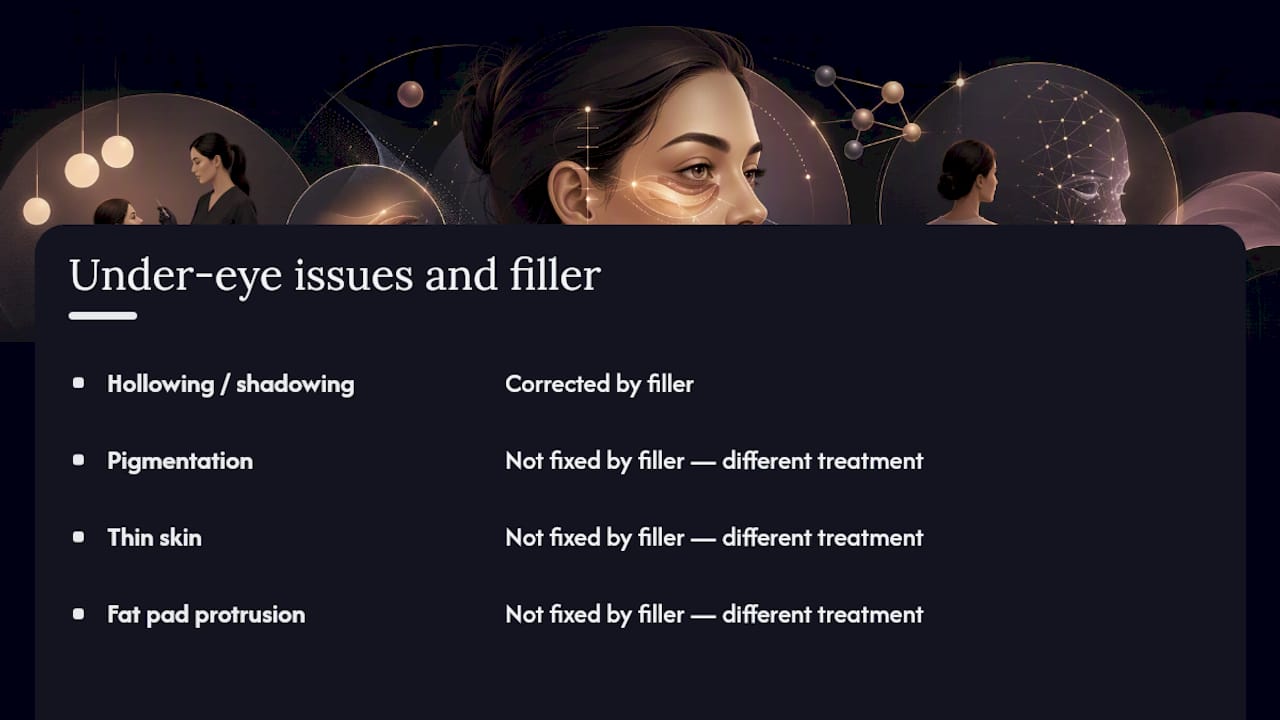
That’s worth sitting with before you book anything. Filler corrects hollowing and shadowing, but it does not fix dark circles caused by pigmentation, thin skin showing underlying muscle, or under-eye bags caused by fat pad protrusion, three separate problems that get lumped together as “tired eyes” but need different treatments entirely. Going in with the wrong problem diagnosed means walking out disappointed even if the injection itself was technically flawless.
There’s also a subtler risk worth naming: under-eye filler is one of the areas most prone to “filler creep,” where subtle over-correction becomes the new normal and each subsequent touch-up edges further from a natural look without the patient quite noticing in real time. A good injector will tell you when to stop, not just when to schedule your next appointment. If you find yourself wanting more volume every few months despite looking objectively fine, that’s worth discussing openly rather than just booking the next round.
Rao Dermatology’s Approach to Under Eye Filler Safety
Some dermatology practices build their cosmetic dermatology processes around anatomy review and honest candidacy assessment before any injection happens, not after. A safety-first approach often favors conservative technique and thorough patient education, and maintaining emergency protocols and product access is critical for periorbital treatment. Patients should expect consistent standards tailored to individual needs rather than one-size-fits-all injections.
— Rao Dermatology
Considering Under Eye Filler? Start With a Real Consultation
If you’re weighing whether under eye filler risks are worth it for your specific anatomy, the honest answer depends on details a photo or a Google search can’t give you. Rao Dermatology’s dermal filler consultations start with a physical assessment of your under-eye anatomy, an honest conversation about whether HA filler, midface volumization, or a surgical referral fits your goals better, and a plain-language rundown of what could go wrong before you ever agree to treatment.

You’ll leave that first visit with a specific plan, not a generic sales pitch, and with a clear sense of what recovery and risk actually look like for your face. If under-eye hollowing or dark circles have been bothering you, schedule a consultation and get a straight answer instead of another round of research.
This article is general information, not a substitute for advice from a qualified doctor. Consult a qualified healthcare professional about your own circumstances before acting on anything here.
Sources
- Complications after cosmetic periocular filler: prevention and management
- Expert recommendations and stroke-like protocols for filler-induced ocular complications
FAQ
Is It Safe to Get Filler Under the Eyes?
Under-eye filler is safe for most patients when placed by a trained injector using HA product and careful technique, though the area carries a higher risk of complications than fuller-featured zones like the cheeks or lips due to its thin skin and dense vascular network.
What Are the Downsides of Under-Eye Filler?
The common downsides are bruising, swelling, tenderness, and temporary lumps that resolve within one to four weeks; the rare but serious downside is vascular occlusion, which can cause skin necrosis or, in the worst cases, vision loss.
What Is the Riskiest Place on the Face for Filler?
The under-eye and glabella (between the eyebrows) areas are generally considered the highest-risk injection zones because of dense, interconnected vessels connected to the ophthalmic artery, raising the stakes of any vascular complication.
Why Are Some People Against Under-Eye Fillers?
Skepticism usually centers on three things: the risk of Tyndall effect (visible bluish discoloration), filler migration over time in an area with little structural support, and the rare but serious possibility of vascular complications affecting vision.
Recommended
Filed under: