
Discover the true costs of skin tag removal in the U.S. and learn which treatment methods might save you money while ensuring quality care.
What You’ll Actually Pay for Skin Tag Removal in the U.S.
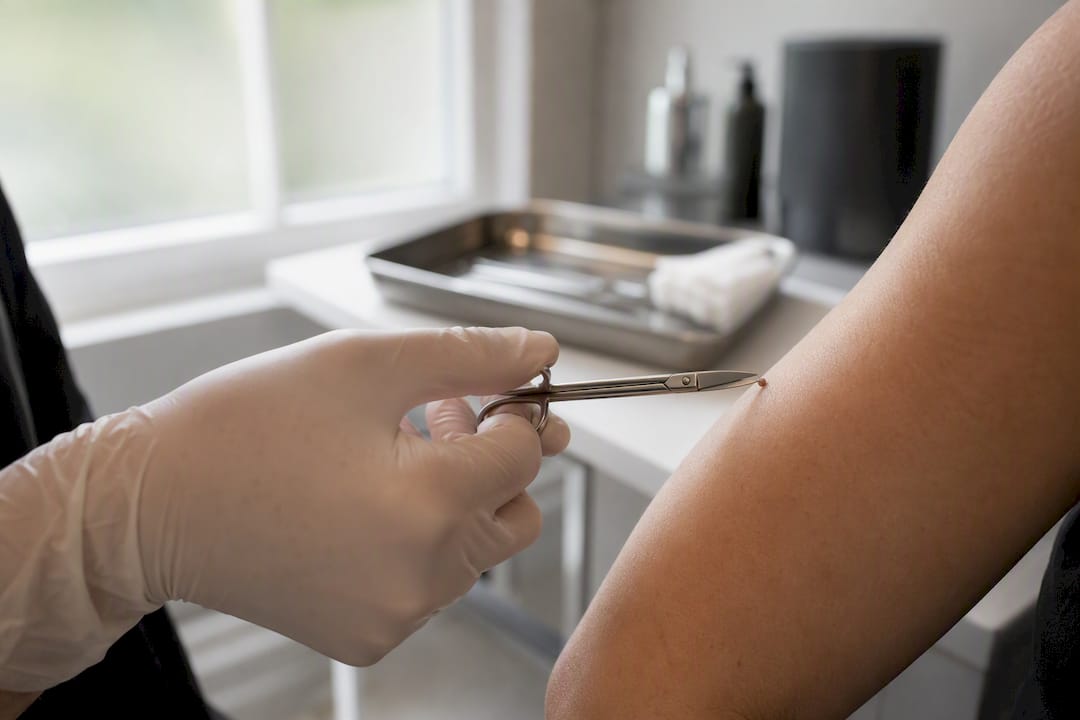
Most people pay an amount out of pocket to have a skin tag removed, with many clinics charging amounts that vary depending on the method used. Insurance typically won’t touch a purely cosmetic removal, but it often will if the tag bleeds, gets irritated by clothing, or looks unusual enough to need a biopsy. See a board-certified dermatologist before you decide, especially if a growth has changed shape or color.
TL;DR:
- Most skin tags can be removed in a single visit, with the number limited mainly by anesthetic safety and procedure time.
- Removal costs vary by technique, with cryotherapy costing around $98 on average and excision roughly $187 per lesion.
- Removal of more than 15 skin tags may require a special code and a custom quote, especially if multiple sessions or larger treatments are involved.
- Insurance coverage depends on medical necessity; purely cosmetic removal is usually not reimbursed and requires patient payment.
- Visiting a dermatologist offers benefits like biopsy options and tailored technique to reduce scarring, unlike DIY home removal kits which carry risks.
Table of Contents
- Skin Tag Removal Cost by Treatment Method
- What Drives the Price Up or Down
- Does Insurance Cover Skin Tag Removal?
- How Many Skin Tags Can Be Removed in One Visit?
- Why Professional Removal Beats At-Home Kits
- How to Prepare for Your Appointment and Avoid Surprise Charges
- Our Take on Getting Skin Tags Removed the Right Way
- Book a Skin Tag Evaluation With Rao Dermatology
- Sources
- FAQ
Skin Tag Removal Cost by Treatment Method
Price depends heavily on which technique a clinic uses, and each one carries a different average.
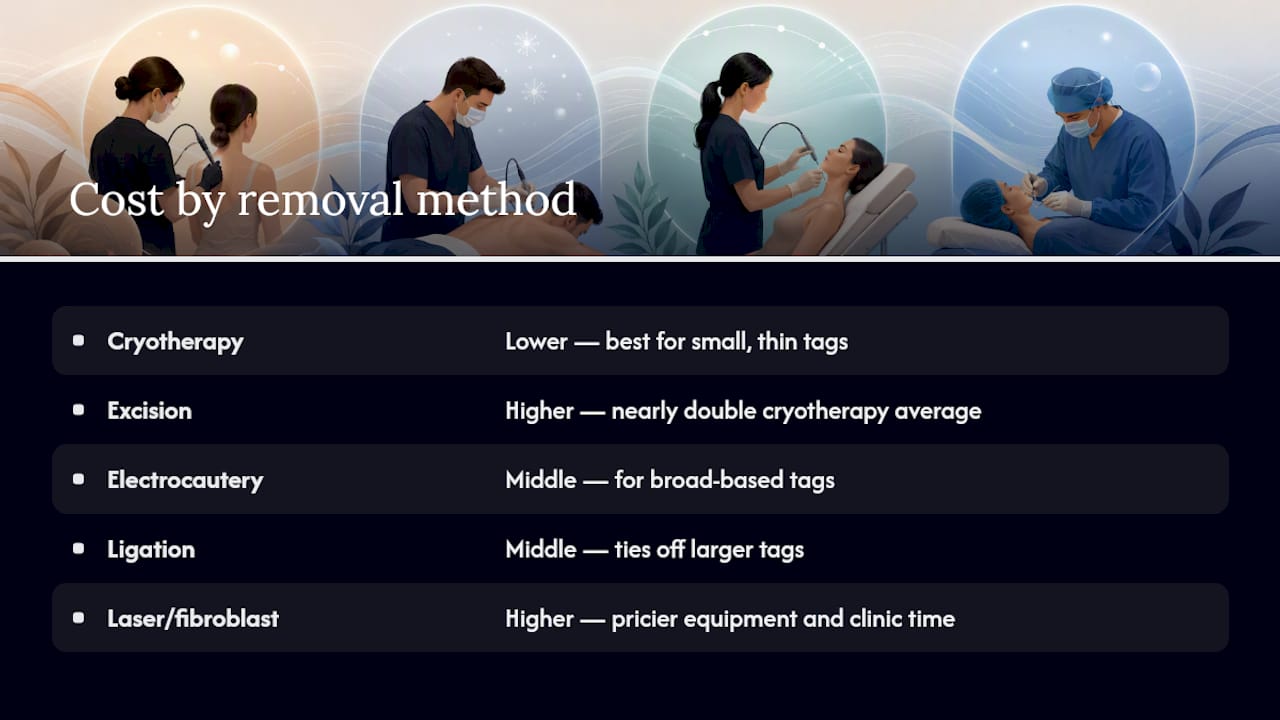
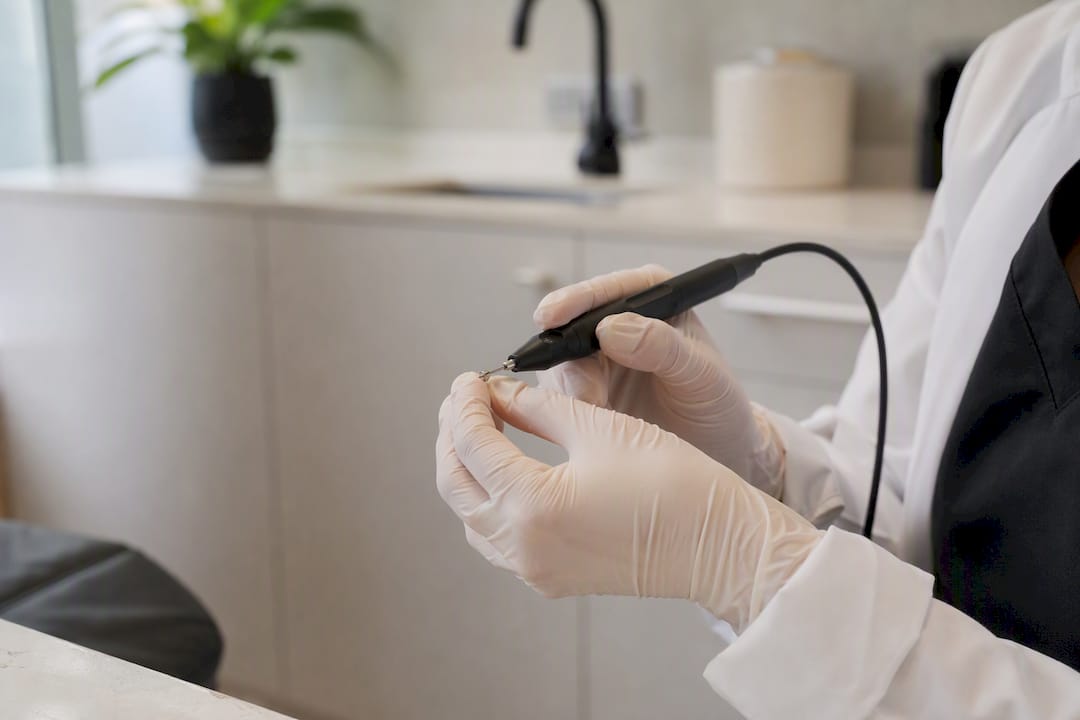
Cryotherapy, which freezes the tag off with liquid nitrogen, tends to run around the lower end of the spectrum and works best on smaller, thinner tags. Excision, sometimes called snip excision, involves clipping the tag off with sterile scissors or a scalpel and averages higher because it takes more precision, especially near the eyelids or skin folds. Electrocautery burns the tag off using a heated probe and sits in the middle of the price range, often chosen for tags that are too broad-based for a clean snip. Laser removal, along with newer fibroblast or ablative techniques, tends to cost more per session because the equipment and per-minute clinic time are pricier, though some patients prefer it for precision around delicate areas like the neck or under the arms. Ligation, tying off the base of a larger tag to cut its blood supply, falls in a similar middle range to electrocautery.
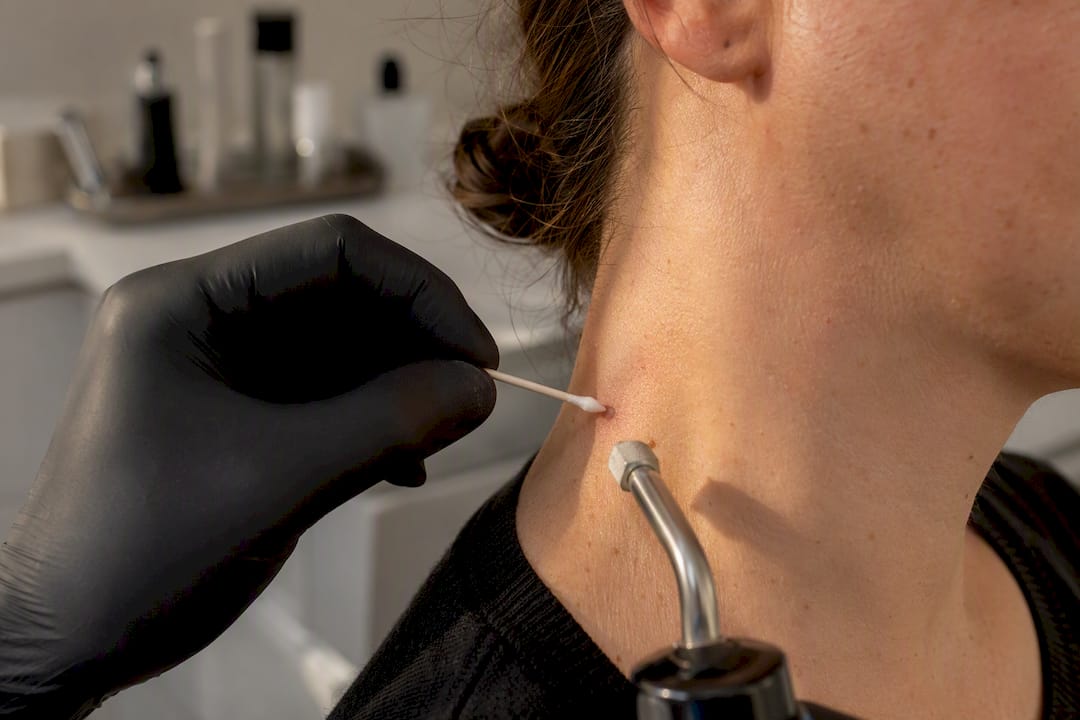
National averages for skin tag removal costs by method generally identify cryotherapy as less expensive and excision as more expensive, with other methods like electrocautery, laser removal, and ligation falling in between.
By the numbers: CareCredit’s cost data shows excision averaging nearly double the cost of cryotherapy, largely because it takes more hands-on time and sometimes involves sending tissue for pathology.
Most practices bill per lesion rather than per visit, though clinics that see a lot of multi-tag patients will often quote a session rate instead. For a deeper look at how these techniques compare in practice, Rao Dermatology’s treatment options guide breaks down what each procedure actually involves.
What Drives the Price Up or Down
The number on your bill depends on more than just the method your dermatologist picks.
Location on the body matters a lot. A tag on the eyelid or in the genital area requires more careful technique and often more time than one on the trunk or an arm, which pushes the price higher. The number of tags being treated also changes the math, since most practices offer a lower per-lesion rate once you’re past the first handful. Complexity plays a role too: if a lesion needs stitches, local anesthetic, or a longer procedure slot, expect the bill to climb. And if tissue gets sent for pathology, that’s a separate charge that can add several hundred dollars depending on the lab.
- Anatomical location (face and eyelids cost more than trunk or limbs)
- Number of tags removed in a single visit
- Need for anesthesia, sutures, or extended procedure time
- Pathology fees when tissue is analyzed
- Regional cost differences and clinic facility fees
Pro Tip: Ask for a written estimate that separates the procedure fee from any pathology or facility charge before you agree to treatment. That way you know exactly what you’re paying for and won’t be surprised by a second bill weeks later.
Does Insurance Cover Skin Tag Removal?
Insurance coverage hinges almost entirely on medical necessity, not on how many tags you have or how much they bother you cosmetically.
Insurers generally want documentation that a tag bleeds, gets caught on clothing or jewelry, becomes infected, or raises suspicion of something more serious before they’ll pay a claim. A tag removed purely because you don’t like how it looks is billed as cosmetic, and most plans won’t reimburse that. Billing runs through specific CPT codes: 11200 covers removal of up to 15 skin tags, with 11201 as an add-on code for additional groups beyond that. Shave removals and excisions fall under a different code range (11300 to 11426), and destruction methods like electrocautery are billed under 17110.
- 11200: removal of up to 15 skin tags
- 11201: add-on code for each additional group of 10 tags
- 11300 to 11426: shave or excision removal codes
- 17110: destruction of benign lesions (cauterization, laser)
Medicare follows the same logic. Coverage kicks in only when removal is medically necessary, and beneficiaries typically pay Part B coinsurance after meeting their deductible. Cosmetic removals aren’t covered under any circumstance. If you’re paying out of pocket, FSA or HSA funds usually require a Letter of Medical Necessity from your dermatologist, and pathology fees get billed separately from the removal itself. Rao Dermatology’s guide to dermatology insurance coverage walks through how medical necessity gets determined in practice.
How Many Skin Tags Can Be Removed in One Visit?
Most patients with several small tags can get all of them treated during a single appointment, since freezing or snipping off a tag takes only a few seconds each.
The limiting factor isn’t usually the number of tags but the anesthetic dose and how much time the provider has blocked out. Larger excisions that need local anesthesia have a practical ceiling, since a dermatologist won’t exceed a safe anesthetic dose in one sitting.
- 1 to 5 tags: Often billed individually or at a modest flat rate, since removal takes just a few minutes total.
- 6 to 15 tags: Frequently falls under CPT code 11200, with many clinics offering a bundled per-visit price rather than charging each tag separately.
- 15 or more tags: Billed with the 11201 add-on code for additional groups, and most practices will give a custom quote once they’ve assessed size and location.
Insurers sometimes cap how many lesions they’ll reimburse in a single claim, so if you have a large number of tags and hope for coverage, ask your provider’s billing team to confirm the payer’s per-session limit before treatment. Office-based scissor excision remains a common choice for clearing multiple small tags quickly with minimal scarring.
Why Professional Removal Beats At-Home Kits
Skin tags are almost always harmless, but that doesn’t mean every growth that looks like one actually is.
Over-the-counter tag removal kits, the kind sold as freezing pens or tying bands, come with real risks. The AAD and FDA have both warned that these products can cause chemical burns, infection, and scarring, and worse, they can mask a lesion that actually needs a biopsy. A dermatologist’s office avoids these risks through sterile technique, correct method selection based on the tag’s size and location, and the ability to send tissue for pathology the moment something looks atypical.
Rao Dermatology has treated skin conditions across California, New Jersey, and New York for more than 25 years, with in-house dermatopathology available when a lesion needs a closer look. That combination lets a single visit cover both removal and diagnostic follow-up if something unexpected turns up under the microscope.
Growths that look like ordinary skin tags occasionally turn out to be something else entirely, which is exactly why a trained eye matters more than a fast fix at home.
- Sterile, controlled technique reduces infection risk
- Biopsy available on-site when a lesion looks atypical
- Method chosen based on size and location to minimize scarring
- Dermatopathology results without an outside referral
For more on why professional care outperforms DIY options, see Rao Dermatology’s guide on choosing a dermatologist over at-home removal.
How to Prepare for Your Appointment and Avoid Surprise Charges
A typical visit starts with a consultation, moves into the removal itself, and sometimes includes a pathology fee if tissue gets sent to the lab. Facility fees can also apply depending on where the procedure happens.
Before you book, ask the front desk a few direct questions: Is pricing per lesion or a package rate for multiple tags? Will any tissue be sent for pathology, and what does that cost separately? Does the practice bill your insurance directly, or do you pay up front and file for reimbursement yourself?
- Ask whether pricing is per lesion or bundled for multiple tags
- Confirm if pathology testing applies and its separate cost
- Ask if the office bills insurance directly or requires self-payment
- Request documentation for FSA/HSA reimbursement if medically necessary
Pro Tip: Bring a list of every tag you want addressed to your first visit. Quoting the full picture up front usually gets you a better bundled rate than booking separate appointments one tag at a time.
Our Take on Getting Skin Tags Removed the Right Way
Cost matters, but it shouldn’t be the only factor driving the decision. A board-certified dermatologist can evaluate every lesion in one visit, flag anything that needs closer testing, and give you a transparent estimate before treatment begins. Bring your insurance card and a list of what you want addressed. Rao Dermatology’s California, New Jersey, and New York offices offer dermatopathology on-site when a growth needs a second look.
— Rao Dermatology
Book a Skin Tag Evaluation With Rao Dermatology
Rao Dermatology handles skin tag removal the way it should be handled: with an upfront look at every lesion, a clear price before treatment starts, and in-house dermatopathology if anything needs a closer diagnostic check. That last piece is what separates a dermatology office from a walk-in med spa: if a growth looks even slightly atypical, it can be biopsied and analyzed without a separate referral or a second appointment somewhere else.

Rao Dermatology’s full range of services covers both medically necessary removals and purely cosmetic dermatology procedures, so whichever category your tags fall into, you’ll get a plan built around it. The team verifies insurance coverage ahead of your visit and discusses payment options for anything billed as cosmetic. Bring your insurance card and a list of every tag you’d like evaluated, then book a consultation at one of the California, New Jersey, or New York locations to get a real quote instead of a guess.
Sources
- American Academy of Dermatology (AAD) — Skin tags
- CareCredit — Skin Tag Removal: Procedure Options and Costs
- Coverage position & criteria: benign skin lesion removal (coding guidance)
- Healthline — Does Medicare cover skin tag removal?
This article is general information, not a substitute for advice from a qualified doctor. Consult a qualified healthcare professional about your own circumstances before acting on anything here.
FAQ
How much does it cost to remove skin tags in the U.S.?
Most patients pay between $100 and $500 out of pocket, with method-specific averages ranging from about $98 for cryotherapy to $187 for excision.
Is it worth removing a skin tag?
If a tag bleeds, catches on clothing, or looks unusual, removal is often worth it both medically and for comfort; if it’s purely cosmetic, that’s a personal call since insurance likely won’t help pay for it.
Will insurance pay to remove a skin tag?
Only if removal is medically necessary, meaning the tag causes symptoms like pain, bleeding, or infection, or raises suspicion of something more serious; purely cosmetic removals are billed to the patient.
How many skin tags can a dermatologist remove at once?
Most patients can have several tags removed in a single visit, since freezing or snipping takes only seconds per lesion, though larger excisions are limited by safe anesthetic dosing.
Recommended
- Professional Skin Tag Removal: Safe Treatment Options & What to Expect | Rao Dermatology
- Professional Skin Tag Removal: Why Choose a Dermatologist Over DIY Methods | Rao Dermatology
- Laser Removal of Skin Tags: What to Know Before You Book | Rao Dermatology
- Professional Skin Tag Removal: Is It Right for You? | Rao Dermatology | Rao Dermatology
Filed under: