
Discover essential day-by-day steps for effective skin punch biopsy aftercare. Ensure proper healing and know when to seek help.
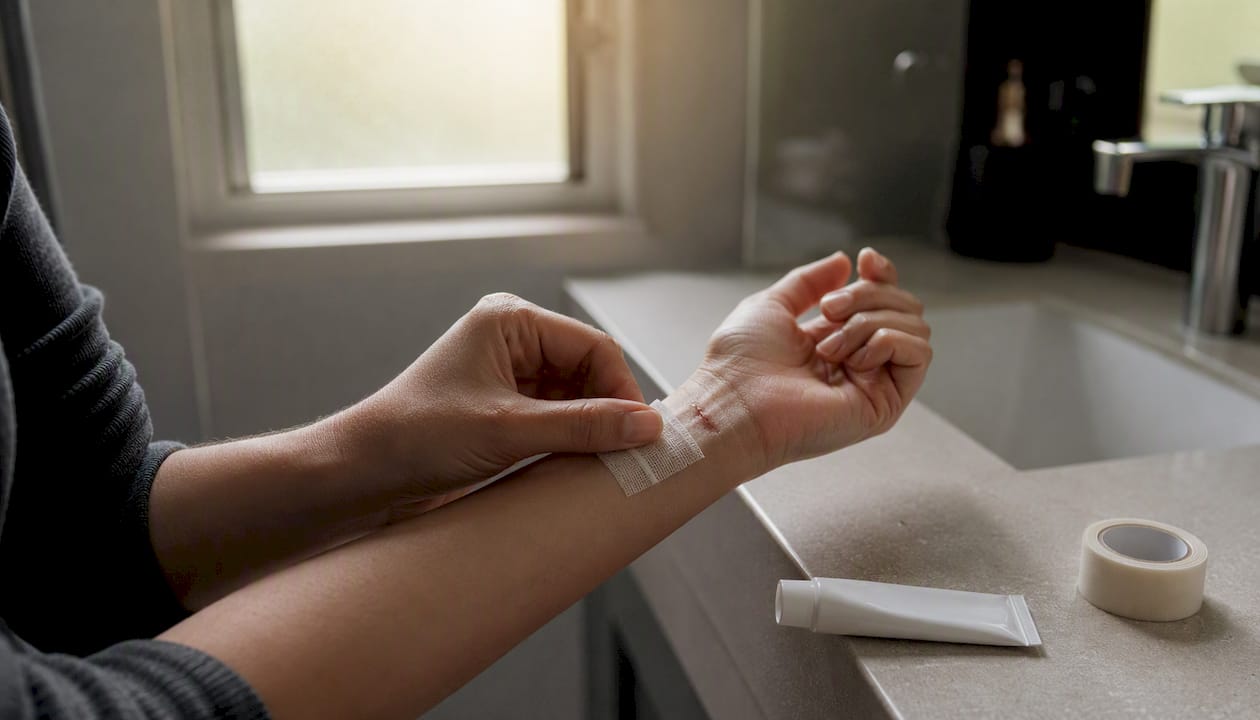
The short plan: keep the original dressing on for 24 hours, then clean the wound daily with mild fragrance-free soap and lukewarm water, apply a thin layer of petroleum jelly from a squeeze tube, and cover it with a fresh bandage until stitches are removed or the skin has closed. Call your provider immediately if you experience uncontrolled bleeding, spreading redness, pus, increasing pain, or fever.
That single routine handles the vast majority of punch biopsy recoveries. The sections below break it down step by step, cover what to watch for, and explain when to call Rao Dermatology or head to urgent care.
Key Takeaways
Proper skin punch biopsy aftercare requires keeping the wound moist and covered daily, managing bleeding with 15–20 minutes of firm pressure, and calling your provider at the first sign of infection.
| Point | Details |
|---|---|
| Daily wound care routine | Clean gently with mild soap and water, apply petroleum jelly from a squeeze tube, and cover with a fresh bandage every day. |
| Bleeding management | Apply firm, steady pressure for 15–20 continuous minutes; call your provider or go to the ER if bleeding does not stop. |
| Suture removal window | Expect removal between 5 and 14 days depending on biopsy location; lower-leg sites take longest. |
| When to call your provider | Contact your provider for spreading redness, pus, uncontrolled bleeding, increasing pain, or fever above 100.4°F. |
| Rao Dermatology follow-up | Rao Dermatology offers suture removal, wound checks, and pathology result consultations across California, New Jersey, and New York. |
Table of Contents
- What does good skin punch biopsy aftercare look like daily?
- How do you care for stitches and when are they removed?
- How do you manage bleeding, pain, and itching at home?
- What does normal healing look like, and how long does it take?
- How do you minimize scarring and protect the site from sun damage?
- What should you avoid after a punch biopsy?
- Special situations that change how you care for the site
- Why do dermatologists recommend keeping biopsy wounds moist and covered?
- Rao Dermatology’s perspective on follow-up care
- Ready to schedule your follow-up with Rao Dermatology?
- Sources
- FAQ
What does good skin punch biopsy aftercare look like daily?
Starting on day 2, your wound care follows the same short sequence every day. Mayo Clinic confirms that after the first 24 hours you can remove the original bandage and begin gentle daily cleaning, continuing until stitches come out or the wound closes on its own.
Here is the daily sequence:
- Wash your hands with soap and water for at least 20 seconds before touching the site. The CDC’s handwashing guidance is specific: 20 seconds of scrubbing, not a quick rinse.
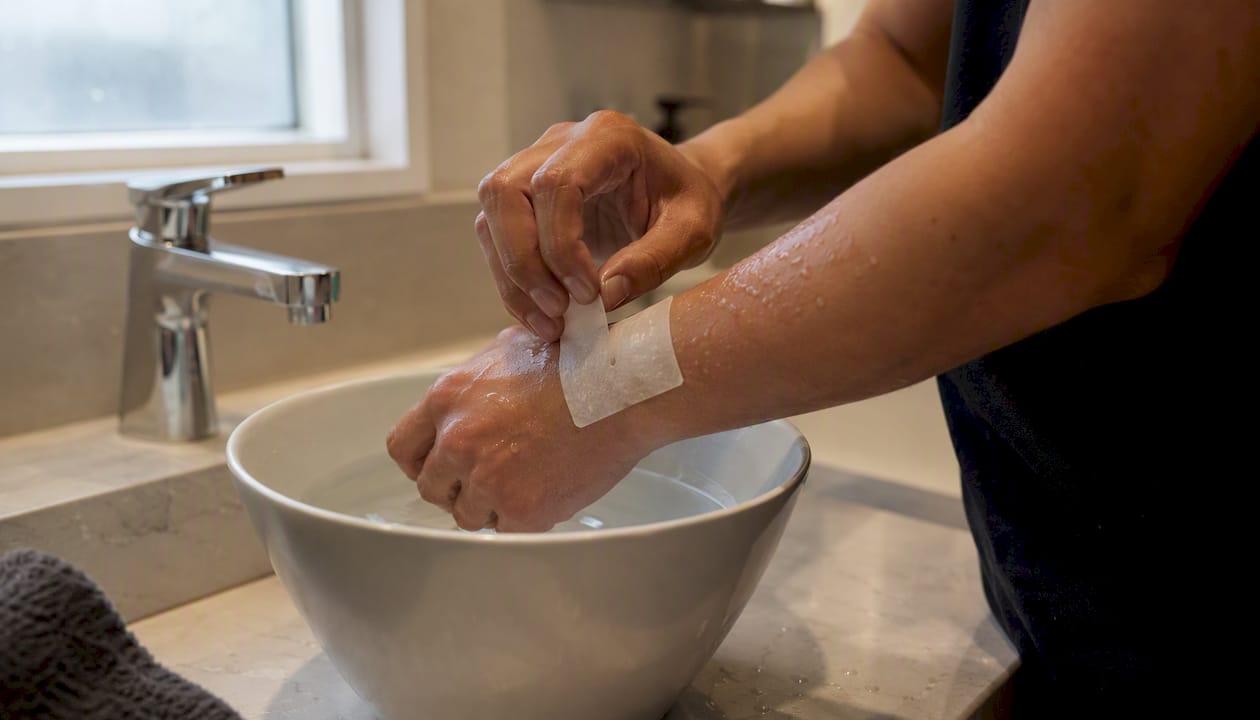
- Remove the old dressing slowly. If it sticks, dampen it with a little clean water first rather than pulling.
- Gently clean the wound with mild, fragrance-free soap and lukewarm running water. No scrubbing.
- Rinse and pat dry with a clean gauze pad or soft cloth.
- Apply a thin layer of petroleum jelly from a squeeze tube. A squeeze tube matters: dipping fingers into a shared jar introduces bacteria. The AAD’s wound care guidance specifically recommends this approach to maintain the moist interface that promotes healing.
- Cover with a fresh adhesive bandage or sterile gauze secured with paper tape.
Change the dressing once daily, or sooner if it gets wet or dirty. For showering, running water over the site is fine after the first 24 hours. Avoid soaking in baths, hot tubs, or pools until the wound is fully closed.
Pro Tip: If the dressing sticks to the wound, soak it with clean water for 30–60 seconds before lifting the edge. Forcing it off can reopen the surface and set healing back by days. For sensitive skin, non-stick pads secured with paper tape cause less adhesive irritation than standard bandages.
For a broader look at post-procedure wound care that applies across dermatology procedures, Rao Dermatology’s patient guide covers the same principles in more detail.
How do you care for stitches and when are they removed?
Not every punch biopsy gets stitches. Smaller biopsies (typically under 3 mm) may be left to close on their own. Larger ones, usually 4 mm or more, often get one or two sutures. MD Anderson Cancer Center notes that suture removal typically happens between 5 and 14 days, depending on where the biopsy was taken.
Typical removal timelines by location:
- Face and scalp: about one week
- Trunk and arms: one to two weeks
- Lower legs: longer than other sites due to slower healing
Some providers use dissolvable sutures, which absorb on their own over a few weeks and do not require a removal visit. Non-dissolvable sutures need to be removed by a clinician. Do not attempt to remove them yourself.
While stitches are in place:
- Keep the site covered and moist as described above.
- When bathing, let water run gently over the area but do not scrub the sutures directly.
- Sleep with the wound uncovered only if your provider specifically instructs it; otherwise keep it bandaged.
- Avoid any activity that stretches or pulls the skin around the site, including heavy lifting, vigorous exercise, or wide arm movements if the biopsy is on the trunk or shoulder.
If a suture falls out before your scheduled removal appointment, or if the wound edges separate (gap open), call your provider the same day. A gaping wound may need re-closure or at minimum a wound check to rule out infection.
How do you manage bleeding, pain, and itching at home?
Bleeding
Some oozing in the first hour or two after the procedure is normal. Active bleeding that restarts later needs a specific response:
- Apply firm, steady pressure directly over the site using a clean sterile gauze pad.
- Hold it without lifting for 15–20 continuous minutes. Peeking resets the clock.
- If bleeding has not stopped after 20 minutes of uninterrupted pressure, call your dermatologist or go to an emergency room.
The AAD’s biopsy wound care page and The Christie NHS patient leaflet both specify this 15–20 minute window. Avoid NSAIDs like ibuprofen or aspirin unless your clinician has cleared them, since these thin the blood and can prolong bleeding.
Pain and swelling
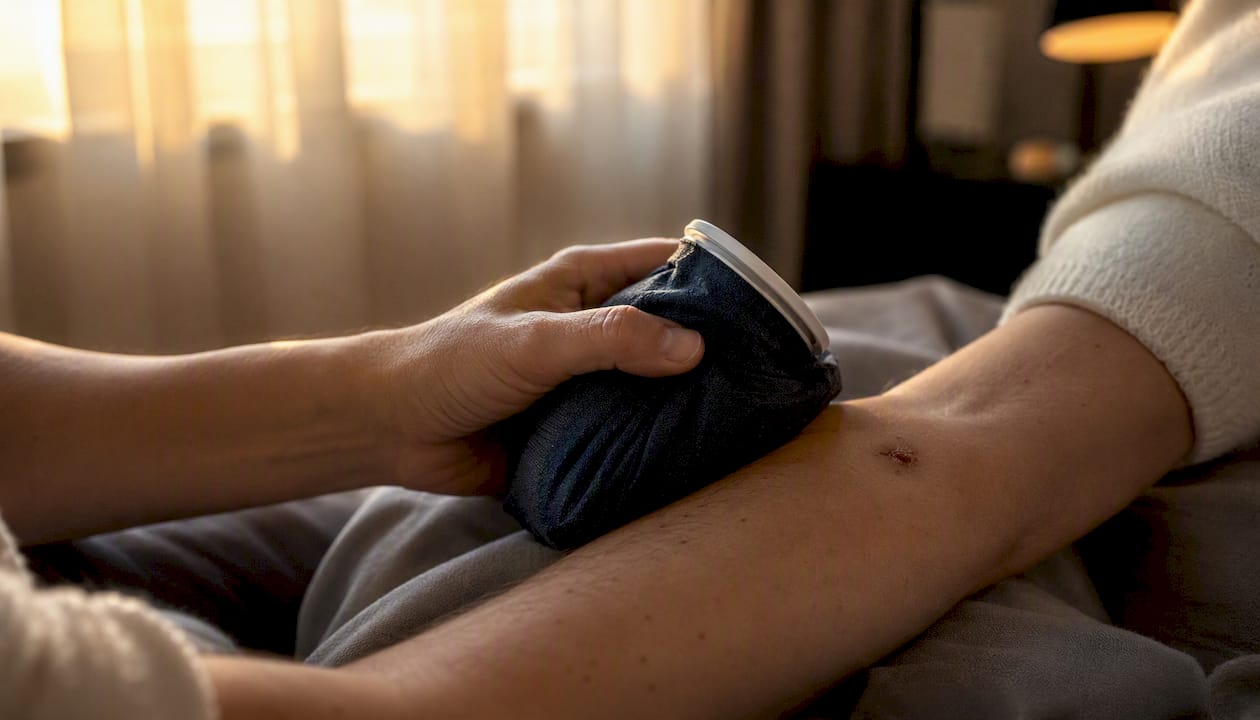
Mild soreness for the first day or two is expected. Acetaminophen (Tylenol) at the standard adult dose is the first choice for pain relief. For swelling, wrap an ice pack in a thin cloth and apply it for 10–15 minutes at a time. Never place ice directly on the wound.
Itching
Itching during the first week usually signals healing, not infection. The fix is simple: keep the wound moist with petroleum jelly. Dry wounds itch more. Do not scratch or pick at the site.
One exception: if you develop a worsening rash or blistering around the wound after using an antibiotic ointment like Neosporin, stop using it. This pattern suggests allergic contact dermatitis, which is more common with antibiotic ointments than most patients expect.
Red flags that require same-day contact with your provider: spreading redness beyond the wound edge, increasing pain after day 2, warmth, pus or cloudy discharge, or a fever above 100.4°F. These are signs of infection, not normal healing.
What does normal healing look like, and how long does it take?
Setting realistic expectations prevents unnecessary anxiety and helps you spot genuine problems.
- Days 1–3: The site looks red, slightly swollen, and may have a thin crust at the edges. This is normal.
- Days 4–7: Redness begins to fade. The surface starts to close. Sutures may look tight.
- Days 7–14: Surface closure is typically complete for most body sites. Sutures are usually removed in this window.
- Weeks 2–8: The area may look pink or slightly raised. This is active scar remodeling, not a problem.
- Months 3–12: Pinkness fades and the mark flattens. The AAD notes that most punch biopsy marks become barely noticeable over time.
Bruising around the eyes or scalp is common and can last up to two weeks, according to Guy’s and St Thomas’ NHS Foundation Trust. Cold compresses wrapped in cloth during the first 24–48 hours help reduce that swelling. Temporary hyperpigmentation (a darker patch) is also possible, especially in patients with deeper skin tones, and usually fades with consistent sun protection.
Factors that slow healing: smoking, uncontrolled diabetes, blood thinners, and immune-suppressing medications. If any of these apply to you, expect a longer timeline and closer follow-up.
How do you minimize scarring and protect the site from sun damage?
The wound needs to be fully closed before you start thinking about scar prevention. Applying anything to an open wound that is not petroleum jelly or a prescribed product can introduce irritants or delay healing.
Once the skin has re-epithelialized:
- Start SPF 30+ broad-spectrum sunscreen on the healed scar every morning. UV exposure is one of the main drivers of post-inflammatory hyperpigmentation, and a fresh scar has no natural UV defense yet. For guidance on long-term sun protection, Rao Dermatology’s sun damage resource covers the reasoning in depth.
- Consider silicone gel sheets or silicone gel after full closure. These are the most evidence-supported over-the-counter scar options, but ask your dermatologist before starting them to confirm the wound is ready.
- Avoid topical vitamin E, aloe vera, or unprescribed steroid creams directly on a healing wound. Despite their popularity, vitamin E in particular has not been shown to improve scar outcomes and can cause contact dermatitis in some patients.
- Protect the site with clothing when outdoors for the first three months. A UPF-rated fabric over a trunk or arm biopsy site is more reliable than remembering to reapply sunscreen.
Pro Tip: If your biopsy was on a sun-exposed area like the face, neck, or forearm, a tinted SPF 50 mineral sunscreen doubles as light coverage and provides better UV protection than chemical-only formulas on a fresh scar.
For prescription-strength topical options during scar maturation, a skincare prescription through a licensed provider can be a practical next step once the wound is fully healed.
What should you avoid after a punch biopsy?
Short list, high stakes:
- No soaking. Baths, hot tubs, and swimming pools are off-limits until the wound is fully closed. Prolonged water exposure softens the wound edges and raises infection risk.
- No hydrogen peroxide or rubbing alcohol. Both are cytotoxic to the skin cells doing the repair work. Kaiser Permanente’s biopsy care instructions are direct: use only mild soap and water for cleansing.
- No routine antibiotic ointment unless your provider prescribed it. Plain petroleum jelly is preferred because it keeps the wound moist without the allergy risk that comes with Neosporin and similar products.
- No picking at scabs or pulling at sutures. Both actions reopen the wound surface and increase scarring.
- No smoking during the healing period. Nicotine constricts blood vessels and measurably slows wound healing.
- No tight clothing over the biopsy site. Friction from waistbands, bra straps, or collars can irritate the wound and disrupt the dressing.
Special situations that change how you care for the site
Standard aftercare works for most patients, but a few circumstances call for modified expectations or earlier contact with your provider.
- Anticoagulants (blood thinners like warfarin, apixaban, or aspirin therapy): Expect a longer bleeding window. If pressure for 20 minutes does not stop the bleeding, call your provider rather than waiting. Do not stop your anticoagulant without medical guidance.
- Diabetes or immune suppression: Both conditions slow healing and raise infection risk. Watch the wound more closely, and do not wait until the scheduled follow-up if redness or swelling increases. Closer check-ins are standard practice.
- Scalp or periorbital (near-eye) biopsies: Bruising in these areas can look alarming but is usually normal. Use cold compresses wrapped in cloth for 10–15 minutes during the first 24–48 hours to manage swelling. The bruising typically resolves within two weeks.
- Children: Secure the dressing with extra tape to prevent curious fingers from removing it. Avoid strenuous play or contact sports until stitches are out. Pediatric suture timelines may differ from adult ones, so follow the specific instructions given at the time of the procedure.
Why do dermatologists recommend keeping biopsy wounds moist and covered?
The biology is straightforward. When a wound dries out and forms a scab, the keratinocytes (the skin cells responsible for closing the wound) have to tunnel under that scab to migrate across the wound bed. That takes longer and increases the chance of scarring. A moist environment lets those cells migrate across the surface directly, speeding closure and producing a smoother result.
This is why the AAD and Mayo Clinic both recommend petroleum jelly over leaving wounds open to air. The “let it breathe” instinct is wrong for wound healing. Petroleum jelly from a squeeze tube is the preferred vehicle because it does not introduce bacteria the way a shared jar can, and it does not carry the allergy risk of antibiotic ointments.
The most common mistake clinicians see: patients who stop wound care after three or four days because the wound “looks fine.” Surface appearance can be deceiving. The skin underneath is still remodeling, and stopping petroleum jelly and coverage early allows a scab to form just as the wound is in its most active repair phase.
Pro Tip: Keep your wound-care supplies in one small bag: a squeeze tube of petroleum jelly, a box of non-stick gauze pads, paper tape, and a pack of adhesive bandages. Having everything in one place makes it easy to stay consistent, which is the single biggest factor in a clean outcome.
Rao Dermatology’s perspective on follow-up care
At Rao Dermatology, the most common concern we hear after a punch biopsy is not about pain or bleeding. It is uncertainty: patients are not sure whether what they are seeing is normal healing or something that needs attention. That uncertainty is exactly what this guide is meant to address.
If you had your biopsy at one of our California, New Jersey, or New York locations, your follow-up typically includes a suture check at the appropriate interval and a separate appointment to discuss pathology results once they are available. If you notice spreading redness, increasing pain, pus, or fever before that appointment, do not wait. Call us directly.
For patients who had biopsies on lesions that may be skin cancer, the pathology result discussion is as important as the wound itself. Our dermatopathology services ensure that results are reviewed by specialists who can explain findings and outline next steps clearly.
Ready to schedule your follow-up with Rao Dermatology?
Wound healing is only half the picture after a punch biopsy. The other half is knowing what your pathology results mean and what comes next. Rao Dermatology offers stitch removal, wound checks, and biopsy result consultations across its California, New Jersey, and New York locations.

For patients whose biopsies were taken to evaluate a suspicious lesion, our skin cancer detection and treatment services provide the clinical follow-through that wound care alone cannot. Whether you need a quick suture removal or a full result review, the next step is straightforward: visit our services page to find the right appointment type, or call your nearest location directly if you have urgent symptoms.
Sources
- Skin biopsy: Dermatologist-recommended wound care
- Skin biopsy - Mayo Clinic
- Clean Hands save lives - CDC
- After your skin biopsy (patient leaflet) - The Christie NHS Foundation Trust
- Recovery after a skin biopsy - Guy’s and St Thomas’ NHS Foundation Trust
This article is general information, not a substitute for advice from a qualified doctor. Consult a qualified healthcare professional about your own circumstances before acting on anything here.
FAQ
How long does skin take to heal after a punch biopsy?
Surface closure typically takes 7–14 days, with sutures removed between 5 and 14 days depending on location. Full scar maturation, including fading of pinkness, can take 6–12 months.
What should you not do after a punch biopsy?
Avoid soaking in baths, hot tubs, or pools; do not use hydrogen peroxide or rubbing alcohol on the wound; do not pick at scabs or remove sutures yourself; and avoid smoking, which slows healing.
Why do dermatologists recommend Vaseline after a skin biopsy?
Petroleum jelly keeps the wound moist, which allows skin cells to migrate across the wound surface faster and reduces scab formation. It also carries no allergy risk, unlike antibiotic ointments such as Neosporin.
Can a punch biopsy heal without stitches?
Yes. Smaller biopsies, typically under 3 mm, are often left to close on their own with daily moist wound care. Larger biopsies usually receive one or two sutures to bring the edges together and reduce scarring.
Recommended
Filed under: