
Learn safe techniques for psoriasis plaque removal to soften scales effectively. Protect your skin and enhance comfort with expert tips!
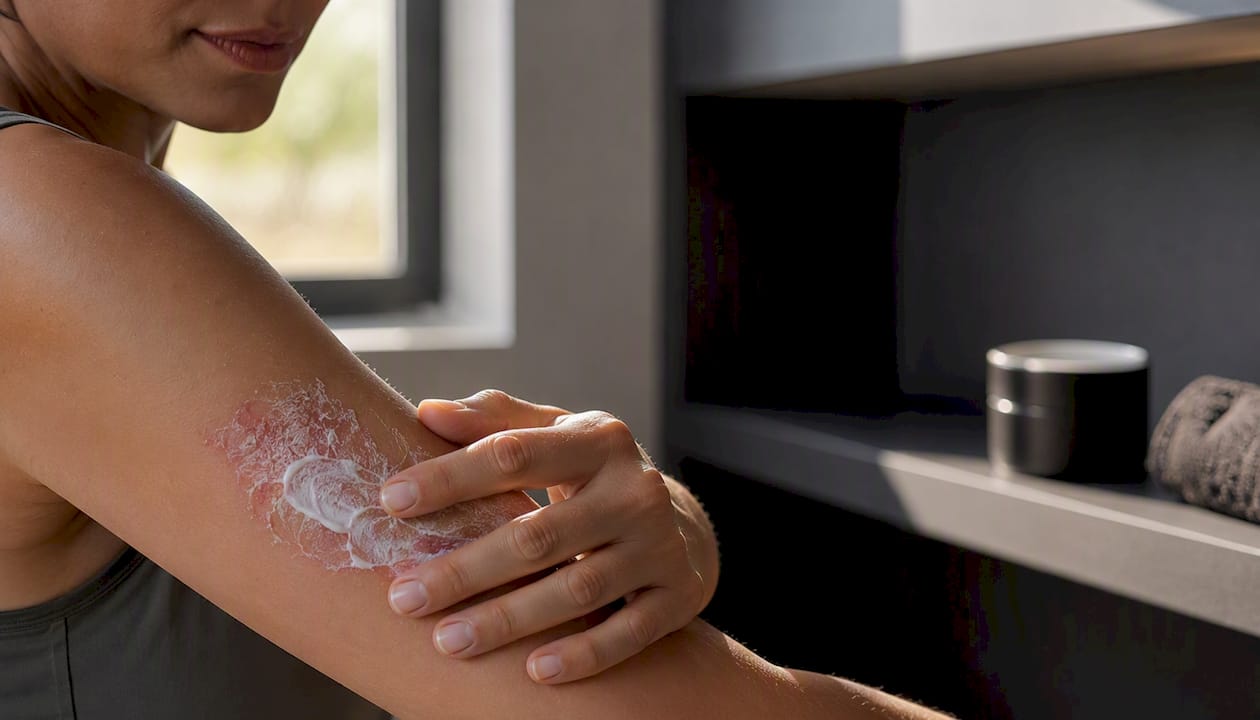
You can safely reduce and remove psoriasis plaques by softening scales with keratolytics and emollients, then lifting them gently with a soft cloth or wide-tooth comb. The single most important rule: never pick or forcibly scrape. Doing so causes pinpoint bleeding and can trigger the Koebner phenomenon, where skin trauma creates new plaques in previously clear areas.
Quick safety check before you start:
- Stop immediately if you see bleeding, pus, or signs of infection.
- Do not attempt home descaling on widespread plaques covering large body surface areas, or on plaques affecting the hands, feet, face, or genitals without dermatologist guidance.
- See a dermatologist right away if plaques are painful, rapidly spreading, or if you have kidney disease, liver disease, or are pregnant.
Pro Tip: Start on a single small plaque to test your skin’s response before applying any keratolytic product to a larger area.
Key Takeaways
Safe psoriasis plaque removal requires softening scales chemically with keratolytics before any mechanical removal, pairing that with anti-inflammatory therapy, and escalating to a dermatologist when plaques are widespread, infected, or unresponsive to home care.
| Point | Details |
|---|---|
| Soften before you lift | Apply a keratolytic (salicylic acid 1.8–3%, urea, or coal tar 0.5–5%) and wait the directed contact time before attempting any scale removal. |
| Never pick or scrape | Forced removal causes bleeding and triggers the Koebner phenomenon, creating new plaques at trauma sites. |
| Pair descaling with anti-inflammatory treatment | Salicylic acid combined with topical steroids showed better outcomes than steroid alone in randomized trials. |
| Know the safety limits | Salicylic acid over large body surface areas risks systemic absorption; avoid in children and those with kidney or liver disease without medical supervision. |
| Rao Dermatology | Offers coordinated psoriasis care including prescription topicals, phototherapy, and systemic referrals across California, New Jersey, and New York. |
Table of Contents
- Why does removing scales actually help?
- What not to do: picking, scraping, and risky home methods
- Which ingredients actually dissolve scales?
- How to safely remove scales at home: a step-by-step protocol
- How to remove scalp scales safely
- How moisturizers and occlusion help soften plaques
- Safety precautions you need to know before starting
- When home care is not enough: escalation to medical treatment
- What to expect at Rao Dermatology for plaque management
- Red flags: stop home treatment and seek care immediately
- Why dermatologists prefer keratolytic and anti-inflammatory combinations
- Personalized psoriasis care at Rao Dermatology
- Sources
- FAQ
Why does removing scales actually help?
Thick psoriasis scales act as a physical barrier. Topical medications, including corticosteroids and vitamin D analogues, cannot penetrate that layer effectively, so they sit on top of dead skin rather than reaching the inflamed tissue underneath. Removing scales improves penetration of topical medications and helps them work better on plaques, which is why descaling is considered a first step in any topical treatment plan, not a cosmetic afterthought.
Beyond medication delivery, patients consistently report these benefits once scales are reduced:
- Less itching and burning sensation
- Reduced cracking and bleeding at plaque edges
- Improved skin flexibility, especially over joints
- Easier daily hygiene and moisturizing
- Better appearance and reduced self-consciousness
A systematic review of emollients and keratolytics in psoriasis found that salicylic acid combined with corticosteroids showed improved onset and severity reduction compared to corticosteroids used alone, though the authors noted that more high-quality trials are still needed. The practical takeaway: descaling is not optional when you are applying prescription topicals. It is what makes those treatments work on schedule.
Set realistic expectations. Scales soften and lift over days, not hours. Thick, longstanding plaques on the palms or soles may take two to three weeks of consistent keratolytic use before they thin noticeably. Facial and intertriginous plaques respond faster because the skin is thinner and more permeable.
What not to do: picking, scraping, and risky home methods
Most of the harm people do to psoriatic skin happens in the bathroom, usually with fingernails or a pumice stone. Picking at a scale that is not ready to shed pulls away living skin cells along with the dead ones, causing the pinpoint bleeding known as Auspitz sign. That trauma is enough to activate the Koebner phenomenon.
Koebner phenomenon: Physical trauma to uninvolved skin can trigger new psoriasis plaques at the injury site within days to weeks. Picking, scratching, aggressive scrubbing, and even adhesive tape removal have all been documented as triggers. The safest rule is: if it requires force, stop.
Common unsafe practices and their specific risks:
- Dry scraping with a fingernail or tool: Removes living epidermis, causes bleeding, and risks infection.
- Pumice stones or harsh physical exfoliants on plaques: Abrades the skin barrier and worsens inflammation.
- Applying undiluted essential oils or apple cider vinegar directly to open plaques: Can cause chemical burns and pH disruption on already-compromised skin.
- Mixing a keratolytic with a topical steroid under occlusion without clinical guidance: Increases systemic absorption of both agents beyond safe limits.
- Peeling off large scale sheets: Even when scales look loose, the base may still be attached. Pulling causes bleeding and trauma.
The safe alternative in every case is the same: soften first, wait, then lift gently with a soft cloth or wide-tooth comb.
Which ingredients actually dissolve scales?
The goal is chemical loosening, not mechanical force. Several well-studied agents do this effectively, each with a different best-use case.
Salicylic acid
Salicylic acid works by lowering the pH of the skin surface, which breaks the bonds holding dead keratinocytes together and causes them to shed. OTC and prescription products with salicylic acid are FDA-recognized options that loosen scale and are available in shampoos, creams, gels, and bath solutions. The KERALYT gel monograph describes its mechanism as desquamation of the horny skin layer, with specific wash-off timing and occlusion cautions.
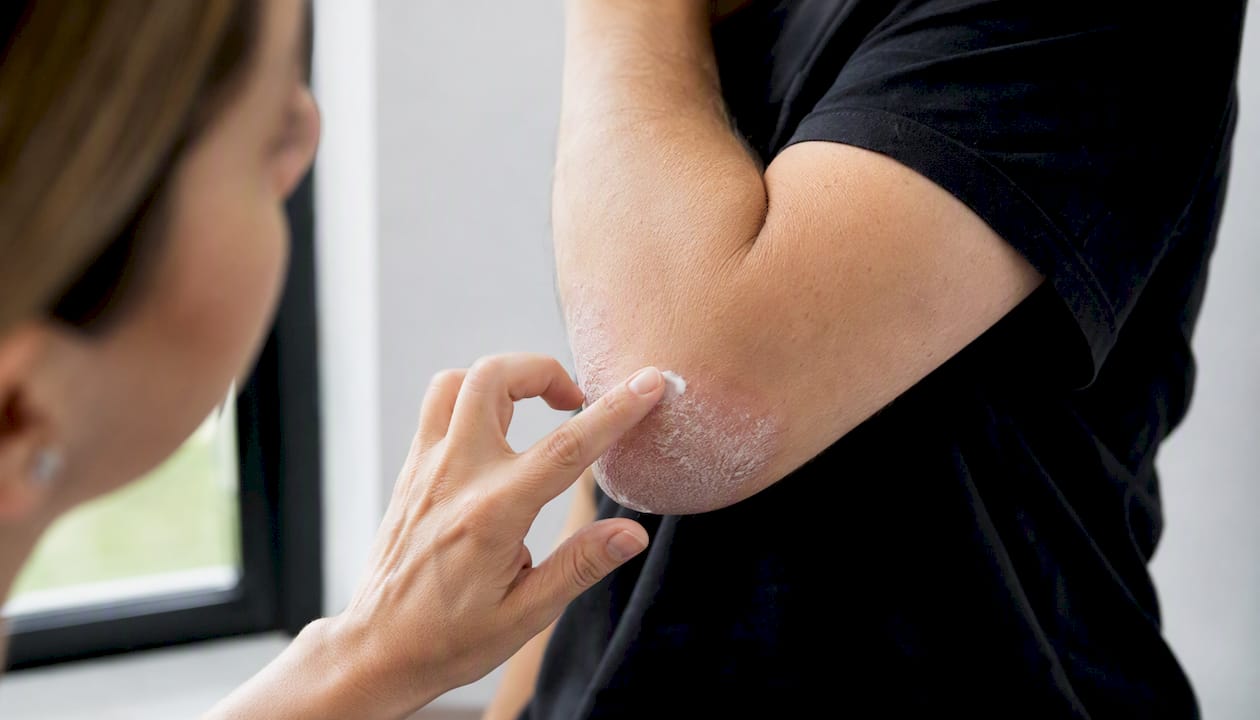
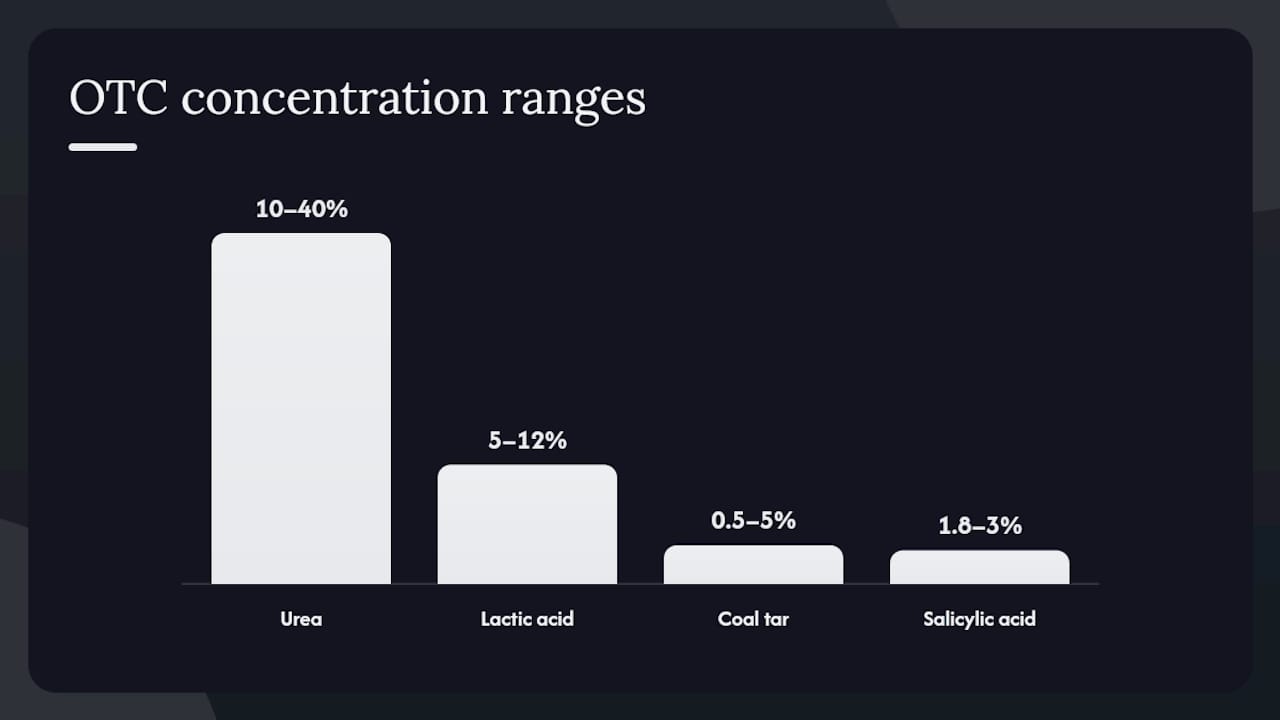
21 CFR § 358.710 sets the allowable OTC concentration range for salicylic acid at 1.8–3% in topical products for psoriasis and dandruff control. Prescription formulations go higher. The key safety flag: applying high-concentration salicylic acid over large body surface areas, especially under occlusion, can lead to systemic salicylate absorption, which is dangerous in children, and in adults with kidney or liver impairment.
Urea
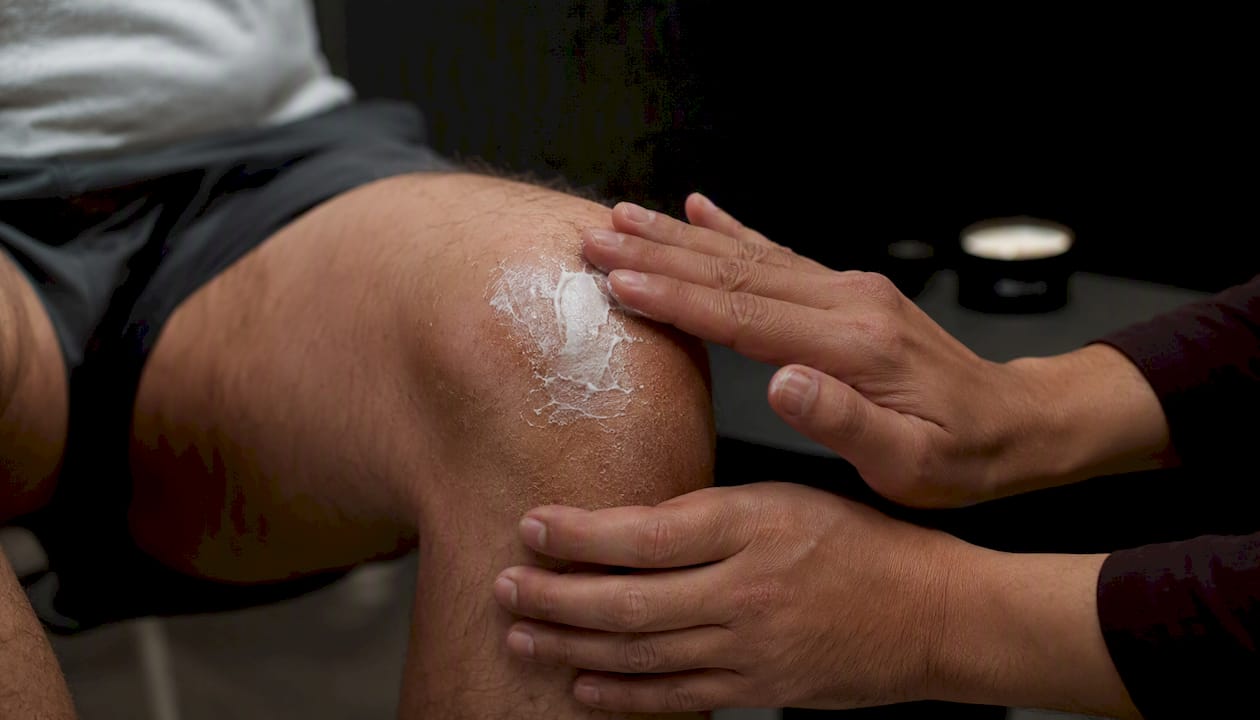
Urea at 10–40% concentrations hydrates and softens the stratum corneum while also acting as a mild keratolytic at higher concentrations. It is particularly useful on thick plaques of the palms and soles, where salicylic acid alone may be insufficient. Urea is generally well-tolerated and less likely to cause systemic absorption issues than salicylic acid at equivalent surface coverage.
Coal tar
Coal tar slows the rapid skin cell turnover that drives plaque formation and has anti-inflammatory properties. 21 CFR § 358.710 sets the OTC range at 0.5–5%. It is available in shampoos, creams, and bath additives. Coal tar stains fabric and hair, has a strong odor, and increases photosensitivity, so patients using phototherapy should avoid it before UV sessions. It is not recommended during pregnancy.
Lactic acid
Lactic acid at 5–12% is a gentler alpha-hydroxy acid keratolytic, useful for mild-to-moderate scaling on the body and face. It is less irritating than salicylic acid and a reasonable option for patients who cannot tolerate stronger agents.
Medicated shampoos
For scalp psoriasis, tar-based and salicylic acid shampoos are the primary OTC descaling tools. They are applied to wet or dry hair depending on scale thickness, left on for the directed contact time (typically 5–10 minutes), then rinsed. The AAD–NPF joint guidelines recognize keratolytics including salicylic acid as part of topical therapy, with clinician supervision recommended for potency and duration decisions.
| Ingredient | Best for | OTC concentration range | How to use | Key safety flags |
|---|---|---|---|---|
| Salicylic acid | Body, scalp, thick plaques | 1.8–3% (OTC); higher Rx | Apply, leave per directions, rinse; avoid occlusion without guidance | Systemic absorption risk; avoid in children, renal/hepatic disease, large BSA |
| Urea | Palms, soles, thick body plaques | 10–40% | Apply to affected area, leave on, no rinse needed at lower concentrations | Stings on broken skin; avoid open wounds |
| Coal tar | Scalp, body | 0.5–5% | Shampoo or cream; rinse after contact time | Photosensitivity; stains; avoid in pregnancy; avoid before phototherapy |
| Lactic acid | Body, face, mild scaling | 5–12% | Apply as lotion/cream, leave on | Mild stinging; avoid on open skin |
How to safely remove scales at home: a step-by-step protocol
This sequence works for body plaques. The scalp protocol follows in the next section.
-
Soak the area for 10–15 minutes. A warm (not hot) bath with colloidal oatmeal, Dead Sea salts, or a small amount of bath oil softens scales and reduces the force needed to lift them. Pat dry gently with a soft towel; do not rub.
-
Apply your keratolytic product. Use a salicylic acid cream or gel (1.8–3% OTC) directly to the plaque. Follow the product’s timing instructions exactly. The KERALYT monograph, for example, specifies wash-off timing and warns against leaving high-concentration formulas on longer than directed.
-
Allow the contact time. Most OTC salicylic acid products direct a leave-on time of several hours or overnight for thick plaques. Do not occlude (wrap in plastic) a salicylic acid product unless your dermatologist has specifically instructed you to, as occlusion significantly increases absorption.
-
Gently lift loosened scales. After the contact time, use a soft washcloth with light circular pressure, or a soft-bristle brush on body plaques. Scales that are ready will come away easily. Stop if you feel resistance.
-
Rinse and neutralize if directed. Wash off the keratolytic with lukewarm water. Some formulations require a gentle cleanser to remove residue.
-
Apply an emollient immediately. Within three minutes of patting dry, apply a thick emollient ointment (petrolatum-based products like plain white petrolatum, or a ceramide-rich cream). This locks in moisture and prevents rapid scale reformation.
-
Apply your prescription topical if prescribed. Now that the scale barrier is reduced, your topical corticosteroid or vitamin D analogue will penetrate far more effectively. Randomized studies show adding salicylic acid to topical steroids improved outcomes compared to steroid alone, supporting this combined approach.
Daily descaling is rarely necessary and increases irritation risk.
Pro Tip: If you notice redness spreading beyond the plaque edge, stinging that does not settle within 10 minutes, or any bleeding, rinse the product off immediately and do not reapply until you have spoken with your dermatologist.
How to remove scalp scales safely
Scalp psoriasis needs a different approach than body plaques because you are working through hair, and the scalp is more sensitive to product buildup and mechanical trauma.
- Choose the right shampoo. Salicylic acid shampoos (1.8–3%) and coal tar shampoos (0.5–5%) are the two main OTC options. Mayo Clinic guidance endorses salicylic acid shampoos for reducing scalp scaling. Alternate between a medicated shampoo and a gentle moisturizing shampoo to avoid over-drying the scalp.
- Apply to dry hair for thick scales. For heavy scale buildup, applying a salicylic acid ointment or a coconut oil/salicylic acid mixture to dry hair before bathing allows the agent to penetrate the scale more effectively than applying to wet hair. Leave it on for 30–60 minutes, then shampoo out.
- Use a wide-tooth comb, not a fine-tooth comb. After shampooing, while the scalp is still damp, use a wide-tooth comb to gently lift loosened scales. Work in small sections and use zero downward pressure. Fine-tooth combs and brushes with stiff bristles cause exactly the kind of trauma that triggers new plaques.
- Protect your hair from coal tar staining. Wear an old T-shirt or towel during treatment. Coal tar can permanently stain light-colored fabrics and may temporarily discolor light or gray hair.
- Rinse thoroughly. Product residue left on the scalp can cause irritation and worsen itching. Rinse for at least two minutes after the contact time.
Pro Tip: For itchy scalp psoriasis solutions between washes, a few drops of diluted tea tree oil (no more than 5% in a carrier oil) applied to the scalp can reduce itch temporarily, but avoid it on broken or bleeding skin and never use it undiluted.
Seek clinic help if scalp plaques are causing hair loss, if the scale is so thick that shampoos cannot penetrate it, or if you develop pain or swelling at the scalp.
How moisturizers and occlusion help soften plaques
Emollients do two things in psoriasis management: they reduce transepidermal water loss, which keeps scale softer and easier to remove, and they support the skin barrier between treatments. Neither role is minor.
- Ointments vs. creams vs. lotions: Ointments (petrolatum-based) are the most occlusive and most effective for thick plaques. Creams are easier to apply and better tolerated on the face and intertriginous areas. Lotions are the least occlusive and best suited for mild scaling or hairy areas.
- Apply within three minutes of bathing. The “soak and smear” technique, endorsed by the AAD, involves applying a thick emollient immediately after patting skin dry to trap moisture in the skin. This is one of the simplest and most consistently effective psoriasis management techniques available without a prescription.
- Wet wraps for severe plaques. For thick, resistant plaques on the limbs or trunk, wet wraps can dramatically accelerate softening. Apply emollient to the plaque, cover with a damp cotton bandage or clothing layer, then a dry layer over that, and leave overnight. Do not use wet wraps on infected or open skin.
- Bath additives. Colloidal oatmeal, Dead Sea salts, and bath oils all reduce itch and soften scale during the soak phase. Keep bath temperature warm rather than hot; hot water increases inflammation and itch.
Safety precautions you need to know before starting
Some descaling methods that are safe for most adults carry real risks for specific groups.
- Systemic salicylate absorption: Applying salicylic acid over large body surface areas, under occlusion, or on broken skin can lead to salicylate toxicity. Symptoms include ringing in the ears, nausea, and confusion. Children are at highest risk because of their higher skin surface-to-body-weight ratio. Adults with kidney or liver disease should use salicylic acid only under medical supervision and only on limited areas.
- Phototherapy interactions: Coal tar and some oils increase photosensitivity. If you are receiving narrowband UVB phototherapy, wash off any coal tar product thoroughly before your session. Some topical agents, including anthralin, require specific timing adjustments around UV exposure.
- Pregnancy and breastfeeding: Salicylic acid in large amounts is not recommended during pregnancy due to systemic absorption risk. Coal tar is also generally avoided. Discuss any topical descaling plan with your obstetrician and dermatologist before starting.
- Children: Use only products specifically labeled for pediatric use and at the lowest effective concentration. Consult a pediatric dermatologist before applying any keratolytic to a child.
Stop and call your dermatologist if you experience: spreading redness beyond the treated area, signs of skin infection (warmth, swelling, pus, fever), severe burning or pain that does not resolve after rinsing, or any systemic symptoms such as ringing in the ears or nausea after applying a salicylic acid product. These are not situations to manage at home.
When home care is not enough: escalation to medical treatment
Home descaling works well for mild-to-moderate plaques on limited body areas. Several situations call for a dermatologist rather than another round of OTC products.
Referral triggers:
- Plaques covering more than 10% of body surface area
- Plaques on the hands, feet, face, or genitals
- Any plaque that is painful, infected, or bleeding without trauma
- No meaningful improvement after four to six weeks of consistent home care
- Joint pain or swelling alongside skin plaques (possible psoriatic arthritis)
- Sudden widespread flare after a new medication or illness
Once you are in clinic, descaling enables the medical treatments that follow. Phototherapy and systemic agents are standard escalation treatments when topical therapy is insufficient for moderate-to-severe disease. Here is the typical progression:
- Prescription topical steroids and vitamin D analogues (calcipotriene). These are far more effective on descaled skin. Calcipotriene slows keratinocyte proliferation; combined with a topical steroid, it addresses both the scale and the underlying inflammation simultaneously.
- Narrowband UVB phototherapy. Delivered two to three times per week in clinic, narrowband UVB suppresses the immune response driving plaque formation. Descaling before sessions improves UV penetration into the dermis. Learn more about what to expect from UVB light therapy for psoriasis.
- Systemic agents and biologics. For patients who do not respond to topicals and phototherapy, oral agents (methotrexate, apremilast) or injectable biologics targeting IL-17, IL-23, or TNF-alpha pathways are the next step. These require monitoring and are managed by a dermatologist.
At your first dermatology visit, expect a body surface area assessment, a review of your current products, and a baseline photograph of your plaques. Follow-up is typically every four to eight weeks during active treatment.
What to expect at Rao Dermatology for plaque management
Rao Dermatology’s psoriasis services cover the full spectrum from first-visit assessment through phototherapy and systemic referrals, across locations in California, New Jersey, and New York.
At your first visit, the clinical team will:
- Assess plaque distribution, thickness, and body surface area involvement
- Review your current OTC and prescription products, including any keratolytics you are already using
- Photograph baseline plaques for objective tracking across visits
- Select a topical descaling and anti-inflammatory regimen matched to your plaque locations and severity
- Discuss phototherapy candidacy if topical therapy alone is unlikely to be sufficient
What to bring:
- A list of every product currently on your skin (OTC and prescription)
- Photos of your worst recent flares, even if they have partially cleared
- Your full medication list, including supplements
- Any relevant medical history: kidney disease, liver disease, pregnancy status, prior phototherapy
Pro Tip: Take photos of your plaques in consistent lighting every two weeks. Objective comparison is far more reliable than memory when assessing whether a treatment is working.
Rao Dermatology coordinates topical management with phototherapy scheduling and, when needed, facilitates referrals for systemic therapy. Follow-up visits are typically scheduled every four to eight weeks during active treatment phases.
Red flags: stop home treatment and seek care immediately
These signs mean stop all home descaling and contact a healthcare provider the same day:
- Spreading redness or warmth beyond the plaque border
- Pus, crusting, or foul odor from a plaque
- Fever above 100.4°F alongside a skin flare
- Severe pain at a plaque site
- Uncontrolled bleeding that does not stop with gentle pressure within five minutes
- Sudden widespread flare covering large body areas, especially after a new medication, infection, or physical trauma
- Ringing in the ears, nausea, or confusion after applying a salicylic acid product (signs of systemic absorption)
If any of these occur: rinse the area gently with clean water, do not apply occlusion or any additional product, and seek urgent dermatology care or an emergency room if systemic symptoms are present.
Why dermatologists prefer keratolytic and anti-inflammatory combinations
Scale removal alone does not treat psoriasis. The plaques come back because the underlying immune dysregulation driving rapid keratinocyte turnover is still active. This is why experienced clinicians rarely prescribe a keratolytic in isolation. The standard approach pairs a descaling agent with an anti-inflammatory, whether a topical steroid, a vitamin D analogue like calcipotriene, or a biologic, because each addresses a different part of the problem. The keratolytic clears the physical barrier; the anti-inflammatory suppresses the immune signal that rebuilds it.
The joint AAD–NPF guidelines reinforce this: individualized topical regimens, with clinician supervision for potency and duration, produce better outcomes than any single-agent approach. Patients who try to manage psoriasis with keratolytics alone often see temporary improvement followed by rapid scale return, which leads to frustration and overuse of products. The combination strategy is not more complicated; it is simply more complete. Side effects are real and worth monitoring, which is exactly why a dermatologist’s involvement matters for anything beyond mild, localized plaques.
Personalized psoriasis care at Rao Dermatology
Psoriasis management works best when your descaling routine, topical prescriptions, and any phototherapy are coordinated by a single clinical team that knows your history. Rao Dermatology offers medical psoriasis visits, in-office phototherapy for psoriasis, and prescription topical management across its California, New Jersey, and New York locations.

Booking is straightforward: schedule online or by phone, and bring your current product list and recent flare photos to your first visit. The team accepts most major insurance plans for medically necessary dermatology visits; the front desk can verify your coverage before your appointment. For a full overview of available services, visit Rao Dermatology’s services page.
Sources
- Psoriasis: Diagnosis and treatment
- 21 CFR § 358.710 - Active ingredients for the control of dandruff, seborrheic dermatitis, or psoriasis
- KERALYT- salicylic acid gel (DailyMed)
- Systematic review on emollients and keratolytics in psoriasis (PubMed)
- Joint AAD–NPF guidelines of care for the management and treatment of psoriasis with topical therapy
- Psoriasis: Diagnosis and treatment (Mayo Clinic)
- Clinical overview of psoriasis treatments (NCBI Bookshelf)
This article is general information, not a substitute for advice from a qualified doctor. Consult a qualified healthcare professional about your own circumstances before acting on anything here.
FAQ
Is it possible to get rid of plaque psoriasis permanently?
Plaque psoriasis is a chronic immune-mediated condition with no permanent cure, but many patients achieve long periods of clear or near-clear skin with consistent treatment combining keratolytics, topical anti-inflammatories, phototherapy, or systemic agents.
Are you supposed to remove psoriasis plaques?
Yes, safely. Removing scale by softening it with keratolytics like salicylic acid or urea improves topical medication penetration and reduces itching and cracking; the key is dissolving scales chemically rather than picking or scraping them off.
What dissolves psoriasis scales?
Salicylic acid (1.8–3% OTC), urea (10–40%), coal tar (0.5–5%), and lactic acid are the main keratolytic agents that chemically loosen and dissolve psoriasis scales; emollients and warm soaks soften them further before gentle removal.
What triggers psoriasis plaque flares?
Common triggers include skin trauma (which can cause the Koebner phenomenon), stress, infections, certain medications, and alcohol; identifying and managing your personal triggers is a core part of long-term psoriasis management.
When should I see a dermatologist instead of treating at home?
Rao Dermatology offers psoriasis evaluations across California, New Jersey, and New York.
Recommended
- Psoriasis Symptoms: Types, Signs, and Treatment Options | Rao Dermatology | Rao Dermatology
- Understanding Psoriasis: Causes, Symptoms, and Expert Treatment Options | Rao Dermatology
- Phototherapy for Psoriasis: How Light Therapy Reduces Symptoms and Improves Skin Health | Rao Dermatology
- Psoriasis & Dermatitis | Rao Dermatology
Filed under: