
Clinic-safe milia removal explained: why clinician deroofing clears lesions in seconds, which home-care steps help, and what to ask before you book.
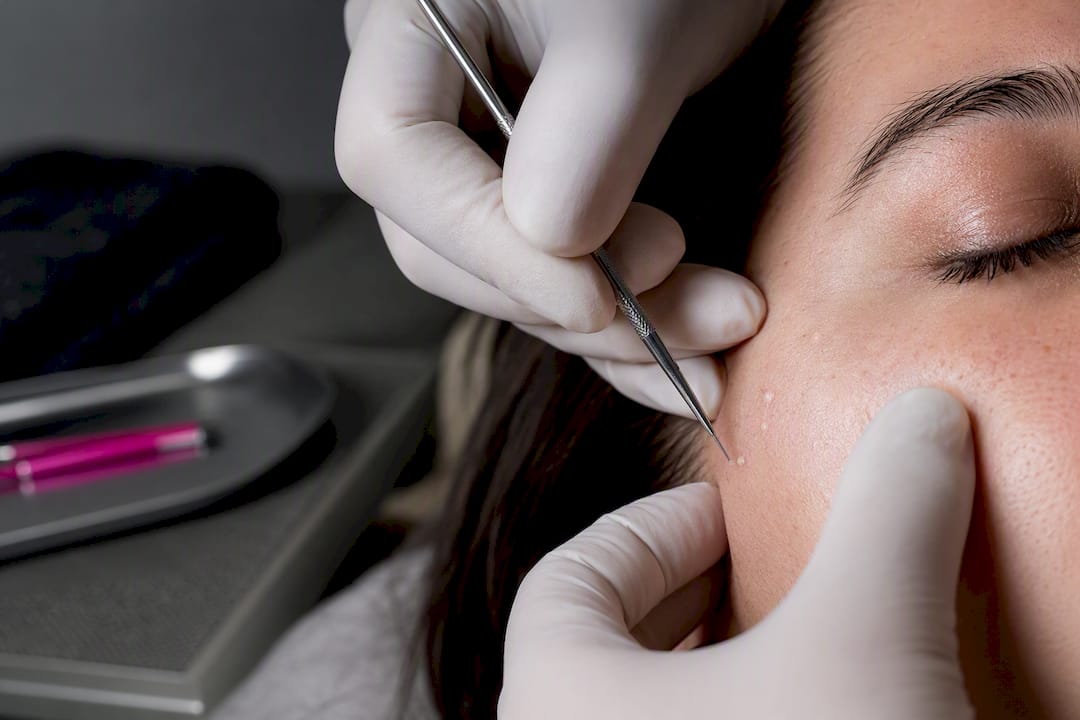
Professional extraction, known as deroofing, clears persistent milia immediately and safely when done by a trained clinician. Small or newly formed milia often respond to gentle exfoliation and topical retinoids over several weeks. What you should never do is pick, squeeze, or use a needle at home. That approach doesn’t work on milia and often leaves scarring behind.
TL;DR:
- Only trained clinicians should perform deroofing or needle extraction, as home attempts can cause scarring and are ineffective.
- Milia are keratin-filled cysts with no surface opening, making squeezing or at-home removal techniques futile and potentially damaging.
- Typical in newborns, milia often resolve within weeks, but adult milia can persist for years without appropriate treatment.
- Over-the-counter options like salicylic acid, glycolic acid, and retinoids slow new formation and promote surface shedding but require consistent use and sun protection.
- Professional removal techniques, including deroofing and laser ablation, provide faster, safer results with minimal downtime when performed in a sterile environment.
Table of Contents
- What Milia Removal Actually Targets: Types and Causes
- Home Care and OTC Options for Milia
- What Happens During Professional Milia Extraction?
- Choosing a Provider and Knowing When to Book
- Aftercare That Actually Prevents Milia From Coming Back
- Why Rao Dermatology Treats Milia the Way We Do
- Ready to Have Milia Evaluated and Removed Safely?
- Sources
- FAQ
What Milia Removal Actually Targets: Types and Causes
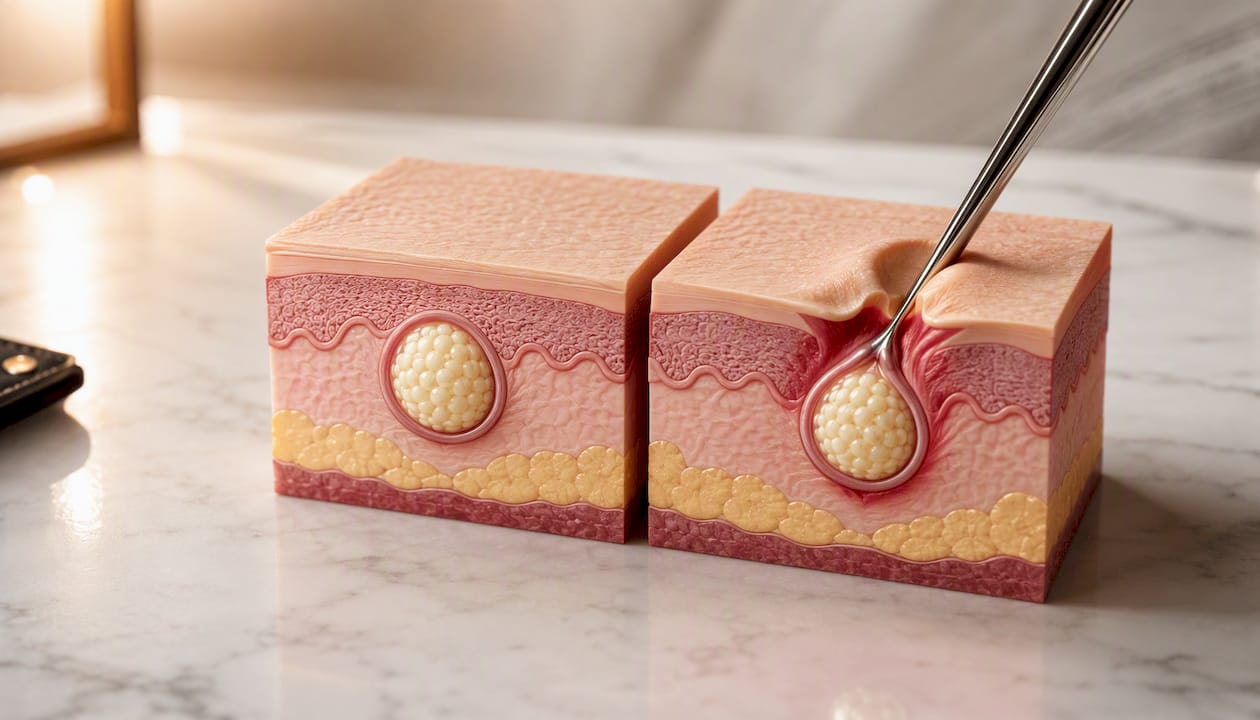
Milia are small, firm bumps, usually white or pale yellow and about 1 to 2 millimeters wide, that form when keratin gets trapped beneath a sealed layer of skin. Unlike a whitehead, a milium has no visible pore or opening, which is exactly why squeezing does nothing productive. Dermatologists sort them into a few categories: neonatal milia, which show up on a baby’s nose and cheeks; primary acquired milia, which appear in older kids and adults for no obvious reason; secondary milia, which form after burns, blistering, or aggressive skin procedures; and milia en plaque, a rarer type where dozens of cysts cluster on an inflamed patch of skin, often near the ears or eyelids.

Newborn milia typically clear on their own; caregivers can also refer to Newborn Care Basics: Your First Week Survival Guide for gentle care routines. Between 40% and 50% of newborns show milia at birth, and most cases resolve within a few weeks with zero intervention. Adult milia are less predictable. Some lesions sit unchanged for years unless treated.
Home Care and OTC Options for Milia
Home care won’t pop a milium out overnight, but it can prevent new ones and gradually thin out small existing lesions. Start with the basics: cleanse gently twice a day, and skip heavy, occlusive moisturizers, especially anywhere near the eyes. Thick eye creams are an underrated cause of periorbital milia, and switching to a lighter formula is often enough to stop new ones from forming.
Beyond cleansing, a few active ingredients have real support:
- Salicylic acid (BHA): breaks down the keratin buildup that seals the cyst; start two to three times a week and watch for irritation.
- Gentle AHAs like glycolic acid: exfoliate the surface layer and can help milia surface and shed over time.
- Topical retinoids (over-the-counter adapalene or prescription tretinoin): speed up skin cell turnover, which discourages keratin from getting trapped in the first place.
Retinoids and acids both increase sun sensitivity, so daily sunscreen isn’t optional if you’re using them, a point dermatologists interviewed by NBC Select stress consistently. Keep all of these away from the eyelid margin unless a clinician has specifically cleared it, and resist the urge to scrub harder when results feel slow. Aggressive exfoliation irritates the skin and can actually trigger more milia rather than fewer.
Pro Tip: If you’re not seeing change after six to eight weeks of consistent retinoid use, that’s your cue to book a consult rather than escalate the strength of your home routine.
And the one absolute: no squeezing, no pins, no at-home “extractor” tools. Milia have no surface opening, so mechanical pressure just traumatizes the surrounding tissue without releasing anything, according to StatPearls. For more on why this backfires so often, see why you should never attempt to remove cysts at home.
What Happens During Professional Milia Extraction?
Deroofing, also called needle extraction, is the standard in-office fix for persistent milia. A clinician sterilizes the area, uses a fine needle or small blade to nick the thin skin covering the cyst, then gently expresses the trapped keratin with light pressure. The whole thing typically takes seconds per lesion, and most patients describe it as a quick pinch rather than genuine pain.
Deroofing isn’t the only tool clinics use. Depending on the lesion’s size, location, and history, a dermatologist might reach for:
- Electrodesiccation — a mild electrical current breaks down the cyst wall, useful for stubborn or clustered lesions.
- Curettage — a small instrument scrapes out the contents, often paired with deroofing.
- Cryotherapy — freezing destroys the cyst, though it carries a higher risk of temporary skin lightening on darker skin tones.
- Laser ablation — precise and often preferred for delicate areas like around the eyes, minimizing surrounding tissue damage.
Clinical guidance from Medscape notes that physical removal remains the preferred approach for milia, since topical or systemic medications have limited evidence for clearing existing lesions. Healing after deroofing is fast, usually just a small scab for three to five days with minimal downtime. Risk of visible scarring is low when performed correctly, but electrosurgery and cryotherapy carry a higher chance of temporary hypopigmentation, particularly on eyelid skin, which is thinner and more reactive than skin elsewhere on the face. Patients with many milia, or lesions that keep recurring in the same spot, often need staged sessions spaced weeks apart rather than one aggressive visit.
Choosing a Provider and Knowing When to Book
Not every milium needs a dermatologist. But certain signs mean it’s time to stop waiting and make an appointment:
- The lesion has persisted for more than a few months despite consistent home care.
- It sits on or near the eyelid or lash line, where self-treatment risk is highest and precision matters most.
- You’re not sure it’s actually milia rather than a wart, cyst, or another skin growth that needs a different treatment entirely.
- Multiple lesions are clustered and cosmetically bothersome, making home management impractical.
Once you’ve decided to book, ask direct questions: what’s the clinician’s exact technique for your case, what’s the realistic scarring risk for your skin type, and how is pricing structured, per visit or per spot. A legitimate clinic follows a sterile protocol, explains the procedure before touching your skin, and never pushes DIY extraction kits or “guaranteed” same-day results as a sales tactic. Since milia removal is almost always classified as cosmetic, expect to pay out-of-pocket unless a dermatologist documents medical necessity, such as milia interfering with eyelid function.
Aftercare That Actually Prevents Milia From Coming Back
Right after extraction, keep it simple: cleanse gently, resist picking at any scab, and apply sunscreen or stay out of direct sun while the area heals. Expect light scabbing for a few days; if you notice increasing redness, pus, or pain past that window, contact the clinic rather than waiting it out.
Long term, the maintenance routine looks a lot like the prevention routine: continue gentle exfoliation, keep a retinoid in rotation if your skin tolerates it, and swap any heavy eye cream for something lighter. This one habit change addresses a surprisingly common cause of recurring periorbital milia.
Pro Tip: Rotate exfoliating acids and retinoids rather than layering them nightly. Your skin barrier recovers faster, and you’ll actually stick with the routine longer.
Newborn milia need a different approach entirely. Skip adult treatments, retinoids, and acids completely. If lesions persist well past infancy or seem to bother the baby, a pediatric dermatology referral is the right call, not a home remedy.
Why Rao Dermatology Treats Milia the Way We Do
Milia extraction looks simple from the outside, which is exactly why so many people try it themselves and end up with irritation or scarring instead of results. The approach to milia treatment generally leans on sterile technique, clinician oversight, and matching the procedure to the lesion rather than defaulting to the most aggressive option. Most milia are purely cosmetic, so we favor conservative home care first when timing allows, and reserve extraction for cases where a patient wants faster, more certain results.
— Rao Dermatology
Ready to Have Milia Evaluated and Removed Safely?
If home care hasn’t moved the needle, or you’d rather skip weeks of retinoids and just have persistent milia extracted properly, trained estheticians and dermatology providers can evaluate your skin and remove lesions using sterile, in-office technique, not a guessing game with a needle at home.

A first visit typically starts with a skin check to confirm the diagnosis (since not every bump is actually milia), followed by a discussion of which technique fits your skin type, lesion location, and cosmetic goals. From there, treatment can often happen the same visit for straightforward cases. Explore cosmetic dermatology services or browse the full services overview to see locations across California, New Jersey, and New York, then reach out to schedule a consultation and get a clear answer on pricing and timing before you commit to anything.
Sources
This article draws on clinical references including USF Dermatology on newborn prevalence, Cleveland Clinic and StatPearls/NCBI Bookshelf on cyst mechanics and extraction risk, and Medscape on treatment protocols. These are external medical resources included for readers who want to verify the clinical details firsthand.
This article is general information, not a substitute for advice from a qualified doctor. Consult a qualified healthcare professional about your own circumstances before acting on anything here.
- What are milia and how do you get rid of them? — USF Dermatology
- Milia — StatPearls / NCBI Bookshelf
- Milia Treatment & Management — Medscape
FAQ
Can I remove milia myself?
You shouldn’t try. Milia have no surface opening, so squeezing or using a home needle tool doesn’t release the trapped keratin and instead risks scarring and infection.
What is the root cause of milia?
Milia form when keratin gets trapped under a sealed layer of skin, often triggered by heavy occlusive creams, sun damage, burns, or skin trauma, though many cases in adults have no clear cause at all.
Can milia be permanent?
Some adult milia persist for months or years without treatment, but they’re not permanent in a medical sense. Professional deroofing or needle extraction clears them reliably in one visit.
How can I remove milia from my face?
For persistent or bothersome milia, book a dermatology visit for sterile deroofing, curettage, or laser removal depending on the lesion. For prevention or very small new lesions, salicylic acid or a retinoid used consistently over several weeks can help.
Recommended
Filed under: