
Clinician-backed, safety-first overview of IPL photofacials: what they treat, real risks for melasma and darker skin, the 3–6 session timeline, and safety...
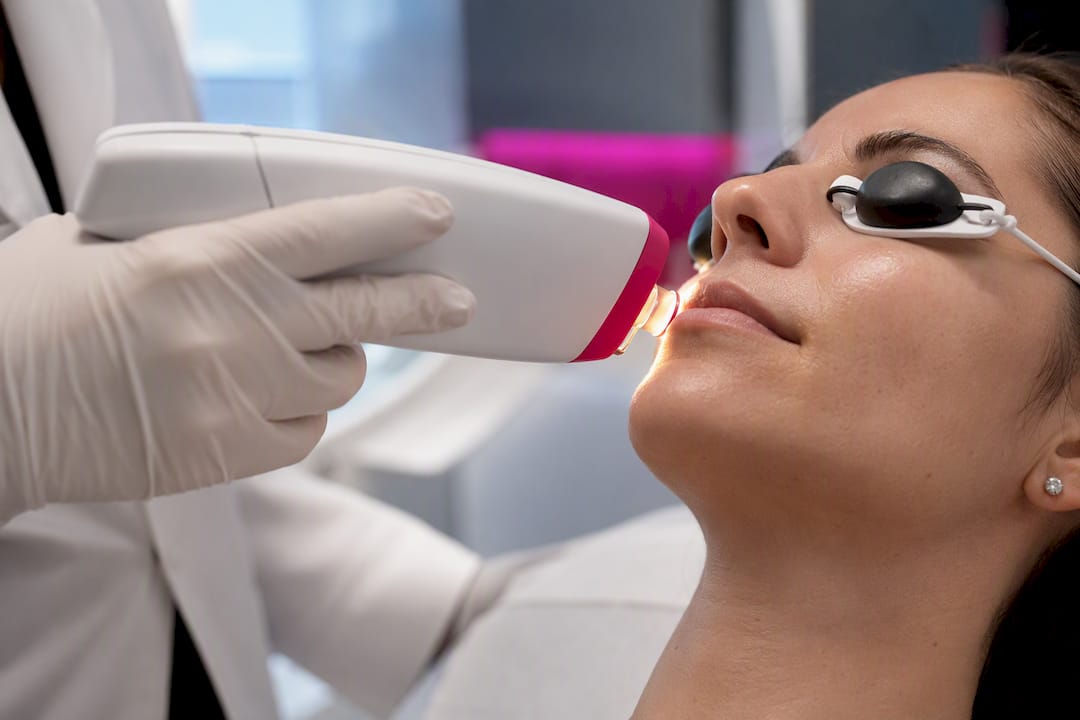
An IPL photofacial works well for sun spots, redness, and broken capillaries, and most patients need minimal downtime. It’s not built for sagging skin or deep wrinkles, and it carries real risk for melasma and darker skin tones. Results build over several sessions, so a consultation and a patch test should come before you book a full series.
TL;DR:
- IPL works best for sun spots, redness, and broken capillaries on lighter skin tones, requiring multiple sessions spaced several weeks apart for visible results.
- It is not effective for deep wrinkles, significant skin laxity, or sagging skin, which need deeper laser or resurfacing treatments.
- Candidates with darker skin tones face higher risks of burns and discoloration, especially if they have recent tanning or melasma.
- A patch test and thorough consultation are essential to determine suitability and prevent adverse reactions, particularly for those on photosensitizing medications.
- Expected costs range from $300 to $600 per session, with a full series typically costing between $900 and $3,000.
Table of Contents
- What Is an IPL Photofacial and How Does It Differ From Laser?
- What Does IPL Treat, and Who Is a Good Candidate?
- What Happens During an IPL Session, From Prep to Aftercare?
- How Long Until You See Results, and How Many Sessions Do You Need?
- What Are the Risks, and How Can You Lower Them?
- How Much Does an IPL Photofacial Cost?
- When Should You Choose a Different Treatment Instead?
- How Rao Dermatology Approaches IPL Candidate Screening
- The Honest Take on IPL Photofacials
- Ready to Find Out if IPL Is Right for You?
- Sources
- FAQ
What Is an IPL Photofacial and How Does It Differ From Laser?
Intense pulsed light, or IPL, is a photofacial that improves skin color and texture by targeting pigment and blood vessels rather than cutting or resurfacing the skin’s surface, according to WebMD. The device fires broad-spectrum light through filters tuned to melanin or hemoglobin, the pigments in brown spots and red vessels. That light energy heats the target until the body can break it down and clear it, with a mild bonus of collagen stimulation along the way.
Lasers work differently. A laser emits one precise wavelength, which is why dermatologists reach for lasers when a problem needs pinpoint depth, like a stubborn vascular lesion or deep pigment. IPL trades that precision for versatility. It treats a mix of concerns in one pass, but it can’t match a laser’s depth for serious texture or tightening work, a limitation the NCBI’s clinical overview of IPL technology traces back to how flashlamp systems are built.
What Does IPL Treat, and Who Is a Good Candidate?
IPL earns its reputation on a specific list of complaints, not a universal one. It handles:
- Age spots and sun spots on the face, chest, and hands
- Freckling and uneven pigment from years of sun exposure
- Broken capillaries and facial redness, including some rosacea flare patterns
- Acne-related redness left behind after breakouts heal
- Fine, unwanted facial hair, though dedicated laser hair removal is usually more efficient for larger areas
The best candidates have lighter, untanned skin, generally Fitzpatrick types I through III, according to guidance from AestheticMedGuide. Darker skin tones absorb more of the light energy meant for pigment, raising the odds of burns or lasting discoloration. That doesn’t mean every patient with deeper skin is automatically excluded, but it does mean a provider needs to adjust settings carefully or recommend a different approach entirely.
Some situations rule IPL out on the spot: active melasma, a tan within the last two weeks, photosensitizing medications, isotretinoin use in the past six months, pregnancy, or an active skin infection. If any of those apply, tell your provider before you book, not after.
What Happens During an IPL Session, From Prep to Aftercare?
Preparation starts days before you sit in the chair. Follow this sequence:
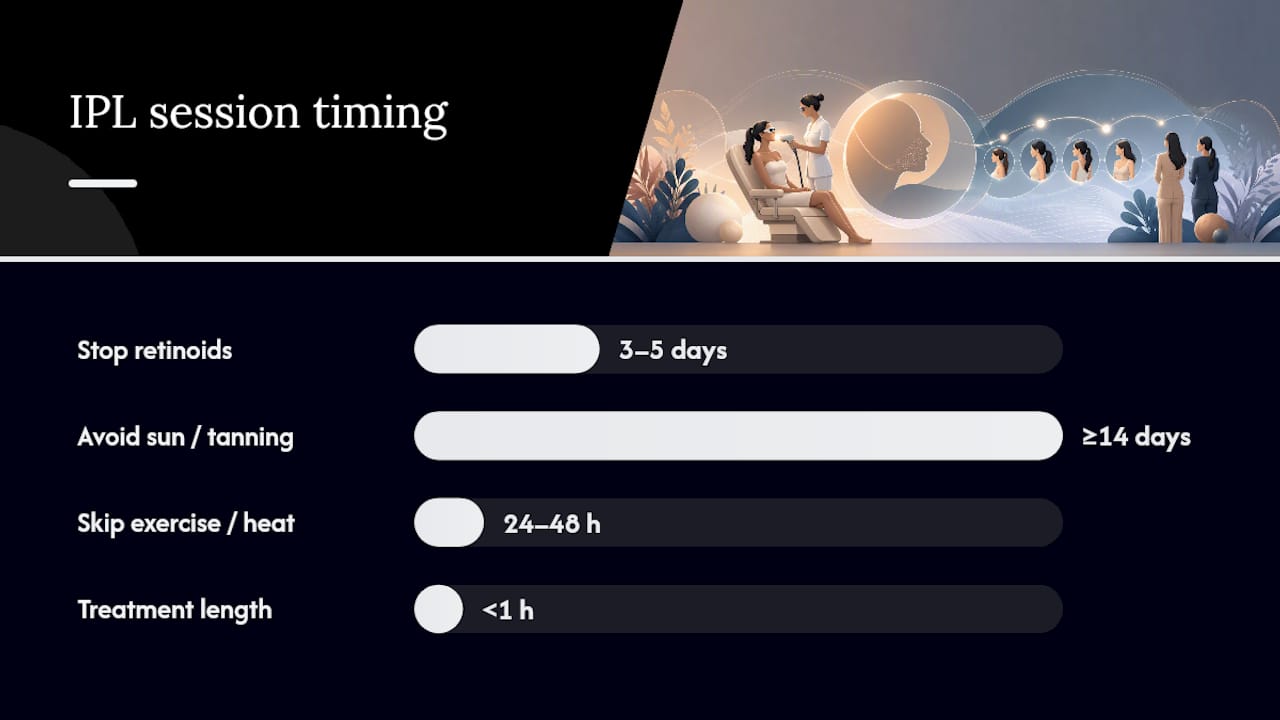
- Stop retinoids and exfoliating acids 3 to 5 days before treatment to reduce sensitivity.
- Avoid sun exposure and tanning beds for at least two weeks beforehand, since tanned skin absorbs light unpredictably, per AestheticMedGuide’s preparation guidance.
- Disclose every medication you’re taking and your isotretinoin history, even if it’s been months.
During the session, expect a cool gel applied to your skin and protective eyewear to shield you from the flashes. A full-face treatment usually takes a short amount of time, generally less than an hour. Most patients describe the sensation as a quick rubber-band snap against the skin, uncomfortable but brief, and cooling systems built into modern devices cut that discomfort further, a safeguard the NCBI review flags as standard practice.
Right after treatment, your skin may look flushed or slightly swollen. Skip strenuous exercise and heat exposure for 24 to 48 hours, and apply SPF 30 or higher every day afterward without exception.
Pro Tip: Brown spots typically look darker for several days before they flake off. That’s expected progress, not a sign something went wrong.
How Long Until You See Results, and How Many Sessions Do You Need?
Most protocols call for 3 to 6 sessions spaced 3 to 6 weeks apart, with each round building on the last, based on treatment norms from DermNet NZ. A single session rarely delivers dramatic change on its own.
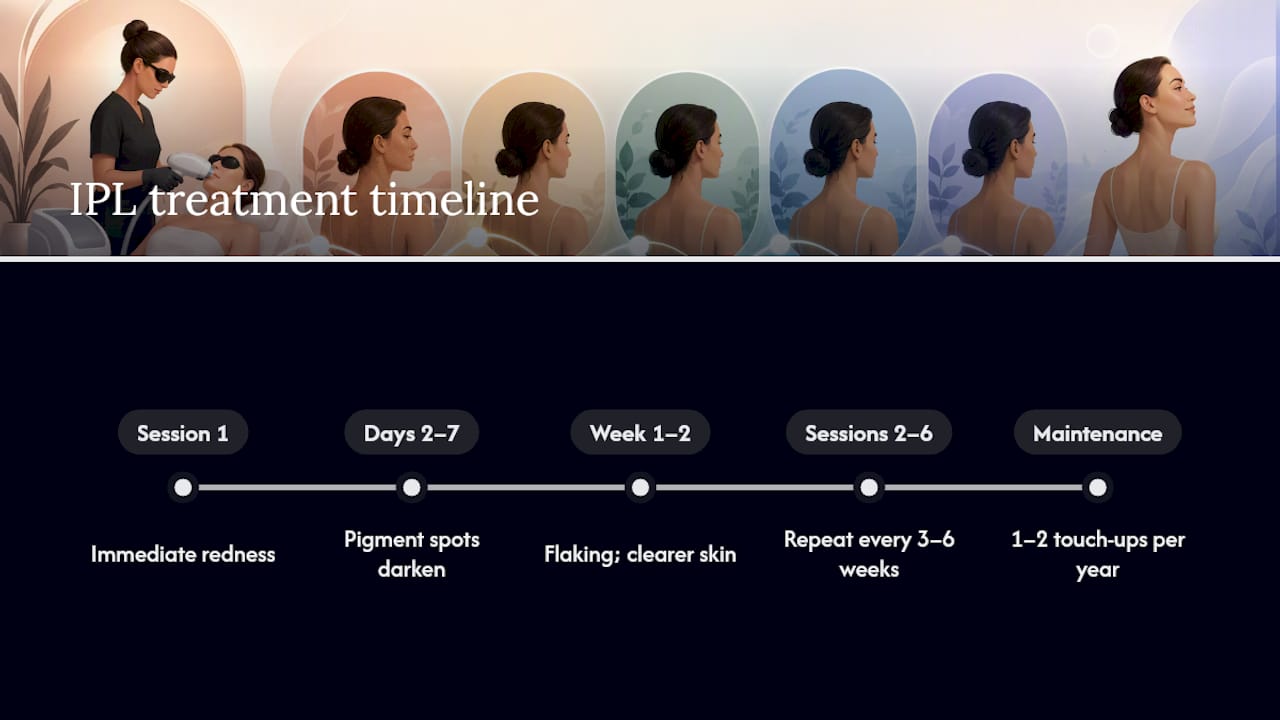
The days right after treatment follow a predictable pattern. Redness shows up immediately, pigment spots darken between day two and day seven, and then flaking begins, revealing clearer skin within one to two weeks, a timeline consistent with patient reporting from Marie Claire. Once you finish the full series, plan on one or two touch-up sessions per year to maintain results, more often if you spend a lot of time in the sun.
What Are the Risks, and How Can You Lower Them?
Most side effects are minor and temporary: transient redness, mild swelling, temporary darkening of pigment spots, and flaking as your skin sheds treated cells. Rare but more serious complications include burns, blistering, and pigment changes that don’t resolve on their own.
Risk climbs for specific groups:
- Patients with Fitzpatrick IV to VI skin tones
- Anyone with hormonally driven melasma, which IPL can worsen rather than improve
- Patients who tanned recently, whether from sun or a bed
To lower your risk, insist on a patch test before a full treatment, choose a provider with real IPL experience, stop any photosensitizing medications your provider flags, and stay strict about sun protection for weeks before and after. If your pigmentation history includes melasma or post-inflammatory dark spots, ask directly whether IPL is even the right tool before scheduling.
How Much Does an IPL Photofacial Cost?
A single full-face session commonly runs between $300 and $600 in the United States, and a complete series often lands between $900 and $3,000, according to pricing benchmarks from DermNet NZ. Where you land in that range depends on your provider’s credentials, the specific device used, your clinic’s location, and whether follow-up visits are bundled into the price.
Before committing to a series, verify the provider’s training, ask to see real before-and-after results from patients with skin similar to yours, and confirm the clinic runs a patch test as part of its standard protocol rather than skipping straight to treatment.
When Should You Choose a Different Treatment Instead?
IPL isn’t the right tool for every skin concern. If you’re dealing with deep wrinkles, significant scarring, or skin laxity, a fractional laser or RF microneedling reaches deeper layers that IPL can’t touch. For melasma or darker skin tones, pigment-specific lasers or a topical regimen are usually safer starting points than broad-spectrum light. Many patients end up combining approaches, using IPL for surface tone and adding targeted resurfacing later for texture, which spreads results across a longer timeline instead of one treatment doing everything.
How Rao Dermatology Approaches IPL Candidate Screening
Experienced dermatology providers treat IPL as a screening decision first and a procedure second. Before a session is scheduled, providers review Fitzpatrick skin type, medication history, and prior isotretinoin use, then run a test patch to confirm how your skin responds. Aftercare instructions, especially sun protection and product holdouts, get spelled out clearly so patients know what to expect before leaving the office.
The Honest Take on IPL Photofacials
The marketing around IPL oversells the “one and done” idea. It’s not a single miracle appointment. It’s a cumulative treatment that rewards patience and punishes shortcuts, and the patients who get the best results are the ones who stick to the full session series instead of stopping after one round because they didn’t see enough change.
The bigger blind spot is skin-type screening. Too many patients book based on a friend’s results without asking whether their own skin type or medication history rules IPL out. Melasma is the clearest example: IPL can make it worse, not better, yet plenty of people find that out only after a bad reaction. A five-minute conversation about your Fitzpatrick type and medication list before treatment prevents most of the regret that shows up in online complaints.
If there’s one thing to prioritize, it’s the consultation itself. A provider willing to say “this isn’t right for you” before your wallet’s involved is worth more than one who books you for six sessions on the first visit.
— Rao Dermatology
Ready to Find Out if IPL Is Right for You?
Skipping the guesswork starts with a real skin assessment, not a guess based on what worked for someone else. A consultation includes a review of your medical history, a hands-on assessment of your skin type and concerns, a patch-test plan if IPL looks like a fit, and a straightforward conversation about what results you can realistically expect.

Bring a list of your current medications and note your tanning history, including any isotretinoin use in the past six months, so your provider can screen you accurately from the first visit. If IPL isn’t the right match for your skin type or goals, providers can offer alternatives like laser treatment or targeted topical care instead of pushing treatments unlikely to help. Visit Rao Dermatology’s services page to schedule a consultation and get a personalized plan.
This article is general information, not a substitute for advice from a qualified doctor. Consult a qualified healthcare professional about your own circumstances before acting on anything here.
Sources
- Intense Pulsed Light (IPL) Therapy: How It Works and What to Expect — WebMD
- Intense Pulsed Light (IPL) Therapy - StatPearls - NCBI Bookshelf
- Intense pulsed light therapy (IPL, flashlamp) — DermNet NZ
- IPL Photofacial: What Intense Pulsed Light Treats, What It Cannot, and Who Should Avoid It · AestheticMedGuide
- IPL Photofacial: Skin benefits, risks, results, best candidates | Marie Claire
FAQ
How much does an IPL photofacial cost?
A single full-face session typically costs $300 to $600, and a full series of three to six sessions usually runs $900 to $3,000 depending on your provider and location.
What is the downside of IPL treatment on the face?
IPL can’t reach deep wrinkles or significant skin laxity, and it carries a real risk of worsening melasma or causing pigment changes in darker skin tones if the wrong candidate is treated.
How long does it take to recover from an IPL photofacial?
Most people see redness and swelling settle within 24 to 48 hours, while treated pigment spots darken over the following week before flaking off to reveal clearer skin within one to two weeks.
Does IPL help sagging jowls?
No. IPL targets surface pigment and blood vessels, not skin laxity, so sagging jowls respond better to treatments like RF microneedling or laser resurfacing that reach deeper tissue layers.
Recommended
Filed under: