
Compare typical U.S. Hydrafacial prices ($150–$350), what raises cost, and dermatologist-backed guidance on when a session or series is worth the spend.
U.S. Hydrafacial Cost: $150–$350, When It’s Clinically Worth It
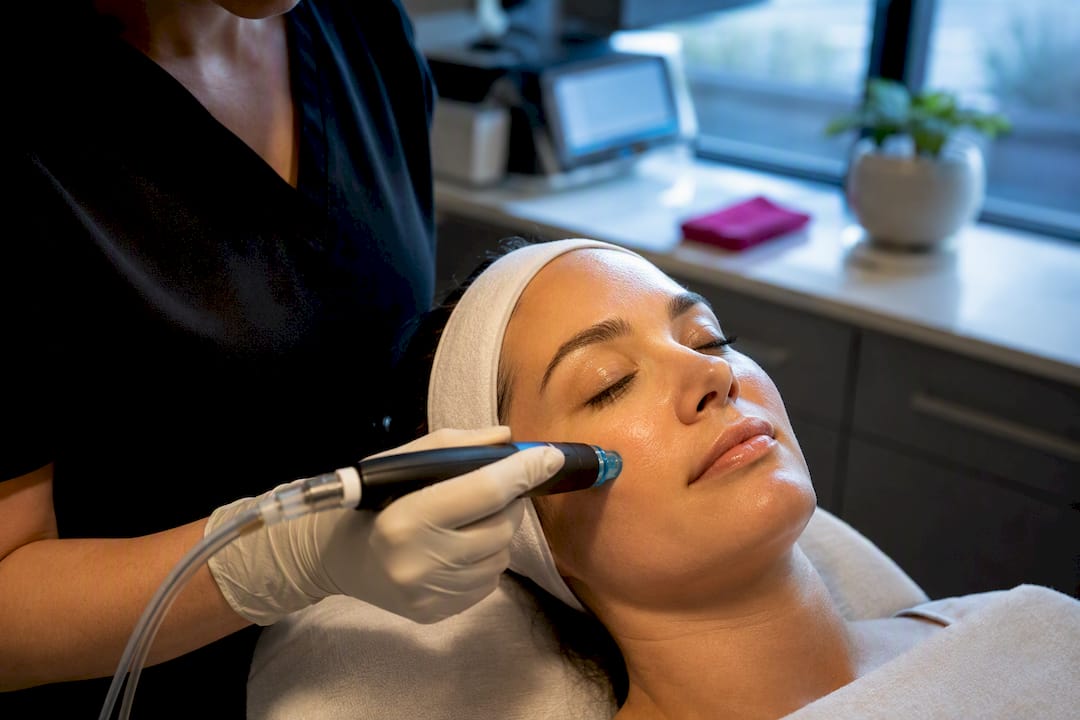
A single Hydrafacial session in the U.S. typically runs $150 to $350, with member-reported averages landing around $206. It’s a solid pick for maintenance, event prep, or an acne clarifying series, but it won’t replace prescription actives or energy-based treatments for structural anti-aging.
TL;DR:
- Hydrafacial prices vary by tier, with Signature costing around $150 to $200, Deluxe up to $275, and Platinum reaching $350, with booster serums adding extra costs.
- Clinics in high-rent urban areas often charge 20 to 30 percent more than the national median, and practitioner type influences cost, with dermatologists pricing higher than medspas.
- A series of six treatments over 12 weeks significantly improves acne severity, but short-term glow effects fade within weeks and do not reverse structural aging.
- Monthly maintenance can be costly annually, but quarterly sessions offer a more affordable glow, while a home regimen with SPF and retinoids often provides better long-term value.
- Booking a consultation to clarify included services, boosters, total costs, and aftercare is crucial for determining if Hydrafacial aligns with your skin goals and budget.
Table of Contents
- How Much Is a Hydrafacial? Pricing by Tier
- What Drives the Price of a Hydrafacial Up or Down?
- How Often Should You Get a Hydrafacial, and What Does That Cost Per Year?
- Is a Hydrafacial Worth the Money? What the Evidence Actually Shows
- Who Should Get a Hydrafacial, and What to Ask at Your Consult
- Rao Dermatology’s Perspective: When We Recommend Hydrafacial and How We Price It
- The Real Question Isn’t the Price, It’s the Match
- Rao Dermatology’s Esthetic Services and How to Book a Consult
- Sources
- FAQ
How Much Is a Hydrafacial? Pricing by Tier
Most providers sell Hydrafacial in three tiers, and the name on the menu tells you almost everything about what’s included and what you’ll pay.
Signature is the base protocol: cleanse, gentle acid peel, extractions, and hydration serum infusion. It typically runs $150 to $200 per session.
Deluxe adds a booster, usually targeting brightening, hydration, or redness, plus sometimes a round of LED light therapy. Expect $200 to $275.
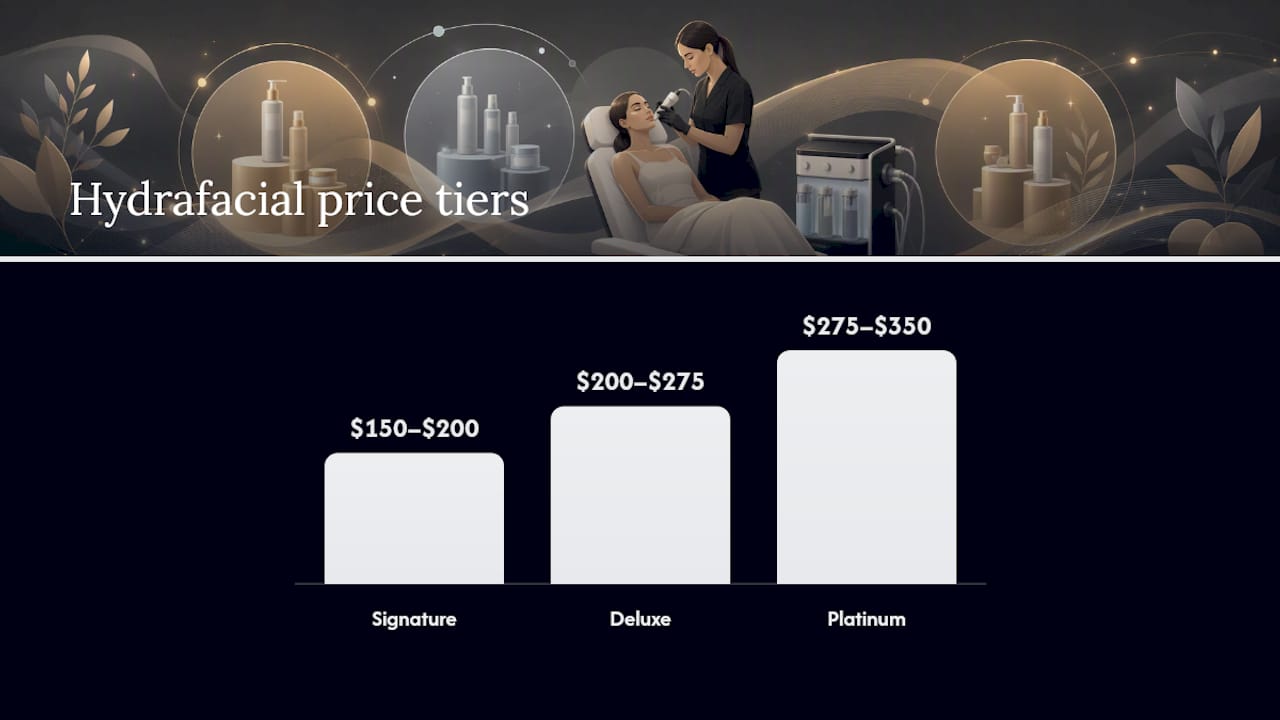
Platinum is the full package: lymphatic drainage massage, a specialty booster, LED, and sometimes a cold globe treatment for extra de-puffing. That tier lands at roughly $275 to $350.
A few things move the number beyond the tier itself:
- Booster serums added a la carte typically cost an extra $40 to $100 each, whether you’re buying up from Signature or stacking a second booster onto Platinum.
- Neck and chest extensions usually add a flat surcharge, separate from facial pricing.
- Metro-area clinics in cities like New York, Los Angeles, and San Francisco often run 20% to 30% above the national median, simply because rent and staffing cost more there.
If a quote comes in well under $150, ask what’s actually included. Chances are it’s a stripped-down version without extractions or a real booster, not a discount on the same service.
What Drives the Price of a Hydrafacial Up or Down?
Two providers can charge wildly different rates for what looks like the same treatment on paper, and the gap usually comes down to a handful of factors.
- Who’s running the machine. A dermatologist-run practice tends to price higher than a standalone medspa, partly because a physician oversees the treatment plan and can escalate to prescription therapy or a procedure if something looks off during the session.
- Location and overhead. Rent, staff wages, and local demand all bake into the sticker price, which is why the same protocol costs more on the Upper East Side than in a suburban strip mall.
- Add-ons. LED therapy, lymphatic drainage, and neck/chest extensions each carry their own surcharge, and booster serums are the single biggest source of price variation beyond the base tier.
- Package or membership pricing. Many clinics sell six or ten sessions at a discount, or offer a monthly membership rate. This only pays off if you’ll actually use every session.
Pro Tip: Ask for the total price with your preferred booster included before you book, not just the tier’s base rate. Booster pricing is where “surprise” charges usually hide.
When comparing package deals, divide the total price by the number of sessions to get a true per-visit cost, then compare that against a la carte pricing at the same clinic.
How Often Should You Get a Hydrafacial, and What Does That Cost Per Year?
Cadence matters more than most people realize when budgeting for Hydrafacial, because the per-session price is only half the equation.
- Monthly maintenance is the standard recommendation for keeping skin texture and tone consistent. At Signature pricing, that can represent a significant annual investment; at Platinum, the cost is notably higher.
- Quarterly sessions (four times a year) work as a budget compromise for people mainly chasing an occasional glow before events. That drops annual spend to $600 to $1,400 depending on tier.
- A clarifying series for acne typically means six sessions over 12 weeks, then a step down to quarterly or monthly maintenance once skin stabilizes.
Package pricing usually knocks 10% to 20% off the a la carte rate if you commit to a set number of visits, but only run the math if you’re confident you’ll use them. A discounted package you half use costs more per session than paying as you go.
Is a Hydrafacial Worth the Money? What the Evidence Actually Shows
The strongest data behind Hydrafacial isn’t about glow. It’s about acne. A 2022 clinical trial found that a series of six sessions over 12 weeks improved investigator-rated acne severity from about 20% to 65% clear or nearly clear. That’s a meaningful, measurable result for a non-invasive treatment.
The evidence gap: Hydrafacial has real, trial-backed support for acne clearing across a multi-session series. It does not have comparable evidence for reversing structural aging, like deep wrinkles or lost volume.
The “glow” people notice right after a session is real, but it’s temporary. Confocal imaging shows that the plumping effect fades back to baseline within weeks, because the mechanism is surface hydration and exfoliation, not collagen remodeling. If you’re chasing that dewy look for a wedding or a photo shoot, one session delivers. If you’re trying to reverse years of sun damage or sagging, energy-based devices and prescription retinoids remodel tissue in ways a facial simply doesn’t.
So where does the money make sense?
- A series is justified for active acne, especially when paired with topical therapy your dermatologist prescribes.
- A single session is justified before an event when you want visible, short-term brightening.
- If your main goal is long-term anti-aging on a limited budget, a consistent home regimen of SPF, a retinoid, and antioxidants often delivers more lasting value than a monthly maintenance membership.
For readers weighing Hydrafacial against other resurfacing options, it helps to see how it stacks up against microdermabrasion and chemical peels before committing to a cadence.
Who Should Get a Hydrafacial, and What to Ask at Your Consult
Three groups tend to get the most out of this treatment: people maintaining generally healthy skin who want a periodic refresh, acne-prone patients running a full clarifying series, and anyone prepping for a wedding, reunion, or shoot who wants brighter, smoother skin fast.
It’s not right for everyone in every moment. Active cold sores, certain inflamed rashes, and recent procedures like laser resurfacing are common reasons a provider will ask you to wait. If you’re unsure, mention any active skin conditions when you book, not when you arrive.
At your consult, ask directly:
- What are your credentials, and who actually performs the treatment?
- What’s included in the base price, and what costs extra?
- What do boosters, LED, or lymphatic drainage add to the total?
- What’s the expected downtime, and is there any aftercare I need to plan for?
- Is package pricing available, and what’s the true per-session cost if I commit?
A provider who answers all five without hesitation is usually one worth booking with.
Rao Dermatology’s Perspective: When We Recommend Hydrafacial and How We Price It
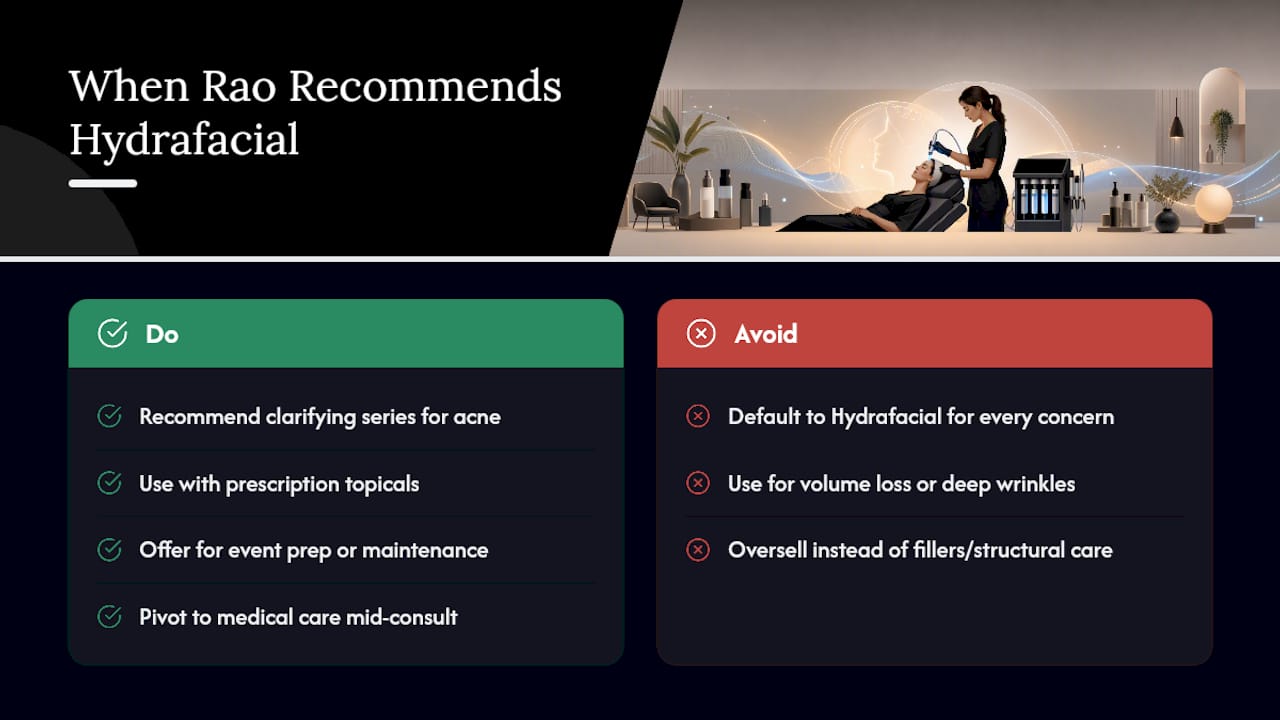
Under the direction of Dr. Babar K. Rao, with over 25 years treating skin conditions across California, New Jersey, and New York, Rao Dermatology positions Hydrafacial as one tool among several, not a default answer for every concern. We typically recommend a clarifying series for active acne, often alongside prescription topicals, and reserve it as event prep or general maintenance for patients without deeper structural concerns. When someone’s real goal is reversing volume loss or deep wrinkles, we talk through dermal fillers or other structural treatments instead of overselling a facial. Because a physician oversees the practice, we can pivot mid-consult if something needs medical attention rather than cosmetic care.
The Real Question Isn’t the Price, It’s the Match
Most articles about Hydrafacial cost treat the number as the whole story. It isn’t. The $150 to $350 range tells you almost nothing about whether the treatment is worth it for your specific skin, and too many people book a package because it was on sale, not because it matched their goal.
Here’s what the evidence actually supports: a series works well for acne, a single session delivers real short-term brightening, and neither replaces what a retinoid or energy-based device does for deeper aging. The conventional advice, “just try it and see,” skips the part where a trained provider should be evaluating your skin first, not just running you through the same seven steps everyone else gets.
If you’re on a budget, spend it on the home regimen first. SPF and a retinoid, used consistently, beat an occasional facial for long-term skin health. Save the in-office spend for acne series work or short-term events where the glow actually has a job to do.
— Rao Dermatology
Rao Dermatology’s Esthetic Services and How to Book a Consult
Rao Dermatology offers Hydrafacial and a full range of esthetic services across its California, New Jersey, and New York locations, all under the oversight of a physician-led practice rather than a standalone medspa. That distinction matters when your skin concern turns out to be more than cosmetic. Our estheticians work alongside Dr. Rao’s dermatology team, so a routine Hydrafacial consult can quickly become a broader treatment conversation if something needs closer attention.

At your consult, we’ll walk through your skin goals, whether that’s acne clearing, event prep, or general maintenance, and give you a clear price breakdown before you commit to anything, including booster and package options. If a structural concern comes up instead, we’ll talk through skin rejuvenation options that go beyond what a facial can address. Ready to see what fits your skin and your budget? Book a consultation with Rao Dermatology and get a personalized recommendation instead of a guess.
This article is general information, not a substitute for advice from a qualified doctor. Consult a qualified healthcare professional about your own circumstances before acting on anything here.
Sources
- RealSelf — HydraFacial cost and pricing by city
- PMC — Clinical trial on HydraFacial outcomes
- DermApproved — Are facials & HydraFacials worth it?
- GlowNoFilter — HydraFacial cost guide (2026)
FAQ
How much do you tip for a $300 facial?
Standard tipping for spa and esthetic services runs 15% to 20% of the pre-tax price, so a $300 facial typically warrants a $45 to $60 tip in cash or added to the card payment.
Is a Hydrafacial worth the money?
It’s worth it for acne clearing series, event prep, and general skin maintenance, but clinical evidence and imaging show the effects are largely surface-level and temporary rather than a substitute for structural anti-aging treatment.
What’s a good price for a Hydrafacial?
A fair price falls within the $150 to $350 national range, with Signature near the low end, Platinum near the high end, and booster add-ons typically costing $40 to $100 more.
What is a 7 step Hydrafacial?
The standard protocol includes detoxification, exfoliation, extraction, hydration, fusion of boosters, LED light therapy, and lymphatic drainage, though not every provider includes all seven steps at every tier.
Is Hydrafacial cheaper at a medspa or a dermatology practice?
Standalone medspas sometimes charge less, but a physician-led practice like Rao Dermatology can catch and address medical skin issues during the same visit, which adds value beyond the base price.
Recommended
Filed under: