
Discover how to maintain healthy skin with daily habits like sunscreen, cleansing, and moisturizing. Achieve radiant, resilient skin!

Healthy skin comes down to four daily non-negotiables: broad-spectrum sunscreen with SPF 30 or higher, gentle cleansing, consistent moisturizing, and avoiding fragranced products. Layer in lifestyle habits like balanced nutrition, adequate hydration, quality sleep, regular exercise, and stress management, and you have a routine that board-certified dermatologists consistently recommend… The American Academy of Dermatology notes that an SPF 30 sunscreen extends the time it takes to burn by 30 times compared to wearing nothing at all. That single habit, applied daily, does more for long-term skin health than most people realize.
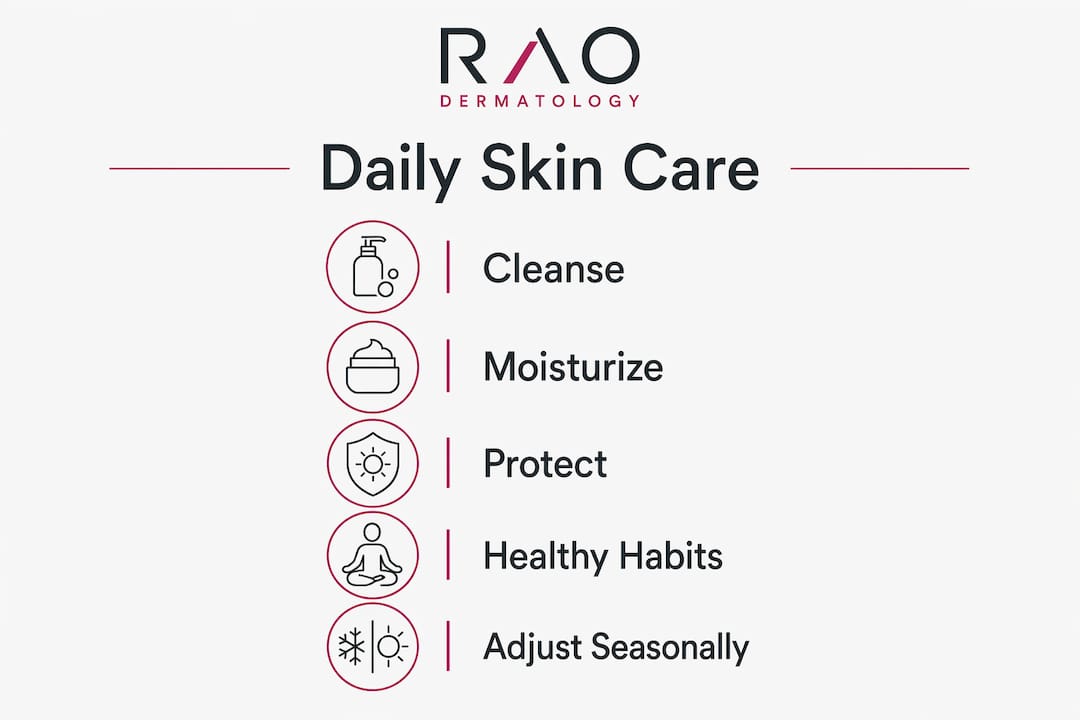
The core daily skin care essentials:
- Apply broad-spectrum sunscreen with SPF 30 or higher every morning, rain or shine
- Cleanse with a mild, non-abrasive cleanser suited to your skin type
- Moisturize immediately after washing while skin is still slightly damp
- Choose fragrance-free, non-comedogenic products to reduce irritation risk
- Drink enough water and eat a diet rich in fruits, vegetables, and healthy fats
- Get adequate sleep to support overnight skin regeneration
- Exercise regularly to boost circulation and deliver oxygen to skin cells
- Manage stress actively, since chronic stress can trigger acne and eczema flare-ups
- Avoid smoking and limit alcohol, both of which accelerate skin aging
Raodermatology’s board-certified dermatologists, with over 25 years of clinical experience, back every one of these practices as foundational to lasting skin health.
Why sun protection is the single most important skin care step
UV rays are the leading cause of premature skin aging, and the damage accumulates silently over years. Both UVA and UVB rays penetrate the skin, disrupting cellular processes that control growth and appearance. Over time, repeated exposure makes skin less elastic, thickened, and prone to wrinkles far earlier than genetics alone would cause.
Daily sunscreen use is the most direct way to interrupt that process. Apply a broad-spectrum product with SPF 30 or higher 15–30 minutes before going outside, and reapply at least every two hours, or more often if you are swimming or sweating. Sunscreen effectiveness also depends on checking the expiration date; active ingredients break down over time and an expired product offers far less protection.
| SPF Level | Times longer to burn vs. no protection |
|---|---|
| SPF 15 | 15x |
| SPF 30 | 30x |
| SPF 30 | 30 times |
Sunscreen alone is not the full picture. Wearing a wide-brimmed hat, choosing loose long-sleeved clothing, and staying out of direct sun between 10 AM and 4 PM all reduce UV load significantly. For anyone concerned about skin cancer risk, combining these habits with regular dermatologist check-ups is the standard of care.
Pro Tip: Even on overcast days, UV rays pass through clouds. Apply sunscreen as part of your morning routine regardless of the forecast.
How gentle cleansing and moisturizing protect your skin barrier
Harsh cleansers are one of the most common ways people unknowingly damage their skin. Aggressive scrubbing or strongly detergent soaps strip the skin’s natural oils and damage its protective outer layer, leaving it vulnerable to irritation, dryness, and even infection. A mild, non-abrasive cleanser used with warm (not hot) water does the job without that cost.

Moisturizing immediately after cleansing locks in the water your skin just absorbed. Ointment-based products like petroleum jelly work especially well for very dry or aging skin, preventing the brittleness and cracking that follow repeated washing. For everyday use, a fragrance-free lotion or cream suited to your skin type keeps the barrier intact without clogging pores.
Best practices for cleansing and moisturizing:
- Cleanse once or twice daily; over-washing strips protective oils
- Use lukewarm water, never hot, which worsens dryness
- Pat skin dry gently with a soft towel rather than rubbing
- Apply moisturizer within a few minutes of washing while skin is still slightly damp
- Choose non-comedogenic formulas if you are prone to breakouts
- For hands, apply an ointment-based moisturizer after every wash to prevent dryness and brittle nails
Aging skin repairs itself more slowly, so consistent moisturizing becomes even more critical after your 40s. Wound healing can slow considerably with age, and well-hydrated skin recovers faster from minor damage.
Why fragrance-free products reduce irritation so quickly
Fragrance is one of the most common triggers for allergic reactions and contact dermatitis, particularly in sensitive or aging skin. The reaction is not always immediate; repeated low-level exposure can sensitize the skin over time until even a small amount causes visible redness or itching. Switching to fragrance-free products typically reduces irritation within days to weeks, making it one of the fastest-acting changes you can make.
Common irritants to avoid beyond fragrance:
- Alcohol-based toners and astringents, which dry out the skin barrier
- Harsh exfoliating scrubs used too frequently
- Strongly detergent soaps and antibacterial cleansers for daily face washing
- Products with dyes or preservatives known to cause reactions in sensitive skin
Pro Tip: When trying a new product, apply a small amount to the inside of your wrist or elbow for two to three days before using it on your face. A patch test catches reactions before they spread.
Dermatologists consistently recommend fragrance-free labeled products as the baseline for anyone with sensitive, reactive, or aging skin. “Unscented” is not the same thing; unscented products can still contain masking fragrances that cause reactions.
What does a dermatologist-recommended skin care routine actually look like?
A 2023 expert consensus published in a peer-reviewed dermatology journal established four pillars for a skin care routine that improves adherence and long-term outcomes: treatment (when a condition requires it), cleansing, moisturizing, and photoprotection. The framework was designed specifically to reduce the confusion that leads people to over-complicate their routines or abandon them entirely.
Simpler routines with fewer, well-chosen products consistently outperform complex or aggressive regimens. The goal is not to use more; it is to use the right things consistently. For anyone managing a condition like acne, rosacea, or atopic dermatitis, a board-certified dermatologist can tailor the routine to your specific skin needs, including whether a retinoid is appropriate. Retinoids, which are vitamin A-based products, reduce inflammation and regulate cell turnover, but they require a slow introduction. Starting infrequently and building tolerance over time prevents the redness and dryness that cause most people to quit too early.
The holistic skin care framework:
- Treatment: Address active conditions (acne, rosacea, eczema) with dermatologist-guided therapy
- Cleansing: Mild cleanser, twice daily, preserving the skin barrier
- Moisturizing: Fragrance-free, skin-type appropriate, applied consistently
- Photoprotection: Broad-spectrum SPF 30+ every day, with physical barriers as backup
- Nutrition and hydration: Adequate water intake and a balanced diet support skin elasticity
- Sleep: 7–9 hours allows skin to repair and regenerate overnight
- Stress management: Chronic stress triggers flare-ups of eczema, acne, and other conditions
- No smoking: Smoking accelerates wrinkling and compromises skin’s ability to heal
Raodermatology’s dermatologist-recommended routines resource covers how to build and adapt this framework based on your skin type and age.
How should your skin care routine change with the seasons?
Your skin’s needs shift with the weather, and a routine that works in July can leave skin tight and flaky by December. Cold, dry winter air pulls moisture from the skin faster than warmer months, so switching to a richer, ointment-based moisturizer from October through March helps maintain the barrier. Indoor heating makes the problem worse; keeping indoor humidity at a moderate level with a humidifier noticeably reduces dryness and itching, especially for aging skin.
Summer brings the opposite challenge. Higher humidity means lighter moisturizers feel more comfortable and are less likely to clog pores. UV intensity peaks in summer months, so reapplying sunscreen more frequently and seeking shade during midday hours matters more than in winter. Spring and fall are good times to reassess your full routine, swap out heavy products for lighter ones or vice versa, and check in with a dermatologist if any seasonal conditions like eczema or rosacea have flared. Raodermatology’s skin health tips cover seasonal adjustments in more detail.
Raodermatology offers medical and cosmetic dermatology services across California, New Jersey, and New York, with board-certified dermatologists who can build a personalized skin care plan for your specific needs and concerns.

Key Takeaways
A consistent daily routine built on sunscreen, gentle cleansing, fragrance-free moisturizing, and smart lifestyle habits is the most effective way to maintain healthy skin over the long term.
| Point | Details |
|---|---|
| SPF 30 is the daily minimum | An SPF 30 sunscreen extends the time to burn by 30 times compared to no protection. |
| Gentle cleansing protects the barrier | Harsh scrubbing or detergent soaps damage the skin’s protective outer layer and cause irritation. |
| Fragrance triggers reactions fast | Switching to fragrance-free products can reduce skin irritation within days to weeks. |
| Four pillars drive adherence | A 2023 expert consensus endorses treatment, cleansing, moisturizing, and photoprotection as the core framework. |
| Seasonal adjustments matter | Richer moisturizers in winter and lighter formulas in summer keep the skin barrier stable year-round. |
FAQ
What is the most important daily habit for healthy skin?
Daily broad-spectrum sunscreen with SPF 30 or higher is the single most impactful habit, since UV exposure is the leading cause of premature aging and skin cancer risk.
How often should you moisturize your skin?
Moisturize at least once daily, ideally immediately after washing while skin is still slightly damp, to lock in hydration and support the skin barrier.
Are fragrance-free products really better for skin?
Yes. Fragrance is a leading cause of contact dermatitis and allergic reactions; switching to fragrance-free products typically reduces irritation within days to weeks.
How does sleep affect skin health?
Adequate sleep, generally 7–9 hours, allows skin to repair and regenerate overnight; poor sleep disrupts this process and can worsen conditions like acne and dullness.
When should you see a dermatologist about your skin?
See a board-certified dermatologist if you notice unusual moles, persistent rashes, or skin changes that do not resolve with basic care, or to get a personalized routine for a chronic condition.
Recommended
- National Healthy Skin Month: Essential Dermatologist-Approved Tips for Year-Round Skin Health | Rao Dermatology
- Skin Health Improvement Tips That Actually Work | Rao Dermatology
- Dermatologist-Recommended Skincare Routines for Healthier Skin | Rao Dermatology
- 2024 Skincare Resolutions: Expert Dermatologist Tips for Healthier Skin | Rao Dermatology
Filed under: