
A clinical guide to female hair loss treatments for women: what works, realistic 6 to 12 month timelines, diagnosis, and pregnancy safe options.
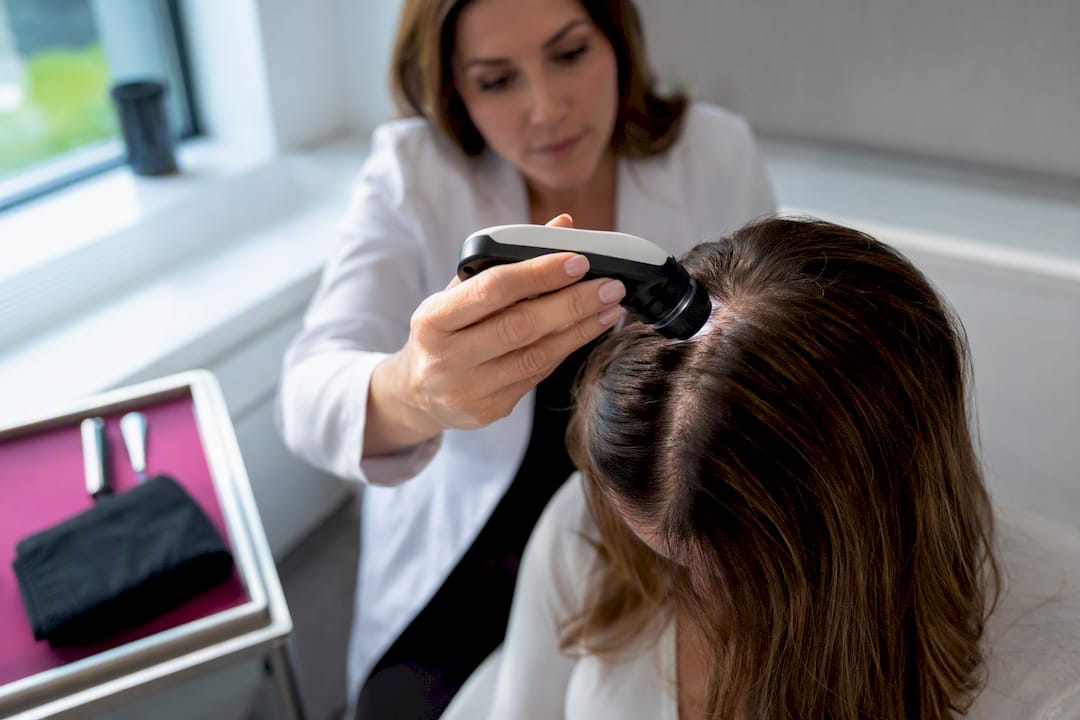
Topical minoxidil remains the only FDA-approved first-line treatment proven to slow female pattern hair loss and regrow density, with results emerging over several months. Spironolactone, low-dose oral minoxidil, and procedures like PRP or low-level laser therapy add benefit for many women once a dermatologist confirms the diagnosis. Skip the guesswork: a scalp exam and basic bloodwork before you start anything tells you which treatment actually fits your case.
Low-dose oral minoxidil requires medical supervision: it can cause fluid retention, a faster heart rate, and lowered blood pressure, so clinicians typically monitor blood pressure and ask about heart conditions before prescribing. It is not recommended during pregnancy or breastfeeding. Discuss these risks with a physician before starting.
TL;DR:
- Minoxidil remains the primary FDA-approved treatment for female pattern hair loss, but combining it with systemic medications or procedures enhances results.
- Early diagnosis and intervention are critical, as most women respond better if they start treatment before visible hair thinning doubles.
- Proper diagnosis requires scalp exams, blood tests, and sometimes biopsy to distinguish female pattern hair loss from other causes like telogen effluvium or scarring alopecia.
- Systemic treatments such as low-dose oral minoxidil and spironolactone require medical supervision, monitoring, and reliable contraception due to potential side effects and pregnancy risks.
- Procedures like PRP, laser therapy, and microneedling serve as adjuncts to medication, improving outcomes but generally not replacing medical treatments alone.
Table of Contents
- What Female Hair Loss Treatment Is Trying to Accomplish
- How Do Dermatologists Diagnose the Cause of Hair Loss?
- Medical Treatments: Minoxidil, Spironolactone, and When Prescriptions Escalate
- What Procedures Help, Beyond Medication?
- Safety, Pregnancy, and Setting Realistic Expectations
- When Should You See a Dermatologist for Hair Loss?
- Our Take on Where Women Get Stuck in Treatment
- How Rao Dermatology Approaches Hair Restoration for Women
- Sources
- FAQ
What Female Hair Loss Treatment Is Trying to Accomplish
Treating hair loss in women isn’t about chasing one miracle product. It’s about matching the right intervention to the right cause, then giving it enough time to work. Most effective treatment plans pursue three goals at once: slowing further shedding, improving density where follicles are still viable, and managing appearance while biology catches up.
Options fall into five broad categories, and most successful plans combine more than one:
- Topical therapies — minoxidil solution or foam, applied directly to the scalp
- Systemic medications — spironolactone, oral minoxidil, and in select cases finasteride or dutasteride
- In-office procedures — platelet-rich plasma (PRP) injections, microneedling, and in rare cases transplant surgery
- At-home devices — low-level laser combs or helmets
- Supportive measures — nutritional correction, camouflage products, and psychological support
Finasteride is FDA-indicated for men only. Women who are or may become pregnant must not handle crushed or broken finasteride tablets, due to the risk of harm to a male fetus. It can also cause sexual side effects (reduced libido, erectile dysfunction) in a minority of men, which usually resolve after stopping treatment. Discuss these risks with a physician before starting.
Timing matters more than most women realize. Early intervention preserves miniaturizing follicles before they stop producing hair altogether, which is why dermatologists push back against the “wait and see” instinct. The women who respond best to treatment are usually the ones who started before their part width had visibly doubled.
How Do Dermatologists Diagnose the Cause of Hair Loss?
Not all hair loss is female pattern hair loss (FPHL), and treating the wrong condition wastes months you don’t have. A dermatologist’s job in the first visit is ruling things in and out: FPHL causes gradual thinning at the crown and part line, telogen effluvium causes diffuse shedding often triggered by illness or stress, alopecia areata causes patchy bald spots, and scarring alopecias destroy follicles permanently if caught late.
The workup typically follows a set sequence:
- History and scalp exam — onset pattern, family history, medications, recent illness, thyroid symptoms, and menstrual or fertility history
- Pull test and trichoscopy — a dermatoscope magnifies the scalp to check for miniaturized hairs, yellow dots, or scarring patterns invisible to the naked eye
- Targeted blood tests — ferritin, TSH, and sometimes a complete blood count, ordered based on findings rather than reflexively
- Scalp biopsy — reserved for unclear or suspected scarring cases; it’s a minor procedure done under local anesthesia, usually closed with just one or two sutures
Wait times for a hair-focused dermatology visit can run 2 to 3 months in many markets, which is another reason to book early rather than trying supplements and serums for six months first.
Pro Tip: Take photos of your part line and hairline under the same lighting once a month before your appointment. Trichoscopy gives your dermatologist objective data, but your own timeline of photos often reveals the rate of change faster than memory alone.
Medical Treatments: Minoxidil, Spironolactone, and When Prescriptions Escalate
Topical minoxidil is the only FDA-approved medication for female pattern hair loss, and it remains the starting point for nearly every treatment plan. Both can cause scalp irritation or, less often, unwanted facial hair growth from product drift, and both require patience: expect several months before judging whether it’s working. Many women also notice a temporary increase in shedding during the first couple of months. That’s usually the medication pushing resting follicles into a new growth cycle, not a sign of failure.
When topical therapy alone isn’t enough, dermatologists commonly add:
- Low-dose oral minoxidil — increasingly used off-label at doses far below those for blood pressure treatment, though it carries some risk of fluid retention or lowered blood pressure and warrants monitoring
- Spironolactone — an anti-androgen typically started at a low dose and titrated upward, with documented benefit in a meaningful share of women with FPHL; requires periodic potassium and kidney function checks
- Finasteride or dutasteride — 5-alpha-reductase inhibitors used mainly in postmenopausal women or select off-label cases, given their teratogenic risk in pregnancy
Why the timeline matters: Most pharmacologic treatments need several months before any meaningful response shows up, and results typically require ongoing use to maintain. Stopping early is the single most common reason women conclude a treatment “didn’t work” when it never got the chance to.
Spironolactone and both 5-alpha-reductase inhibitors require reliable contraception for anyone who can become pregnant, since fetal exposure carries documented risk. This is a conversation to have explicitly with your dermatologist, not an afterthought.
Combining topical minoxidil with a systemic agent or a procedure outperforms any single approach for many women, which is why most dermatology-led plans layer therapies rather than rotate through them one at a time.
What Procedures Help, Beyond Medication?
Procedures rarely replace medical therapy in female pattern hair loss. They extend it. PRP and low-level laser therapy both show evidence of benefit in controlled studies, though most trials are small and neither works as a one-time fix.
- PRP involves drawing a patient’s own blood, concentrating the platelets, and injecting the plasma into the scalp at thinning areas. A typical course runs monthly sessions initially, then quarterly maintenance, with results assessed over several months.
- Low-level laser therapy comes as combs, caps, or helmet devices used at home several times a week. Benefit depends on consistent, ongoing use, similar to topical minoxidil.
- Microneedling creates controlled micro-injuries that appear to improve absorption of topical treatments when paired with minoxidil or PRP, often used as a combination protocol rather than standalone therapy.
- Hair transplant is possible in women but far less common than in men, since diffuse thinning (rather than a stable donor zone) limits who is a good surgical candidate.
None of these work in isolation the way patients often hope. They work as an add-on layer to an already-diagnosed, already-treated case.
Safety, Pregnancy, and Setting Realistic Expectations
Every effective systemic option for female hair loss carries a safety conversation attached to it, and skipping that conversation is the most avoidable mistake in this category. Spironolactone and finasteride/dutasteride are contraindicated in pregnancy due to teratogenic risk, so contraception counseling is not optional for anyone who could conceive while on these medications.
Watch for these effects during treatment:
- Hypertrichosis (unwanted hair growth on the face) from topical minoxidil applied too close to the hairline
- Hypotension or lightheadedness from oral minoxidil, especially at higher doses
- Hyperkalemia from spironolactone, which is why periodic bloodwork matters, not a one-time check
- Transient shedding in the first two to three months of any effective therapy, which is expected and typically resolves
Pro Tip: Before buying biotin gummies or a “hair vitamin” bundle, ask for a ferritin and TSH panel first. Dermatology guidelines note that supplements rarely help unless a specific deficiency is confirmed, and normal-range labs make a $40-a-month supplement habit pointless.
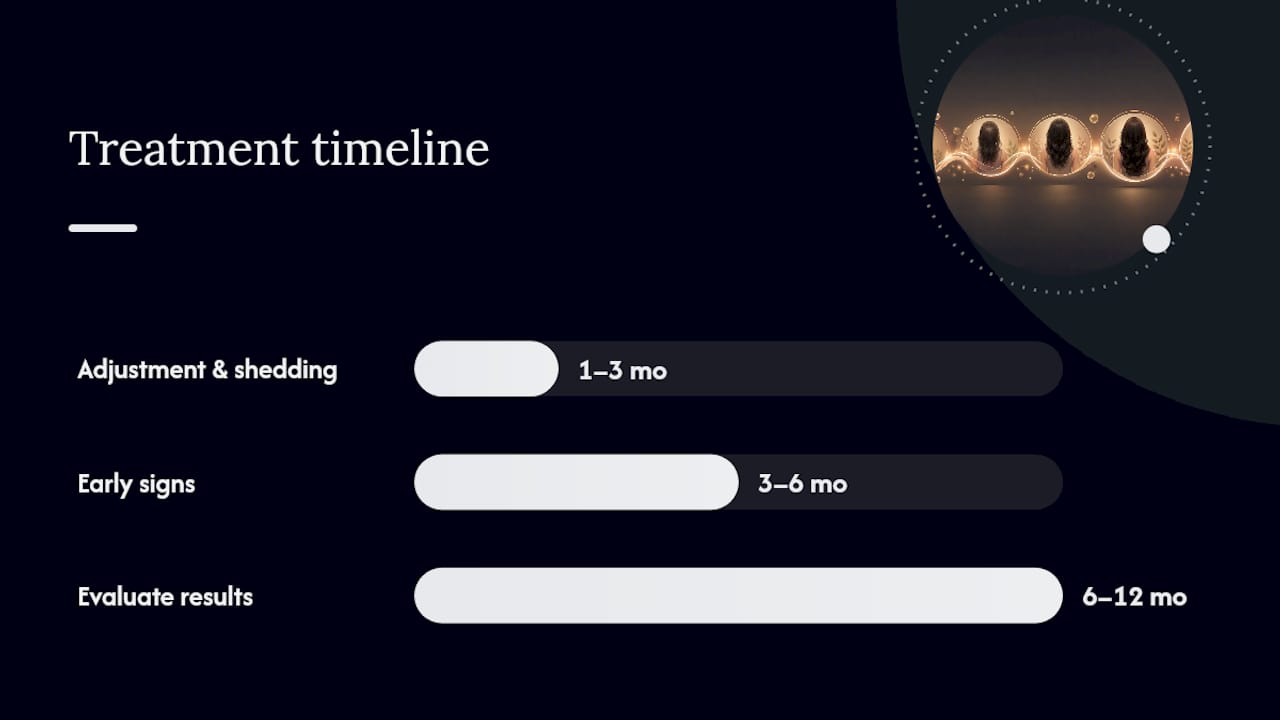
Expect the arc of treatment to run in phases: months 1 to 3 for adjustment and possible shedding, months 3 to 6 for early signs of change, and 6 to 12 months for a real verdict on whether the plan is working. Maintenance, not a finish line, is the honest goal.
When Should You See a Dermatologist for Hair Loss?
Some situations call for a specialist visit sooner rather than later, and treating any of them as “wait and see” risks permanent follicle loss.
- Diagnosis is unclear — patchy loss, scalp redness, scaling, or scarring signs need evaluation before any treatment starts
- Progression is rapid — sudden or accelerating shedding over weeks rather than months
- Six months of consistent therapy shows no response — a signal to reassess diagnosis or escalate treatment rather than continue unchanged
- The emotional toll is significant — hair loss carries a disproportionate psychosocial burden for women, and dermatologists increasingly screen for anxiety and depression alongside the physical exam
Monitoring an active treatment plan usually means a follow-up visit at three months and again at six months, with blood pressure checks and lab work for anyone on systemic medication. Camouflage options, from scalp micropigmentation to topical fibers, are reasonable to use during treatment. They’re a bridge, not a substitute for addressing the underlying cause.
Our Take on Where Women Get Stuck in Treatment
The biggest gap we see isn’t access to treatment. It’s timing. Most women who come through Rao Dermatology have already spent 12 to 18 months trying serums, supplements, and social-media-recommended routines before booking a diagnostic visit. Trichoscopy takes minutes; the delay before it happens is what costs follicles.
Our approach at Rao Dermatology starts with that exam, not a prescription pad. We document baseline photos, run targeted labs when history warrants it, and set explicit three- and six-month checkpoints so patients know exactly when to expect a verdict rather than guessing whether a treatment is failing. For partial responders, we layer PRP or laser therapy onto medical treatment instead of swapping one for another. That’s the part conventional advice skips: combination care isn’t a last resort, it’s usually the plan that should have started sooner.
— Rao Dermatology
How Rao Dermatology Approaches Hair Restoration for Women
If you’re past the point of wondering whether your thinning is “just stress” and want an actual answer, that’s exactly what a hair restoration consult is built for. Rao Dermatology offers in-clinic evaluation across California, New Jersey, and New York, combining trichoscopy, targeted labs, and prescription management with procedural add-ons like PRP for patients who need more than topical therapy alone.

Booking is straightforward: schedule online or by phone, and come prepared. Bring a list of current medications, any prior lab results (thyroid panels or ferritin tests are especially useful), and a few recent photos of your scalp taken in natural light if you have them. That prep alone can shave weeks off getting to an actual treatment plan instead of a repeat of the same “let’s watch it” conversation. Explore Rao Dermatology’s full range of services or go directly to the hair restoration page to see what a first visit covers and request an appointment.
Sources
For deeper reading beyond this guide: the American Academy of Dermatology covers diagnostic standards, Harvard Health details minoxidil evidence, Cleveland Clinic outlines treatment timelines, and this PMC review summarizes combination therapy research.
- Female pattern hair loss: Current treatment concepts — PMC review
- Treating female pattern hair loss — Harvard Health
- Hair Loss in Women: Causes, Treatment & Prevention — Cleveland Clinic
FAQ
What Is the Best Treatment for Female Hair Loss?
Topical minoxidil is the only FDA-approved first-line option and the standard starting point; many women add spironolactone, oral minoxidil, or PRP once a dermatologist confirms the diagnosis and rules out other causes.
Can Hair Grow Back After Female Pattern Hair Loss?
Follicles that are miniaturized but not yet dormant can often regrow with consistent treatment, which is why early intervention matters so much; fully scarred or dormant follicles typically do not respond to medical therapy.
How Do I Stop My Hair From Falling Out?
Get a diagnosis before treating anything, since telogen effluvium, thyroid issues, and iron deficiency all cause shedding that responds to different fixes than female pattern hair loss does; once the cause is clear, consistent use of the right therapy for 6 to 12 months is what actually stops progression.
Is It Safe to Use These Treatments During Pregnancy?
No. Spironolactone and finasteride/dutasteride carry documented risk to a developing fetus and require reliable contraception if you’re taking them and could become pregnant; talk to your dermatologist about pregnancy-safe alternatives if you’re planning conception.
How Long Before I See Results?
Expect 6 to 12 months before judging whether a treatment is working, with some women noticing temporary increased shedding in the first few months as a normal part of the response.
Recommended
Filed under: