
Discover examples of common skin conditions, their signs, and effective treatments. Learn how to recognize and manage them today!

What are the most common skin conditions?
The five most frequent skin diagnoses at U.S. outpatient visits are contact dermatitis, acne vulgaris, actinic keratosis, benign skin neoplasms, and epidermoid cysts, with a median patient age of 46.5 years. That list covers a lot of ground, but it leaves out conditions millions of people deal with daily. Here is a broader picture of examples of common skin conditions, with the key signs to recognize each one:
- Acne vulgaris: Whiteheads, blackheads, and inflamed pimples, primarily on the face, chest, and back. Acne affects up to 50 million Americans every year, making it the most prevalent skin condition in the United States.
- Eczema (atopic dermatitis): Intensely itchy, red, and cracked skin, often appearing in the creases of elbows and knees. Scratching worsens the cycle, leading to weeping and crusting.
- Psoriasis: Thick, scaly plaques that are red or silvery, commonly on the scalp, elbows, and knees. The skin can feel hot and swollen.
- Rosacea: Persistent facial redness, visible blood vessels, and sometimes pimple-like bumps. Over time, skin may thicken, particularly around the nose.
- Seborrheic dermatitis: Flaky, greasy scales on the scalp, eyebrows, and sides of the nose. On darker skin tones, the patches may appear purplish rather than the classic red.
- Contact dermatitis: A rash triggered by direct contact with an allergen or irritant. Symptoms include redness, itching, and scaling at the point of contact.
- Actinic keratosis: Rough, scaly patches caused by years of sun exposure, most often on the face, scalp, and hands. These are precancerous and warrant prompt evaluation.
- Benign skin neoplasms: Moles, skin tags, and seborrheic keratoses that are non-cancerous but may resemble more serious lesions.
- Epidermoid cysts: Slow-growing, firm lumps just beneath the skin surface, filled with keratin. They are benign but can become inflamed or infected.
What causes skin conditions in the first place?
Skin is the body’s largest organ, and it does a lot: it regulates temperature, blocks pathogens, and signals internal health changes through visible symptoms. When something disrupts that barrier, a skin condition can develop.
The causes of skin conditions fall into four broad categories: genetics, immune system dysfunction, environmental exposures, and infections. Acne, for example, results from clogged follicles, excess oil, bacteria, and dead skin cells combining to create inflammation. Psoriasis, by contrast, is an autoimmune condition where the immune system accelerates skin cell turnover far beyond normal. Contact dermatitis is purely reactive, triggered by allergens like nickel or irritants like harsh soaps.
Inflammatory conditions (eczema, psoriasis, rosacea) involve an overactive immune response. Infectious conditions (fungal infections, impetigo) involve a pathogen. Benign growths like cysts and skin tags are structural, not inflammatory. Understanding which category a condition falls into shapes every treatment decision that follows.
Skin health also reflects overall wellness. Hormonal shifts drive acne flares. Stress reliably worsens psoriasis and eczema. Nutritional deficiencies can appear on the skin before they show up in bloodwork.
How do you recognize and diagnose skin conditions accurately?
Visual recognition is a starting point, not a finish line. Many common skin disorders share overlapping signs, and misidentification is easy without clinical training.
Common visual signs to watch for:
- Redness or flushing (rosacea, contact dermatitis, eczema)
- Scaling or flaking (psoriasis, seborrheic dermatitis, actinic keratosis)
- Itching with or without a visible rash (eczema, contact dermatitis, hives)
- Lumps or bumps beneath or on the skin surface (cysts, benign neoplasms)
- Rough, sandpaper-like patches (actinic keratosis)
- Persistent pimples or pustules not responding to standard acne care (rosacea)
Dermatologists use several diagnostic tools beyond a visual exam. Dermoscopy, a handheld magnifying device with polarized light, reveals subsurface structures invisible to the naked eye. For ambiguous lesions, a skin biopsy provides a definitive tissue diagnosis. Patient history matters just as much: sun exposure history, known allergies, family history of skin conditions, and current medications all shape the picture.
A full-body skin exam establishes a baseline of what is normal for your skin, which makes future changes easier to detect. Conditions like seborrheic dermatitis can look pink or purplish on darker skin rather than the classic red, so clinical awareness of how signs of common skin conditions vary by skin tone is critical to avoiding misdiagnosis.
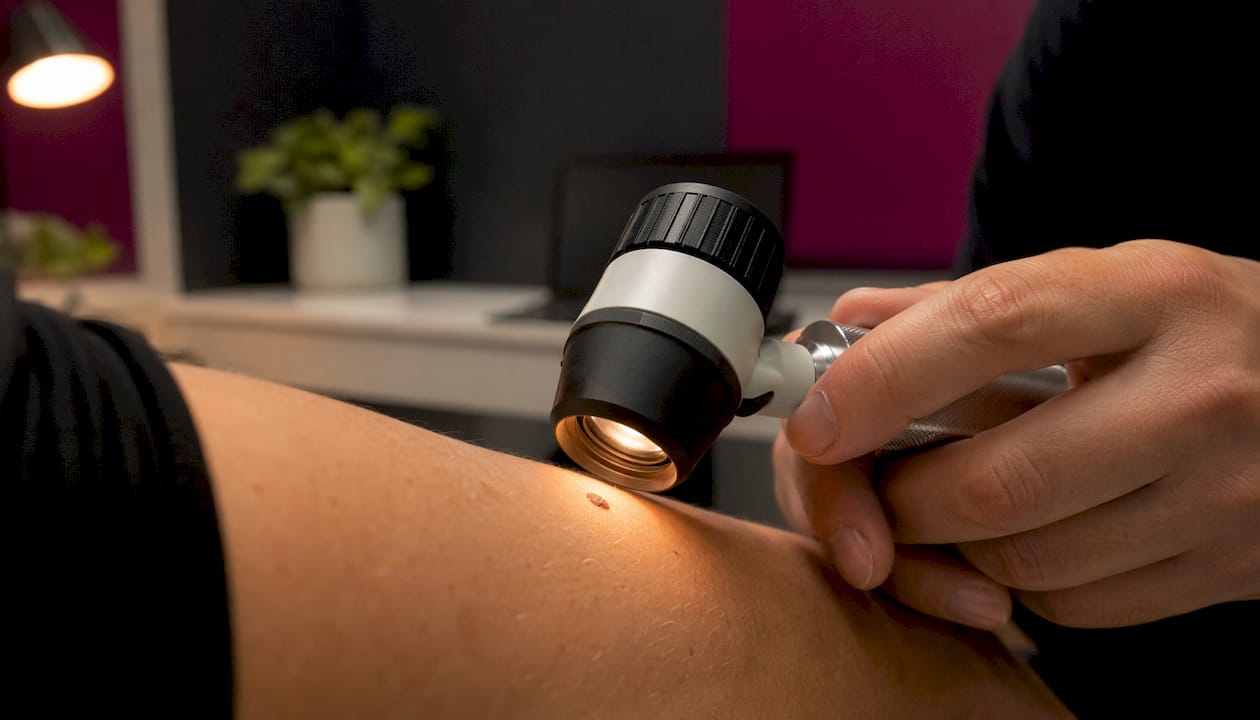
Pro Tip: Photograph any new or changing spot with your phone before your appointment. Dermatologists find dated photos genuinely useful for tracking progression.
What treatments are available for common skin conditions?
Treatment depends heavily on the condition type, severity, and the patient’s overall health. There is no single protocol that works across all skin condition types.
Standard treatment categories include:
- Topical medications: Corticosteroid creams for inflammation, retinoids for acne and sun damage, antifungals for seborrheic dermatitis, and calcineurin inhibitors for eczema.
- Systemic medications: Oral antibiotics for moderate-to-severe acne, biologics for psoriasis, and immunosuppressants for severe eczema.
- Phototherapy: Ultraviolet light therapy, including narrowband UVB, is a well-established option for psoriasis and eczema. Photodynamic therapy targets actinic keratosis specifically.
- Surgical and procedural options: Cyst excision, mole removal, cryotherapy for actinic keratosis, and laser treatments for rosacea.
Chronic conditions like psoriasis and eczema require personalized plans that combine topical, systemic, and procedural options, with ongoing monitoring for both effectiveness and side effects. A treatment that controls psoriasis plaques in one patient may do little for another with the same diagnosis. Severity, skin tone, comorbidities, and patient preference all factor in.
Moisturizers and barrier repair creams are underappreciated in this list. For eczema especially, consistent moisturizing reduces flare frequency as reliably as many prescription options.

Pro Tip: Before your appointment, verify your insurance coverage. The American Academy of Dermatology notes that treatments for chronic skin conditions are usually covered, while cosmetic procedures typically are not.
How can you reduce your risk of developing skin conditions?
Some risk factors are fixed, like genetics and skin type. Most are not.
Key risk factors:
- Cumulative sun exposure (primary driver of actinic keratosis and skin cancer)
- Known allergens or irritants in personal care products or workplace environments
- Family history of psoriasis, eczema, or skin cancer
- Immune system conditions or medications that suppress immunity
- Poor skin barrier function from over-washing or harsh cleansers
Practical prevention steps:
- Apply broad-spectrum SPF 30 or higher sunscreen daily, not just at the beach
- Identify and avoid personal contact allergens (patch testing can pinpoint them)
- Use fragrance-free, pH-balanced cleansers to protect the skin barrier
- Stay consistent with a simple moisturizing routine, especially in dry climates
- Schedule annual skin evaluations even when nothing looks wrong
Early detection changes outcomes. Actinic keratosis caught early is treatable in a single office visit. Left alone, it can progress toward squamous cell carcinoma. The same logic applies to atypical moles and early-stage melanoma.
What dermatologists know that most people don’t
One of the most clinically important points about frequent skin problems is how differently they present across skin tones. Seborrheic dermatitis, for example, appears pink or purplish on darker skin rather than the red patches typically shown in medical textbooks. That gap between textbook images and real-world presentation has historically led to delayed diagnoses in patients with darker complexions.
Median patient age for the five most common skin diagnoses at U.S. outpatient visits: 46.5 years (source)
Dermatologists also catch systemic conditions through skin signs. Yellowing of the skin can indicate liver disease. Butterfly-shaped facial rashes may signal lupus. Velvety, darkened skin folds can be an early marker of insulin resistance. The skin is a diagnostic window, not just a surface concern.
Chronic skin conditions carry a real psychological burden. Patients with psoriasis, severe acne, or eczema report significant impacts on mental health and quality of life, including anxiety, depression, and social withdrawal. Addressing that dimension is part of good dermatological care, not a secondary concern.
Raodermatology’s medical dermatology services cover skin cancer, psoriasis, and dermatitis with the kind of clinical depth these conditions require. With 25+ years of experience across California, New Jersey, and New York, the practice brings both diagnostic precision and personalized treatment planning to every patient.

If you are ready to get a professional evaluation, explore Raodermatology’s full services to find the right care for your skin.
Key Takeaways
The five most common skin diagnoses at U.S. outpatient visits are contact dermatitis, acne vulgaris, actinic keratosis, benign neoplasms, and epidermoid cysts, with a median patient age of 46.5 years.
| Point | Details |
|---|---|
| Most common conditions | Contact dermatitis, acne, actinic keratosis, benign neoplasms, and epidermoid cysts top U.S. outpatient skin diagnoses. |
| Acne prevalence | Acne affects up to 50 million Americans yearly, making it the most prevalent skin condition in the country. |
| Skin tone affects presentation | Seborrheic dermatitis appears purplish rather than red on darker skin, which can lead to misdiagnosis without clinical awareness. |
| Treatment is condition-specific | Topical, systemic, phototherapy, and surgical options each suit different conditions and severity levels. |
| Prevention starts with sun protection | Daily SPF 30+ sunscreen and annual skin exams are the two highest-impact prevention habits. |
FAQ
What are the most common skin conditions in the United States?
The five most frequent diagnoses at U.S. outpatient visits are contact dermatitis, acne vulgaris, actinic keratosis, benign skin neoplasms, and epidermoid cysts. Acne alone affects up to 50 million Americans every year.
How do I know if a skin condition needs a dermatologist?
See a dermatologist for any rash, growth, or lesion that persists beyond two weeks, changes in size or color, bleeds without injury, or does not respond to over-the-counter treatment.
Can skin conditions look different on darker skin tones?
Yes. Conditions like seborrheic dermatitis appear purplish or brown rather than red on darker skin, which means standard visual descriptions can mislead. A board-certified dermatologist trained in diverse skin tones will recognize these variations.
Are common skin conditions usually covered by insurance?
Treatments for chronic conditions like psoriasis, eczema, and acne are generally covered by insurance. Cosmetic procedures typically are not, so confirming coverage before your appointment is worth the call.
What is actinic keratosis and why does it matter?
Actinic keratosis is a rough, scaly patch caused by cumulative sun damage and is considered precancerous. Early treatment prevents progression to squamous cell carcinoma.
Recommended
- Types of Fungal Skin Infections: Understanding Symptoms and Treatment Options | Rao Dermatology
- Common Causes of Skin Cysts: Types, Symptoms & Treatment Options | Rao Dermatology
- What Are Cysts? Causes, Symptoms, and Treatment Options | Rao Dermatology
- Understanding Bacterial Skin Infections: Causes, Types & Treatment Options | Rao Dermatology
Filed under: