
Clear U.S. pricing for earlobe repair: expect $400–$1,200 per ear, what an itemized quote should list, insurance odds, payment options, and when to repierce.
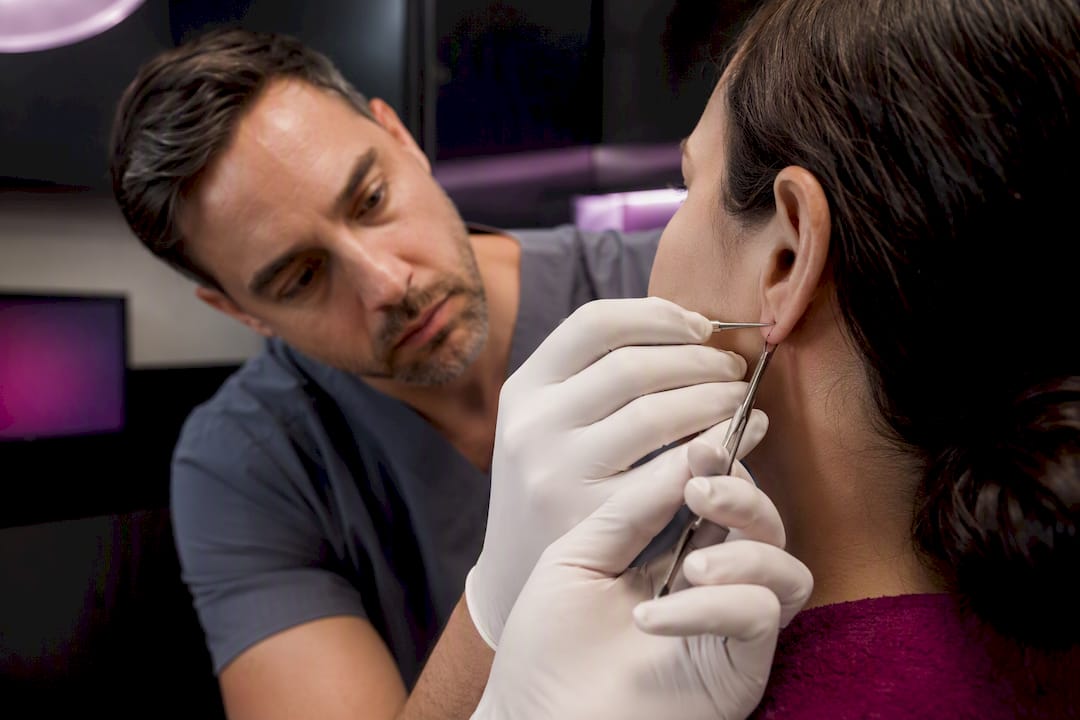
Earlobe repair typically runs $400 to $1,200 per ear in the United States, with most practices charging less for a second ear repaired in the same visit. Insurance rarely covers it since carriers treat torn or stretched lobes as cosmetic, not medical. Your best move is booking a consultation for an itemized quote before assuming any number applies to your case.
TL;DR:
- Most earlobe repairs cost between $400 and $1,200 per ear, with lower fees often available for the second ear during the same visit; complex procedures can cost up to $1,700.
- Repair complexity varies based on tear type and technique, with simple splits costing less than reconstructions involving grafts or flaps, and pricing influenced by provider credentials and geographic location.
- The procedure typically takes under an hour, involves local anesthesia, and requires minimal recovery time, with sutures removed after about one week and scar tissue maturing over several months.
- Insurance rarely covers elective earlobe repairs, so most patients pay out-of-pocket through financing options like CareCredit or in-house payment plans.
- When consulting, clarify whether costs include follow-up and suture removal, and ask about provider experience with your specific repair needs to avoid surprises on the final bill.
Table of Contents
- How Much Does Earlobe Repair Cost Per Ear vs. Both Ears?
- What Factors Push Earlobe Repair Pricing Higher or Lower?
- What Happens During the Procedure and Recovery?
- Will Insurance Cover Earlobe Repair, and What Are Your Payment Options?
- What Should You Ask at Your Consultation?
- How Do You Protect Your Results After Repair?
- Rao Dermatology’s Clinical Perspective on Pricing and Outcomes
- How Rao Dermatology Can Help With Your Earlobe Repair
- Sources
- FAQ
How Much Does Earlobe Repair Cost Per Ear vs. Both Ears?
That $400 to $1,200 per-ear range covers a wide spread because a simple split lobe and a stretched gauge hole are two different procedures wearing the same name. Repairing both ears often costs less than double the single-ear price, since many practices apply a reduced fee to the second lobe once the surgeon is already set up and the anesthesia is administered.
A quote usually breaks down into a few distinct line items, and knowing them helps you compare bids apples to apples:
- Surgeon or provider fee: the largest single cost, reflecting the actual repair work.
- Facility fee: covers the room, sterile setup, and equipment, whether that’s a dermatology office or a surgical suite.
- Anesthesia and supplies: local anesthesia plus sutures, dressings, and antiseptic materials.
- Follow-up visits: suture removal and a check-in appointment, sometimes bundled, sometimes billed separately.
A representative sample calculation for a straightforward single-ear repair might look like a $600 surgeon fee, a $150 facility charge, and $50 in supplies, landing near $800 total. A complex reconstruction involving gauge reversal or tissue grafting can push the total toward $1,500 to $1,700, according to clinic pricing pages that publish real-world examples. National cost aggregators confirm this pattern of per-ear pricing with itemized components you should expect any legitimate quote to disclose.
What Factors Push Earlobe Repair Pricing Higher or Lower?
A clean split lobe from a torn earring is a fifteen-minute fix. A stretched gauge piercing that needs tissue trimmed and reshaped, or a lobe requiring a flap or graft technique, is a longer and more technical procedure, and the price reflects that difference.
Several variables explain why two people can get very different quotes for what sounds like the same repair:
- Complexity of the tear or stretch: simple linear closures cost less than reconstructions involving flaps, grafts, or large-gauge reversal.
- Provider credentials and setting: a board-certified dermatologist or plastic surgeon operating in an accredited surgical center typically charges more than a walk-in clinic, but that premium often buys more consistent technique.
- Geography: metro areas on the coasts tend to run higher than smaller markets, mirroring broader cost-of-living differences.
- Add-ons: revision fees, extra follow-up visits, or redo work if healing doesn’t go as planned can all add to the original quote.
Ask directly whether a higher quote buys you a specific technique, added experience with gauge repairs, or simply a pricier zip code.
What Happens During the Procedure and Recovery?
Earlobe repair is a minor, in-office procedure, not a hospital surgery. The surgeon numbs the lobe with local anesthesia, trims the damaged edges of the tear or stretched hole, and closes the tissue with fine sutures. A simple repair usually takes under an hour from numbing to bandaging, and you walk out the same day.
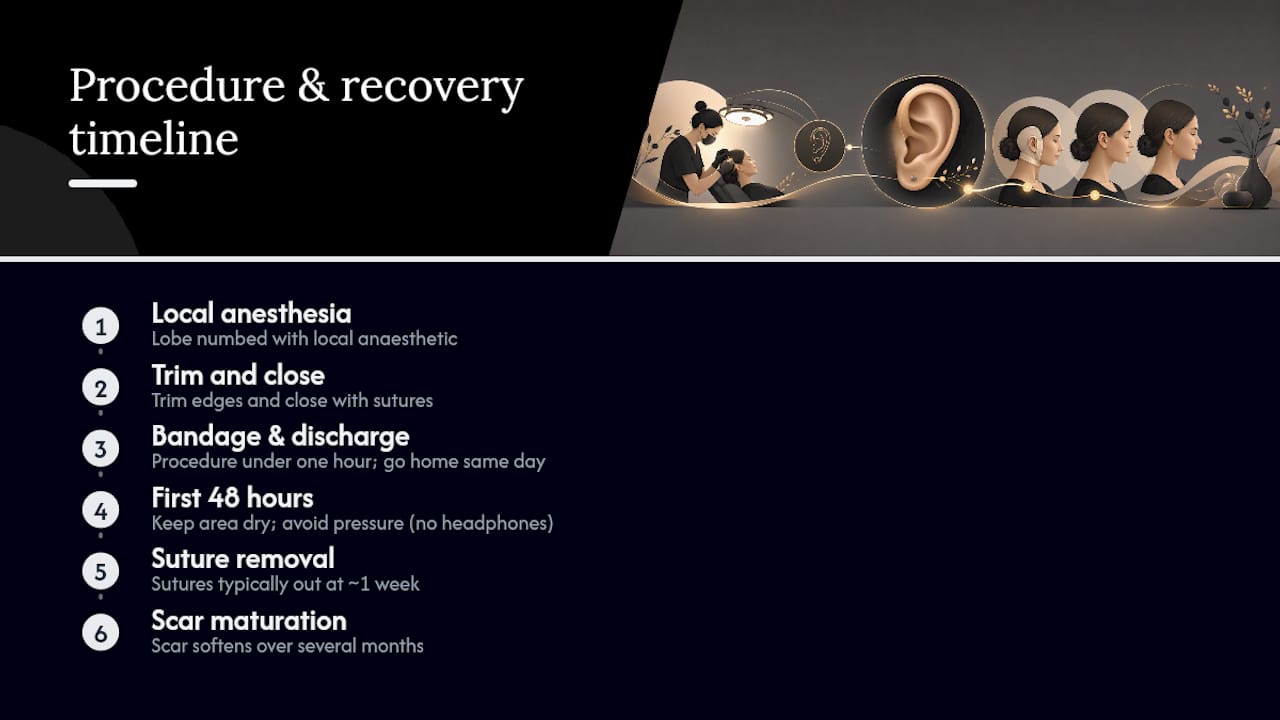
The first 48 hours call for keeping the area dry and avoiding pressure, meaning no sleeping on that side and no headphones resting directly on the lobe. Sutures typically come out around the one-week mark. The scar itself keeps maturing and softening for months afterward, which is why surgeons are conservative about declaring the repair “finished” too early. Most people need zero time off work, though you’ll want to skip anything that snags on the ear, like pulling shirts over your head, for the first few days.
Will Insurance Cover Earlobe Repair, and What Are Your Payment Options?
Most U.S. health plans classify earlobe repair as cosmetic or elective, which means you’re paying out of pocket in the overwhelming majority of cases. Insurers draw a sharp line between restorative treatment for a genuine acute injury, like a torn lobe from an accident, and correcting a voluntary body modification such as a stretched gauge hole. A doctor’s note alone rarely flips that classification.
If you believe your case qualifies as trauma related, check your plan’s benefit language and request preauthorization before the procedure, not after.
For everyone else, common payment routes include:
- CareCredit, a healthcare financing card many dermatology practices accept for cosmetic procedures.
- In-house payment plans offered directly by some clinics.
- Standard credit cards, useful for smaller totals under $1,000.
Before signing anything, verify the interest rate, deferred-interest terms, and whether the itemized estimate you received matches what the financing application requires.
What Should You Ask at Your Consultation?
A vague quote is how people end up surprised by their final bill. Walk into your consultation with a short checklist:
- Is the price per ear or per pair? Confirm whether repairing both lobes costs less than two separate single-ear fees.
- Does the quote include suture removal and follow-up? Some practices quote a lower base fee, then bill the follow-up separately.
- What’s included in the itemized estimate? Surgeon fee, facility fee, anesthesia, and supplies should each be listed, not lumped into one number.
- What’s the provider’s experience with your specific repair? Gauge reversal and complex reconstructions need more hands-on experience than a standard tear.
- What’s the expected cosmetic outcome, and how are complications handled? Ask what a revision would cost if the initial result isn’t what you hoped for.
- When can you safely re-pierce, and what’s the financing and cancellation policy?
Pro Tip: Bring a printed list of these questions to your consult. Practices juggling a full schedule sometimes skip details verbally that they’ll happily put in writing if you ask directly.
How Do You Protect Your Results After Repair?
Aftercare is where a lot of otherwise good repairs go sideways. Keep the area clean and dry, avoid direct pressure while sleeping, and follow your provider’s specific suture care instructions rather than generic advice you find online.
Re-piercing too soon is the most common way people undo their own results. Scar tissue keeps strengthening for months after the sutures come out, so rushing a new piercing through immature tissue raises your risk of tearing all over again. When you do re-pierce, placing the new hole a few millimeters from the old scar line, rather than directly through it, gives you meaningfully better odds. Contact your provider if you notice redness, swelling, or the wound reopening.
Rao Dermatology’s Clinical Perspective on Pricing and Outcomes
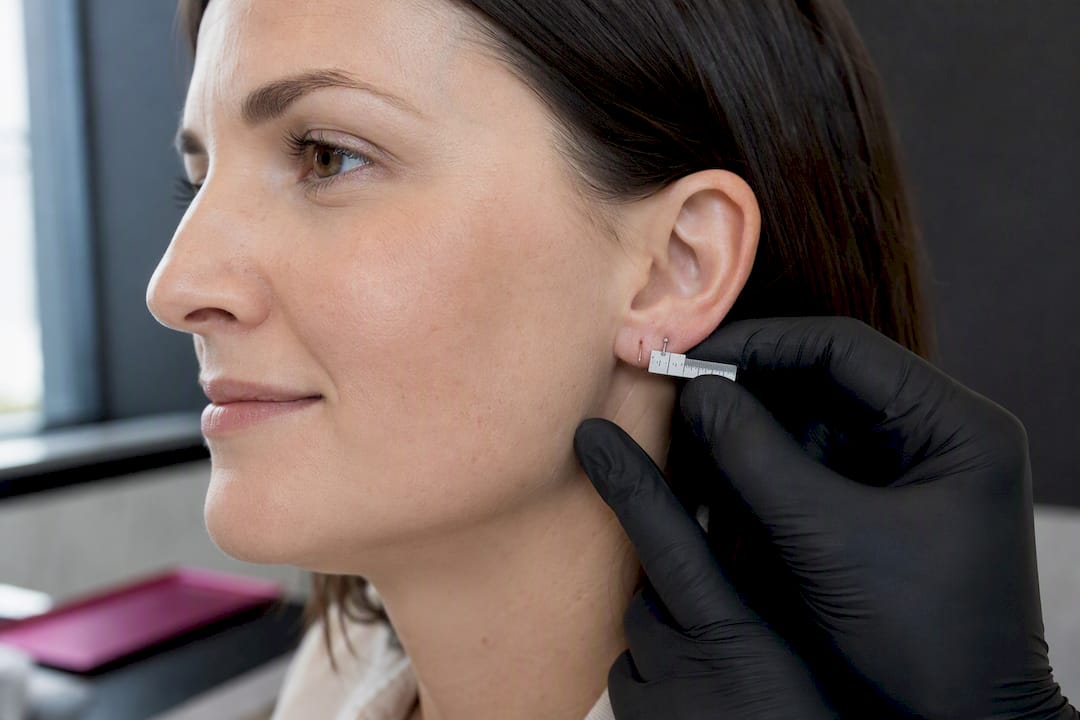
Earlobe repair looks simple, which is exactly why it gets rushed. Rao Dermatology’s approach leans on board-level surgical training, sterile technique, and setting realistic expectations about scar maturation rather than promising a “perfect” invisible result on day one. Operating across California, New Jersey, and New York gives patients access to consistent standards of care regardless of which office they walk into. Pricing transparency matters just as much as technique: a quote that hides follow-up costs or skips over provider experience isn’t one you should accept at face value.
— Rao Dermatology
How Rao Dermatology Can Help With Your Earlobe Repair
Rao Dermatology’s cosmetic dermatology team provides itemized pricing during your consultation, so you know exactly what you’re paying for before any procedure begins, no guessing between surgeon fees, facility costs, and follow-up visits.

Bring a photo or description of how the injury happened (helpful if you plan to check insurance eligibility for trauma-related cases), a list of any medications or supplements you’re taking, and questions about your specific repair complexity. Financing is available for patients who prefer to spread out the cost rather than pay the full amount upfront. With offices across California, New Jersey, and New York, scheduling a consultation near you is straightforward through Rao Dermatology’s full services page, where you can review the practice’s broader cosmetic and medical dermatology offerings before booking.
This article is general information, not a substitute for advice from a qualified doctor. Consult a qualified healthcare professional about your own circumstances before acting on anything here.
Sources
- A simple solution to torn and stretched earlobes — American Society of Plastic Surgeons (ASPS)
- Earlobe repair — Cleveland Clinic
- How Much Does Earlobe Repair Cost? (2026 Prices) — Get Clear Beauty
FAQ
Is Earlobe Repair Worth the Cost?
For most people with a torn or heavily stretched lobe, yes. It’s a low-risk, short procedure with a strong track record for restoring a natural appearance, and the $400 to $1,200 per-ear investment is usually one-time if aftercare is followed correctly.
Will Insurance Cover Earlobe Repair?
Almost never for elective cases, since most plans classify it as cosmetic. Coverage is occasionally possible for acute traumatic injuries, but you need to verify this with your specific plan documentation before the procedure.
Can a Torn Earlobe Heal Without Surgery?
A minor, partial tear can sometimes close on its own with careful at-home care, but a fully split lobe or a significantly stretched gauge hole generally needs surgical closure to look and function normally again.
What Happened to Nicole Kidman’s Earlobes?
Public speculation about visible earlobe changes in celebrity photos usually points to stretched piercings, aging skin laxity, or cosmetic procedures, though specifics about any individual’s private medical history aren’t publicly confirmed.
How Long Does Earlobe Repair Recovery Take?
Sutures typically come out around one week, but the scar continues maturing and softening for several months, which is why providers recommend waiting before re-piercing the area.
Recommended
Filed under: