
Discover the best creams to treat back spots effectively. Explore top-rated options that tackle inflamed spots, fading marks, and more!
If you’re dealing with inflamed red bumps, start with a benzoyl peroxide body wash. If dark marks left behind by old breakouts bother you more than active spots, azelaic acid cream does the fading work. All three are backed by the American Academy of Dermatology as first-line options, and all three need several weeks of consistent use before you’ll see a real difference. Skipping around between products every ten days is the single fastest way to waste money and get nowhere.
Here’s the quick verdict before you read further:
- Best for inflamed, red, pus-filled spots: benzoyl peroxide body wash (5% or so), left on for 2 to 5 minutes before rinsing
- Best for persistent clogged pores and blackhead-like bumps: adapalene 0.1% gel, applied nightly
- Best for dark marks left behind by old breakouts: azelaic acid 10% cream
- Gentlest option for sensitive or reactive skin: salicylic acid wash, used cautiously at first
If nothing improves after 6 to 8 weeks of correct use, or if you notice spots that are growing fast, draining fluid, or unusually painful, that’s your signal to book with a dermatologist rather than keep experimenting on your own.
Key Takeaways
Matching the active ingredient to the specific type of spot, benzoyl peroxide for inflammation, adapalene for clogged pores, azelaic acid for dark marks, works faster than using any single product for everything.
| Point | Details |
|---|---|
| Match active to spot type | Benzoyl peroxide for inflamed spots, adapalene for clogged pores, azelaic acid for dark marks. |
| Contact time matters | Leave benzoyl peroxide washes on skin for 2 to 5 minutes before rinsing for real effectiveness. |
| Don’t combine actives carelessly | Space benzoyl peroxide and adapalene at different times of day to avoid canceling each other out. |
| Give it 6 to 8 weeks | Judge any routine only after two full months of consistent, correct use. |
| Watch for red flags | Rapidly changing, painful, or draining lesions need professional evaluation, not more OTC products. |
| Consult Rao Dermatology when stuck | Rao Dermatology offers prescription topicals, oral medication, and in-office procedures across California, New Jersey, and New York when OTC care isn’t enough. |
Table of Contents
- What Is the Best Cream for Spots on Back?
- Ranked Creams and Body Treatments for Spots on the Back
- How Do You Choose the Right Product for Your Back Spots?
- How to Apply Back Acne Products for Better Results
- Everyday Habits That Help Clear and Prevent Back Spots
- When Should You See a Dermatologist for Back Spots?
- Why These Recommendations Track Dermatology Guidance
- How Rao Dermatology Can Help With Back Acne That Won’t Clear
- Sources
- FAQ
What Is the Best Cream for Spots on Back?
There’s no single best cream for spots on back because “spots” covers at least three different skin problems, and each responds to a different active ingredient. Inflamed pustules respond to benzoyl peroxide. Clogged pores respond to retinoids like adapalene. Discoloration responds to azelaic acid. Treating all three the same way is why so many over-the-counter routines fail.
This is worth saying plainly because most drugstore shelves and search results treat “back acne” as one condition with one fix. It isn’t. A pimple that’s red, swollen, and sore is a bacterial and inflammatory event. A cluster of small, skin-colored bumps that never come to a head is a clogged-pore problem. A brownish mark left over from a breakout that healed months ago is neither of those. It’s pigment. Reaching for the same body wash for all three explains why plenty of people cycle through three or four products before they find one that helps.
The standard industry term for this cluster of conditions is truncal acne, sometimes shortened to bacne when it’s specific to the back and shoulders. Dermatologists group it under general acne treatment protocols, but the back’s thicker skin and harder reach change how products need to be applied compared to the face.
Ranked Creams and Body Treatments for Spots on the Back
Here’s how the most common OTC options stack up against each other, ranked loosely by how often dermatologists recommend them as a starting point.
| Product Type | Active Ingredient & Concentration | Best For | Form | How to Use | Irritation Risk | Price & Availability |
|---|---|---|---|---|---|---|
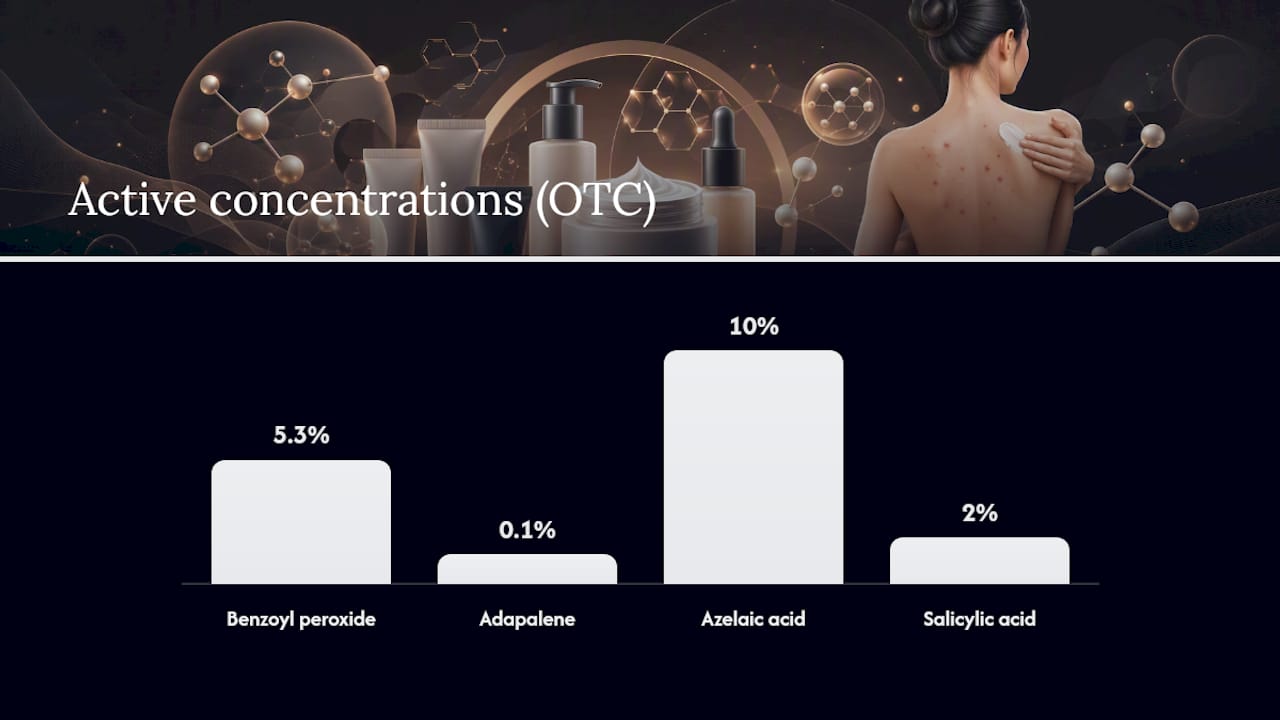
| Benzoyl peroxide body wash | Benzoyl peroxide, roughly 5% (2.5% to 10% range) | Inflamed, pustular breakouts | Wash/soap | Leave on 2 to 5 minutes, then rinse | Moderate; can bleach fabric | OTC, drugstores and Amazon, low to mid cost |
| Adapalene 0.1% gel | Adapalene 0.1% (retinoid) | Clogged pores, persistent non-inflamed bumps | Gel, leave-on | Apply nightly to dry skin | Moderate; dryness and peeling early on | OTC, drugstores and Amazon |
| Azelaic acid cream | Azelaic acid, around 10% | Dark marks and mild inflammatory acne | Cream, leave-on | Apply once or twice daily | Low to moderate; mild tingling | OTC, mostly online retailers |
| Salicylic acid wash or lotion | Salicylic acid, 2% typical | Comedonal acne, oily skin | Wash or lotion | Leave on briefly, rinse, or leave on if lotion | Low; can dry sensitive skin | OTC, widely available |
| AHA body exfoliant | Glycolic or lactic acid, varies | Surface texture, adjunctive fading | Lotion or wash | 2 to 3 times weekly | Low to moderate; sun sensitivity | OTC, drugstores and online |
Benzoyl peroxide body wash (approx. 5% concentration) is the workhorse for active, inflamed spots. It kills the bacteria that drive breakouts and works fastest when you actually let it sit on skin rather than lathering and rinsing immediately. PanOxyl body washes are the most recognizable version of this on drugstore shelves, sold in 4%, 5.3%, and 10% strengths, and the AAD notes that 5.3% tends to hit the sweet spot between effectiveness and irritation.
Adapalene topical gel is the retinoid option, and it works differently than benzoyl peroxide. Instead of killing bacteria, it normalizes how skin cells shed inside the pore, which stops new clogs from forming. Differin Gel is the brand most people recognize, and it’s the same 0.1% formula that used to require a prescription before switching to OTC status. Expect some dryness in the first few weeks.
Azelaic acid topical cream (around 10% OTC formulations) does two things at once: it calms inflammation and it interferes with the pigment-producing cells that create dark marks. That dual action makes it a smart pick if fading old marks matters more to you than treating active spots. The Ordinary Azelaic Acid Suspension 10% is a budget-friendly, widely stocked version that shows up constantly in skincare recommendations for exactly this reason.
Salicylic acid body wash or lotion is the gentlest broad-use option and a reasonable starting point if you’re not sure how reactive your skin is. It’s a beta hydroxy acid, meaning it’s oil-soluble and can get into the pore lining to break up the debris that forms blackheads and small bumps. CeraVe SA body wash and Neutrogena Body Clear body wash are the two most common drugstore versions, and Paula’s Choice CLEAR makes a salicylic-acid spray format that’s genuinely useful for reaching mid-back without contorting.
Alpha hydroxy acid (AHA) body exfoliants, using glycolic or lactic acid, work on the skin’s surface rather than inside the pore. They’re not a primary acne treatment so much as a support player, useful for smoothing texture and helping other actives penetrate better when used a few times a week rather than daily.
One caution that applies across this whole list: don’t stack benzoyl peroxide and adapalene into the same application. Mayo Clinic warns against combining benzoyl peroxide with topical retinoids at the same time because benzoyl peroxide can break down and deactivate some retinoid formulas, and the irritation from both at once tends to compound rather than cancel out. Space them by time of day instead.
Most of these are available at any major drugstore, Target, or Amazon without a prescription, which is part of why they’re a reasonable first step before booking a dermatology visit.
How Do You Choose the Right Product for Your Back Spots?
Match the product to the type of spot, not the marketing on the label. That single shift solves most of the trial-and-error people go through.
Start by looking honestly at what’s actually on your back. If most of what you see is red, raised, and sometimes tender to the touch, you’re dealing with inflammatory acne, and benzoyl peroxide is the logical first choice. If your skin feels bumpy under the surface with small, skin-colored or slightly pink bumps that rarely open up, that’s comedonal acne, and either salicylic acid or adapalene will do more for you than an antibacterial wash. If the spots themselves have mostly cleared but you’re left with brown or reddish-purple marks, you’re in pigment territory, and azelaic acid or a retinoid-led fading routine is the better fit.
Formulation matters almost as much as the active ingredient itself. Creams tend to sit on skin longer and cause less irritation, but Mayo Clinic’s overview of acne treatments notes that gels absorb more efficiently, which can mean faster results paired with more stinging, especially on skin that’s already irritated. Washes are the easiest to apply across a large area like the back, but only work if you actually give the product enough contact time before rinsing. A wash you scrub off in three seconds isn’t doing much.
A few modifiers change the calculus:
- Sensitive skin: start with salicylic acid or a lower-strength benzoyl peroxide (2.5%), and introduce anything new only every third day for the first two weeks.
- Darker skin tones: azelaic acid is often preferred over harsher exfoliants because it treats pigment without raising the risk of new discoloration, a real concern with aggressive scrubs or high-strength peels.
- Pregnancy or breastfeeding: avoid retinoids like adapalene, and check with your OB or dermatologist before starting azelaic acid or salicylic acid regimens. Benzoyl peroxide is generally considered lower-risk, but confirm with your provider.
- Sun sensitivity: anyone using adapalene or an AHA exfoliant needs daily sunscreen on treated areas, since both increase how easily skin burns.
Price shapes adherence more than people admit. A $30 body wash you use twice a week because you’re rationing it won’t outperform a $10 wash you use every day as directed. Buy the product that fits your actual budget for daily use.
How to Apply Back Acne Products for Better Results
The back is the hardest part of the body to treat consistently, mostly because you can’t see it and can’t easily reach it. A routine that would take thirty seconds on your face takes real planning on your back.
- Shower and cleanse first. Use a gentle, non-comedogenic cleanser to remove sweat and oil before applying any treatment.
- Apply your benzoyl peroxide wash and wait. If you’re using a benzoyl peroxide cleanser, apply it to affected areas and leave it on for 3 to 5 minutes before rinsing. This contact time is what makes the difference between a wash that works and one that doesn’t.
- Dry completely before leave-on products. Pat skin dry, then apply adapalene gel or azelaic acid cream to a fully dry back. Applying retinoids to damp skin increases irritation.
- Use tools for hard-to-reach spots. A long-handled lotion applicator, a spray-format product like Paula’s Choice CLEAR, or ten seconds of help from someone at home solves the coverage problem more reliably than trying to reach your own shoulder blades.
- Space your actives by time of day. Use benzoyl peroxide in the morning shower and save adapalene or azelaic acid for the evening, since applying a retinoid at night also limits sun exposure while it’s most active.
- Introduce retinoids slowly. Start adapalene at 2 to 3 nights a week for the first two weeks, then increase to nightly as your skin adjusts.
Pro Tip: Keep your back-acne products lined up on the shower shelf, not in a cabinet elsewhere in the house. The single biggest reason people quit a routine that’s actually working is that it becomes one extra step they have to remember instead of something already in front of them.
Expect some dryness and mild peeling in the first two to three weeks, especially with adapalene. That’s a normal adjustment period, not a sign to stop. If irritation is severe (raw skin, significant burning, or a rash that spreads beyond the treated area), scale back frequency rather than pushing through. Anyone pregnant or breastfeeding should skip adapalene entirely and run any azelaic acid or salicylic acid plan past their doctor first.
Everyday Habits That Help Clear and Prevent Back Spots
No cream works in isolation. What you do the rest of the day either supports or undermines it.
- Shower as soon as possible after sweating, whether that’s from a workout or just a hot commute. Mayo Clinic Health System points to prompt post-sweat showers as one of the most effective free interventions for reducing back-acne flares.
- Choose moisture-wicking fabrics over cotton for workouts, and change out of damp clothing quickly rather than lounging in it.
- Avoid tight backpacks, gym bag straps, or fitted shirts that trap sweat and create friction against already-irritated skin.
- Wash gently with your hands or a soft cloth. Skip loofahs and rough scrubbing, which can spread bacteria and worsen inflamed spots rather than clean them.
- Use a non-comedogenic, oil-free sunscreen (SPF 30 or higher, water-resistant) on treated skin, especially if you’re using adapalene or an AHA. A spray sunscreen makes back application realistic.
- Skip unnecessary antibacterial body soaps layered on top of your treatment products. More antibacterial ingredients doesn’t mean faster results, and it often means more dryness.
None of this costs extra money. It’s mostly about timing and habit, and it’s often the difference between a routine that plateaus and one that keeps improving past week eight.
When Should You See a Dermatologist for Back Spots?
Give any OTC routine several weeks before judging it a failure. If you’re past that window with no visible improvement, that’s a legitimate reason to book a dermatology visit rather than keep swapping products.
Certain signs mean don’t wait that long at all:
- Lesions that are growing quickly, unusually painful, or hard and deep under the skin
- Any spot that’s draining fluid, bleeding, or showing signs of infection (warmth, spreading redness, fever)
- Widespread severe nodules or cysts rather than surface-level bumps
- Persistent itching alongside the bumps, which can point to a different condition entirely
That last point matters more than most people realize. Cleveland Clinic notes that back lesions which change rapidly or don’t respond to standard acne care sometimes turn out to be something other than acne, including fungal folliculitis or hidradenitis suppurativa, both of which need a different treatment entirely and won’t budge no matter how consistent your benzoyl peroxide routine is.
Before your visit, take photos over a few weeks to document how the spots are changing, write down which products you’ve tried and for how long, and note any allergies or current medications. A dermatology visit for stubborn back acne can open up prescription-strength retinoids, prescription azelaic acid, oral medications, or in-office options like chemical peels and corticosteroid injections for large, painful cysts. Injections work fast on individual cysts but don’t prevent new ones from forming. Peels help with texture and mild scarring but require a series of sessions, not a single visit.
Why These Recommendations Track Dermatology Guidance
The active ingredients in this guide aren’t arbitrary picks. Benzoyl peroxide kills the bacteria implicated in inflammatory acne. Adapalene normalizes cell turnover inside the follicle to stop new clogs. Azelaic acid calms inflammation while interfering with excess pigment production. Salicylic acid dissolves the debris that clogs pores in the first place. Each targets a distinct mechanism, which is exactly why matching the active to the spot type matters more than trying the strongest product on the shelf.
Benzoyl peroxide cleansers work best when left on the skin for 2 to 5 minutes, and a 5.3% concentration performs about as well as stronger formulas while causing less irritation. Most people using OTC actives correctly should expect visible improvement within several weeks, not days.
That timeline and concentration guidance both come from the AAD’s own back-acne protocol, which is the closest thing to a standard clinical reference for treating truncal acne without a prescription. This guide prioritized OTC availability, tolerability on a large body surface, and safety margins over raw potency, because a product nobody can tolerate long enough to see results is worthless regardless of its strength. Rao Dermatology’s clinical experience with patients managing bacne backs up the practical application tips here, particularly around contact time and spacing actives to avoid compounding irritation.
Clinic perspective: what we see with bacne patients
Bacne responds to a plan, not a single product. Our practice’s experience treating patients across California, New Jersey, and New York consistently shows that people who stick with one active ingredient for a full 6 to 8 weeks do better than those chasing the newest product. We also see the cost of waiting too long: spots that could have been managed with a topical routine turn into scarring once cysts form. If your back isn’t responding to consistent OTC care by the two-month mark, that’s the point to bring it to us rather than your bathroom cabinet.
How Rao Dermatology Can Help With Back Acne That Won’t Clear
Once you’ve given an OTC routine a real 6 to 8 week trial and your back still isn’t cooperating, that’s exactly the gap Rao Dermatology is built to close. A drugstore shelf can’t prescribe stronger retinoids, adjust dosing based on how your skin actually responds, or drain a painful cyst that’s been sitting under the skin for weeks. Our clinicians can, across locations in California, New Jersey, and New York.

Our acne and rosacea treatment services cover prescription-strength topical therapy, oral medications when the situation calls for it, and in-office procedures like chemical peels or corticosteroid injections for stubborn cysts. If scarring or lingering dark marks are part of what’s bothering you, our cosmetic dermatology team can talk through fading options that go beyond what any cream can do alone. Bring photos of your back over time, a list of what you’ve already tried, and how long you tried it. Book a visit through our full services page and get a plan built around what your skin is actually doing, not another guess off a shelf.
Sources
- Back acne: How to see clearer skin — American Academy of Dermatology (AAD)
- Acne: Diagnosis and treatment — Mayo Clinic
- Back acne (“bacne”): Symptoms, causes & treatment — Cleveland Clinic
- Don’t turn your back on back acne — Mayo Clinic Health System
The AAD’s page is the best starting point if you want the clinical protocol behind these recommendations in full detail.
This article is general information, not a substitute for advice from a qualified doctor. Consult a qualified healthcare professional about your own circumstances before acting on anything here.
FAQ
What Can I Put on Spots on My Back?
What Is the Best Cream for Treating Back Acne Spots?
There’s no single best cream because back acne varies by type.
What Is the Best Cream for Getting Rid of Spots?
For active inflamed spots, a benzoyl peroxide body wash used with 2 to 5 minutes of contact time is typically the fastest OTC option. For lingering discoloration, azelaic acid cream tends to work better over several weeks.
What’s the Best Cream for Back Acne?
For most people with mixed back acne (some inflamed spots, some clogged pores), starting with a benzoyl peroxide wash and adding adapalene gel at night, spaced apart, covers both mechanisms at once. If that combination doesn’t clear things within 6 to 8 weeks, Rao Dermatology can evaluate for prescription-strength options.
Recommended
Filed under: